
4 min walk
六原公園
- Notable
- Nature site
Language · 11 published
Place of worship · Kyoto
六波羅蜜寺
Reviewed by Elena Voss · Roavina Travel Editor
| Monday | 08:00 – 17:00 |
|---|---|
| Tuesday | 08:00 – 17:00 |
| Wednesday | 08:00 – 17:00 |
| Thursday | 08:00 – 17:00 |
| Friday | 08:00 – 17:00 |
| Saturday | 08:00 – 17:00 |
| Sunday | 08:00 – 17:00 |
Parsed from OpenStreetMap opening hours on 2026-09-09.
This place is a Place of worship. It was established in 963. It carries the Important Cultural Property of Japan heritage designation.
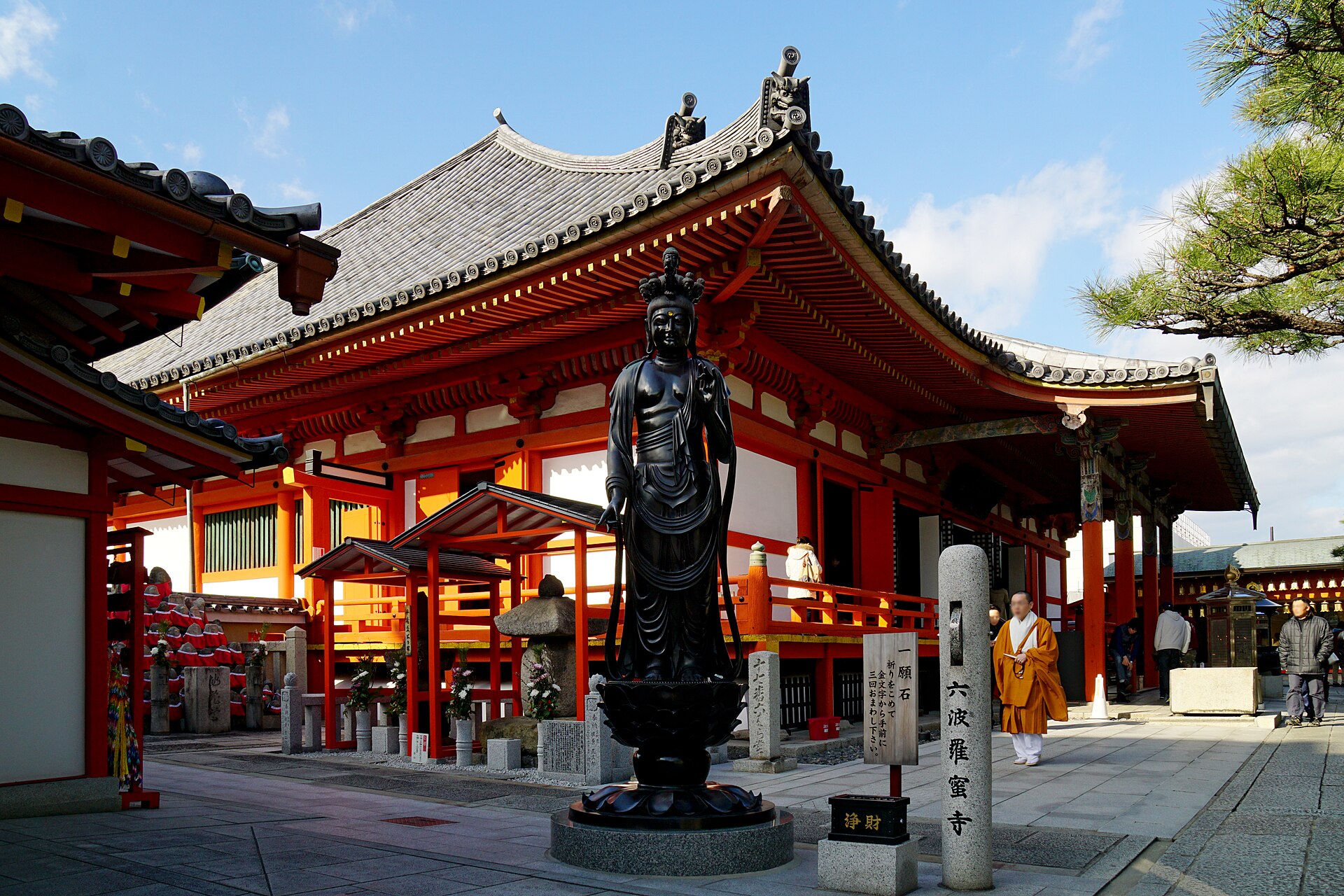
Rokuharamitsu-ji is a historic Shingon Buddhist temple in Kyoto’s Higashiyama district. Its identity is rooted in religious practice and the long history of this eastern part of the city, where temples and traditional neighbourhoods stand close together. The temple is a compact cultural stop for travellers interested in Buddhist architecture, devotional spaces, and Kyoto’s historic urban fabric. Rather than approaching it as a large museum complex, come ready to notice the character of a working temple: the arrangement of its buildings, the atmosphere of its grounds, and the way ordinary city life meets a place of worship.
Checked 2026-08-26 · Source
The site includes a main hall and subsidiary Buddhist buildings, with religious statuary, artwork, and furnishings associated with Shingon practice. The grounds combine built structures with garden or natural elements, giving the visit visual interest even when the complex is compact. Focus on the architectural details that are easy to miss at speed: roof forms, thresholds, timber construction, and the framing of devotional spaces. The experience is not built around a long exhibition route. It is better understood through a few attentive pauses, moving from the exterior setting toward the principal religious areas while keeping the atmosphere quiet and respectful.
Checked 2026-08-26 · Source
Set aside roughly 20 to 40 minutes for a straightforward visit to the grounds and principal structures. Travellers who take a close interest in Buddhist art, architecture, or devotional practice may stay longer, while a brief stop can suit a day already filled with Higashiyama sights. The temple’s compact scale makes it easy to place within a walking route, but do not measure the experience only by the number of minutes spent indoors. Leave room for the approach from nearby streets and for the pauses that make a religious site feel distinct from a checklist attraction.
Checked 2026-08-26 · Source
Morning is a strong choice for a calmer visit, while spring and autumn add seasonal colour to Kyoto’s temple districts. Those popular seasons also bring heavier foot traffic, especially around Higashiyama’s major sights. Summer can be humid and tiring when walking between temples; winter is colder but often supports a quieter rhythm. Religious activity may shape what you encounter, so treat the site as a place of worship first. Plan Rokuharamitsu-ji as one stop in an eastern Kyoto day, choosing a time that leaves space for both the temple and the surrounding historic streets.
Checked 2026-08-26 · Source
Plan the stop around its religious and architectural interest rather than assigning it a confirmed cost in advance. Carrying some Japanese yen is sensible for a temple visit and ordinary offerings, but the entrance experience should be understood from the arrangements presented at the site. Its compact scale makes it easy to include in a broader Higashiyama walk, where the value comes from the cumulative character of the neighbourhood as much as from any single paid attraction.
Checked 2026-08-26 · Source
Rokuharamitsu-ji is in Higashiyama and fits naturally into a walking route through eastern Kyoto. City buses serve the wider district, while the final approach is on foot through historic streets. Travellers can link the temple with the Gion area and with the Kiyomizu-dera side of Higashiyama, creating a day that moves between religious sites and preserved neighbourhood scenery. Expect narrow streets and some uneven ground. Cycling can work for confident urban riders, but walking is often the more natural way to experience the district. Taxis may bring you close, although the last section can remain pedestrian.
Checked 2026-08-26 · Source
Observe the etiquette of an active Buddhist temple: keep your voice low, follow signs, and give worshippers space. Shoes may need to come off before entering particular interiors, and religious objects should not be touched. Traditional paths can include steps, gravel, or uneven surfaces, so mobility and comfort deserve attention. Crowds increase during spring blossoms and autumn foliage, reducing space around compact buildings. Weather affects much of the experience because circulation takes place outdoors. Avoid smoking where prohibited, keep belongings secure, and remember that the temple’s spiritual function matters more than a fast sightseeing circuit.
Checked 2026-08-26 · Source
Use the exterior setting for architectural photographs, paying attention to the main hall, rooflines, timber details, and the way the buildings sit within the Higashiyama streetscape. Inside, follow posted rules and put the camera away during worship or ceremonies. Avoid flash, intrusive close-ups, and photographing people at prayer. Selfie sticks and tripods can obstruct movement in a compact temple, so keep equipment small and discreet. A respectful photograph records the character of the place without turning devotional spaces into a performance. Morning light can be especially useful for exterior details and quieter compositions.
Checked 2026-08-26 · Source
It is a historic Shingon Buddhist temple in Kyoto’s Higashiyama district, best experienced as a compact working religious site.
The temple offers a main hall, subsidiary Buddhist buildings, religious statuary, artwork, architectural details, and garden or natural elements.
Allow about 20 to 40 minutes for the compact temple, plus time for the walking approach if it forms part of an eastern Kyoto route.
Expect an active religious site: keep quiet, follow signs, respect worshippers, and be prepared for steps, gravel, uneven ground, and possible shoe removal.
Yes. Its location makes it a practical stop between the Gion and Kiyomizu-dera sides of Higashiyama, with the historic streets forming part of the experience.
Morning generally suits a quieter visit, while spring and autumn add seasonal scenery but also bring more visitors to Higashiyama.
Loading the interactive map…
The interactive map could not be loaded.
Last updated:
Source: OpenStreetMap contributors, Wikidata ·