
7 min walk
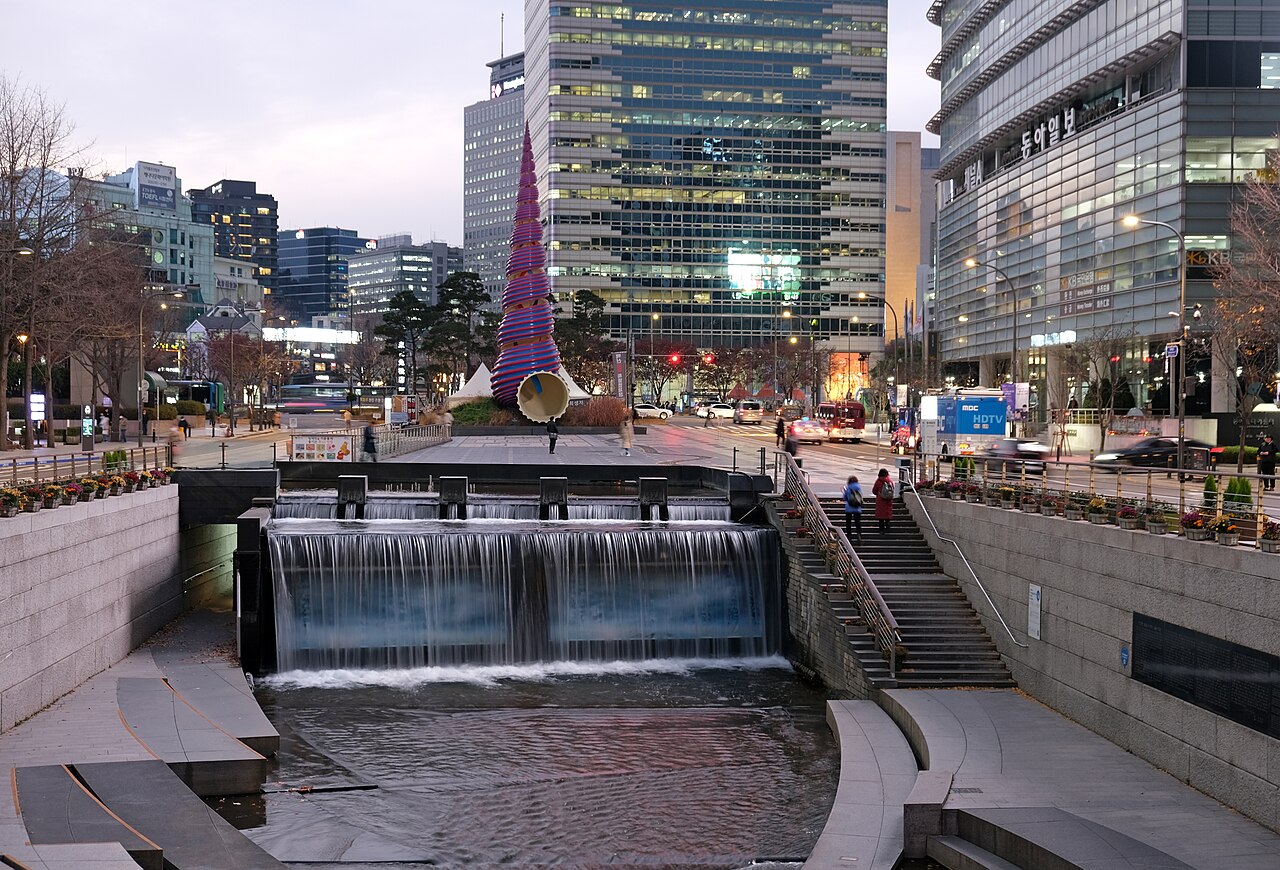
Cheonggyecheon
- Must see · Heritage site
- Nature site
Market · Seoul
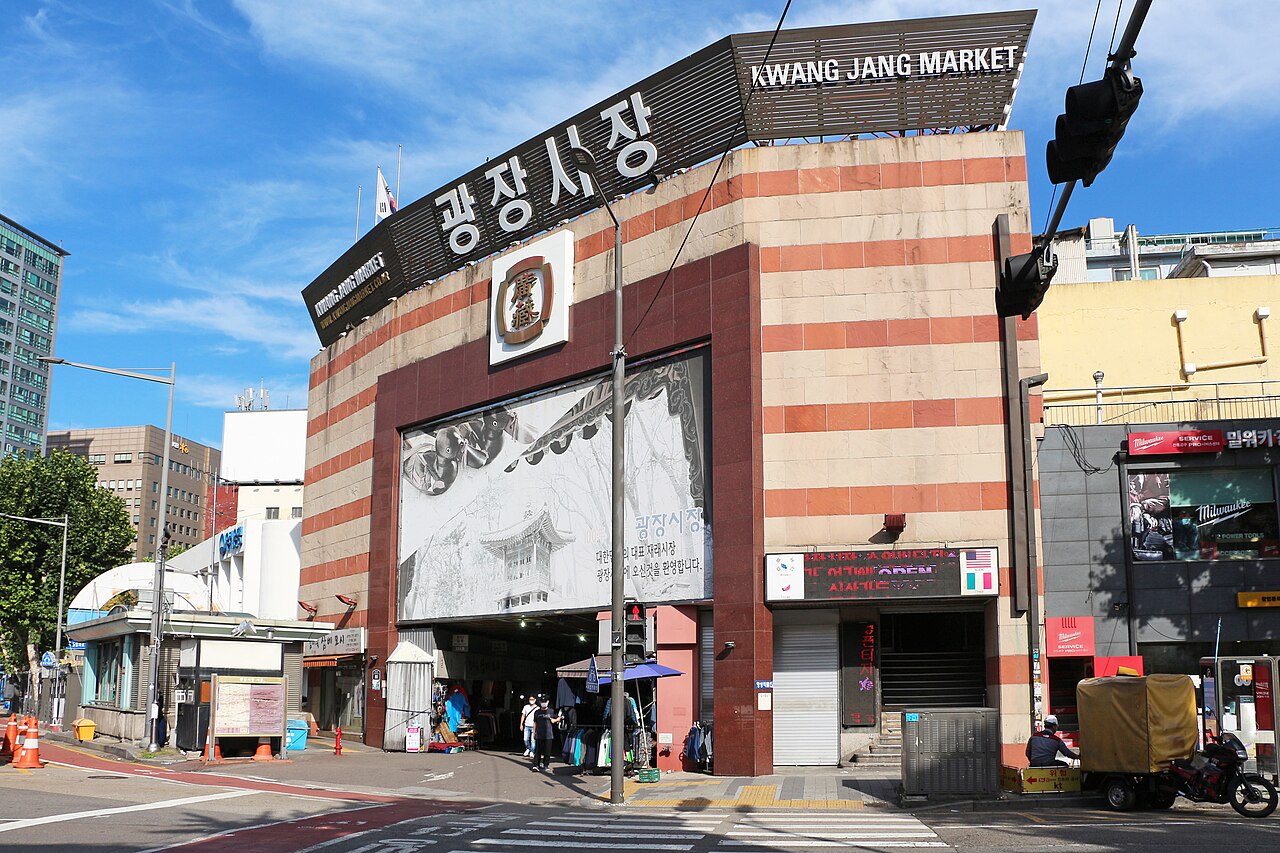
광장시장
Closed today, Sunday. Next open Monday at 09:00 — the planner will not place a stop here on a Sunday.
Plan around it| Monday | 09:00 – 18:00 |
|---|---|
| Tuesday | 09:00 – 18:00 |
| Wednesday | 09:00 – 18:00 |
| Thursday | 09:00 – 18:00 |
| Friday | 09:00 – 18:00 |
| Saturday | 09:00 – 18:00 |
| Sunday | Closed |
Checked 2026-08-31 · Source
| Per person | Free entry |
|---|
Checked 2026-08-31 · Source
Read from the OpenStreetMap access tags; anything not listed has no tag recorded.
Set the group type to family in the planner and the day window contracts to about three quarters of a solo day.
Gwangjang Market fills a block of Jongno-gu at 88 Changgyeonggung-ro, on the ground between Jongno 4-ga and Yeji-dong, and its merchants describe it as the first permanent market in Korea. The founding story the market tells about itself is political rather than commercial. In July 1905, while Japan's monetary restructuring was pulling the ground from under Korean traders, a group of Chosun merchants set up Kwangjang Corporation, and the Dongdaemun Market it ran stayed on purely Korean capital at a time when other markets were passing into Japanese hands. The site was already trading long before that as Beoge, or Pear Hill, one of the three great markets of the late Chosun period. Even the name is an accident of engineering.
Checked 2026-08-31 · Source
Three quite separate trades share one roof, and a visitor who only knows the market from photographs usually meets one of them. The food alley is the loudest: a lane of open griddles where mung-bean pancakes are pressed and fried in front of the customer, alongside jokbal, sundae and trays of jeon, with stools pulled up to the counter rather than tables set behind one. The market's own account notes that the pancake stalls stay lively late into the evening, and they are the reason the food lane keeps different hours from everything around it. The second trade is ceremonial textile.
Checked 2026-08-31 · Source
Ninety minutes is the honest figure for a first visit that includes eating. Half an hour goes on one lap of the food lane before committing to anything, because the stalls are close variations on each other and the decision is easier once the whole run has been seen; forty minutes goes on sitting down at a counter and actually eating, which at a shared bench is not a thing to rush; the rest goes on the textile aisles on the way back out. A visitor who wants to shop rather than eat should budget separately and more generously — the vintage arcade rewards slow rummaging and an hour there disappears without any sense of progress.
Checked 2026-08-31 · Source
Main market: Monday–Saturday 09:00–18:00; closed Sunday. Vintage shopping street: Monday–Saturday 10:00–19:00; closed Sunday. Food Alley: daily 09:00–23:00, including Sundays. The Sunday closure applies to the main market and vintage shopping street; Food Alley operates year-round. The market publishes its own hours, and they are not one set of hours but three. The market as a whole runs from 9. 00 in the morning to 6. 00 in the evening and is closed on Sunday. The second-hand clothing arcade opens later and closes later, from 10. 00 to 7. 00, also closed on Sunday, and the Korean-language notice adds that it trades normally on public holidays. The food street is the exception that matters most: the merchants state that it trades until 11.
Checked 2026-08-31 · Source
Free general entry; no admission ticket is required. Food and merchandise are purchased separately from individual vendors. There is no ticket. Gwangjang Market is a working street market with open entrances rather than a gated attraction, and the merchants' association publishes no admission price of any kind — not on its hours notice, not on its contact page, not anywhere else on its site. What a visitor pays is paid stall by stall, per dish and per item, directly to the trader.
Checked 2026-08-31 · Source
Take Seoul Subway Line 1 to Jongno 5-ga Station; Exit 8 is 62 metres from the market. For a step-free station exit, use the elevator located between Exits 8 and 9. An alternative arrival is Euljiro 4-ga Station on Lines 2 and 5, Exit 4, about 100 metres away. This is the named approach for an independent visit. The market's address is 88 Changgyeonggung-ro, Jongno-gu, in the Yeji-dong area, and the merchants publish two subway approaches. Line 1 to Jongno 5-ga station, exit 8, puts a visitor on the market's northern side.
Checked 2026-08-31 · Source
Accessible pathways and accessible restrooms are listed. Two accessible toilets are on the first floor: one by the fruit-and-vegetable area and one by the early-morning market. Most first-floor shops have ramps or step-free entrances. There is no elevator, so wheelchair access is limited to the first floor. The access description applies to the documented visitor route. The Sunday trap is the one that ruins visits. The market proper and the vintage arcade are both closed on Sunday, so a visitor who comes for hanbok, fabric or second-hand jackets on a Sunday finds shutters, even though the food lane beside them is trading. Check which half of the market the trip is actually for before choosing the day. The second issue is width.
Checked 2026-08-31 · Source
The merchants publish no photography rule, so the constraints here are practical and social rather than posted. The market is a low, roofed grid, which means daylight arrives sideways from the entrances and dies within a few metres; the useful light inside is the tungsten and fluorescent glare over each counter, and it is unflattering, mixed in colour temperature and just bright enough to shoot in. A fast lens and a raised sensitivity do far more good here than a flash aimed at a stranger cooking.
Checked 2026-08-31 · Source
88 Changgyeonggung-ro, Jongno-gu, Seoul, postal code 03195.
Official Seoul tourism information highlights bindaetteok, assorted savory pancakes, mayak gimbap, sundae, head meat, yukhoe, and Korean-style meatballs.
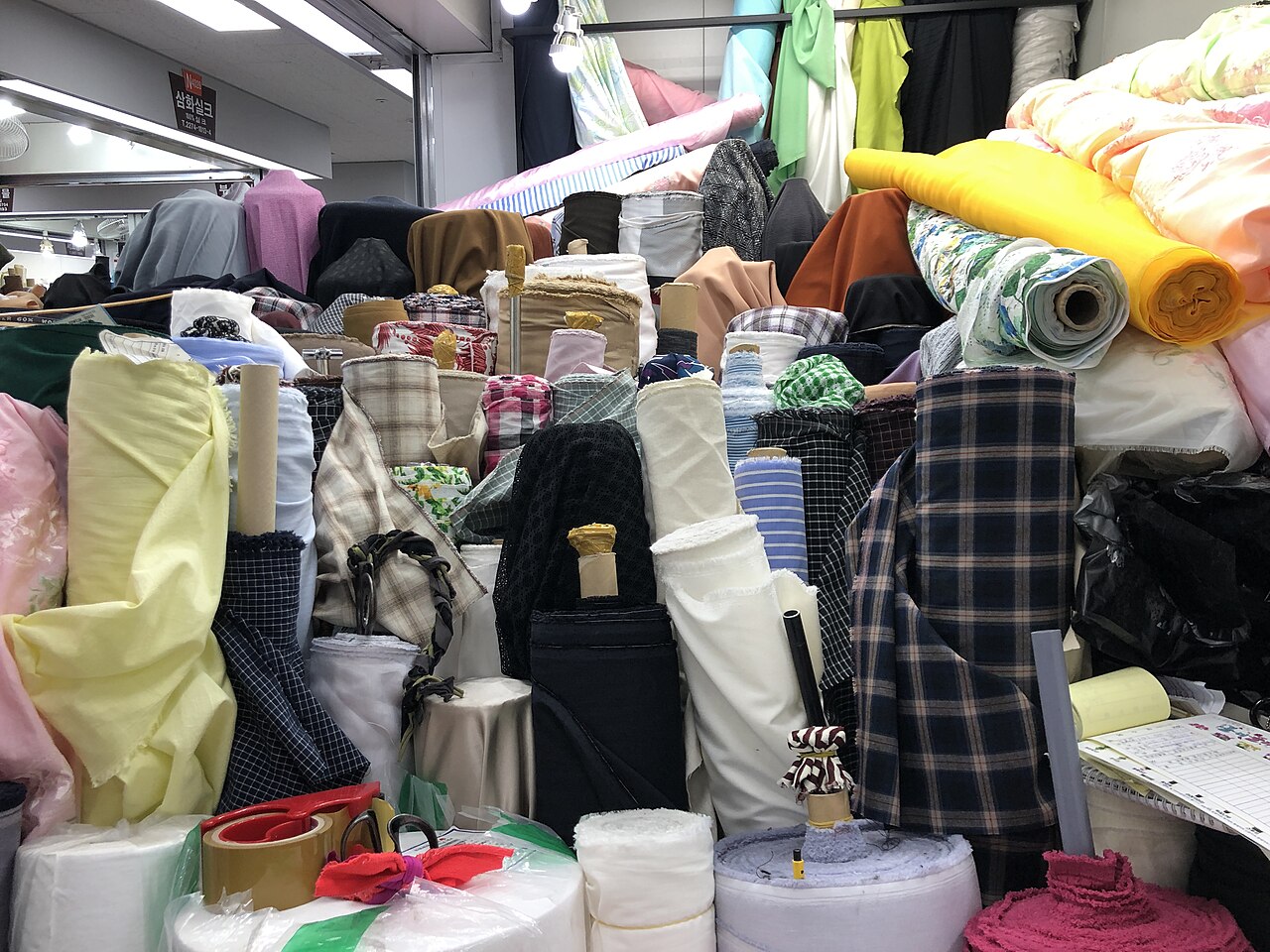
The market sells silk, dress materials, fashion apparel, agricultural and fishery products, bedding, handicrafts, and mother-of-pearl lacquerware; hanbok and vintage-clothing shops are on the second floor.
Yes. Korea Tourism Organization's market information lists cards as accepted.
Use the Jongno 4-ga Jongmyo Parking Lot.
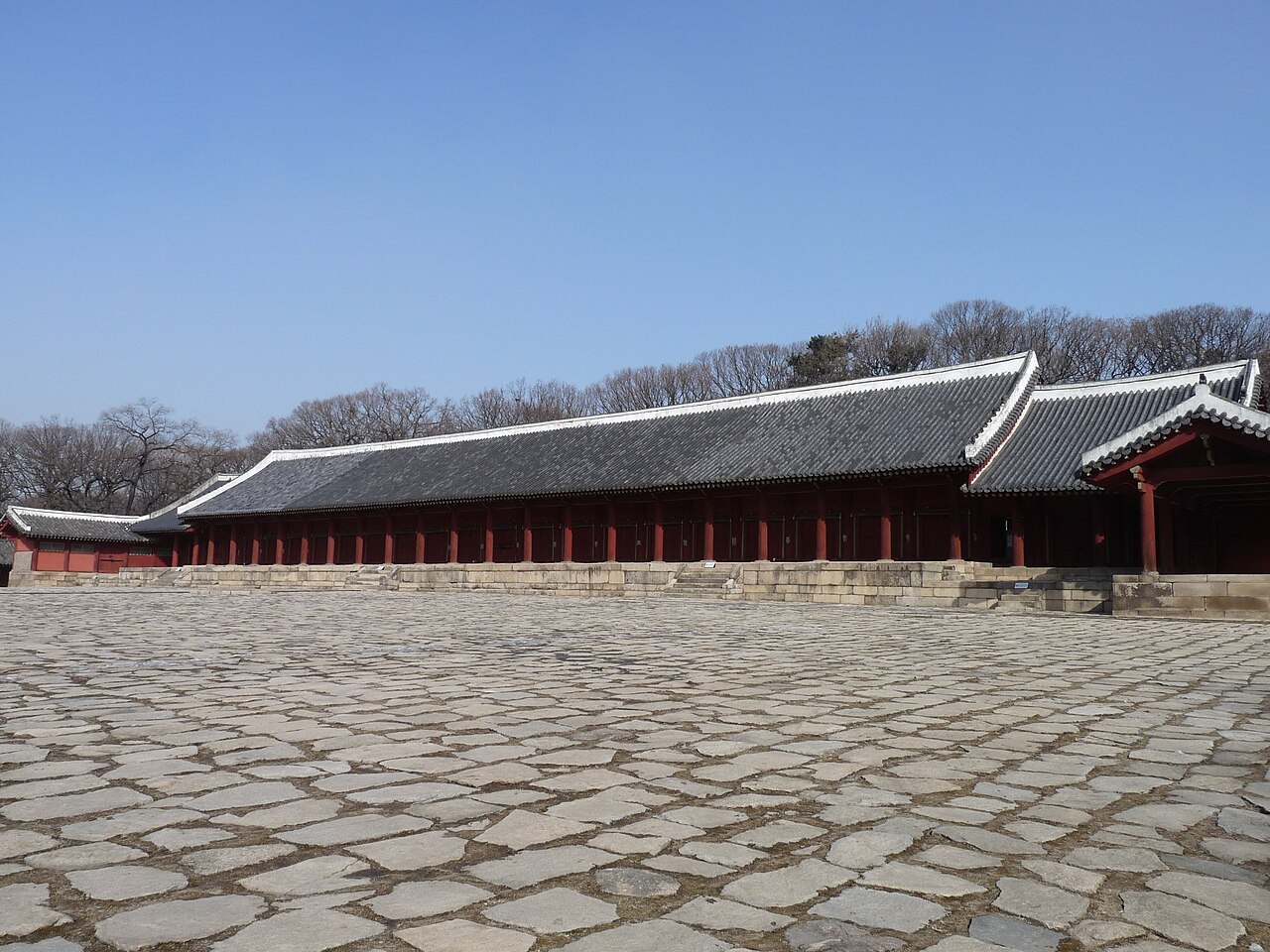
Sewoon Shopping Center, Jongmyo Shrine, and Dongdaemun Design Plaza are listed nearby.
Loading the interactive map…
The interactive map could not be loaded.
Last updated:
Source: OpenStreetMap contributors, Wikidata ·