


3 min walk
Statue of Peace
- Notable
- Art and culture venue
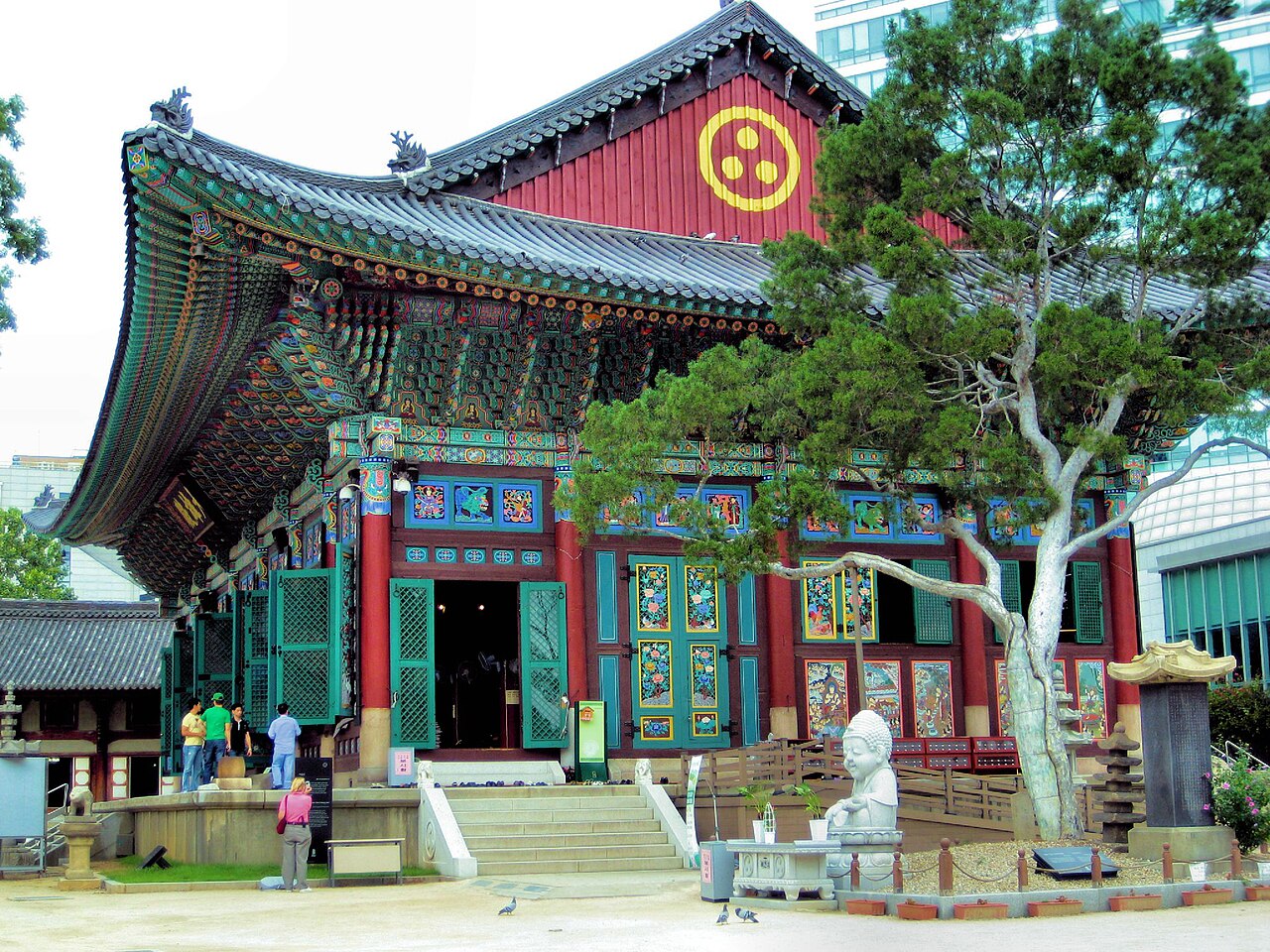
Place of worship · Seoul
조계사
| Monday | 00:00 – 23:59 |
|---|---|
| Tuesday | 00:00 – 23:59 |
| Wednesday | 00:00 – 23:59 |
| Thursday | 00:00 – 23:59 |
| Friday | 00:00 – 23:59 |
| Saturday | 00:00 – 23:59 |
| Sunday | 00:00 – 23:59 |
Checked 2026-08-31 · Source
Jogyesa is a major Buddhist temple in Seoul, South Korea, serving as the chief temple of the Jogye Order of Korean Buddhism. It stands in the Jongno district near Insadong. The temple functions as an active religious site rather than a museum, hosting ceremonies and serving as a center for Buddhist practice. Its location in central Seoul makes it accessible within the urban environment. The temple grounds provide a contrast to the surrounding commercial streets. Visitors should approach the site with appropriate respect for its religious function.
Checked 2026-08-31 · Source
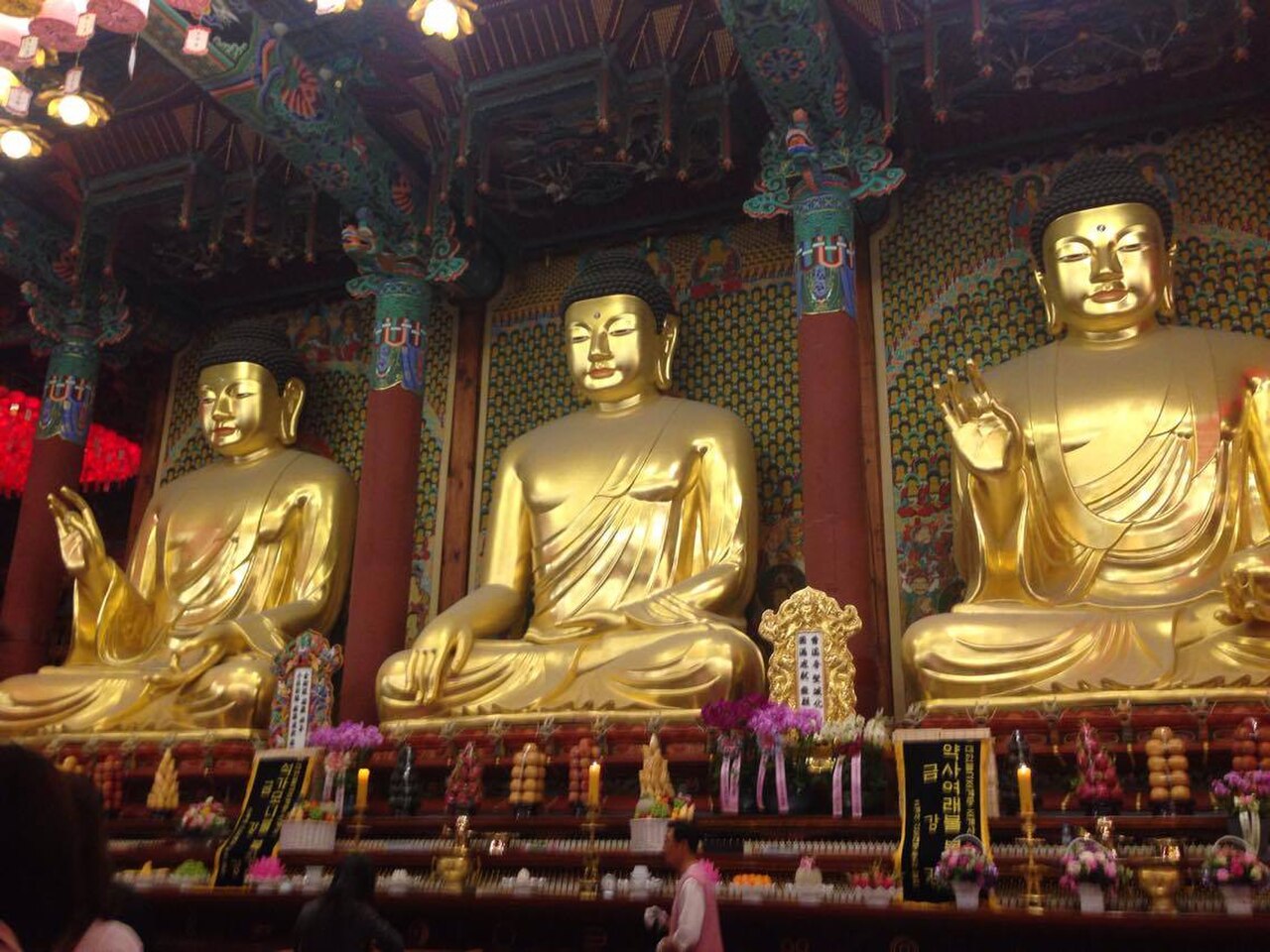
The temple complex contains multiple buildings including Daeungjeon, the main hall, which houses Buddhist statues. The grounds feature mature trees, some reportedly quite old, contributing to the atmosphere. Lantern decorations are visible during certain periods. Various subsidiary halls and structures serve different religious functions. The temple includes spaces for meditation and worship that may not be open to general visitors. Decorative elements and architectural details reflect Buddhist traditions. The specific contents of individual buildings are subject to religious use and may vary by time and occasion.
Checked 2026-08-31 · Source
A respectful visit to observe the exterior grounds and main hall typically requires approximately thirty to sixty minutes. Those participating in temple stay programs or religious services would require substantially longer. The duration depends on individual interest in Buddhist architecture and culture, as well as whether any ceremonies are in progress. Visitors should not rush through active worship spaces. Photography and quiet observation take additional time. The compact layout of the temple means extensive walking is not necessary.
Checked 2026-08-31 · Source
Temple grounds: daily, 24 hours. No regular closure day. Access to individual halls may vary during Buddhist ceremonies and scheduled temple events. The temple holds particular significance during Buddhist holidays, especially Lotus Lantern Festival around Buddha's Birthday, when elaborate decorations transform the grounds. These periods attract larger crowds but offer distinctive visual experiences. Early morning or evening visits may coincide with prayer sessions. Weather considerations for Seoul apply, with hot humid summers and cold winters. The temple's central location allows combining with nearby Insadong or Gwanghwamun visits regardless of season.
Checked 2026-08-31 · Source
Free general admission. Templestay programs are separate and may charge a program fee. As an active religious institution, Jogyesa may not charge standard admission fees typical of tourist attractions. Donations are commonly accepted at Buddhist temples. Special programs such as temple stays, when available, would involve separate fees requiring direct inquiry. Visitors should carry cash for any voluntary contributions or offerings. The temple's religious purpose suggests accessibility rather than commercial tourism pricing.
Checked 2026-08-31 · Source

The closest quantified subway approach is Jonggak Station, Exit 2, approximately 413 metres from the temple. Seoul Metropolitan Government also identifies Anguk Station, Exit 6, and Gwanghwamun Station, Exit 2, as arrival options. This is the named approach for an independent visit. Jogyesa occupies a central Seoul location accessible by public transportation. The nearest subway stations include Jonggak on Line 1 and Anguk on Line 3, both requiring short walks. Multiple bus routes serve the Jongno area. The temple's proximity to Insadong makes it walkable from that popular district. Taxis can access nearby streets though traffic congestion is common in central Seoul. Signage in the area is present but visitors should prepare directions in Korean characters. Walking from Gwanghwamun or City Hall is feasible for those exploring central Seoul on foot.
Checked 2026-08-31 · Source
Seoul’s official tourism listing confirms accessible pathways. The listing does not identify elevators, accessible toilets, accessible parking or wheelchair rental at the temple, so step-free access should not be treated as comprehensive across every building. The access description applies to the documented visitor route. Visitors must observe Buddhist temple etiquette: speak quietly, dress modestly covering shoulders and knees, and remove shoes when entering buildings. Photography restrictions may apply inside halls. Active worshippers have priority in all spaces. The temple remains a functioning religious site, not solely a tourist destination. Begging or aggressive solicitation by individuals near temple grounds has been reported in some Seoul temple areas. Visitors should be cautious of their belongings in crowded periods. Some areas may be closed without notice for private ceremonies. Respectful behavior is essential regardless of personal beliefs.
Checked 2026-08-31 · Source
Exterior photography of temple buildings and courtyard areas is generally permitted. The architectural details and decorative elements provide subjects of interest. Lantern displays during festival periods offer particularly notable photographic opportunities. However, restrictions apply inside worship halls where Buddha statues are present. Visitors should observe signage or request guidance from temple staff regarding current rules. Tripods may attract restrictions. Early morning light and evening illumination create different atmospheric conditions. Respect for worshippers must override photographic objectives in all situations.
Checked 2026-08-31 · Source
Yes. The temple states that its grounds are open to visitors regardless of nationality or whether they are Buddhist.
Jogyesa is the head temple of the Jogye Order of Korean Buddhism.
It was founded as Gakhwangsa in 1910, relocated to its present site beginning in 1937 and renamed Jogyesa after the Buddhist purification movement of 1954.
The hall was reconstructed from the former Sipiljeon building of Bocheongyo in Jeongeup; its completion and enshrinement ceremony took place on 25 October 1938.
The operator’s site map identifies Daeungjeon, Geuknakjeon, the bell pavilion, an eight-sided ten-storey Buddha-relic stupa, a scholar tree and a Korean white pine.
Yes. Jogyesa states that its Templestay program is offered in English and requires a separate reservation.
Loading the interactive map…
The interactive map could not be loaded.
Last updated:
Source: OpenStreetMap contributors, Wikidata ·