
.jpg)


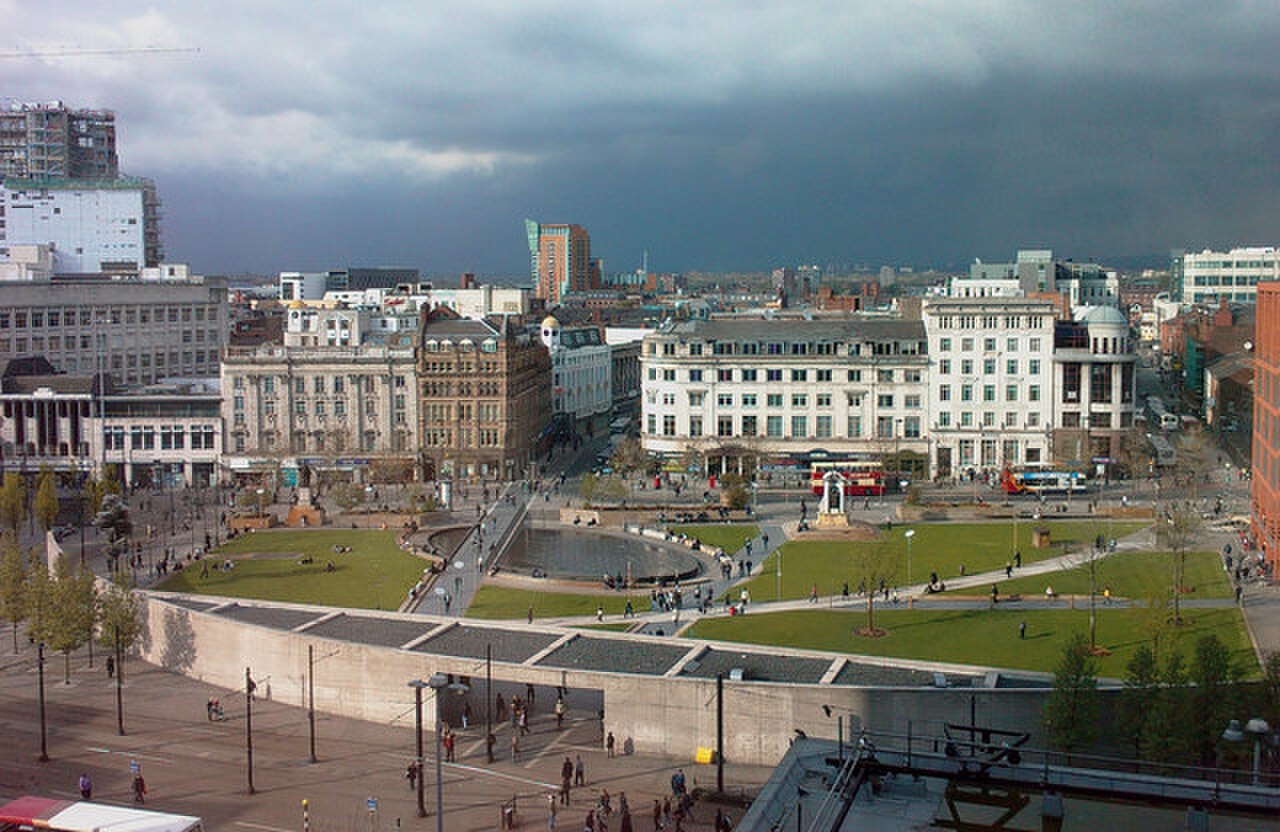
1 min walk
Piccadilly Gardens
- Must see
- Nature site
Language · 11 published
Art and culture venue · Manchester
Peel
Reviewed by Elena Voss · Roavina Travel Editor
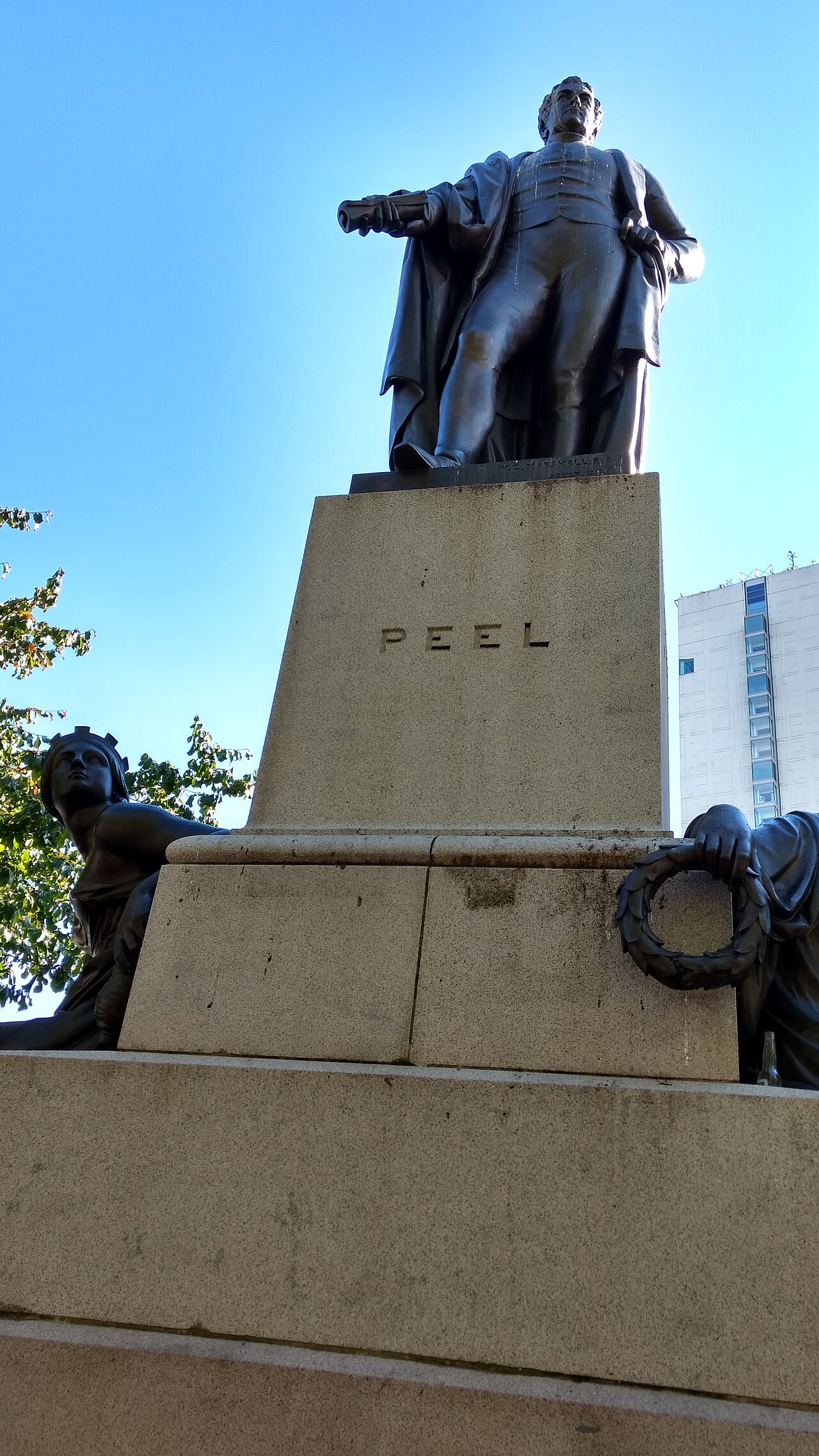
This place is a Artwork. It was established in 1853. It carries the Grade II listed building heritage designation.
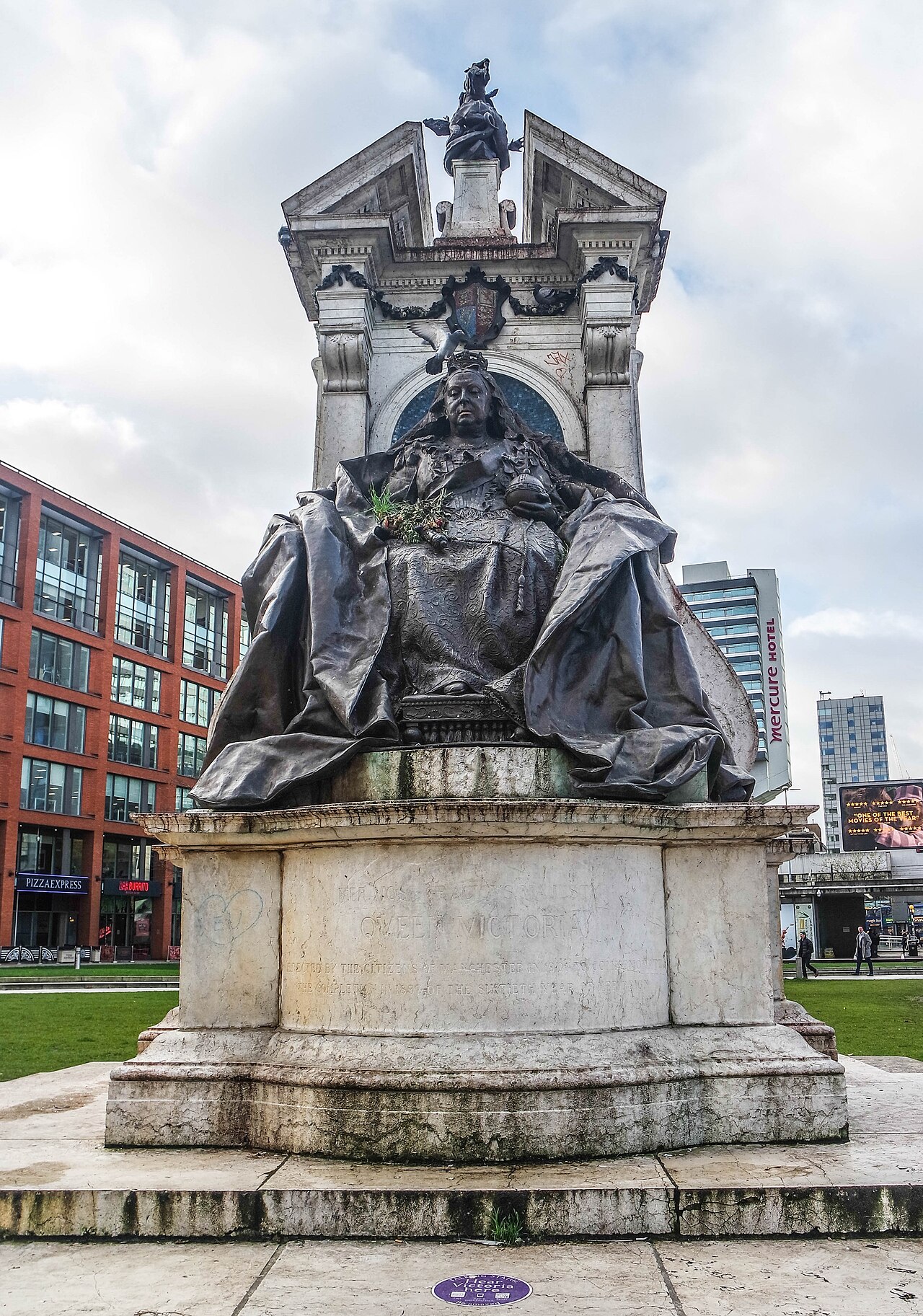
The Peel Statue is an outdoor Manchester monument commemorating Sir Robert Peel, the nineteenth-century statesman who served twice as British Prime Minister and is associated with the creation of the modern police force. For visitors, the statue offers a compact meeting point between political history and Victorian public art. Its meaning is shaped not only by the figure itself but also by its place in Manchester’s working city centre, where historical memorials remain part of the everyday public landscape. The Peel Statue is an outdoor monument in Manchester commemorating Sir Robert Peel, the nineteenth-century British statesman who served twice as Prime Minister and established the modern police force. The statue stands as a piece of Victorian civic commemoration within the city's public realm. It represents Manchester's engagement with national political history and the practice of honouring influential figures through permanent sculptural works placed in accessible urban locations for public encounter. The Peel Statue is an outdoor monument situated within Manchester's public urban realm.
Checked 2026-08-26 · Source
There is no interior area to enter. The attraction is the freestanding sculptural figure, its pedestal and any inscription presented as part of the memorial. Approach from the surrounding public space to see the statue’s overall pose, then look more closely at the base and the relationship between the monument and nearby streets. The site is suited to travellers who enjoy civic history, political biography and Victorian sculpture, with the public setting providing the context rather than galleries or enclosed displays.
Checked 2026-08-26 · Source
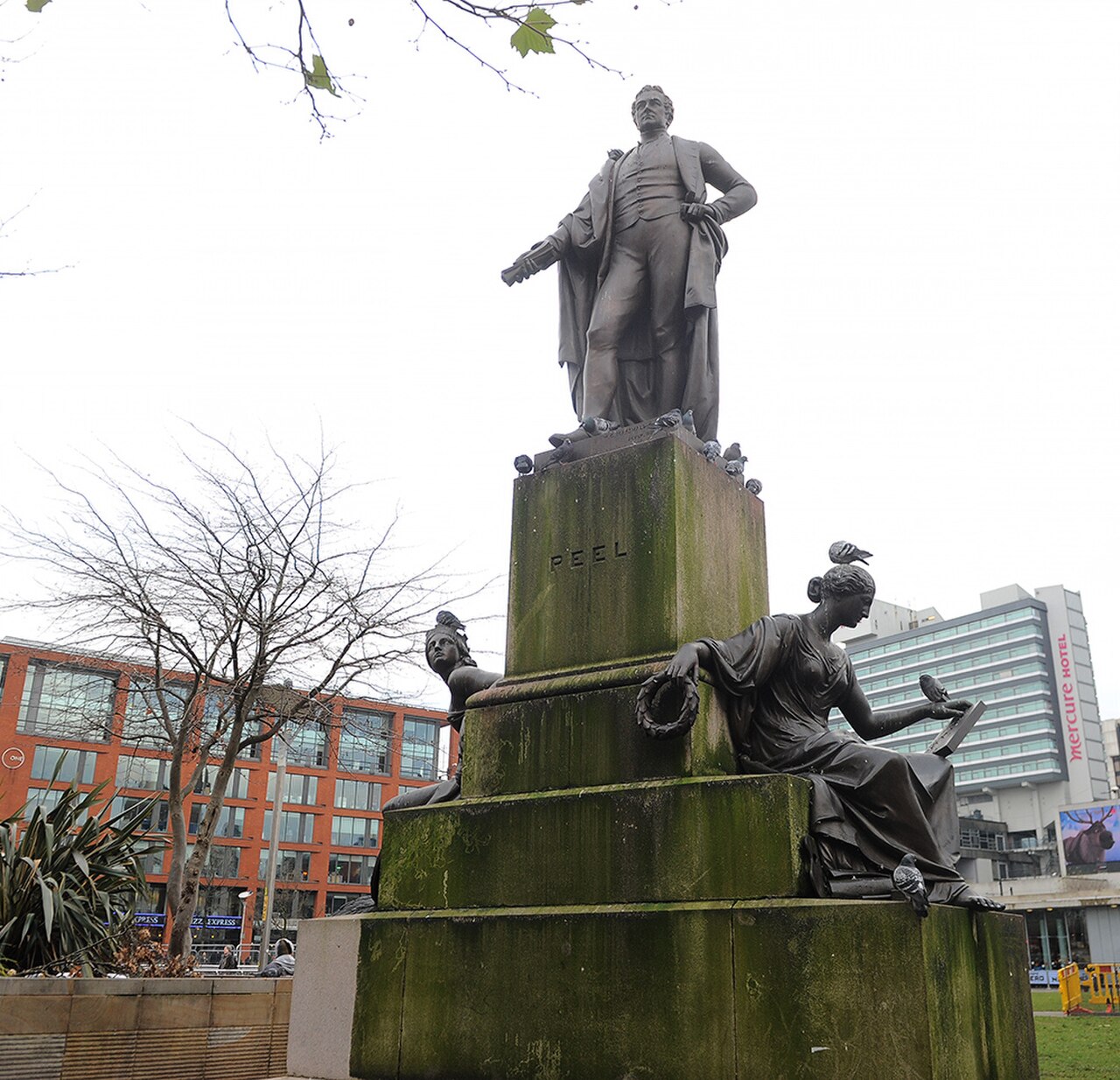
Most visitors need around five to fifteen minutes. Use the first few minutes to approach and view the statue from different angles, then read any visible inscription and consider Peel’s role in British political history. Visitors with a particular interest in civic monuments or the development of policing may stay longer. The statue is most practical as a short stop during a broader exploration of central Manchester, especially when combined with other public artworks, historic streets and civic landmarks.
Checked 2026-08-26 · Source
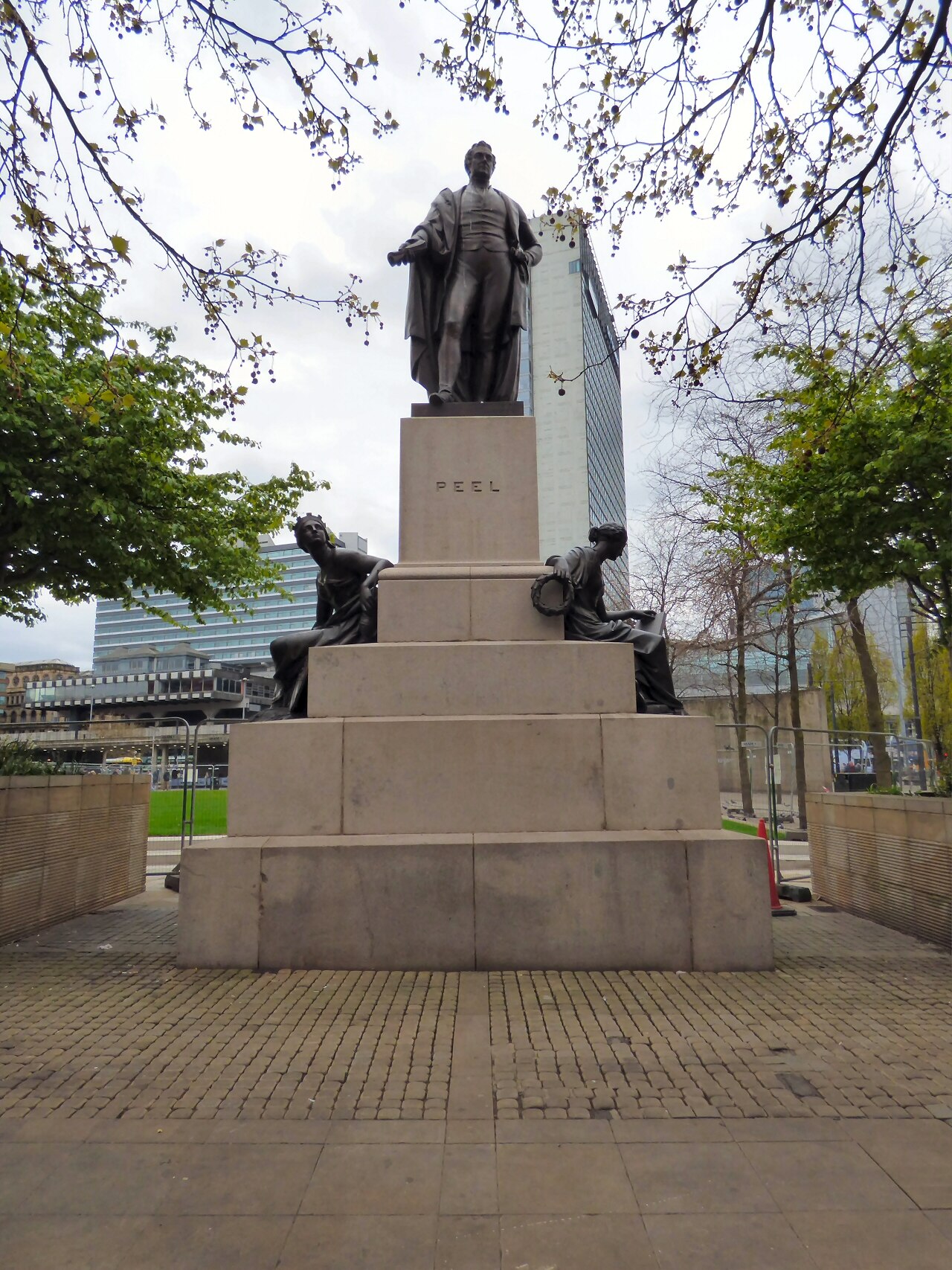
The Peel Statue is outdoors in public space and can be approached throughout the day. Daylight is best for reading details and seeing the sculptural form clearly. Rain, wind and cloud may reduce comfort, while evening visits depend on the ordinary lighting of the surrounding streets. Because the monument sits within an active city centre, the atmosphere changes with pedestrian traffic and nearby activity. Choose a quieter daytime moment if you want to pause for reflection or make an unobstructed photograph.
Checked 2026-08-26 · Source
There is no admission charge for the Peel Statue. It is an outdoor civic monument in Manchester’s public realm, without a ticket barrier or controlled entry point. Travellers can include it in a walking route at no direct cost and stay for as long as they wish. The statue is encountered independently in the city rather than through a paid entrance experience, so the visit requires only time to reach it and space to observe the memorial respectfully.
Checked 2026-08-26 · Source
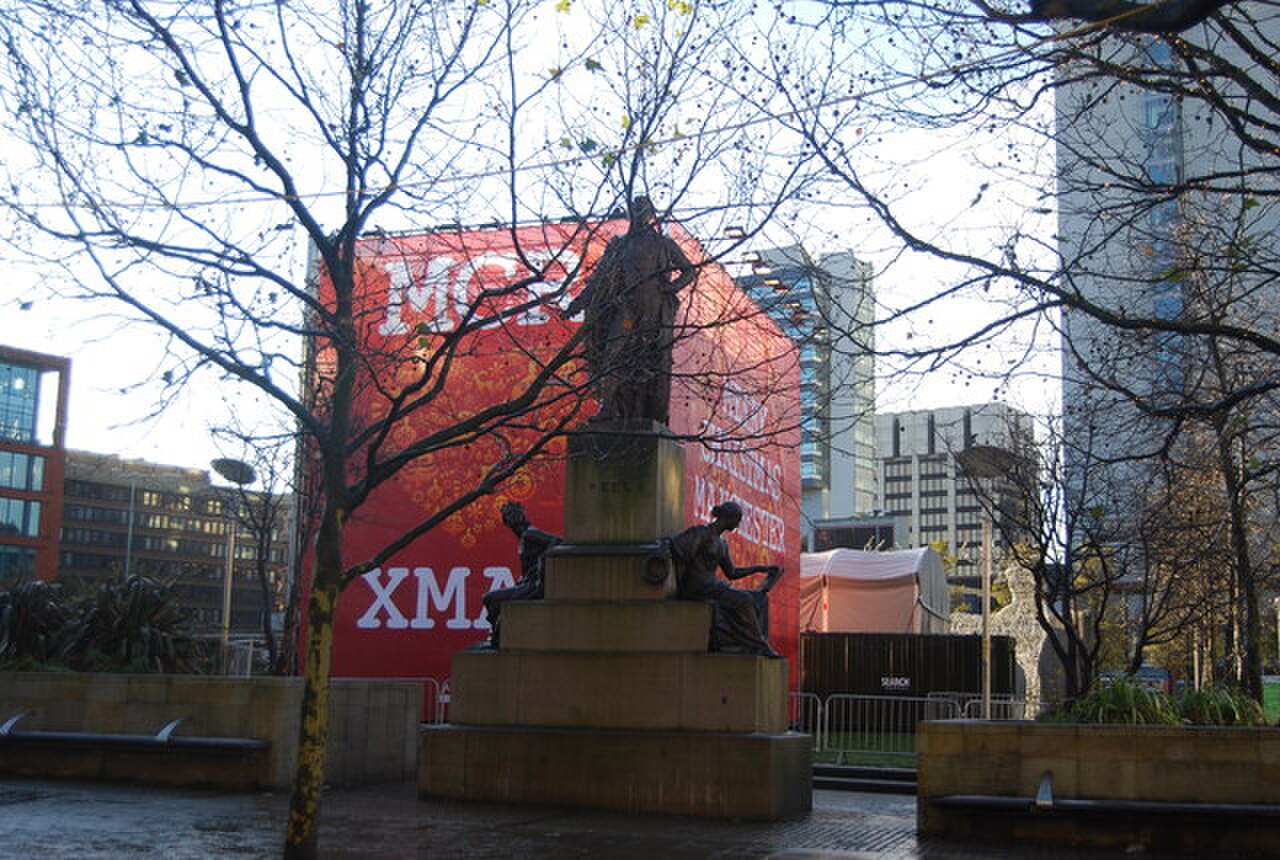
The statue lies within Manchester city centre, connected by national and regional rail through Manchester Piccadilly and Manchester Victoria. Metrolink trams and local buses serve central streets, and the compact core makes walking a practical way to link the statue with other monuments. Use the mapped position for the final approach, since the city centre contains many public artworks within a short distance of one another. Expect ordinary urban pavements and active pedestrian movement around the memorial.
Checked 2026-08-26 · Source
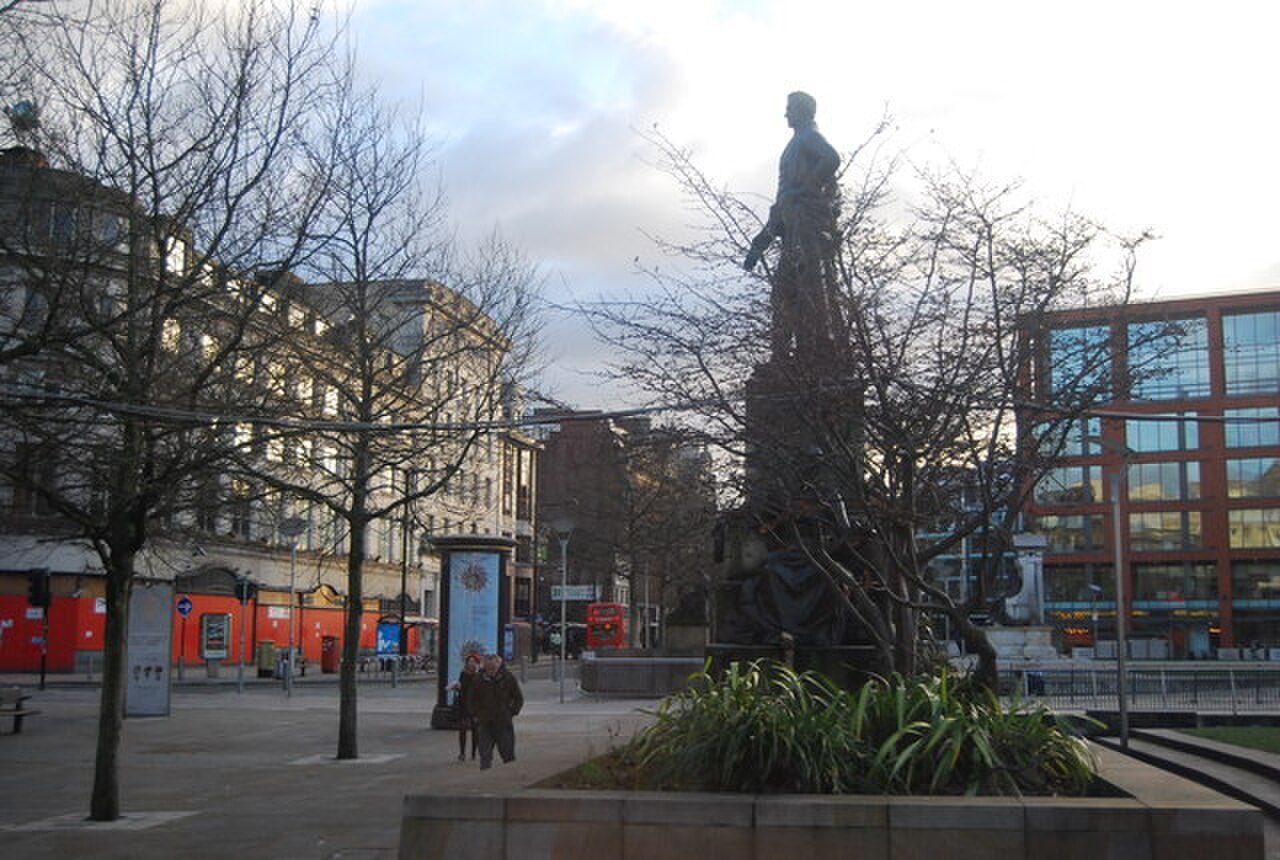
The statue offers no shelter from rain or sun, and wet weather can affect the monument’s base and nearby pavement. It occupies active public space, so keep clear of pedestrian routes and remain aware of traffic in surrounding streets. Do not climb on the pedestal or interfere with the sculpture. Evening visitors should use the same urban awareness appropriate to any city-centre stop. The memorial is best approached as a place of public remembrance, with a short pause that does not disrupt people passing through.
Checked 2026-08-26 · Source
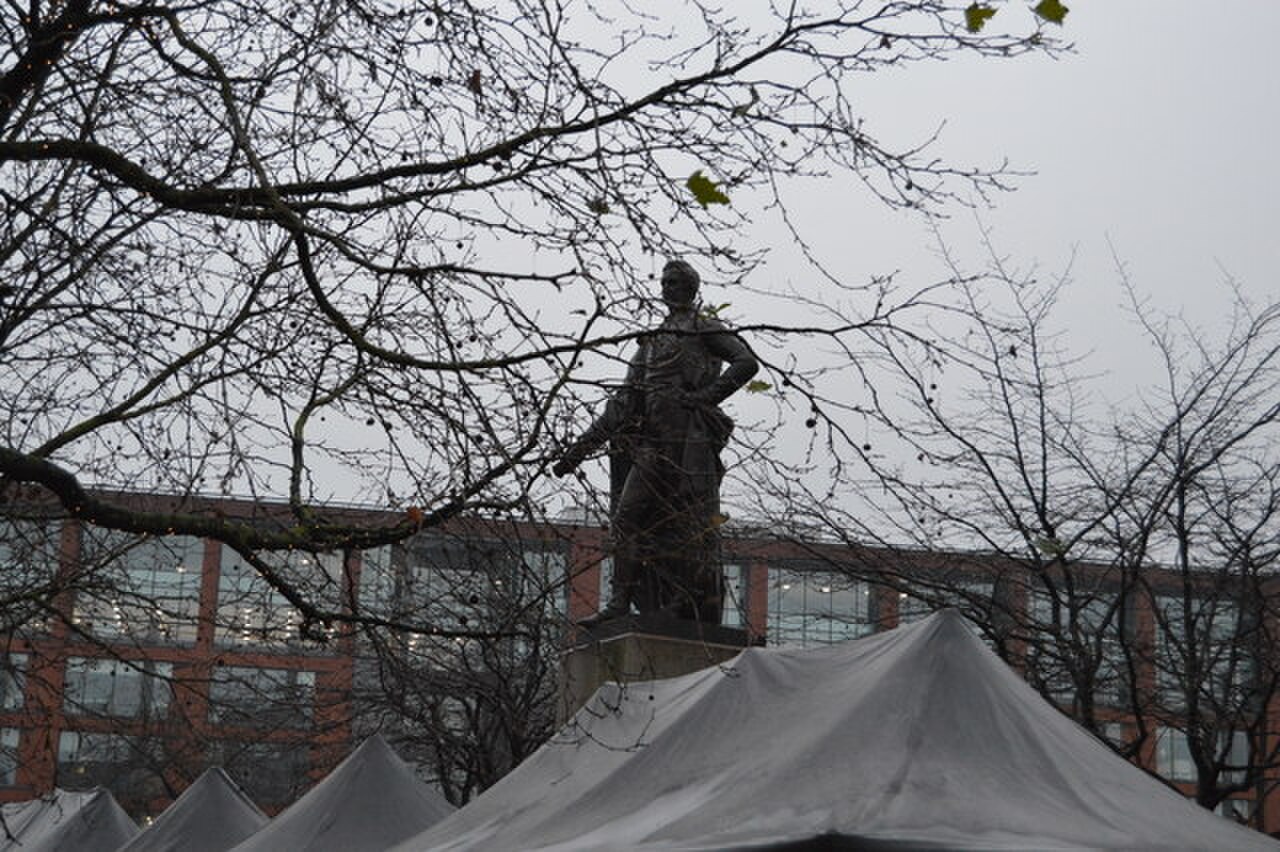
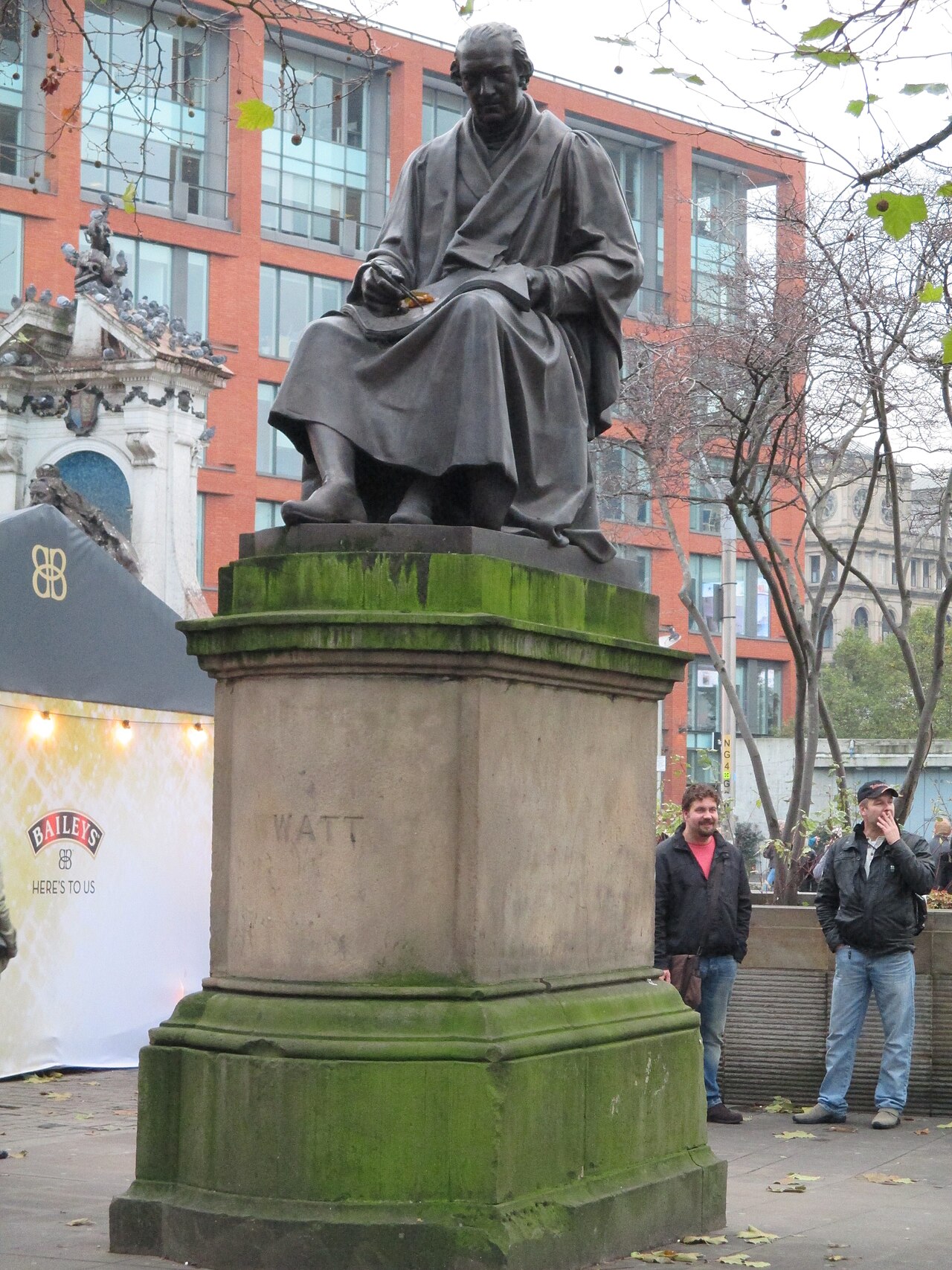
The Peel Statue can be photographed from the surrounding public area. A wider composition places the monument within Manchester’s streetscape and shows how Victorian civic commemoration shares space with the modern city. Closer views can focus on the figure, pedestal and inscription. Daylight gives the clearest detail, while cloudy conditions soften shadows on the sculptural surface. Passing people, street furniture and signs may enter the frame. Keep your position compact, especially when using a larger camera, so pedestrians can continue through the area.
Checked 2026-08-26 · Source
The Peel Statue is an outdoor monument in Manchester’s public urban space.
As an outdoor public sculpture, the statue can be approached throughout the day without an enclosed entrance schedule.
No. Viewing the monument is free because it stands in Manchester’s public realm.
Most visitors spend about five to fifteen minutes viewing the figure, reading any inscription and taking photographs.
Manchester Piccadilly and Victoria stations, Metrolink trams, buses and central walking routes connect travellers with the surrounding city-centre area.
The statue commemorates Sir Robert Peel, a nineteenth-century British Prime Minister associated with establishing the modern police force.
Loading the interactive map…
The interactive map could not be loaded.
Last updated:
Source: OpenStreetMap contributors, Wikidata ·