
1 min walk
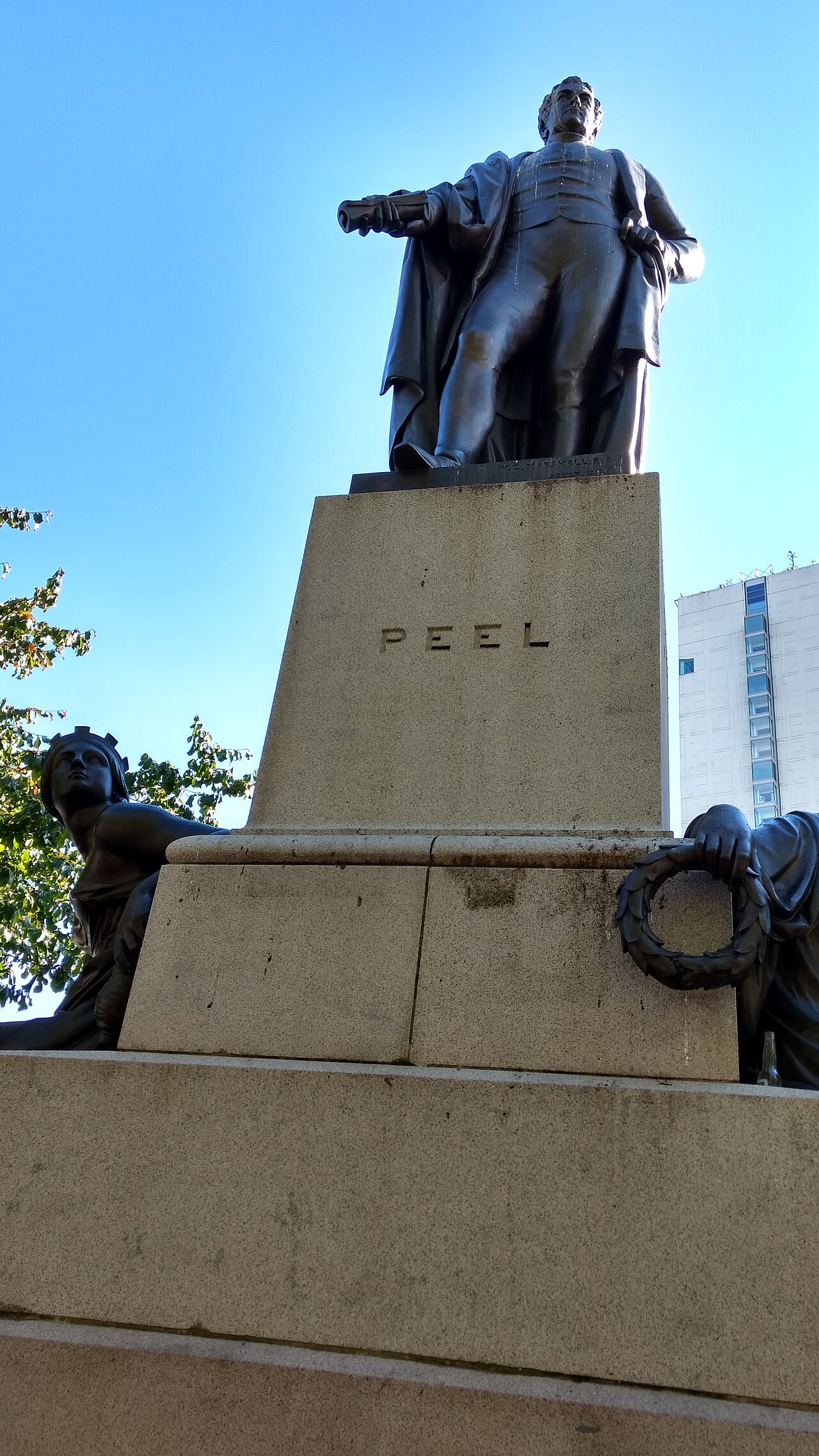
Peel Statue
- High · Heritage site
- Art and culture venue
Nature site · Manchester
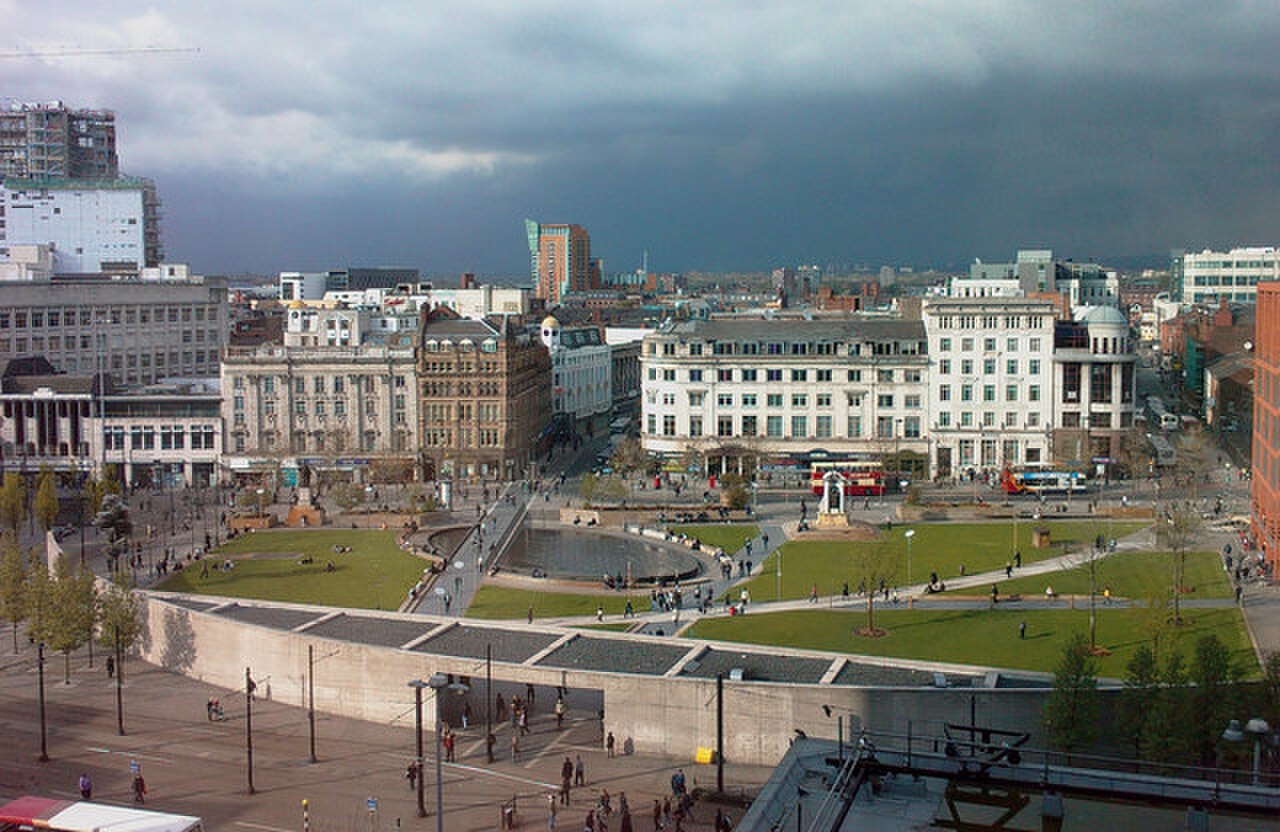
Piccadilly Gardens is a central public green space and transport interchange in Manchester. It links Manchester Piccadilly station with the city’s retail core and serves as a meeting point, rest area and route through the centre. The space combines landscaped planting, paved pedestrian areas and a central water feature, reflecting its mixed role as a garden and an urban transit plaza. Several redesigns have shaped its present form. Visitors generally encounter Piccadilly Gardens as part of a wider city walk rather than as a stand-alone attraction. Its importance comes from its position in Manchester’s everyday city-centre movement.
Checked 2026-08-26 · Source
The gardens contain planted areas, trees, paved pedestrian zones, seating and a central water feature. A concrete pavilion provides some shelter, while surrounding commercial buildings and food outlets keep the area connected to the city’s busy centre. Metrolink platforms and waiting areas occupy part of the space, so trams form part of the visual and practical character of the gardens. The greenery is modest rather than park-like, with hard surfacing covering much of the site. Use the seating for a short pause, watch the movement around the interchange and continue into the retail streets or towards Manchester Piccadilly station.
Checked 2026-08-26 · Source
Ten to fifteen minutes is enough for a transit connection, a short rest or a quick look at the garden, pavilion and water feature. If you sit down or buy food from a nearby outlet, allow around thirty minutes. Piccadilly Gardens does not have a structured visitor route or a large collection of sights, so extended time is rarely necessary on its own. Most travellers use it as a central link between Manchester Piccadilly station, the shopping district and nearby streets. Include it within a broader city-centre walk and let the gardens provide a pause between more substantial attractions.
Checked 2026-08-26 · Source
Piccadilly Gardens is public open space, so it functions as a through-route at any time. Daytime is the most natural period for a relaxed pause, when transport connections, shops and surrounding streets are active. Weather affects the experience because shelter is limited, while warmer months make the planted areas and seating more inviting. Rush hours and city events bring heavier foot traffic. After dark, the atmosphere changes with lower natural light and different patterns of movement, so choose the timing that suits your comfort and route. The gardens are most useful when visited as part of a daytime Manchester itinerary.
Checked 2026-08-26 · Source
There is no admission charge for Piccadilly Gardens because it is public open space. The Metrolink services within the interchange require their own transport fare, and nearby food outlets charge separately for anything you buy. No ticket is needed to sit, walk through the gardens or view the public water feature and pavilion. Use the site as a free pause in a city-centre route, while treating tram travel and refreshments as separate expenses. The space connects several paid and unpaid parts of Manchester, so its main value for travellers is convenience and orientation rather than a ticketed programme.
Checked 2026-08-26 · Source
Manchester Piccadilly railway station stands immediately east of Piccadilly Gardens, making the space a natural first or last stop for rail travellers. The gardens have their own Metrolink stop, with tram routes serving destinations across Greater Manchester, including Bury, Ashton-under-Lyne, Eccles and Manchester Airport connections. Bus services use the surrounding city-centre streets. Walking from the retail core is straightforward, while routes from Manchester Victoria cross the central shopping area. There is no dedicated car park in the gardens themselves; drivers need to use city-centre parking and walk from there.
Checked 2026-08-26 · Source
Piccadilly Gardens is an open, busy urban interchange, so keep bags and phones secure in crowded periods. Watch carefully for trams and remain alert around the tracks and platforms. The water feature can create slippery surfaces, while limited shelter leaves you exposed to Manchester rain and wind. Rush hours may make crossing the gardens slower. The atmosphere changes between daytime and evening, and some visitors may encounter persistent begging. Treat the gardens as a transport hub as well as a green space: stay aware of vehicles, moving crowds and your onward route, particularly when travelling with children or luggage.
Checked 2026-08-26 · Source
The gardens offer simple urban photographs built around the central water feature, concrete pavilion, planted areas and tram movement. Surrounding buildings, including the London Road Fire Station and commercial facades, provide context for the space’s position in Manchester. Daylight brings softer detail to the greenery, while evening views emphasise movement and artificial light. Photograph from public areas and stay clear of tram platforms and pedestrian flows. Night photography requires the same awareness as any busy transport interchange. The site is better suited to documenting city life and changing activity than to grand architectural compositions, so use people, trams and surrounding buildings to create scale.
Checked 2026-08-26 · Source
Yes. Walking through, sitting in and viewing the public gardens costs nothing; tram travel and nearby purchases are separate.
It functions as a public garden, pedestrian meeting point and major transport interchange beside Manchester Piccadilly station.
Allow ten to fifteen minutes for a pause or connection, or around thirty minutes if you sit or buy food nearby.
Manchester Piccadilly station is beside the gardens, and the Piccadilly Gardens Metrolink stop and nearby buses connect across the city region.
The space includes planted areas, paved pedestrian zones, seating, a central water feature, a concrete pavilion and Metrolink platforms.
Pay attention to trams, crowded pedestrian flows, wet surfaces around the water feature and changing conditions after dark.
Loading the interactive map…
The interactive map could not be loaded.
Last updated:
Source: OpenStreetMap contributors, Wikidata ·