

5 min walk
The Specimen Jar
- Notable
- Art and culture venue
Language · 11 published
Museum · Sydney
Reviewed by Elena Voss · Roavina Travel Editor
| Monday | 10:00 – 16:00 |
|---|---|
| Tuesday | Closed |
| Wednesday | Closed |
| Thursday | Closed |
| Friday | Closed |
| Saturday | Closed |
| Sunday | 10:00 – 16:00 |
Parsed from OpenStreetMap opening hours on 2026-09-09.
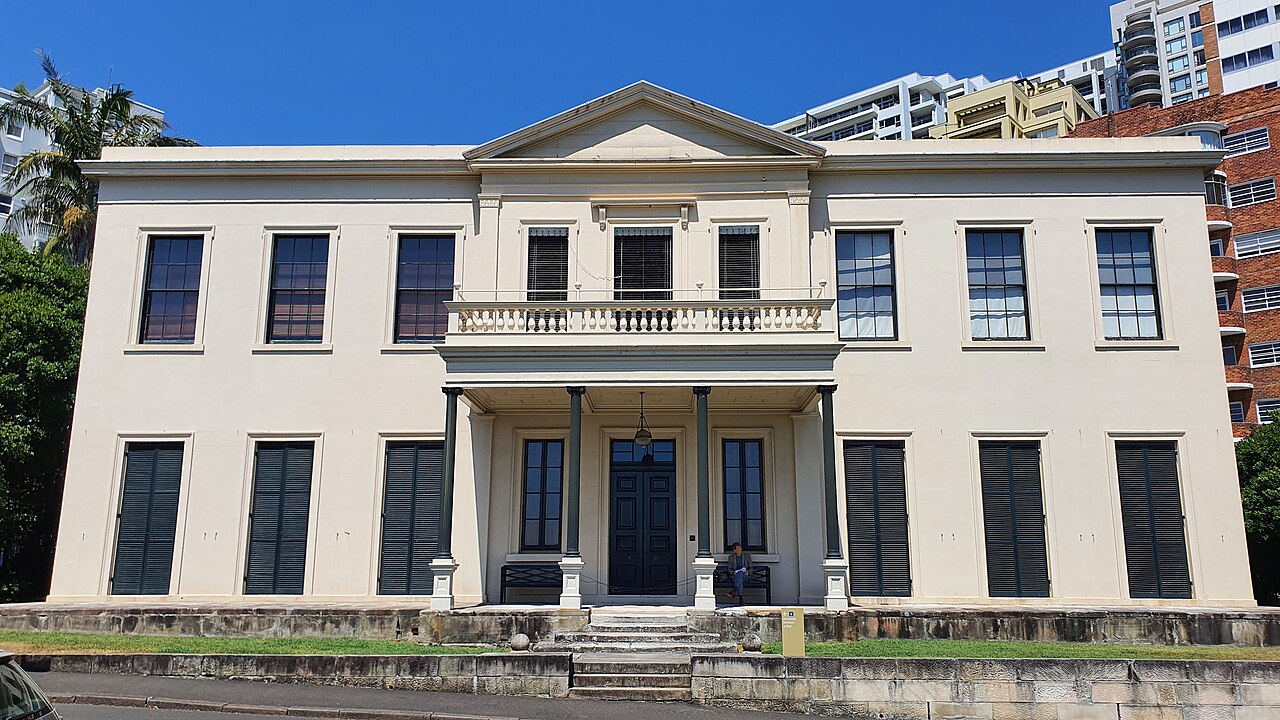
This place is a Museum. It was established in 1839. It was built in the Neoclassical architecture style. It was designed by John Verge. It carries the Heritage Act — State Heritage Register heritage designation. It is run by Museums of History NSW.
Elizabeth Bay House is an 1830s colonial residence built for Alexander Macleay, the colony’s colonial secretary, in Sydney’s inner east. Its identity comes from the house itself: an ambitious domestic design with a sweeping staircase, an oval central space and rooms arranged to express the status of a wealthy nineteenth-century household. The setting adds another layer, linking the preserved interior with Elizabeth Bay’s harbour-side streets and the neighbouring character of Potts Point. This is a focused heritage visit centred on architecture, domestic life and the Macleay family’s place in early colonial Sydney.
Checked 2026-09-02 · Source
Begin with the central staircase and the oval-shaped central space, then slow down in the principal rooms. Decorative plasterwork, fireplaces, polished timber, period furnishings and carefully proportioned transitions reveal how the residence was designed for both display and everyday movement. Look through doorways for changing sightlines, and notice how ceiling finishes and room-to-room connections establish a sense of ceremony. Interpretation adds context about domestic use and nineteenth-century Sydney, while the garden and harbour-side setting help explain why this house was such a distinctive expression of colonial wealth and confidence.
Checked 2026-09-02 · Source
Allow about 60 to 90 minutes for the house at an unhurried pace. That gives enough time to move through the principal rooms, read the interpretation and examine the staircase, decorative finishes and surviving domestic details without rushing. Visitors interested in colonial architecture, Alexander Macleay, the Macleay family or the social history of nineteenth-century Sydney may want longer. Add time for the garden and surrounding Elizabeth Bay streets, or for a guided programme and any organised activity that changes the normal pace through the rooms. Architecture enthusiasts may spend extra time comparing the oval planning with the more formal sequence of adjoining rooms, while visitors focused on family history may prefer to pause with the interpretation.
Checked 2026-09-02 · Source
A quieter opening makes it easier to study the staircase, plasterwork and room proportions, while the inner-city location makes Elizabeth Bay House simple to pair with Potts Point or Woolloomooloo. Weather matters less inside than at an outdoor heritage site, although time in the garden is more exposed. The house’s compact rooms reward an unhurried pace, especially when a guided component or organised activity adds historical detail. Visitors interested in the Macleay family can shape the visit around the residence, garden and surrounding Elizabeth Bay streetscape rather than treating the house as an isolated interior.
Checked 2026-09-02 · Source
Admission is tied to the particular programme, guided activity or event through which Elizabeth Bay House is presented. The format may shape whether access is arranged as a tour, an event booking or another scheduled activity. The house works best as a planned heritage stop alongside Potts Point or Woolloomooloo, with enough flexibility to accommodate the structure of the day’s programme. Its architectural detail, domestic setting and Macleay family history provide the central value of the visit, whatever form the particular opening takes.
Checked 2026-09-02 · Source
Elizabeth Bay House is in Sydney’s inner-eastern Elizabeth Bay, near Potts Point and within walking distance of Kings Cross railway station on the Eastern Suburbs line. Buses run on nearby arterial routes. From the central business district, you can walk through Woolloomooloo or Potts Point, but the area’s slopes may make that approach tiring. On-street parking is limited in established residential streets, so driving is not the easiest option. Cyclists should expect changing gradients and plan secure parking or an onward walk. With luggage or a pushchair, assess the final approach as well as the station distance.
Checked 2026-09-02 · Source
Elizabeth Bay House is a historic residence, so movement through it differs from a modern museum. Historic stairs, thresholds, narrow passages and uneven outdoor surfaces can affect the rhythm of the visit, while the domestic scale creates tighter circulation than a purpose-built gallery. Children should be supervised around historic fabric and display areas. Follow visitor-flow instructions around staircases and fragile finishes, and allow patience when a guided programme or special opening brings several visitors through the same rooms. Doorways, pauses and viewpoints may be shared rather than encountered in isolation.
Checked 2026-09-02 · Source
The staircase, decorated rooms and Elizabeth Bay setting offer strong subjects for personal photography. In the compact historic interior, pause in wider areas and keep circulation routes clear. Respect barriers, fragile finishes and other visitors, especially during a guided programme or a busy special opening. Exterior views and garden details provide a useful second perspective on the house, showing how the residence sits within Elizabeth Bay rather than reducing the visit to individual decorative features. Inside, compose from permitted positions and avoid blocking stairways, doorways or sightlines for visitors moving through the same sequence of rooms.
Checked 2026-09-02 · Source
Elizabeth Bay House is visited through its programme, special opening or event rather than a dependable daily interior visit. The house’s compact rooms and guided activities make the particular opening date important to the experience.
Kings Cross railway station on the Eastern Suburbs line is within walking distance, and buses run on nearby arterial routes. Walking from the CBD through Woolloomooloo or Potts Point is possible, although the area’s slopes are worth allowing for.
Admission depends on the particular programmed opening, guided activity or event. The arrangement may be a tour, an event booking or another scheduled form of access, so the day’s programme determines how the visit is organised.
Allow about 60 to 90 minutes for the house. Add time to study the architecture and Macleay family history closely, explore the garden and surrounding Elizabeth Bay streets, or join a guided programme.
The historic residence includes stairs, thresholds, narrow passages and uneven outdoor surfaces that may make movement difficult. The approach also includes slopes, so visitors with mobility limitations should consider the full route from transport to the house.
Follow posted instructions and staff directions for indoor photography. Flash, tripods and commercial photography require permission, while compact circulation routes should remain clear around the staircase, doorways and decorated rooms.
Loading the interactive map…
The interactive map could not be loaded.
Last updated:
Source: OpenStreetMap contributors, Wikidata ·