
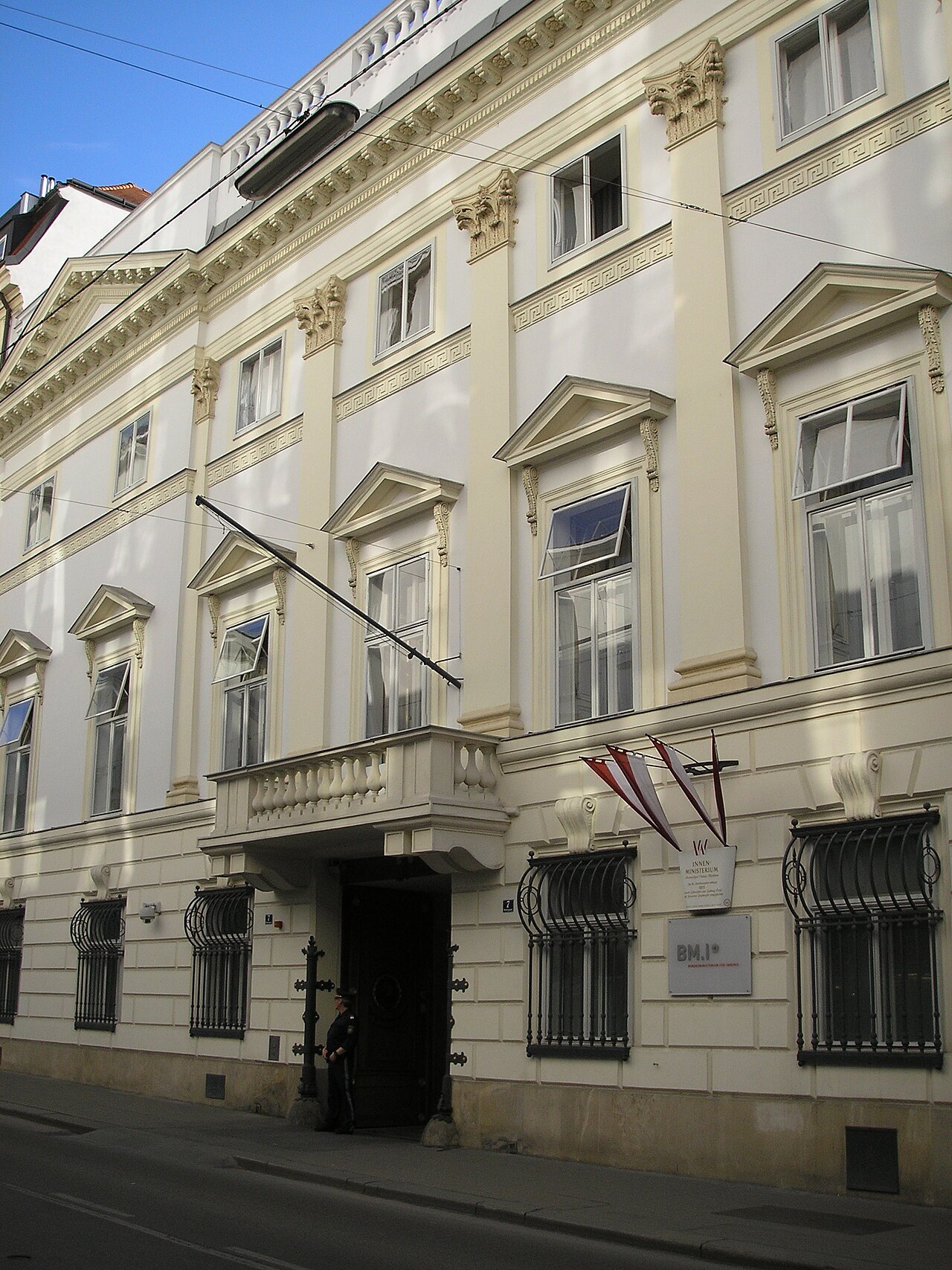
1 min walk · Innere Stadt
Palais Modena
- Must see · Heritage site
- Historic monument
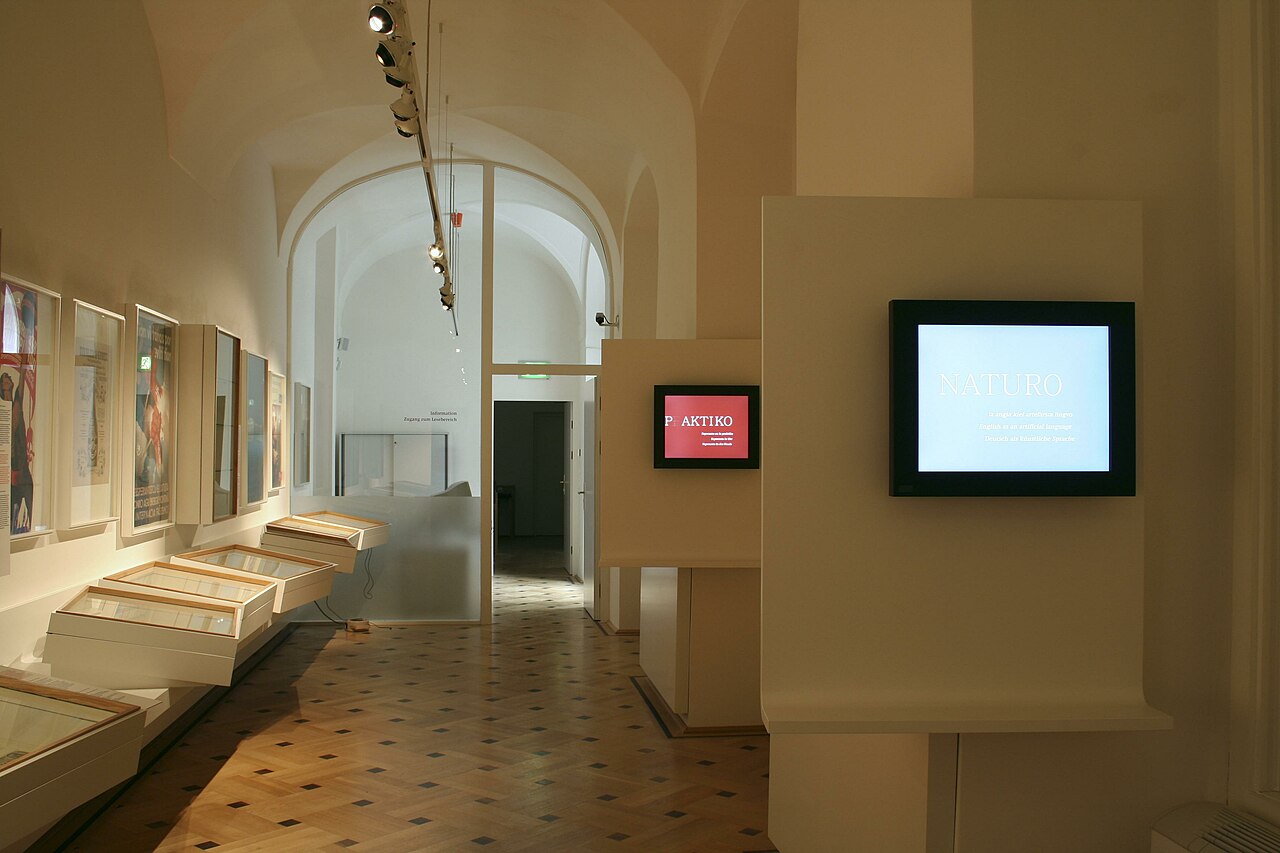
Museum · Innere Stadt, Vienna
Esperantomuseum
| Monday |
10:00 – 18:00
Valid 2026-06-01 – 2026-09-30 |
|---|---|
| Monday |
Closed
Valid 2026-10-01 – 2027-05-31 |
| Tuesday |
10:00 – 18:00
Valid 2026-06-01 – 2026-09-30 |
| Tuesday |
10:00 – 18:00
Valid 2026-10-01 – 2027-05-31 |
| Wednesday |
10:00 – 18:00
Valid 2026-06-01 – 2026-09-30 |
| Wednesday |
10:00 – 18:00
Valid 2026-10-01 – 2027-05-31 |
| Thursday |
10:00 – 21:00
Valid 2026-06-01 – 2026-09-30 |
| Thursday |
10:00 – 21:00
Valid 2026-10-01 – 2027-05-31 |
| Friday |
10:00 – 18:00
Valid 2026-06-01 – 2026-09-30 |
| Friday |
10:00 – 18:00
Valid 2026-10-01 – 2027-05-31 |
| Saturday |
10:00 – 18:00
Valid 2026-06-01 – 2026-09-30 |
| Saturday |
10:00 – 18:00
Valid 2026-10-01 – 2027-05-31 |
| Sunday |
10:00 – 18:00
Valid 2026-06-01 – 2026-09-30 |
| Sunday |
10:00 – 18:00
Valid 2026-10-01 – 2027-05-31 |
Parsed from OpenStreetMap opening hours on 2026-09-09.
Read from the OpenStreetMap access tags; anything not listed has no tag recorded.
Set the group type to family in the planner and the day window contracts to about three quarters of a solo day.
The Esperantomuseum, formally the Department of Planned Languages and Esperanto Museum, is a small collection inside the Austrian National Library devoted to constructed languages — Esperanto foremost, but also Volapük, Ido and dozens of smaller projects.
It opened in 1927 as a stand-alone Esperanto museum, the first of its kind, and was absorbed into the Austrian National Library's holdings in 1929; it now occupies rooms in the Palais Mollard on Herrengasse rather than the library's main Hofburg building.
The collection holds books, journals, correspondence and objects documenting more than 500 planned-language projects, making it the largest specialised archive of its kind anywhere.
Checked 2026-08-24 · Source
A permanent exhibition on why languages get invented, and a reading room for the collection behind it.
The display walks through the history of planned languages from early philosophical schemes for a universal grammar, through Volapük's brief nineteenth-century popularity, to Esperanto's invention by L. L. Zamenhof in 1887 and its subsequent spread.
Objects on show include early Esperanto textbooks, congress memorabilia and correspondence from Zamenhof and later Esperantists, alongside material from rival and successor projects such as Ido and Interlingua.
The museum shares its building, the Palais Mollard, with the library's Globe Museum, another small specialised collection.
Checked 2026-08-24 · Source
Thirty to forty-five minutes for the exhibition itself, longer for anyone using the reading room.
The display occupies a modest set of rooms and is read rather than walked through at length, so most visitors are through it inside three-quarters of an hour.
Combining it with the Globe Museum in the same building, and possibly the Mollard palace's other small collections, turns the visit into a fuller morning.
Checked 2026-08-24
Any weekday during opening hours; this is not a place with a season or a crowd to avoid.
As a small specialised museum inside a library building, it sees a fraction of the footfall of the nearby Hofburg sights, and there is no particular time of day that is noticeably quieter than another.
Exact opening days and hours were not confirmed against the operator's own page for this entry; check the Austrian National Library's site before visiting.
Checked 2026-08-24
The museum is separately ticketed from the Austrian National Library's main State Hall, with its own reduced-rate categories.
Current admission prices are not published on the sources this page uses and are not reproduced here.
A combined ticket covering the Esperantomuseum and the Globe Museum, both housed in Palais Mollard, is sold at the same desk rather than requiring two separate purchases.
Checked 2026-08-24
Palais Mollard, Herrengasse 9, in the Innere Stadt, a short walk from the Hofburg and Michaelerplatz.
Herrengasse U-Bahn station, on line U3, sits almost directly outside; several tram lines on the Ring are a few minutes' walk away.
The palace is easy to pass without noticing — a plain city-centre façade rather than a monumental one — and the entrance is easiest found by looking for the Austrian National Library's own signage.
The main Austrian National Library building and its baroque State Hall are a separate walk across the Hofburg complex, not the same entrance as this smaller museum.
Checked 2026-08-24 · Source
This is a reading-heavy museum: the objects are mostly books, letters and print, and a visitor expecting large interactive displays will find a quieter room than the name promises.
The Globe Museum shares the building and is easy to combine, but the two have separate entries within the same ticket structure at times, worth checking at the desk.
There is little signage in English inside a museum built around language itself, which is a mild irony worth being ready for.
The rooms are small, so a school group or a tour party passing through can fill the space noticeably more than the same numbers would at a larger museum.
Checked 2026-08-24
The subject is documents rather than architecture — congress badges, handwritten letters, small printed grammars — and close, well-lit shots of individual objects work better than any wide shot of the room.
Palais Mollard's own street façade on Herrengasse is a modest baroque frontage, easily photographed from across the narrow street.
Flash photography of paper and ink objects is the kind of thing library collections generally restrict; checking with staff before shooting close-ups is the safer approach.
The glass display cases reflect the room's overhead lighting, so a slight angle to the case rather than a straight-on shot avoids most of the glare.
Checked 2026-08-24
A collection inside the Austrian National Library devoted to constructed languages, Esperanto foremost, with objects from more than 500 planned-language projects.
As a stand-alone museum in 1927, then absorbed into the Austrian National Library's holdings in 1929.
Palais Mollard, Herrengasse 9 in the Innere Stadt, a short walk from the Hofburg, not the library's main building.
L. L. Zamenhof, in 1887; the museum's collection documents Esperanto's spread alongside rival projects such as Volapük and Ido.
Yes, the Globe Museum shares Palais Mollard and a combined ticket is sold at the same desk.
Thirty to forty-five minutes for the exhibition; longer for anyone using the reading room.
Loading the interactive map…
The interactive map could not be loaded.
Last updated:
Source: OpenStreetMap contributors, Wikidata ·