.JPG)
1 min walk · Innere Stadt
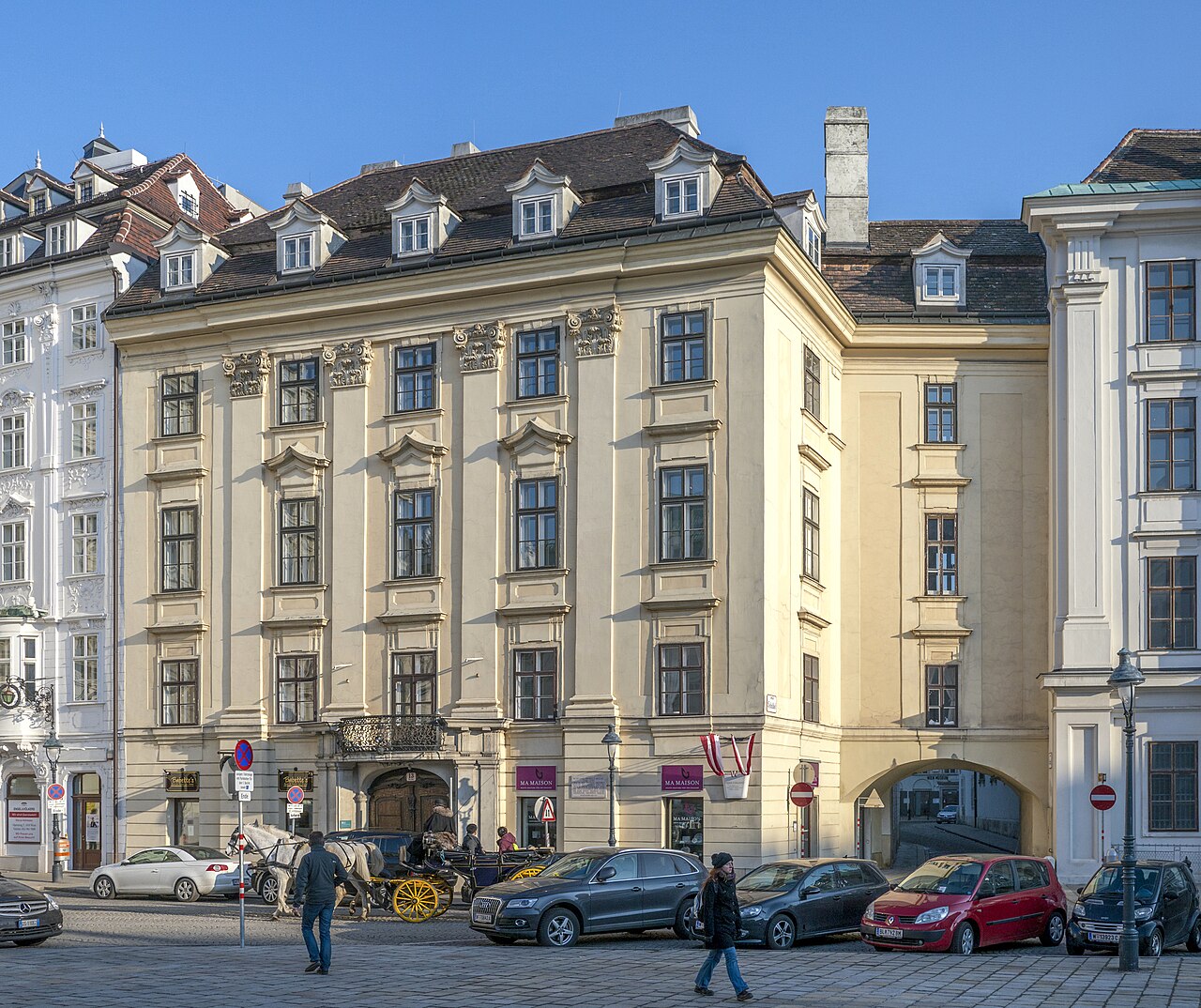
Palais Collalto
- High · Heritage site
- Historic monument
Language · 11 published
Historic monument · Innere Stadt, Vienna
Holocaust-Mahnmal
Reviewed by Elena Voss · Roavina Travel Editor
Read from the OpenStreetMap access tags; anything not listed has no tag recorded.
Set the group type to family in the planner and the day window contracts to about three quarters of a solo day.
This place is a Memorial. It opened in 2000. It is built of reinforced concrete. It carries the Listed objects in Austria heritage designation.
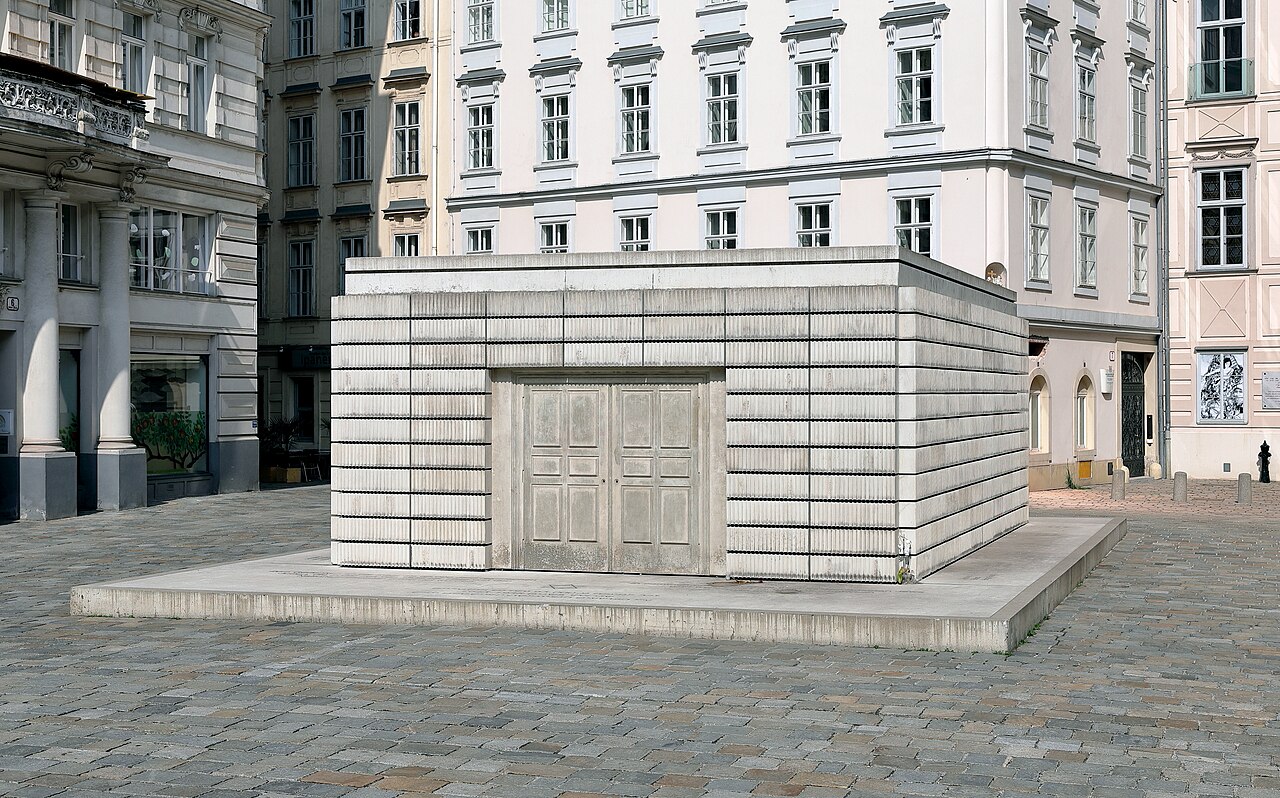
The Judenplatz Holocaust Memorial is a sealed concrete sculpture by the British artist Rachel Whiteread, unveiled on 25 October 2000 on Judenplatz in the Innere Stadt. It commemorates the roughly 65,000 Austrian Jews murdered in the Holocaust, and it stands on the site of a medieval synagogue that was destroyed in 1421 during the pogrom known as the Vienna Gesera.
Whiteread's design, often called the Nameless Library, is a cast concrete cube the size of a small room, its outer walls formed from casts of library shelving turned so that the books' spines face inward and their cut page-edges face out, and its double doors cast without handles. The names of the concentration camps and killing sites where Austrian Jews were murdered are inscribed in a band around the memorial's base.
It is one of a small number of Holocaust memorials worldwide designed around an absence rather than a figure or a name-list, and it sits at the centre of Judenplatz alongside the excavated remains of the medieval synagogue it commemorates, which are shown separately in the adjoining Museum Judenplatz.
Checked 2026-08-24 · Source
The memorial cannot be entered — this is the point of the design rather than an access limitation. Whiteread cast the interior surfaces from real library shelves stocked with books, then took the negative of that cast in concrete, so the space a visitor would expect to find inside a library is instead a solid, sealed volume: the shape of a room-sized library rendered permanently unreadable and permanently unenterable, standing for the destroyed community and its lost, unnamed books and lives. The double doors on one face are cast shut with no handles, reinforcing that the memorial is a monument to be read from outside, never a room to walk into.
Checked 2026-08-24 · Source
Reading the memorial from the square — the inscribed base, the cast shelving on all four sides, the sealed doors — takes ten to fifteen minutes for a visitor who also reads the plaques on Judenplatz around it. A visit that adds the excavated medieval synagogue in the adjoining Museum Judenplatz runs to a further thirty to forty-five minutes.
Checked 2026-08-24 · Source
The memorial stands in an open public square and can be seen at any hour of the day or night; Judenplatz is unticketed, unfenced open space. Early morning or evening, when the square is quiet, gives the most reflective visit, since it is a memorial rather than a sight to be seen quickly between other stops. The adjoining Museum Judenplatz keeps its own separate opening days and hours, tied to the wider Jewish Museum Vienna's calendar, and closes on Jewish holidays — plan that part of the visit around its own schedule rather than the memorial's unrestricted access.
Checked 2026-08-24 · Source
There is no admission fee for the memorial itself, because it is a freestanding sculpture in a public square with nothing to be admitted to. The adjoining Museum Judenplatz, which holds the excavated foundations of the destroyed medieval synagogue, is a separate, ticketed part of the Jewish Museum Vienna, and this guide does not record its current admission price here since it was not verified against the museum's own page at the time of writing.
Checked 2026-08-24 · Source
Judenplatz sits in the Innere Stadt, a short walk from Herrengasse station on the U3 and from the Stephansplatz station on the U1 and U3, both within a five- to ten-minute walk through the pedestrian streets of the old city. No dedicated transport stop serves the square directly, which is typical for this part of central Vienna.
Checked 2026-08-24 · Source
Judenplatz is a memorial site and the square around it, including a statue of the playwright Gotthold Ephraim Lessing, functions primarily as a place of remembrance rather than a general tourist plaza — quiet, respectful behaviour is expected around the memorial itself. A visitor expecting to walk inside the structure will be disappointed by design: the sealed doors are the point, not a fault. The Museum Judenplatz entrance is separate from the memorial and easy to walk past without noticing if it is not specifically sought out.
Checked 2026-08-24 · Source
The cast bookshelf texture reads most clearly in raking light, early or late in the day, when the repeated ridges of the book-spine casts throw shadow across the concrete surface; flat midday light on the plain grey concrete photographs comparatively flat. The inscribed base naming the camps is worth its own close shot rather than only the wide view of the cube.
Checked 2026-08-24 · Source
No. It is a sealed concrete sculpture with doors cast shut and no handles — the sealed, unenterable form is the artist's intended statement, not a closure or a restriction that could be lifted.
The British artist Rachel Whiteread designed it; it was unveiled on 25 October 2000 on Judenplatz.
Because its outer walls are cast from library shelving with the books' spines turned inward, so the shelves appear from outside as rows of blank, unreadable page-edges — a library that cannot be read, standing for the community and the lives destroyed.
No. The memorial commemorates the Holocaust and stands above the site of a medieval synagogue destroyed in 1421; the excavated remains of that earlier synagogue are shown separately, and ticketed, in the adjoining Museum Judenplatz.
No, the memorial stands in an open public square with no admission fee; only the adjoining Museum Judenplatz, a separate site, is ticketed.
A band around the base names the concentration camps and killing sites where Austrian Jews were murdered.
Loading the interactive map…
The interactive map could not be loaded.

Last updated:
Source: OpenStreetMap contributors, Wikidata ·