
1 min walk · Innere Stadt
Stylit
- Notable
- Historic monument
Museum · Innere Stadt, Vienna
Museum für Angewandte Kunst
| Monday | Closed |
|---|---|
| Tuesday | 10:00 – 21:00 |
| Wednesday | 10:00 – 18:00 |
| Thursday | 10:00 – 18:00 |
| Friday | 10:00 – 18:00 |
| Saturday | 10:00 – 18:00 |
| Sunday | 10:00 – 18:00 |
Checked 2026-08-31 · Source
| Per person | €19.00 |
|---|
Checked 2026-08-31 · Source
Read from the OpenStreetMap access tags; anything not listed has no tag recorded.
Set the group type to family in the planner and the day window contracts to about three quarters of a solo day.
The MAK was the first museum of its kind on the continent, and it was founded to improve manufacturing.
It was established on 7 March 1863 as the Imperial Royal Austrian Museum of Art and Industry, under Franz Joseph I, and opened to the public on 12 May 1864 in the Ballhaus near the Hofburg.
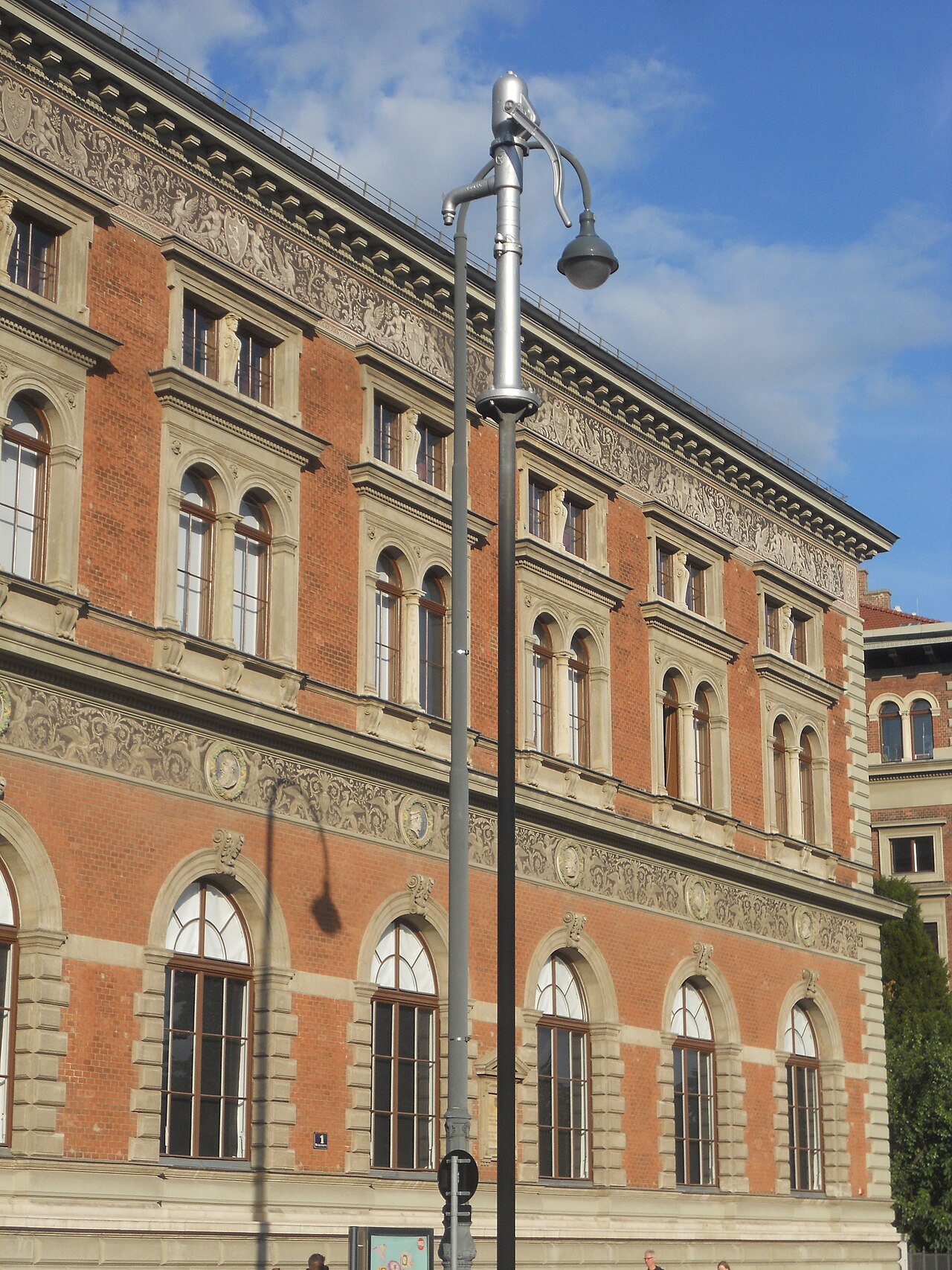
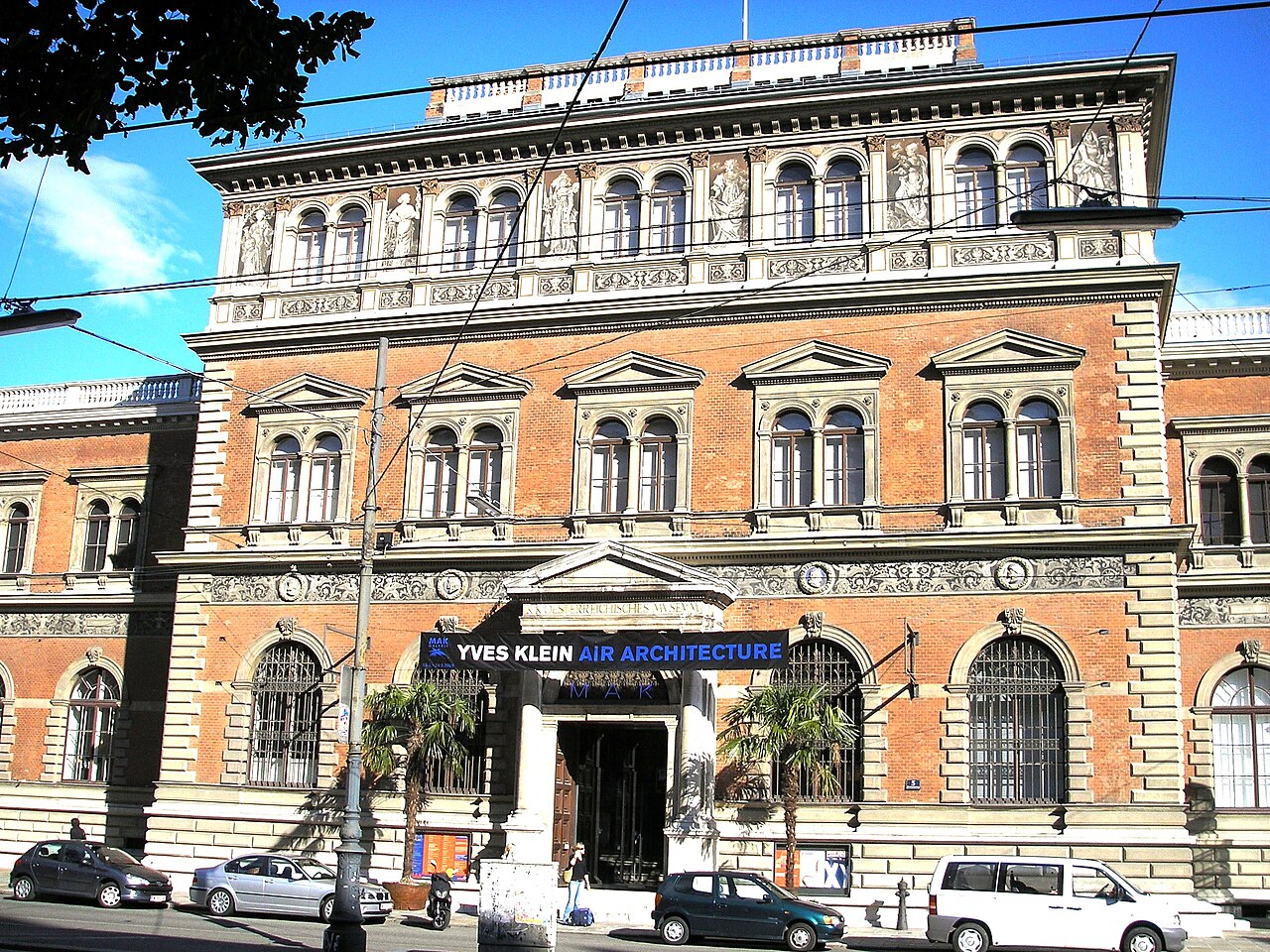
Heinrich von Ferstel's neo-Renaissance building at Stubenring 5 opened on 15 November 1871 — the first museum building on the Ringstrasse. An extension followed at Weiskirchnerstraße 3 in 1908 and a major renovation was completed in 1993.
James Turrell's permanent installation MAKlite has lit the façade since 2004.
Checked 2026-08-23 · Source
The Wiener Werkstätte, Thonet chairs, and Klimt's working drawings.
Gustav Klimt's cartoons for the Stoclet Palace frieze are here — the full-size working drawings for a mosaic in Brussels that most people will never see, which makes these the closest thing to it.
The Wiener Werkstätte holdings are the reference collection for Viennese design between 1903 and 1932. The Thonet bentwood furniture, the Japanese woodblock prints, the carpets and the Chinese porcelain are each substantial in their own right.
More than 300,000 objects are published online, the largest online collection among the Austrian federal museums.
In 2015 the MAK became the first museum to buy art with bitcoin.
Checked 2026-08-23 · Source
Two hours.
The permanent galleries were redesigned so that a different contemporary artist staged each room, which means the display itself is an exhibit and the rooms do not resemble one another. That is either the best or the most irritating thing about the museum.
The Klimt drawings and the Wiener Werkstätte rooms are the hour that matters.
The Stadtpark is across the Ring and the Postsparkasse, Otto Wagner's masterpiece, is two minutes north.
Anyone following Viennese design through the city should treat the MAK, the Postsparkasse and the Secession as one route; they are the three buildings that argue with each other.
Checked 2026-08-23 · Source
The late-opening evening, when admission has traditionally been reduced or free.
That arrangement is the museum's own and changes; it is worth checking rather than assuming.
The museum closes one day a week.
The galleries are artificially lit and the season makes no difference to what can be seen, which is not true of most Vienna museums.
It is one of the quieter major museums in the city at any hour, and never has the queues the Ring's larger institutions do.
Checked 2026-08-23 · Source
The MAK is ticketed, and has long run a reduced or free evening on one day of the week. Current rates and the current arrangement are not published on the sources this page uses and are not reproduced here.
The MAK Tower in the Arenbergpark, a Second World War flak tower holding part of the contemporary collection, is a separate site with its own limited opening.
Combined tickets across the MAK sites are sold.
Checked 2026-08-23 · Source
The 1st district, at Stubenring 5, on the Ring at the eastern side of the Innere Stadt.
Stubentor on U-Bahn line U3 is at the door and Landstraße on the U3 and U4 is five minutes south. The Ring trams 1 and 2 stop outside.
The U-Bahn has five lines and 109 stations over 83.9 km, running from about 05:00 to 01:00 and all night at weekends.
Checked 2026-08-23 · Source
The artist-staged permanent rooms are deliberately unconventional and some of them show objects in ways that make individual pieces hard to see. This is the museum's policy rather than an accident.
The Klimt Stoclet drawings are fragile works on paper and are not always on display.
The museum closes one day a week and the reduced-price evening arrangement changes.
The MAK Tower in the Arenbergpark is a separate building across the canal with very limited opening.
Photography rules vary by room and by exhibition.
Checked 2026-08-23 · Source
The reading room and the Ferstel staircase are the best interiors and are the pictures that read as a nineteenth-century museum.
The artist-staged galleries photograph as installations rather than as collections, which is either the point or the problem depending on what the photograph is for.
The Thonet chairs, hung in rows against light walls, are the most photogenic objects in the building.
Turrell's MAKlite changes the façade colour after dark and is the reason to walk past at night.
Checked 2026-08-23
The Museum of Applied Arts, founded on 7 March 1863 as the Imperial Royal Austrian Museum of Art and Industry — the first museum of its kind on the continent, set up to improve manufacturing.
Gustav Klimt's full-size working drawings for the Stoclet Palace frieze, and the reference collection of the Wiener Werkstätte.
Each permanent gallery was staged by a different contemporary artist, so the display itself is an exhibit. It is deliberate and it divides opinion.
Heinrich von Ferstel's neo-Renaissance building opened on 15 November 1871 — the first museum building on the Ringstrasse. An extension followed in 1908 and a renovation in 1993.
The museum has long run a reduced or free evening one day a week. The arrangement is its own and changes, so check before relying on it.
A Second World War flak tower in the Arenbergpark holding part of the contemporary collection, on very limited opening, with its own ticket.
Loading the interactive map…
The interactive map could not be loaded.
Last updated:
Source: OpenStreetMap contributors, Wikidata ·