.JPG)
1 min walk · Innere Stadt
Schottenstift
- Notable · Heritage site
- Historic monument
Language · 11 published
Historic monument · Innere Stadt, Vienna
Reviewed by Elena Voss · Roavina Travel Editor
Read from the OpenStreetMap access tags; anything not listed has no tag recorded.
Set the group type to family in the planner and the day window contracts to about three quarters of a solo day.
It was built in the baroque architecture style.
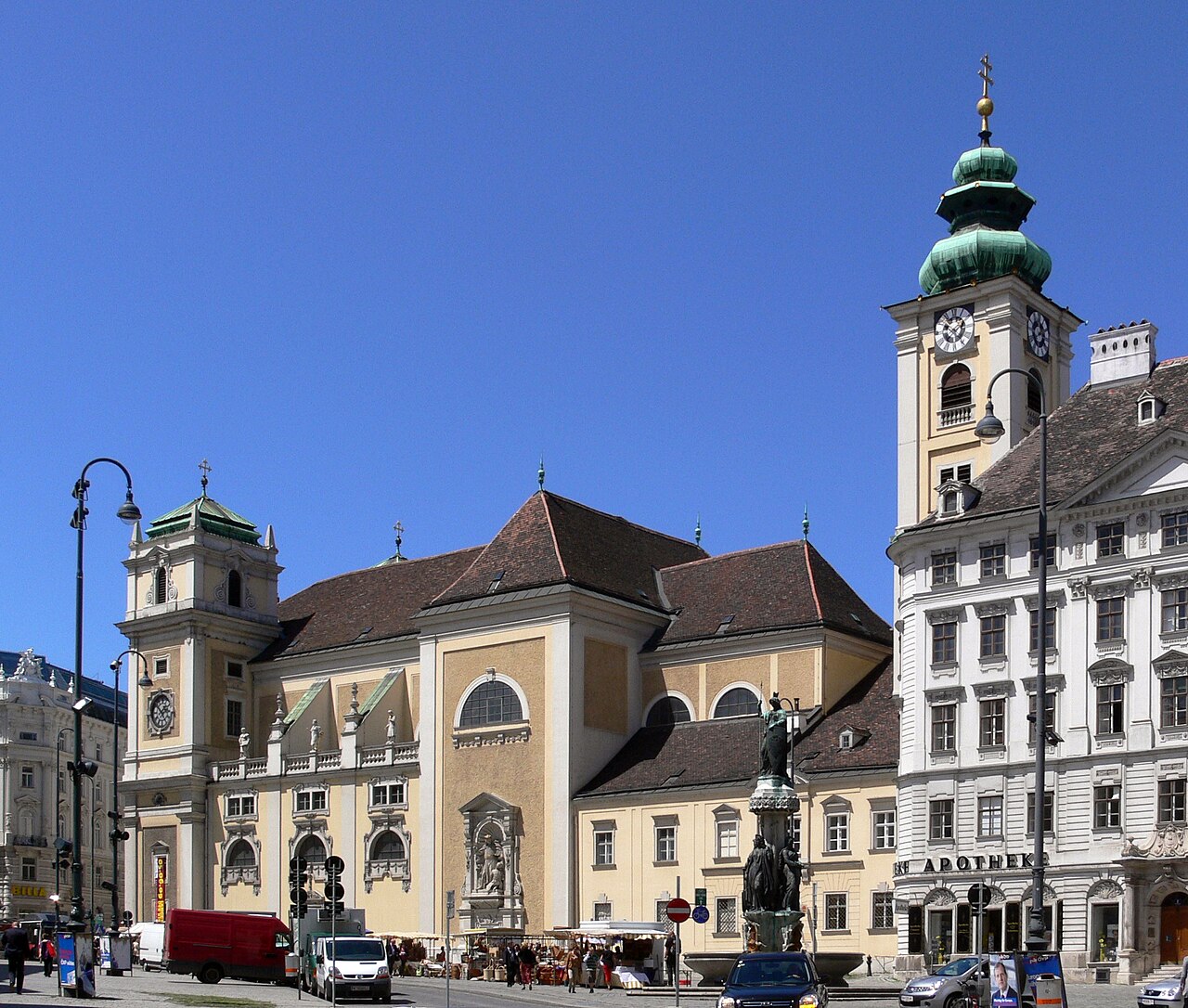
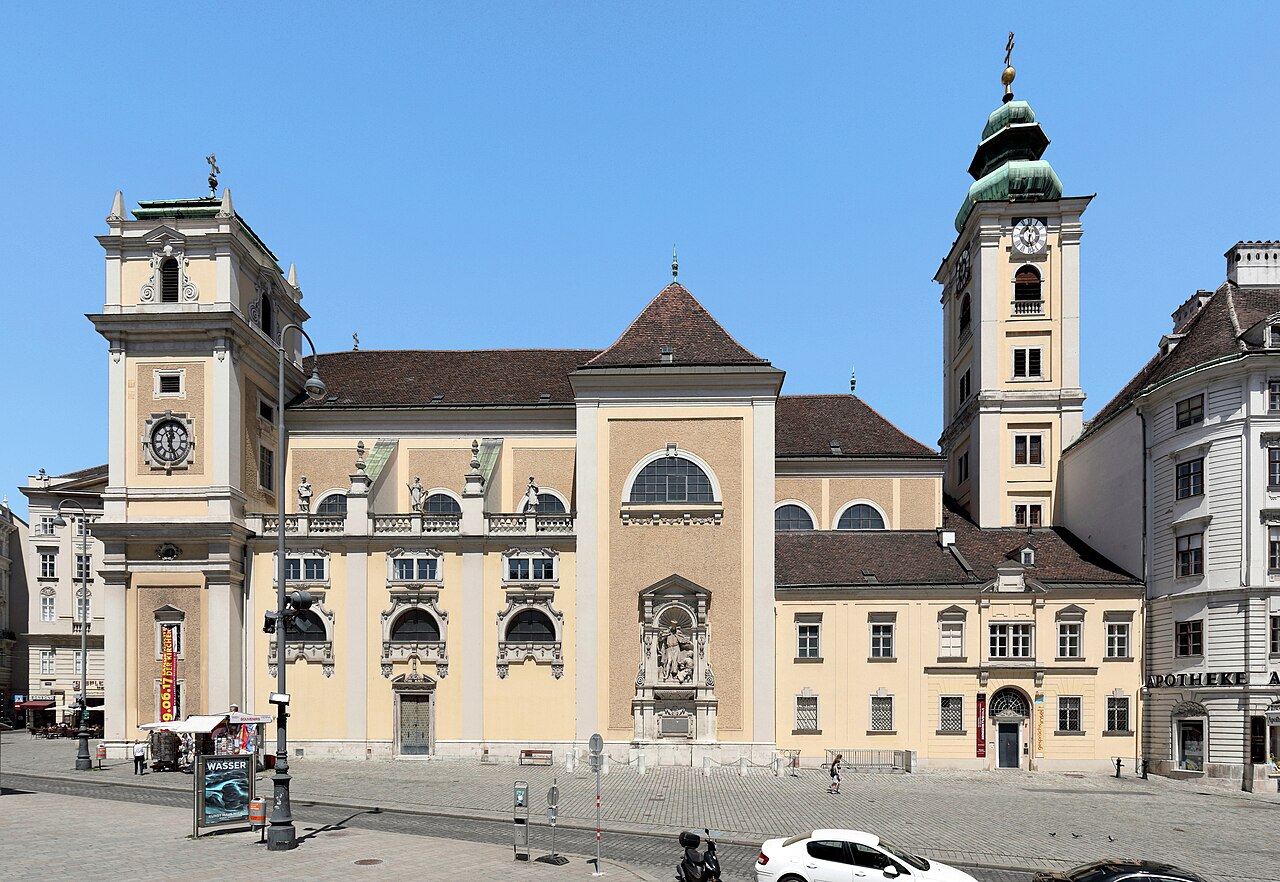
Schottenkirche, the Scots Church, is the abbey church of the Schottenstift, a Benedictine monastery on Freyung in Vienna's Innere Stadt founded in 1155 by Duke Henry II Jasomirgott. Its name is a historical misnomer: the founding monks came from Ireland, not Scotland, since medieval Latin used 'Scotus' for Irishmen before the word narrowed to its modern meaning, and the monastery kept the name after later monastic communities there did become genuinely Scottish. The original Romanesque church was rebuilt repeatedly, most decisively in the seventeenth and eighteenth centuries, so the building standing today is a Baroque church wrapped around a much older foundation, still an active Benedictine house running its own school, the Schottengymnasium, next door. Duke Henry II is himself buried in the church, one of the few Babenberg-era rulers whose grave in central Vienna can be visited today. The monastery's own archive and library, among the oldest continuously held collections in the city, sit behind the church and are not part of any public visiting route, kept for scholarly access rather than display. Freyung, the square in front of the church, took its own name from the right of asylum the monastery once held over the ground in front of it, a medieval legal privilege that no longer applies but that left its trace in the place name.
Checked 2026-08-23 · Source
The nave holds a Baroque high altar and side chapels typical of Vienna's seventeenth-century church rebuildings, in active use for a working parish and monastic community rather than staged as a museum display. The church's best-known artwork, the Schottenmadonna, a Gothic wood-carved Madonna and Child from around 1250, is not usually encountered inside the church itself but is held in the adjoining Museum im Schottenstift, the monastery's separate art collection housed in the same complex and requiring its own paid admission distinct from the church. Duke Henry II's tomb is set into the church itself and is one of the few features that does stay inside the free-entry space.
Checked 2026-08-23 · Source
Fifteen to twenty minutes for the church interior on a self-guided look, including the ducal tomb. The adjoining museum, when visited separately, runs closer to an hour and is priced and timed independently of the church, so a visitor covering both should plan for around ninety minutes in total rather than treating them as a single combined stop.
Checked 2026-08-23 · Source
The church keeps regular opening hours around its daily Mass schedule, typically open through the morning and again in the late afternoon on weekdays, with fuller hours on Sundays around Mass times; Not recorded: the museum's current weekly opening days, which run on a more limited schedule than the church and should be checked against the Schottenstift's own site before a visit built around it.
Checked 2026-08-23 · Source
Free to enter the church itself, as with Vienna's other working parish churches. The Museum im Schottenstift charges a separate admission and keeps separate, more limited hours; a visitor coming specifically for the Schottenmadonna needs the museum ticket, not just the church.
Checked 2026-08-23 · Source
Freyung is a five-minute walk from Herrengasse U-Bahn station on line U3 and from Schottentor station on lines U2 and the Ring tram lines 1, 2, D and 71, which stop directly at Schottentor beside the monastery complex, a short walk from the square itself.
Checked 2026-08-23 · Source
The church is a working place of worship, so a Mass or a wedding in progress takes precedence over sightseeing and quiet, unobtrusive movement is expected during a service. Visitors who arrive expecting the Schottenmadonna inside the church are commonly disappointed to find it is in the adjoining museum instead, which is easy to miss since the museum entrance is a separate door on Freyung rather than a continuation of the church. Freyung's market stalls and the general bustle of the square make the two entrances easy to overlook from a distance, and a visitor unfamiliar with the layout can walk past the museum door without registering it as separate from the church.
Checked 2026-08-23 · Source
Photography inside the church is generally permitted outside of services, without flash, given the low interior light and the altar gilding that flash washes out. The Freyung square outside gives a clean view of the church's Baroque facade, best caught in morning light before the square's market stalls, set up on certain weekdays, crowd the foreground.
Checked 2026-08-23 · Source
Medieval Latin used 'Scotus' for Irishmen; the monastery kept the name after the word's meaning narrowed and after genuinely Scottish monks later took over the community.
No. It is held in the adjoining Museum im Schottenstift, which charges its own admission separate from the free church.
Yes, the church itself is free, as with Vienna's other working parish churches; only the adjoining museum charges.
In 1155, by Duke Henry II Jasomirgott, who is buried inside the church.
Yes. It remains a working Benedictine house that also runs the Schottengymnasium school on the same site.
About fifteen to twenty minutes for the church alone; the separate museum adds roughly an hour if visited too.
Loading the interactive map…
The interactive map could not be loaded.
Last updated:
Source: OpenStreetMap contributors, Wikidata ·