Great Pyramid of Giza
الهرم الأكبر بالجيزة
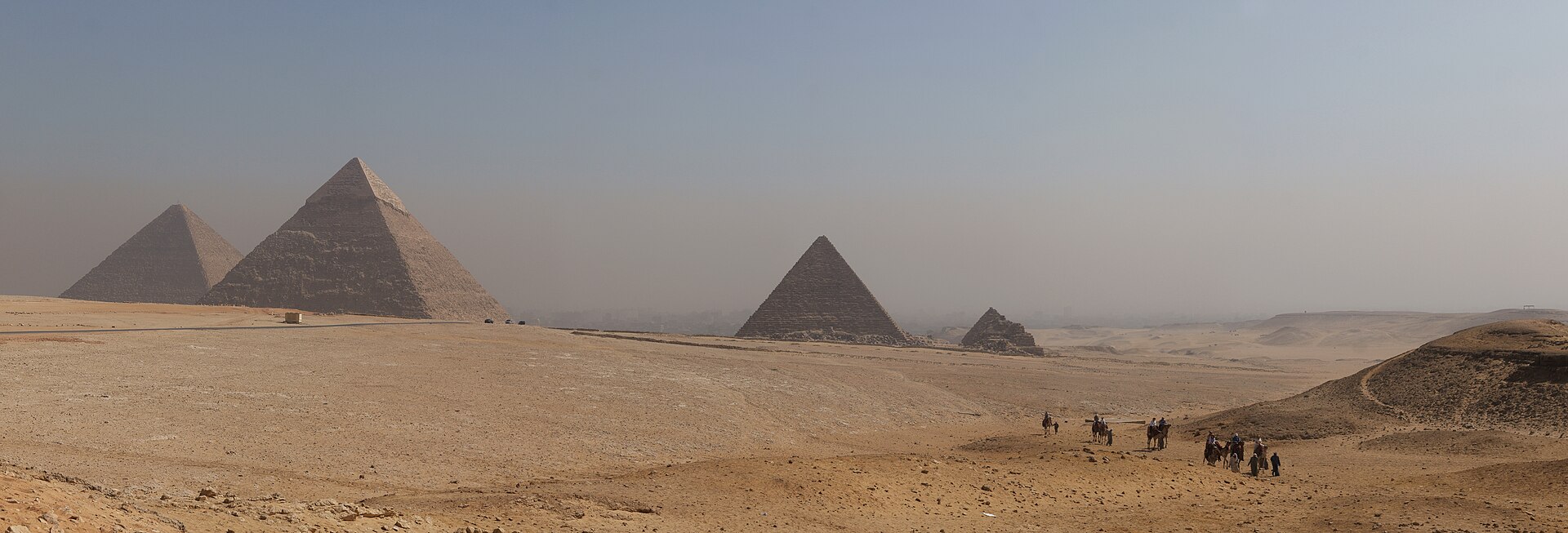
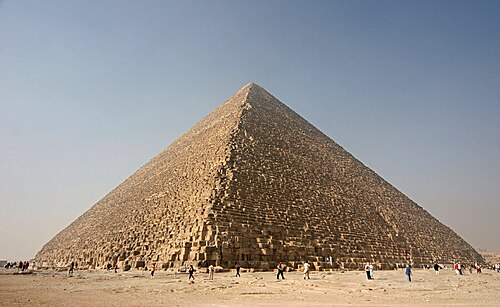
The Great Pyramid of Giza is the largest and oldest of the three pyramids in the Giza pyramid complex on the southwestern outskirts of Cairo.
- Must see
- Historic monument
- Cairo
Language · 11 published
Country guide
Egypt covers 1,001,450 km2, and about 99% of its people live on roughly 5.5% of it: the narrow Nile Valley and the Delta. That single line of green sets the trip. Cairo and Giza sit at the head of the Delta, Luxor and Aswan lie far upriver, and what joins them is the water itself or the rail line that follows it. The coasts behave like a separate country - Alexandria on the Mediterranean, Hurghada and Sharm El Sheikh on the Red Sea, where people come for coral reefs rather than tombs. Sinai holds Mount Catherine, at 2,642 metres the highest ground in the country.
Reviewed by Elena Voss · Roavina Travel Editor
Every city catalogued in this country so far, ranked by how much there is to see.
Photograph · Faris El-Gwely · CC BY 4.0
Ranked by importance — sitelinks, pageviews and heritage status, not editor preference.
26 places match
Category
Typical visit duration
Interests
الهرم الأكبر بالجيزة
The Great Pyramid of Giza is the largest and oldest of the three pyramids in the Giza pyramid complex on the southwestern outskirts of Cairo.
أبو الهول
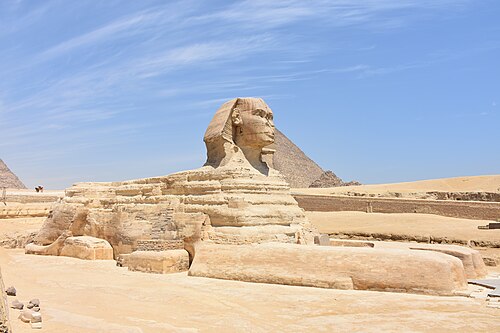
The Great Sphinx of Giza is a colossal limestone statue depicting a recumbent lion with a human head, situated on the Giza Plateau on the southwestern outskirts of Cairo.
قلعة صلاح الدين
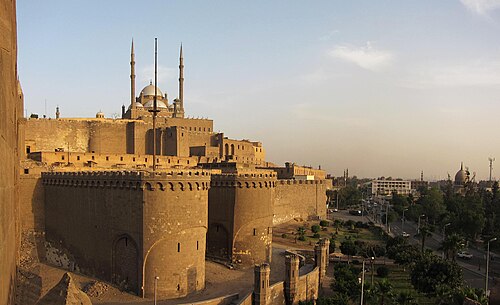
The Cairo Citadel, known locally as Qal'at Salah al-Din al-Ayyubi, is a medieval fortress complex occupying a strategic hilltop in eastern Cairo.
Historic Cairo is a UNESCO World Heritage site encompassing one of the world's oldest Islamic cities, founded in the tenth century. It became the new centre of the Islamic world, reaching its golden age in the fourteenth century.
خان الخليلي
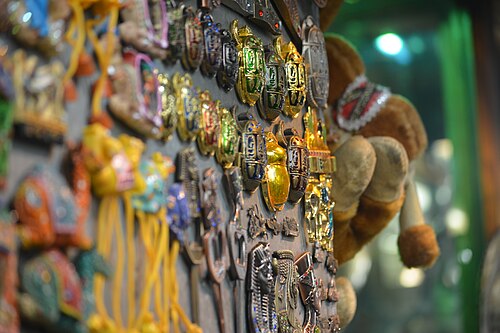
Khan el-Khalili is a historic bazaar in Islamic Cairo, one of the oldest commercial centres in the Middle East. Established during the Mamluk period, it occupies a dense network of narrow lanes and alleyways near the Mosque of al-Hussein.
مسجد محمد علي
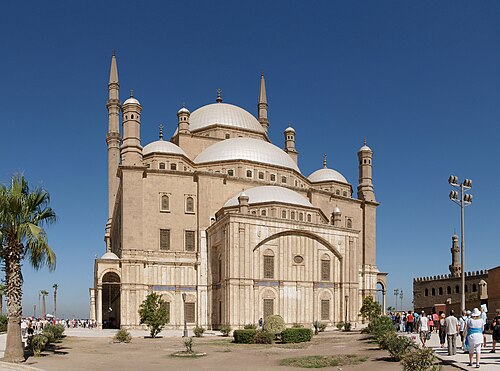
The Mosque of Muhammad Ali is a nineteenth-century Ottoman mosque situated within the Cairo Citadel complex in Egypt. Commissioned by Muhammad Ali Pasha, it is constructed largely of alabaster, earning it the popular name the Alabaster Mosque.
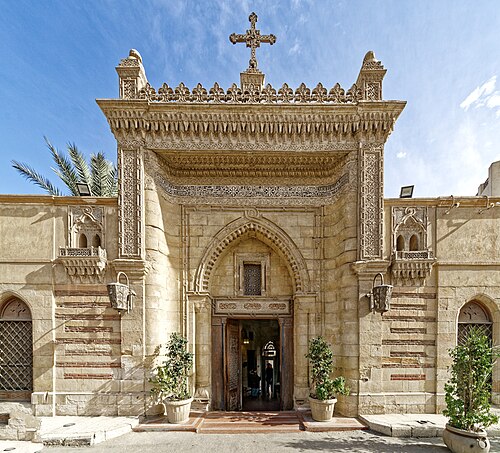
القاهرة القبطية
Coptic Cairo is a compact historic quarter in Old Cairo, Egypt. It contains significant religious and archaeological sites spanning multiple eras. The area includes ancient Christian churches, a synagogue, and traces of Roman settlement.
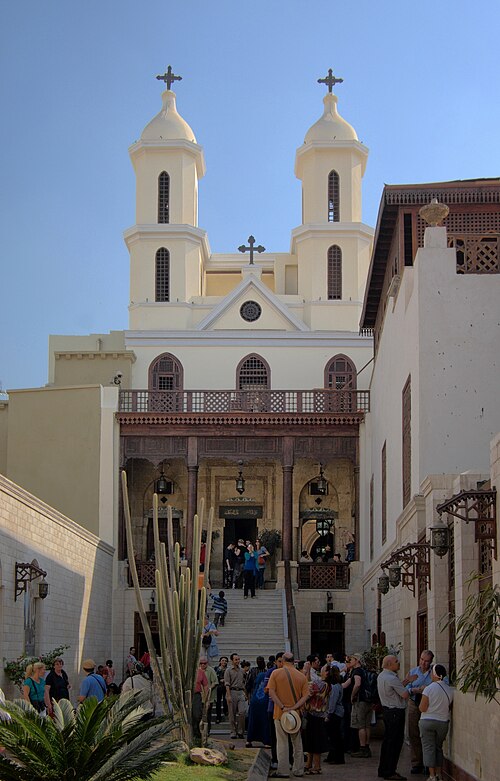
الكنيسة المعلقة
The Hanging Church, locally known as al-Kanīsa al-Muʿallaqa, is the Church of the Virgin Mary in Old Cairo. It was constructed above the gateway of a Roman fortress, giving it its distinctive elevated position.
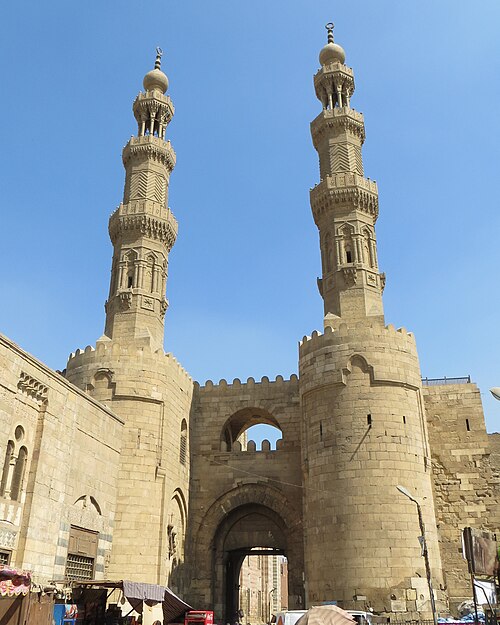
باب زويلة
Bab Zuweila is the surviving southern gate of the Fatimid-era walls of Cairo, Egypt. Its local name is باب زويلة. The structure stands as a key monument along the old city's principal north-south route.
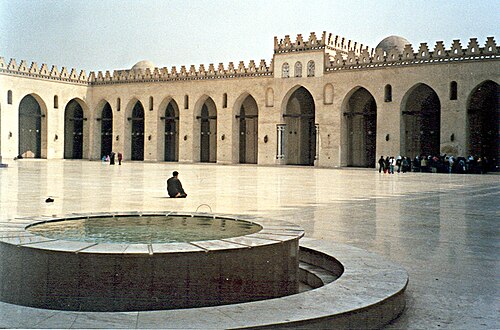
جامع الحاكم بأمر الله
Al-Hakim Mosque, known locally as مسجد الحاكم بأمر الله, is a major Fatimid-era mosque situated in Cairo, Egypt.
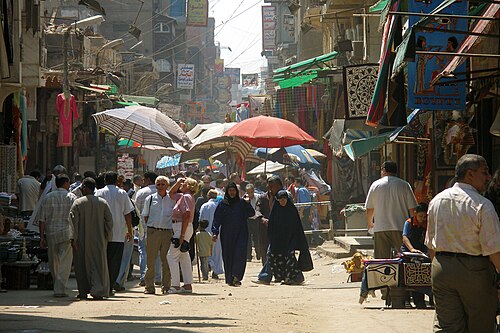
Al-Muizz Street is one of Cairo's most significant historic thoroughfares, stretching through the medieval Islamic quarter. The local name is شارع المعز لدين الله الفاطمي.
مجموعة السلطان المنصور قلاوون
The Qalawun Complex is a Mamluk-era hospital, madrasa, and mausoleum ensemble located on al-Muizz Street in Islamic Cairo. Commissioned by Sultan al-Mansur Qalawun, it stands as one of the most significant architectural achievements of the Mamluk period.
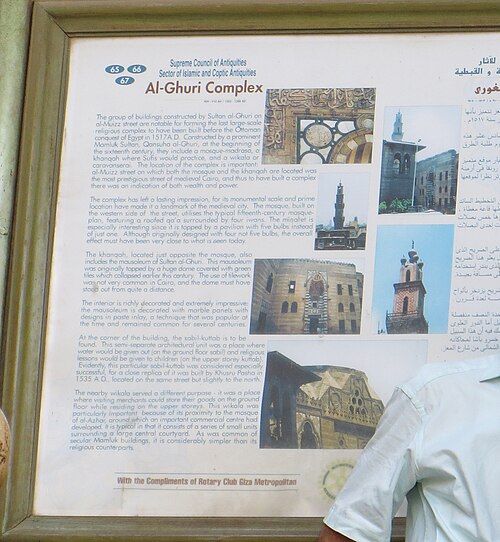
The Al-Ghuri Complex is a Mamluk-era architectural ensemble in Islamic Cairo, commissioned by Sultan al-Ashraf Qansuh al-Ghuri, the penultimate Mamluk sultan of Egypt.
بيت السحيمي
Bayt al-Suhaymi is a restored Ottoman-era townhouse located in the historic district of Islamic Cairo. The building exemplifies domestic architecture from the period, offering visitors a counterpoint to the monumental religious structures that dominate the area.
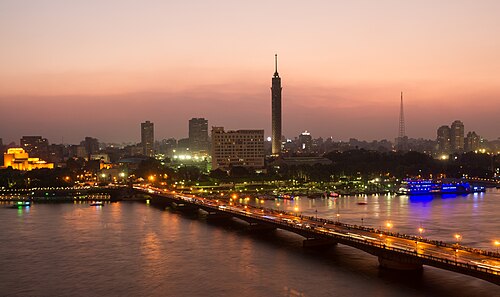
برج القاهرة
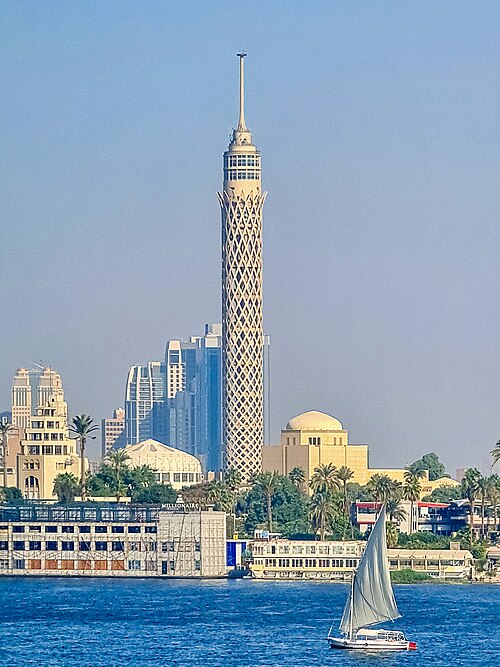
Cairo Tower is a free-standing concrete tower located on Gezira Island in the Nile River. Constructed during the 1960s, it serves as Cairo's principal dedicated urban viewpoint.
قصر عابدين
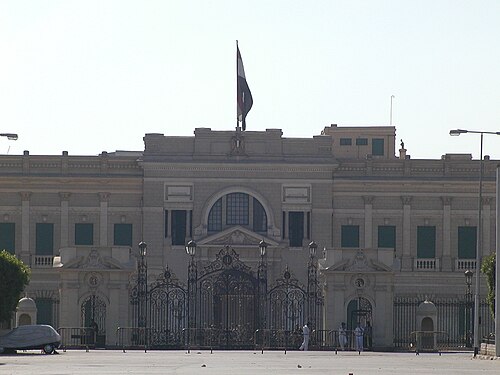
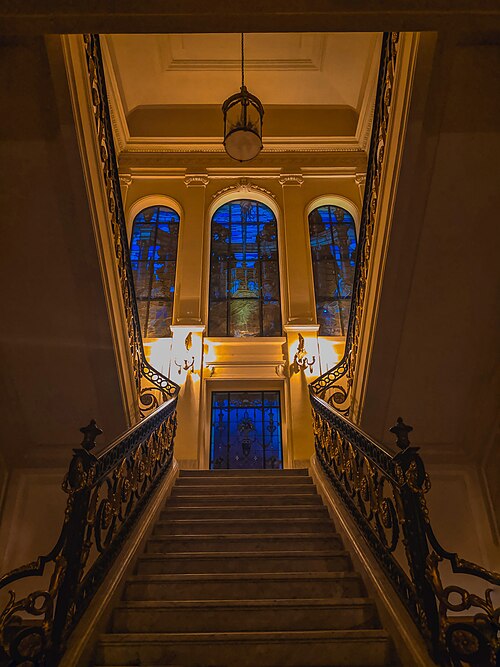
Abdeen Palace Museum is a former royal palace in central Cairo, now converted into a museum complex.
كوبري قصر النيل
Qasr El Nil Bridge is a historic Nile crossing in downtown Cairo, locally known as كوبري قصر النيل. The bridge is distinguished by its four bronze lion statues at each entrance, which have become emblematic of the structure.
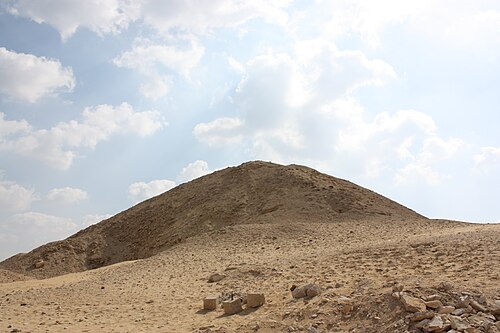
هرم تتى
The Pyramid of Teti is a Sixth Dynasty royal pyramid at Saqqara, Egypt. It belongs to Pharaoh Teti, first ruler of that dynasty, who reigned during the Old Kingdom period.
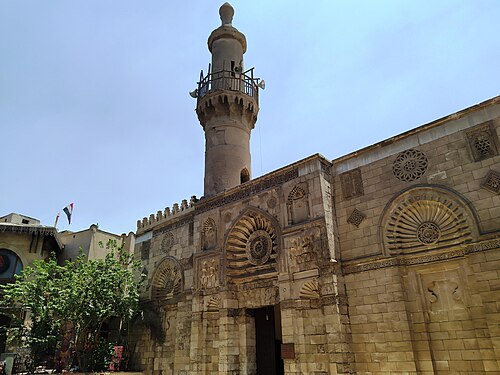
جامع الأقمر
Al-Aqmar Mosque is a small Fatimid-era mosque located on al-Muizz Street in Cairo's historic Islamic quarter. Built during the Fatimid caliphate, it represents an important example of medieval Islamic architecture in Egypt.
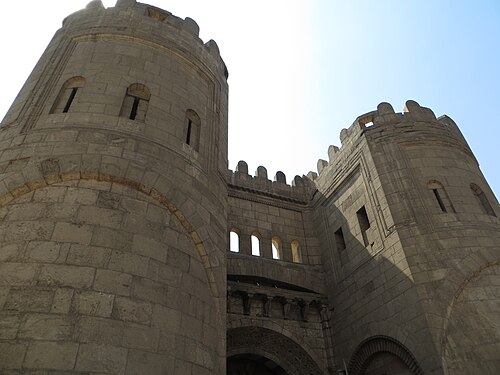
باب الفتوح
Bab al-Futuh is a massive northern gate in Cairo's medieval fortification system, built during the Fatimid period. The name translates to Gate of Conquests.
جامع الناصر محمد بن قلاوون
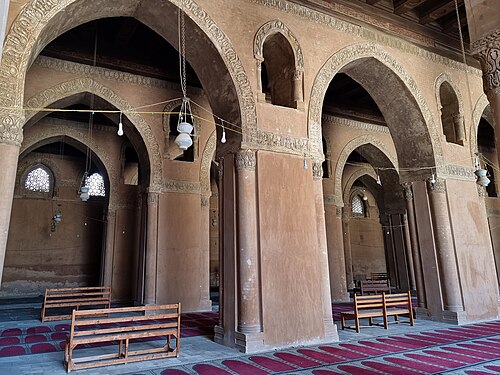
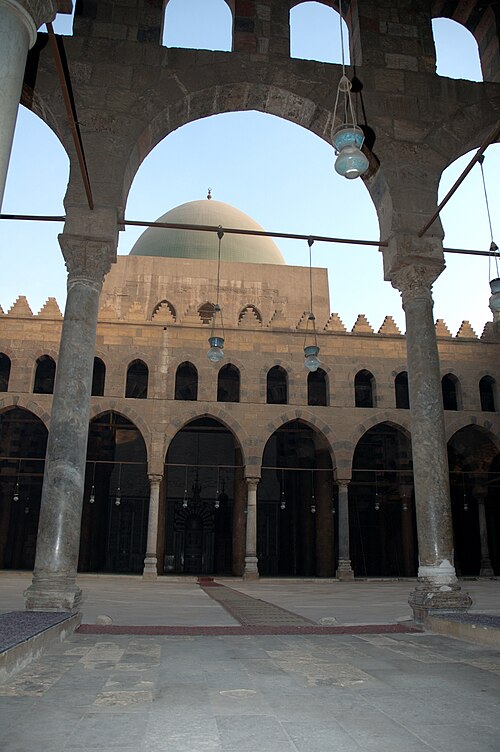
Al-Nasir Muhammad Mosque is a Mamluk-era hypostyle mosque located within the Cairo Citadel complex. Commissioned by Sultan Al-Nasir Muhammad ibn Qalawun, it represents a significant example of early 14th-century Islamic architecture in Egypt.
قصر عائشة فهمي
Aisha Fahmy Palace is a restored early twentieth-century residential palace located in Zamalek on Gezira Island, Cairo. The building represents a significant example of Cairo's riverside residential architecture from this period, situated along the Nile.
قصر بارون أمبان
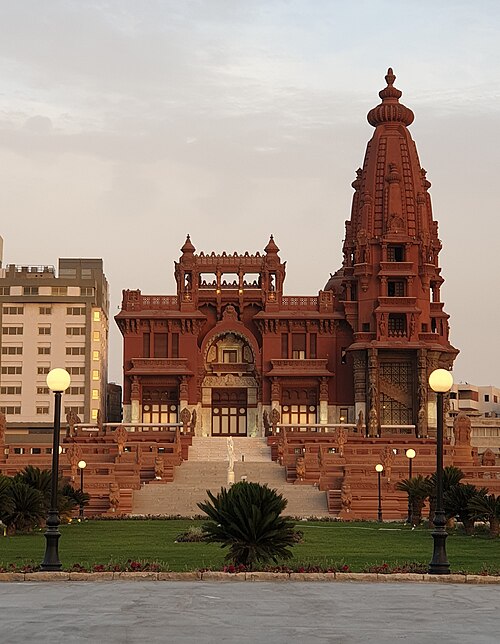
Baron Empain Palace, known locally as قصر البارون, is a flamboyant Heliopolis landmark and Cairo's most distinctive early twentieth-century private palace. The building stands as a remarkable architectural statement in the suburb of Heliopolis, northeast of central Cairo.
القرية الفرعونية
Pharaonic Village is a living-history attraction on an island in the Nile at Cairo. The experience presents recreated scenes from ancient Egyptian life through reconstructed environments, costumed performers, and staged tableaux.
مصطبة مريروكا
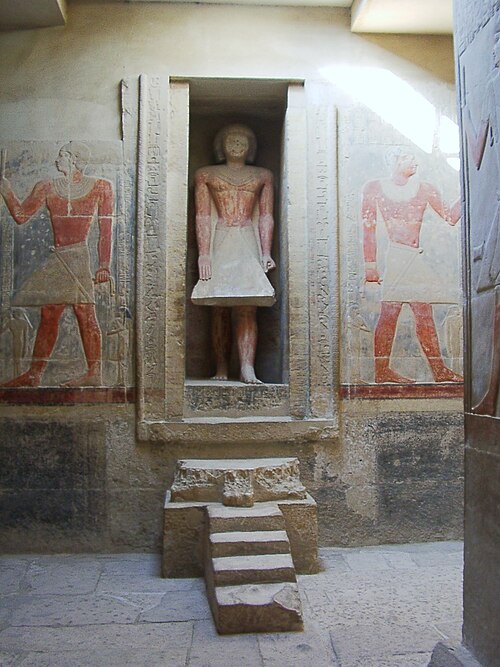
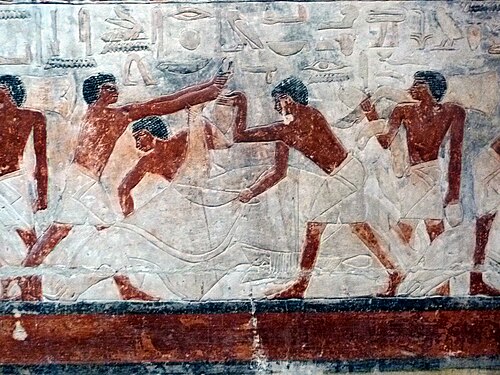
Mastaba of Mereruka is an extensive Old Kingdom tomb at Saqqara, the ancient necropolis south of Cairo. Mereruka served as vizier under Pharaoh Teti of the Sixth Dynasty, and his burial monument reflects the status of a senior official.
مصطبة كاجيمنى
Mastaba of Kagemni is an Old Kingdom tomb at Saqqara, the ancient necropolis south of Cairo. Kagemni served as vizier under Pharaoh Teti during the Sixth Dynasty, and his rectangular mastaba reflects the burial architecture of an elite official.
Source: OpenStreetMap contributors, Wikidata ·
Eight to twelve days can combine Cairo and Giza with one Nile corridor, Red Sea stay or desert extension. Moving between these regions takes substantial time, so a short visit should not attempt all three.
Egypt’s official e-Visa portal states which passports can apply online and which travellers need another consular process. Confirm eligibility, passport conditions and permitted stay on that service before departure.
Cairo is the main air hub, with domestic flights linking Luxor, Aswan and Red Sea airports. The Cairo–Luxor–Aswan rail corridor and organised road transfers serve other common routes, but schedules and boarding points need direct confirmation.
October to April avoids the most intense summer heat on many archaeological routes. Red Sea plans and desert nights have different conditions, so temperatures at the actual destination matter more than Cairo’s calendar alone.
Egyptian pounds (EGP) are the recorded currency. This file does not record current cash availability, card acceptance or exchange fees; establish the price and currency with the provider before paying.
Egypt’s numbers are 122 for police, 123 for ambulance and 180 for fire. Type C and F sockets supply 220 V; tap-water safety is Not recorded and must be checked locally.