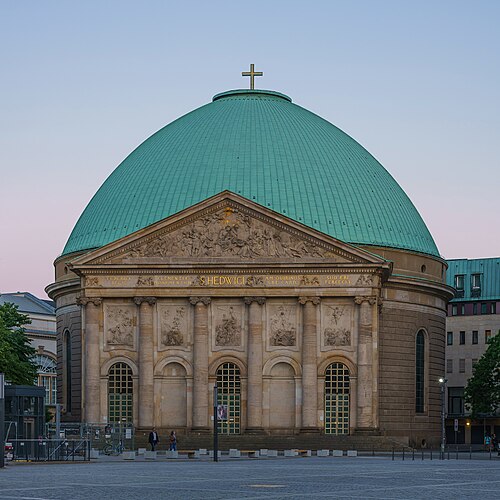
St. Hedwig's Cathedral
St. Hedwigs-Kathedrale Berlin
St. Hedwig’s Cathedral, locally known as St. Hedwigs-Kathedrale Berlin, is a Catholic cathedral near Bebelplatz in Berlin’s Mitte district.
- Must see
- Historic monument
- Berlin
Country guide
Germany runs from the Baltic and North Sea coasts in the north down to the Alps in the south, and its 16 states have kept enough separateness that the country r...
Photograph · Llez · CC BY-SA 3.0
Reviewed by Elena Voss · Roavina Travel Editor
Germany runs from the Baltic and North Sea coasts in the north down to the Alps in the south, and its 16 states have kept enough separateness that the country reads as a set of destinations rather than one. Over 83 million people live in them, more than any other European Union member. Berlin is the capital and the largest single city, Frankfurt is the financial centre, and the largest urban area is neither - it is the Ruhr, a belt of western towns that have grown into each other. Choosing between the Bavarian south, the Rhine, the Hanseatic north and the eastern cities is the actual planning decision; the distances are short and the places are not variations on one another.
Checked 2026-08-25
Every city catalogued in this country so far, ranked by how much there is to see.
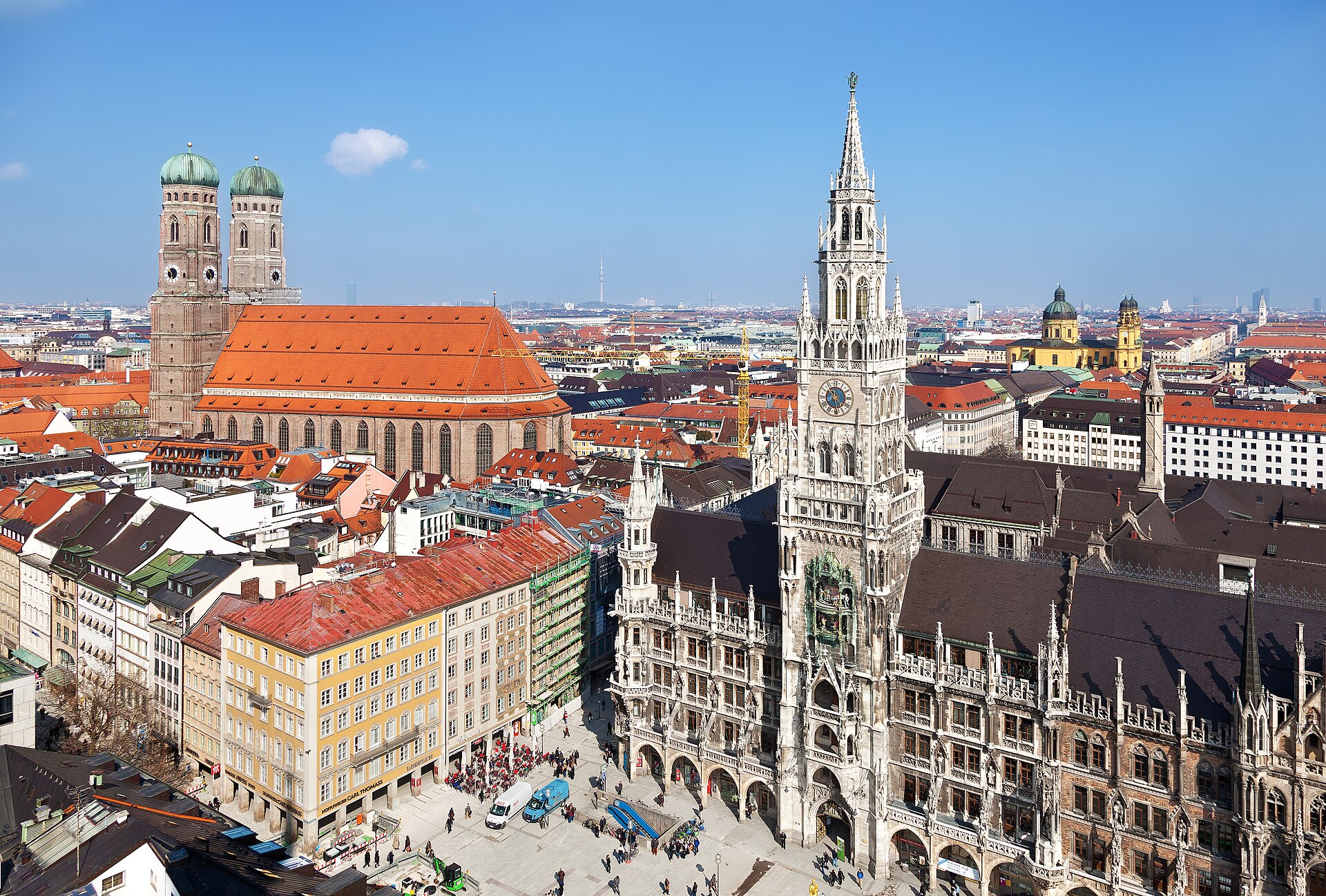
Photograph · Thomas Wolf, www.foto-tw.de · CC BY-SA 3.0
Photograph · Thomas Wolf, www.foto-tw.de · CC BY-SA 3.0 de
Ranked by importance — sitelinks, pageviews and heritage status, not editor preference.
62 places match
Category
Typical visit duration
Interests
St. Hedwigs-Kathedrale Berlin
St. Hedwig’s Cathedral, locally known as St. Hedwigs-Kathedrale Berlin, is a Catholic cathedral near Bebelplatz in Berlin’s Mitte district.
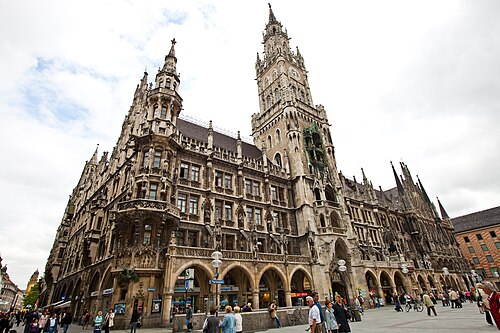
Neues Rathaus
The Neues Rathaus fills the whole north side of Marienplatz and is a working building rather than a monument: the mayor, the city council and part of Munich's administration sit here, and the city counts more than 600 staff across…
Residenz
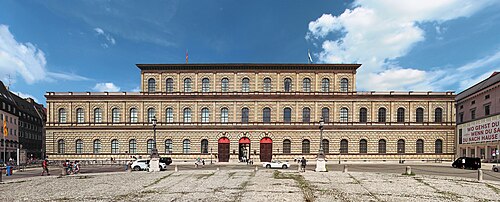
The Munich Residence was the seat of government and the home of Bavaria's dukes, electors and kings from 1508 until the monarchy ended in 1918.
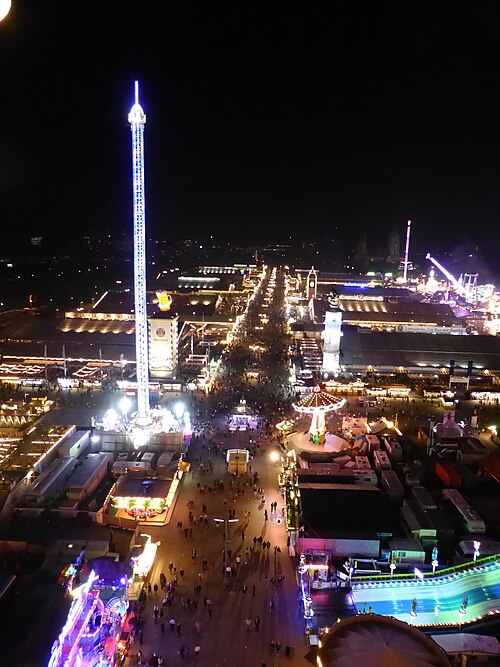
Oktoberfest is Munich’s city festival on the Theresienwiese, a short walk from the old town in Ludwigsvorstadt-Isarvorstadt.
Theatinerkirche St. Kajetan
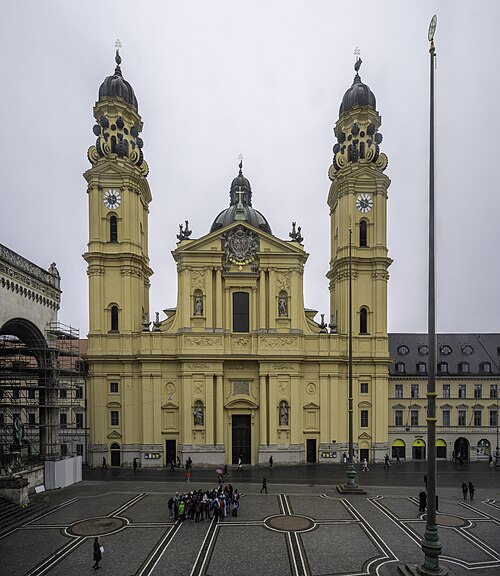
Theatine Church of St. Cajetan is a prominent Catholic church beside Odeonsplatz in central Munich. Built in the Italian Baroque style during the seventeenth century, it is recognised by its pale yellow facade, monumental proportions, and ornate interior.
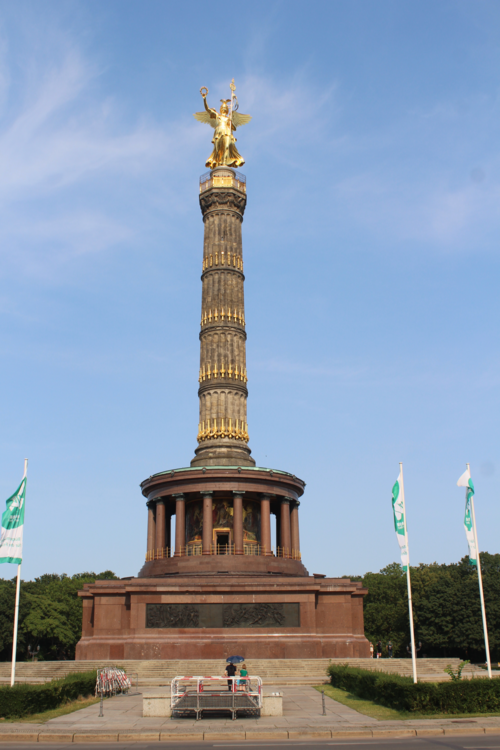
The Siegessäule, or Victory Column, stands in Berlin's Tiergarten park. Erected in the 1870s to commemorate Prussian military victories, the monument features a gilded bronze statue of Victoria at its summit.
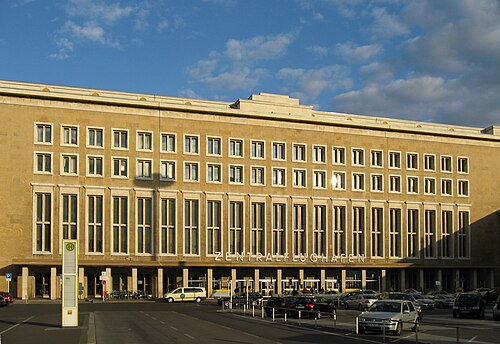
Ehemaliger Flughafen Berlin-Tempelhof
Berlin-Tempelhof Airport is a former airport whose immense terminal and airfield now form a public park and event landscape. Flights ended in 2008, leaving behind a place where aviation history and everyday city life meet.
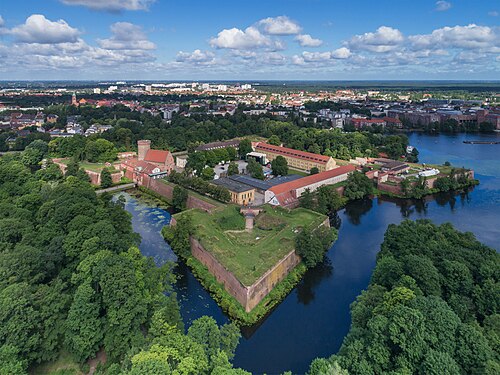
Zitadelle Spandau
The Spandau Citadel, known locally as Zitadelle Spandau, is a fortress complex in Berlin's Spandau district. Constructed in the 16th century on the site of earlier medieval fortifications, it represents one of Europe's best-preserved Renaissance military structures.
Hofgarten
Hofgarten is a formal garden in central Munich, located adjacent to the Residenz palace complex. The garden was originally laid out in the early 17th century as a Renaissance-style court garden for the Bavarian rulers.
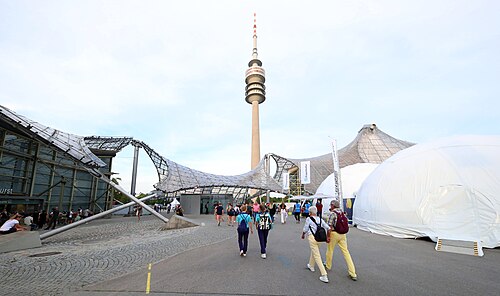
The Olympic Tower is shut. Olympiapark München GmbH closed it on 1 June 2024 for renovation, and it had not reopened when this page was checked on 26 August 2026, so nothing described here can be entered today.
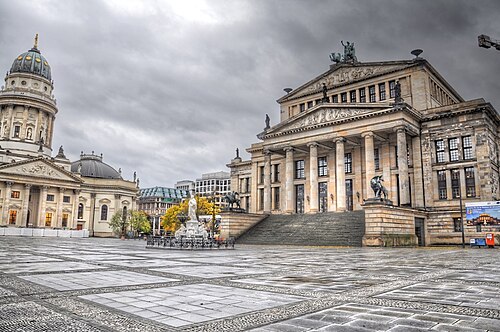
Gendarmenmarkt is a historic public square in the Mitte district of central Berlin. The ensemble comprises the Konzerthaus concert hall flanked by the German Cathedral and the French Cathedral, two nearly identical domed church structures.
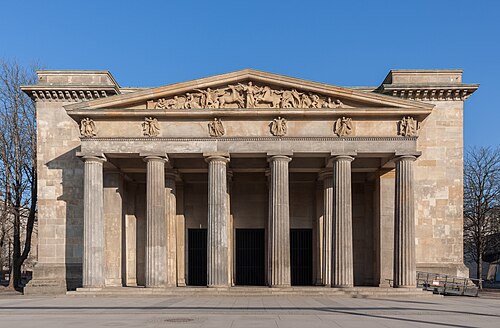
Neue Wache is a neoclassical memorial on Berlin’s Unter den Linden boulevard in the Mitte district. Karl Friedrich Schinkel designed the building, completed in 1818 as a guardhouse for Prussian troops.
Neues Schloss Schleißheim
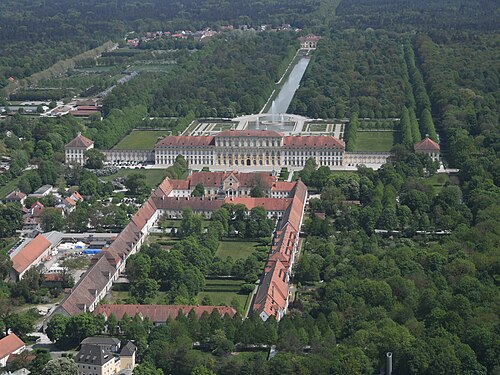
The Schleißheim palace complex, locally known as Neues Schloss Schleißheim, stands among the most significant Baroque palace ensembles in Germany. Located in the Munich metropolitan area, this architectural complex comprises multiple palaces and extensive gardens developed over several centuries.
Denkmal für die ermordeten Juden Europas
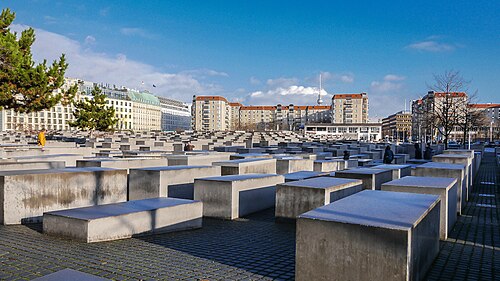
The Memorial to the Murdered Jews of Europe is Germany's central Holocaust memorial, and it is two things at one address rather than one.
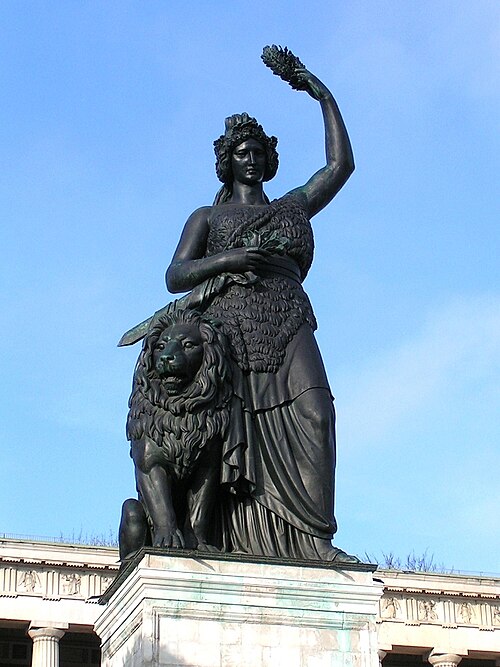
Bavaria is a monumental bronze statue standing prominently in Munich's Theresienwiese, the traditional grounds of Oktoberfest. Cast in the 19th century, this female personification of the Bavarian homeland ranks among Europe's largest bronze sculptures.
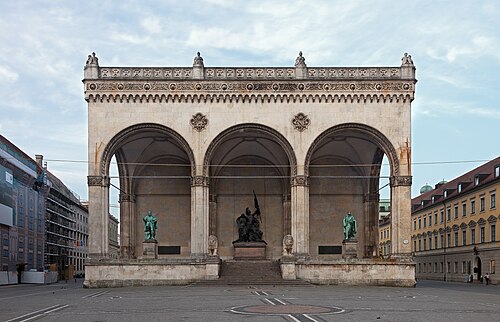
Feldherrnhalle is a monumental loggia on the Odeonsplatz in central Munich. Commissioned by King Ludwig I and completed in 1844, it was modelled on the Loggia dei Lanzi in Florence.
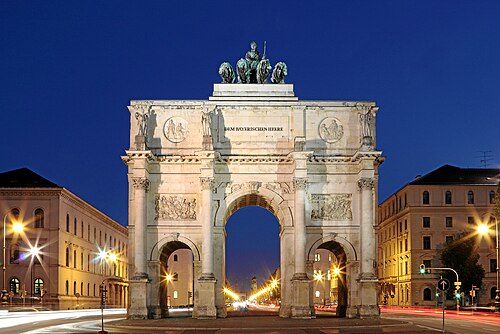
Siegestor is a nineteenth-century triumphal arch at the northern end of Ludwigstraße, where the avenue becomes Leopoldstraße in Munich. King Ludwig I commissioned the monument to commemorate Bavarian military achievements, and Friedrich von Gärtner designed it.
Urania-Weltzeituhr
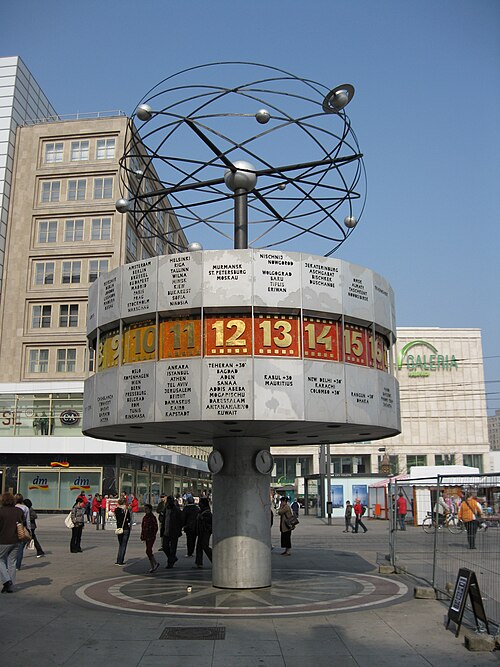
The World Clock, or Urania-Weltzeituhr, is a public landmark on Alexanderplatz in Berlin’s Mitte district. Its rotating display presents the time for twenty-four world cities and international time zones.
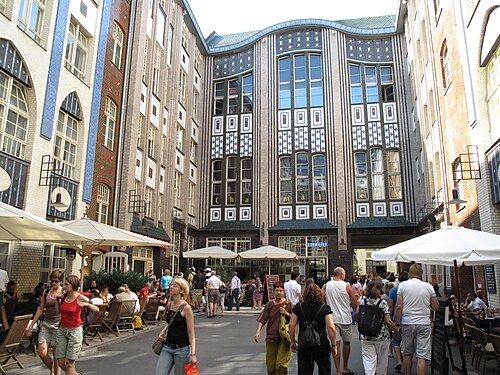
Hackesche Höfe is a historic courtyard complex in Berlin's Mitte district, situated in the Spandauer Vorstadt area near Hackescher Markt. Constructed in the early twentieth century around 1906-1907, the ensemble comprises eight interconnected courtyards with Art Nouveau architectural detailing.
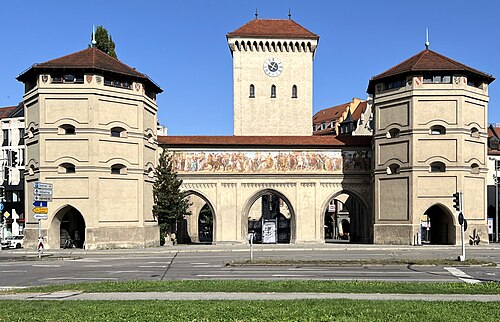
Isartor is one of Munich's surviving medieval city gates and marks the eastern edge of the historic Altstadt.
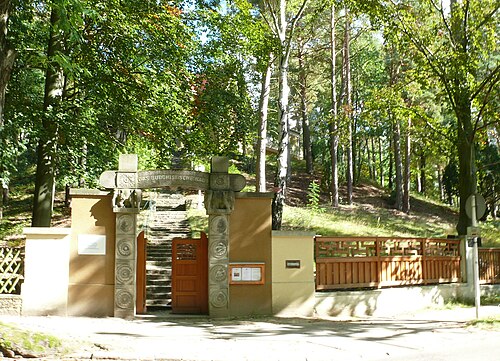
Das Buddhistische Haus is a Buddhist temple complex in Frohnau, northern Berlin. Founded in the early twentieth century, it is regarded as one of Europe’s oldest Buddhist institutions.
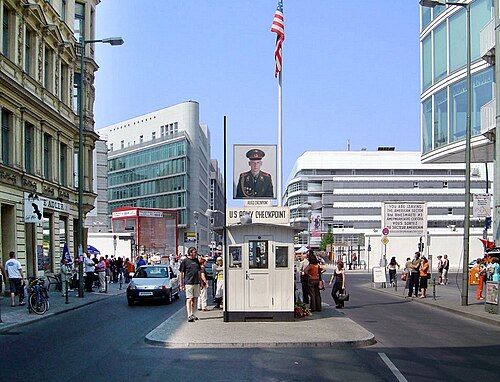
Checkpoint Charlie marks the former Allied crossing on Friedrichstraße between the American and Soviet sectors of divided Berlin.
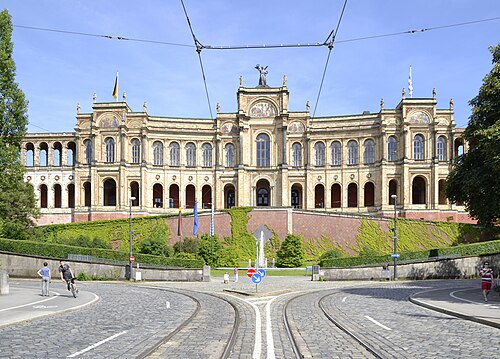
The Maximilianeum is a monumental palatial building located on the right bank of the Isar River in Munich. It serves as the seat of the Bavarian State Parliament (Bayerischer Landtag).
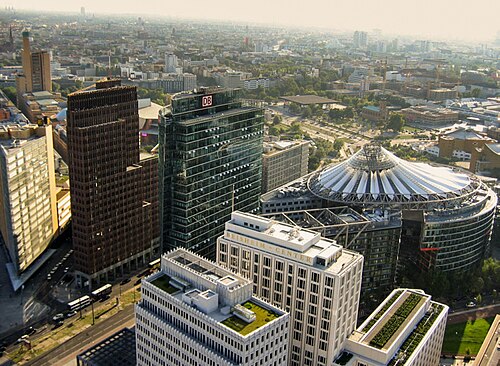
Potsdamer Platz is a major public square and traffic intersection in central Berlin. Historically one of Europe's busiest squares, it was devastated during World War II and left desolate during the Cold War when the Berlin Wall bisected it.
Zeiss-Großplanetarium
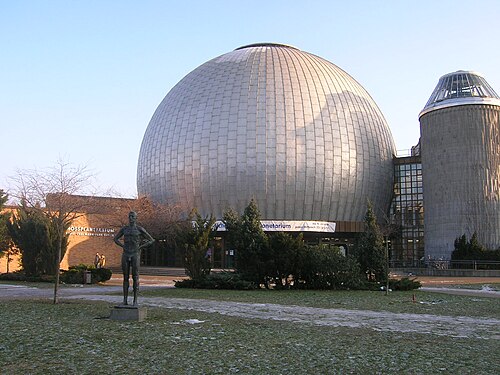
Zeiss Major Planetarium, known locally as Zeiss-Großplanetarium, is a dedicated astronomy venue in Berlin. Its large dome gives the building a memorable profile in the city, while the programme combines public education with immersive entertainment.
Seven to ten days works for Berlin plus one connected region, or for a focused Rhine, Bavaria or northern-city route. Germany’s rail network makes multi-city travel practical, but changing bases every night still reduces useful time.
Germany’s Federal Foreign Office is the official visa reference. Review its nationality-specific entry rules and the Schengen application guidance for the passport and route being used.
Intercity and high-speed trains connect Germany’s major cities, with regional services completing shorter journeys. Deutsche Bahn publishes the integrated timetable; airport choice should follow the route rather than defaulting to one national gateway.
May through September favours outdoor city and countryside travel, while December has a distinct seasonal-market pattern. Alpine, North Sea and urban conditions differ enough that the intended region should determine clothing and reservations.
Germany uses the euro (EUR). Cash and card practices are not stated as a single national rule in the cited source, so travellers should carry a backup and check the payment method before ordering or boarding.
For Germany, 112 reaches medical and fire services and 110 reaches police. Type C and F plugs use 230 V, and mains tap water is recorded as safe.