A photograph of Tel Aviv

City guide · Israel

Historic sites in Tel Aviv, Israel

Tel Aviv-Yafo is a long Mediterranean city best understood as connected north-south districts rather than one compact centre. Historic Jaffa and the port sit at...

Photograph · Ynhockey · CC BY-SA 4.0

1,854 Places
Suggested stay
2–3 days
Getting around
Walk, bicycle, bus, light rail and train

Turn this list into a plan

Set your days, your pace and the hours you actually want to be out. The planner works around closing days and travel time, and leaves room to eat.

Plan Tel Aviv

Editorial responsibility: Elena Voss · Roavina Travel Editor

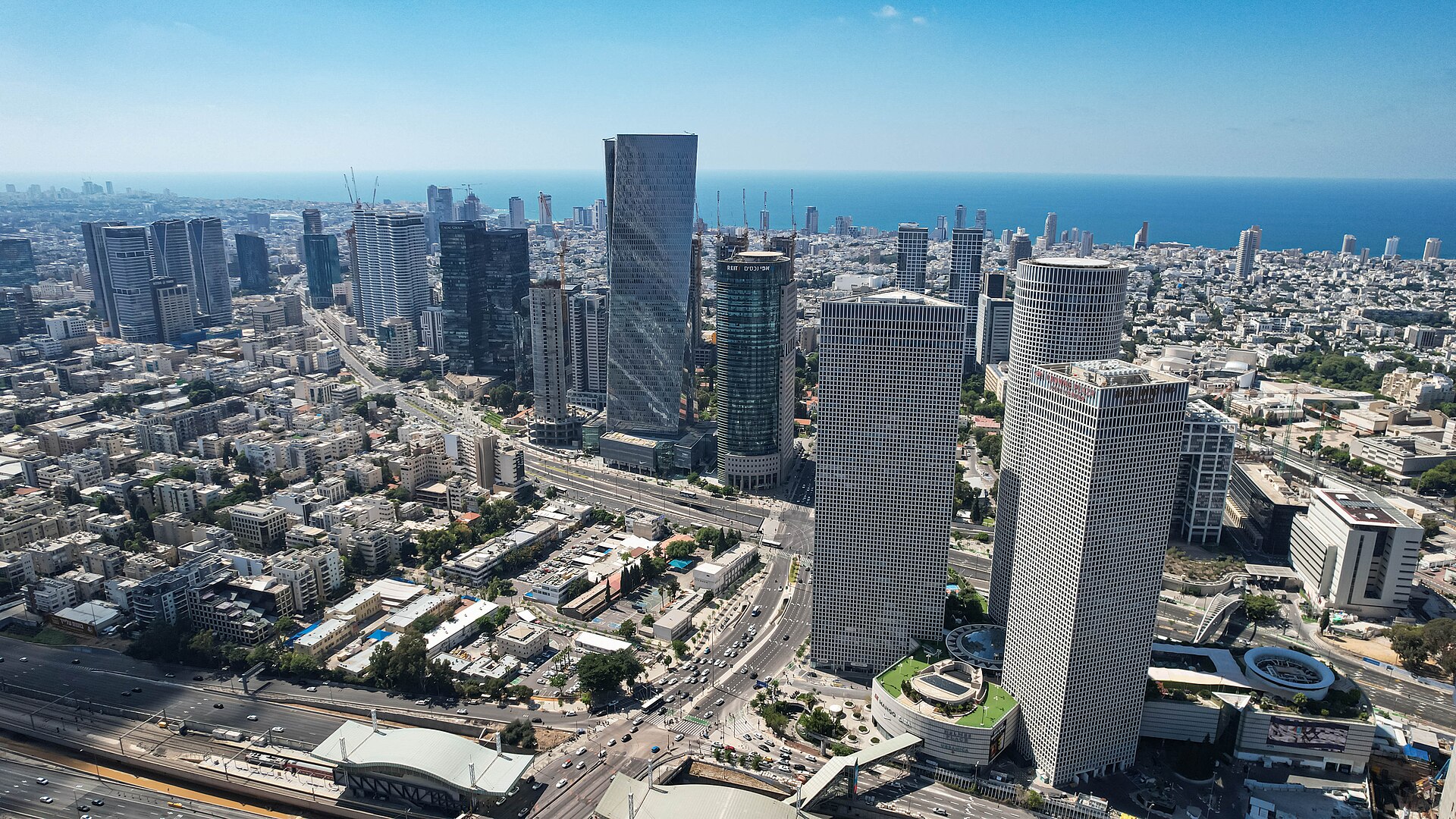
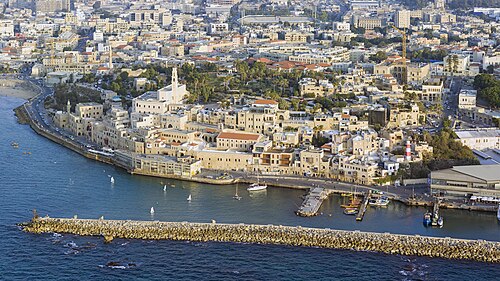
Tel Aviv-Yafo is a long Mediterranean city best understood as connected north-south districts rather than one compact centre. Historic Jaffa and the port sit at the southern end, Neve Tzedek and the market districts lead into the central city, and the beach continues north beside residential and cultural areas. Walking works within each cluster; transit connects the longer gaps.

Checked 2026-08-26

Practical information

Language spoken
Hebrew; Arabic has special status
National practical orientation; regional and minority languages may also be used
Dialling code
+972
International calling code; local area and mobile prefixes still apply
Currency
Israeli new shekel (ILS)
Use the official local currency; card acceptance varies by place
Emergency number
100 police · 101 ambulance · 102 fire
Use only for an emergency; tourist assistance may use a separate number
Plug type
Type C and H · 230 V
Check that chargers support the recorded voltage before using an adapter
Tap water
Not recorded
No verified nationwide visitor statement was recorded for this content pack

Planning a visit

November · November in Tel Aviv has mean high 23.8°C, mean low 14.8°C, rainfall 80.8 mm, 7.2 rain days. Warm, dry conditions make the waterfront and city walks especially comfortable. November visitors can plan longer days outside in Tel Aviv with relatively little weather friction.

  1. January: viable with meaningful trade-offs
  2. February: viable with meaningful trade-offs
  3. March: good time to visit
  4. April: best time to visit
  5. May: best time to visit
  6. June: good time to visit
  7. July: viable with meaningful trade-offs
  8. August: viable with meaningful trade-offs
  9. September: good time to visit
  10. October: best time to visit
  11. November: best time to visit — current month
  12. December: good time to visit

Sources

Top things to see

Ranked by importance — sitelinks, pageviews and heritage status, not editor preference.

  1. White City of Tel Aviv White City of Tel Aviv
    02 2 hours

    White City of Tel Aviv

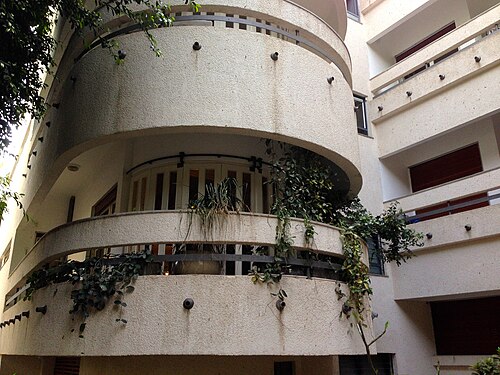
    The White City of Tel Aviv is a UNESCO-listed urban ensemble, not one building or a gated attraction. UNESCO inscribed it in 2003 as an outstanding concentration of Modern Movement architecture adapted to Tel Aviv's cultural and climatic setting.

    • Must see
    • Historic site
  2. Jaffa Clock Tower Jaffa Clock Tower
    03 45 min

    Jaffa Clock Tower

    מגדל השעון יפו

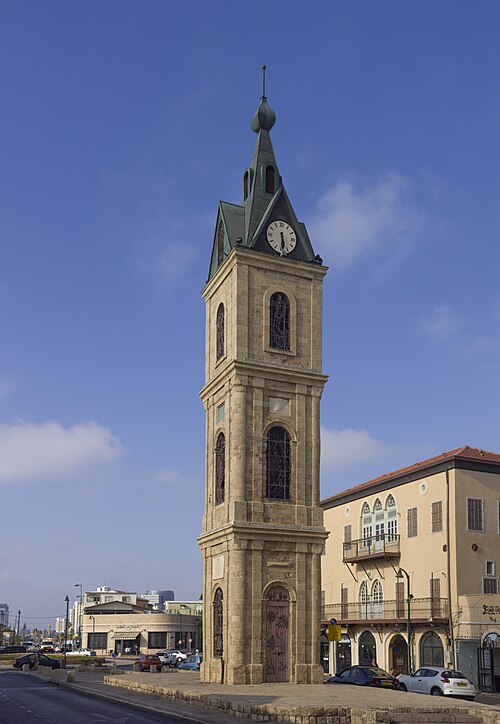
    Jaffa Clock Tower is an Ottoman-era clock tower standing in central Jaffa, the ancient port district now incorporated into Tel Aviv-Yafo. Built during the late Ottoman period, it remains the defining landmark of this historic area.

    • Must see
    • Historic site
  3. Rothschild Boulevard Rothschild Boulevard
    04 1 hr 30 min

    Rothschild Boulevard

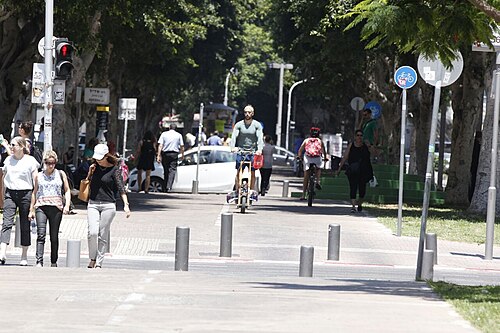
    Rothschild Boulevard is a principal tree-lined avenue in central Tel Aviv, Israel. It forms the core public-space spine of the UNESCO-inscribed White City, recognized for its outstanding collection of Bauhaus and International Style architecture.

    • Must see
    • Historic site
  4. Rabin memorial - Rabin Square
    05 45 min

    Rabin memorial - Rabin Square

    האנדרטה לזכר יצחק רבין

    The Yitzhak Rabin memorial marks the place in Tel Aviv where Prime Minister Yitzhak Rabin was assassinated at the end of a peace rally on 4 November 1995.

    • High
    • Historic site
  5. Tel Gerisa Tel Gerisa
    06 45 min

    Tel Gerisa

    גבעת נפוליאון (תל גריסה)

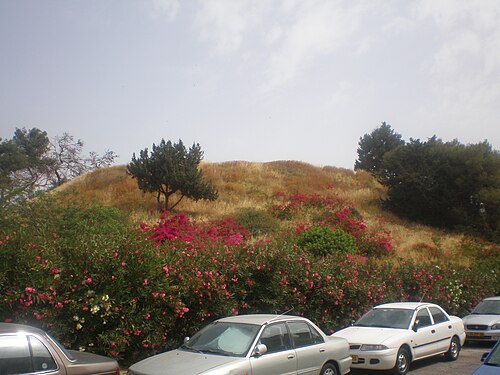
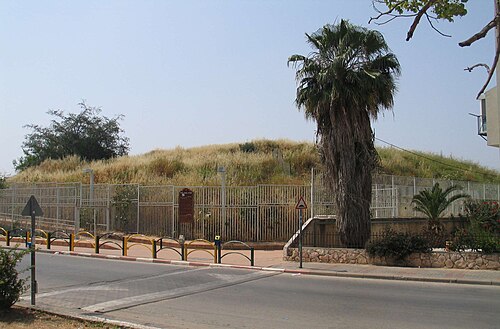
    Tel Gerisa, also called Tel Napoleon, is an archaeological mound within Tel Aviv-Yafo. A tel is a settlement hill formed by layers of occupation built up over successive periods, making the landscape itself part of the historical evidence.

    • Must see
    • Historic site
  6. Tel Hashash Tel Hashash
    07 45 min

    Tel Hashash

    תל חשאש

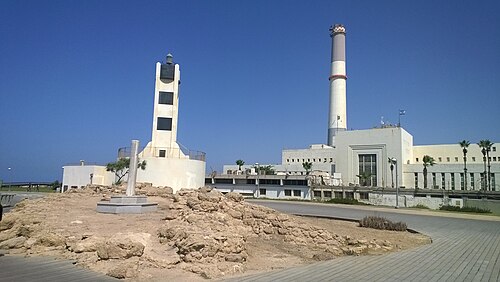
    Tel Hashash (תל חשאש) is a named archaeological tell mapped within Tel Aviv-Yafo, where a historic landscape feature is recorded inside a developed coastal-plain municipality.

    • Must see
    • Historic site
  7. Tel Kudadi Tel Kudadi
    08 45 min

    Tel Kudadi

    תל כודאדי

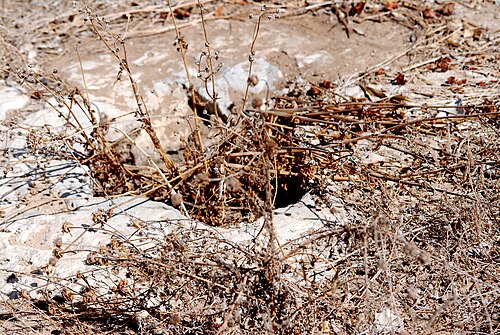
    Tel Kudadi is an archaeological site in Tel Aviv-Yafo containing remains of an ancient settlement.

    • Must see
    • Historic site
  8. Tel Zeton Tel Zeton
    09 45 min

    Tel Zeton

    תל זיתון

    Tel Zeton is an archaeological site within the Tel Aviv-Yafo municipal area.

    • Must see
    • Historic site
  9. Tell Qasile Tell Qasile
    10 45 min

    Tell Qasile

    תל קסילה

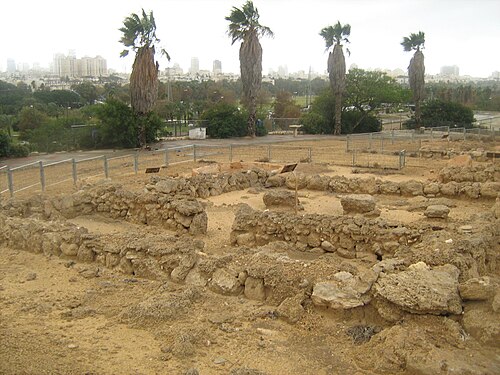
    Tell Qasile is an archaeological site in Tel Aviv, Israel, located within the Eretz Israel Museum complex. It contains the remains of a Philistine settlement dating to the 12th-11th centuries BCE.

    • Must see
    • Historic site
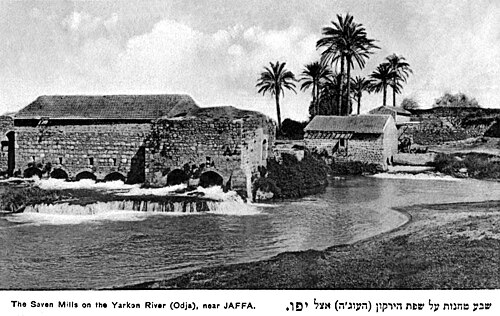
  10. Sheva Tahanot Sheva Tahanot
    11 45 min

    Sheva Tahanot

    שבע טחנות

    Sheva Tahanot, or שבע טחנות, is an archaeological site in Tel Aviv-Yafo whose name means Seven Mills. The name connects the place with milling and industrial activity, adding a practical, working dimension to the city’s historical landscape.

    • Must see
    • Historic site
  11. American–German Colony American–German Colony
    12 45 min

    American–German Colony

    המושבה האמריקאית–גרמנית

    The American–German Colony is a historic neighborhood in Jaffa, within Tel Aviv-Yafo. Its streets reflect nineteenth-century settlement by American and German communities and form part of Jaffa’s layered urban heritage.

    • Must see
    • Historic site

Source: OpenStreetMap contributors, Wikidata ·

How the city is laid out

Old Jaffa, Jaffa Port and the flea-market streets form a southern historic cluster. Neve Tzedek and the old railway area lie immediately north, followed by Carmel Market, Rothschild Boulevard and the White City. The main museum and performing-arts institutions sit farther east, while the seafront forms a parallel route. Group visits by these corridors to avoid repeated cross-city journeys.

Checked 2026-08-26

Getting around

Central Tel Aviv and Jaffa are highly walkable, and cycling can suit the flat seafront and boulevard network. The official city guide lists buses, light rail, trains, taxis, bicycles and scooters as transport options. The Red Line connects parts of Tel Aviv-Yafo with the wider metropolitan area. Check real-time service information because infrastructure work can alter routes and stops.

Checked 2026-08-26

More city guides

Common questions

How many days should I spend in Tel Aviv?

Suggested stay for a first visit: 2–3 days. Prioritise Jaffa, the central market and boulevard districts, the beach and one museum cluster, then expand according to available time.

Is Tel Aviv walkable?

Yes within individual districts. The official city guide describes the city as highly walkable, while transit is useful for longer links between Jaffa, central Tel Aviv and northern areas.

Does Tel Aviv have light rail?

Yes. The Red Line serves Tel Aviv-Yafo and the wider metropolitan area, alongside buses and national rail services.

Which Tel Aviv areas combine well on foot?

Old Jaffa and Jaffa Port combine naturally, while Neve Tzedek, Carmel Market and Rothschild Boulevard form another practical sequence. Use transit between more distant clusters.

Should I check transit updates in Tel Aviv?

Yes. The official city guide advises using transport apps for current information because infrastructure work can affect routes and stops.