
9 min walk
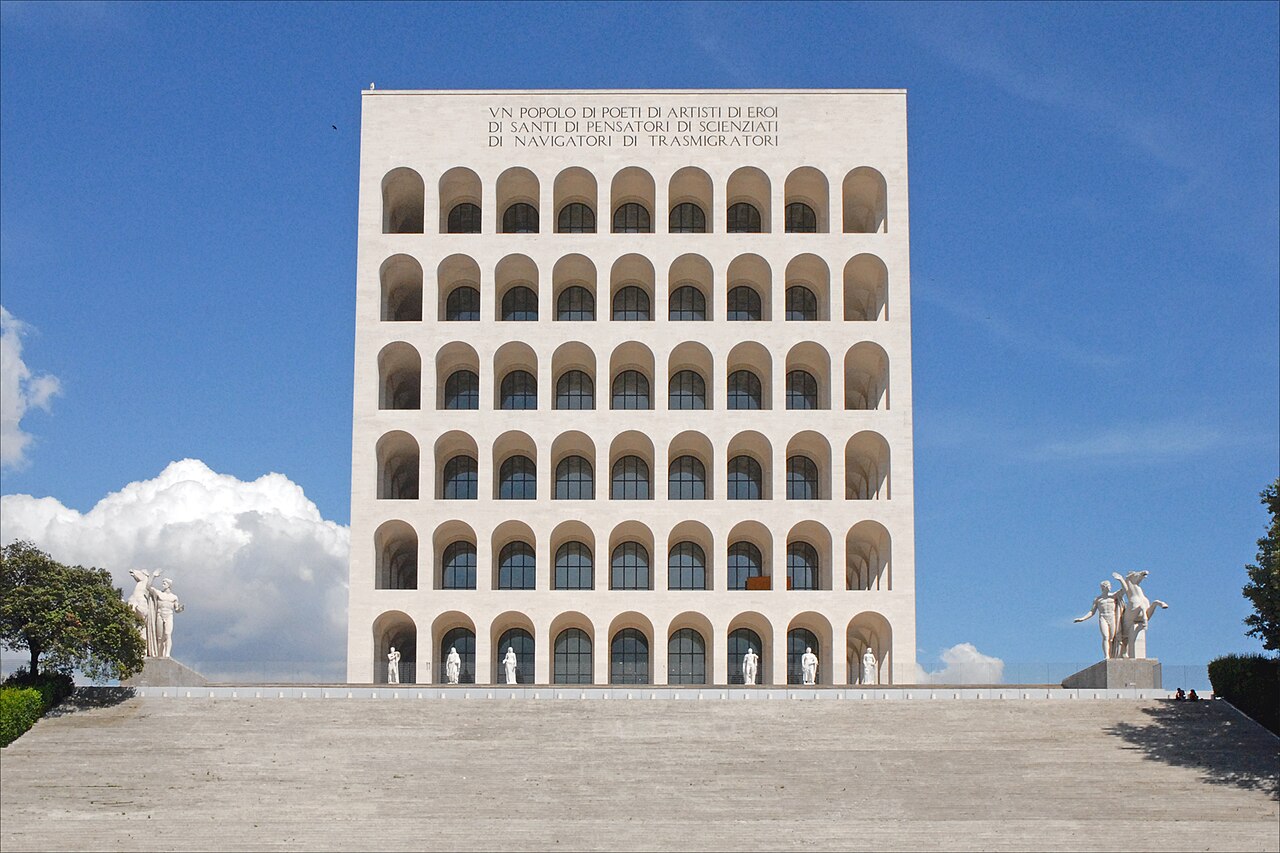
Palazzo della Civiltà Italiana
- Notable
- Historic monument
Language · 11 published
Museum · Rome
Reviewed by Elena Voss · Roavina Travel Editor

This place is a Museum. It opened in 2016. It carries the Italian national heritage heritage designation.
Museo delle Civiltà is a museum complex in Rome’s EUR district devoted to cultures and civilizations from around the world. Its collections bring together ethnographic, anthropological, archaeological and artistic material formerly held by different institutions. The museum offers a broad cultural visit rather than a single-period monument, making it useful for travelers who want to explore Italy’s collecting history and global cultural encounters. The Museo delle Civiltà is a museum complex in Rome dedicated to the cultures and civilizations of the world. It houses collections formerly held across multiple institutions, brought together under one administrative umbrella. The museum occupies a significant position in Rome's cultural landscape, reflecting Italy's historical engagement with ethnography, anthropology, and non-Western artistic traditions. Its formation represents an effort to consolidate dispersed heritage collections and present them to contemporary audiences within a unified interpretive framework. A flexible visit lets travellers connect Museo delle Civiltà with the rest of the day without treating one room, viewpoint or photograph as the whole experience. The useful pace depends on personal interest and conditions on arrival. Visitors must verify accessibility before traveling.
Checked 2026-08-26 · Source
The holdings include objects connected with Africa, Asia, the Americas and Oceania, alongside archaeological and ethnographic material. Displays may place artistic objects beside everyday, ceremonial or historically significant items, so the experience rewards visitors who compare cultures rather than move quickly through isolated highlights. Pay attention to provenance and acquisition histories, especially where objects were gathered during colonial-era expeditions, diplomatic exchanges or scholarly research. The museum's holdings encompass ethnographic materials, archaeological artifacts, and artistic objects from Africa, Asia, the Americas, and Oceania. Collections include items acquired through colonial-era expeditions, diplomatic exchanges, and scholarly research. Visitors should anticipate encountering objects whose provenance and acquisition histories reflect complex historical circumstances. The museum's curatorial approach to these contested holdings remains an evolving subject of public and academic discussion.
Checked 2026-08-26 · Source
Allow about ninety minutes for a focused visit covering the collections that interest you most. Two to three hours gives a traveler more time to move between regional material, archaeological objects and the museum’s wider cultural themes. The complex suits a flexible itinerary: visitors with a strong interest in anthropology or museum history can stay longer, while others can make it one substantial EUR stop. A thorough visit to the Museo delle Civiltà requires careful time allocation given the breadth of material potentially on display.
Checked 2026-08-26 · Source
Plan this museum for a day when you want an indoor cultural experience in EUR, south of Rome’s historic center. Morning or early afternoon leaves room to combine the visit with the district’s modernist architecture and broad avenues. Spring and autumn are comfortable seasons for moving between nearby sights, while summer visitors should remember that outdoor approaches can be hot and exposed.
Checked 2026-08-26 · Source
Treat Museo delle Civiltà as a substantial museum visit within a Rome cultural itinerary. Admission arrangements can differ from those of nearby attractions, so plan the day around the museum itself rather than relying on a combined ticket. The collections’ international scope is the main value of the stop: set aside enough time to read labels, compare regions and consider how objects entered Italian institutions.
Checked 2026-08-26 · Source
The museum is in EUR, south of central Rome, and can be reached using Metro Line B and local buses. EUR Palasport and EUR Magliana are the nearby Line B stations associated with the district, but the final approach still involves walking or a connecting service. Its location makes it a deliberate excursion from the historic center, so allow extra travel time in the day’s plan.
Checked 2026-08-26 · Source
The museum’s subject matter calls for thoughtful attention to colonial-era collecting and the different meanings objects may hold for their communities of origin. EUR is spacious and modern rather than compact and medieval, which can make the walk between transport and the museum feel longer than expected. Wear comfortable shoes, protect yourself from summer sun outdoors and give sensitive ceremonial or funerary material respectful attention.
Checked 2026-08-26 · Source
Use the museum visit to photograph architectural details and selected displays only where the museum’s signs and staff permit it. Avoid flash around delicate objects, and be especially considerate near ceremonial, funerary or culturally sensitive material. The international range of the collections can produce stronger photographs when objects are framed with their labels and display context, rather than treated as isolated decorative pieces.
Checked 2026-08-26 · Source
It is a museum complex focused on cultures and civilizations worldwide, with ethnographic, anthropological, archaeological and artistic collections.
The collections include material connected with Africa, Asia, the Americas and Oceania, as well as archaeological objects.
About ninety minutes suits a focused visit, while two to three hours allows broader exploration of the museum complex.
The museum is in Rome’s EUR district, south of the historic center.
Metro Line B and local buses serve EUR; EUR Palasport and EUR Magliana are nearby Line B stations, followed by a walk or connecting service.
Consider the colonial-era provenance of some objects and give ceremonial or funerary material respectful attention.
Loading the interactive map…
The interactive map could not be loaded.
Last updated:
Source: OpenStreetMap contributors, Wikidata ·