
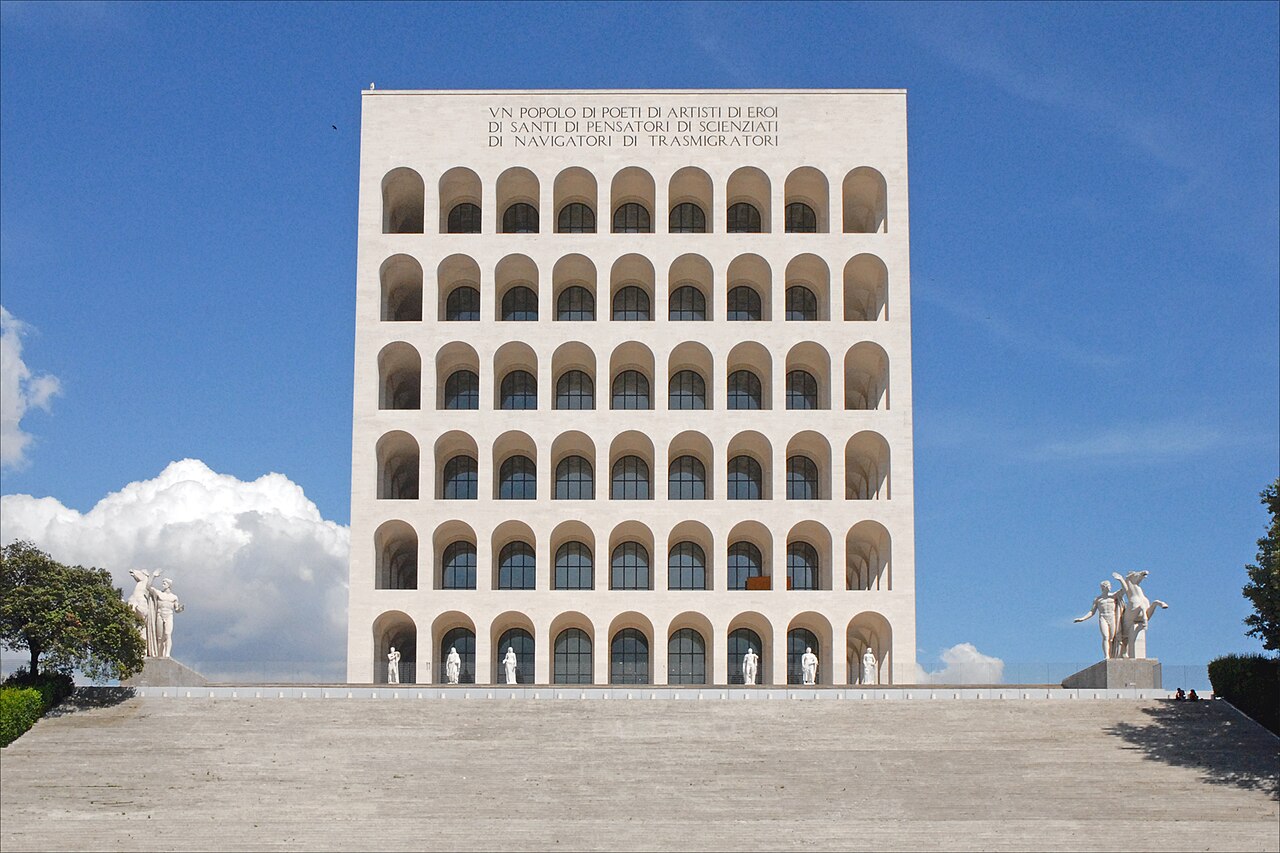
8 min walk
Palazzo della Civiltà Italiana
- Notable
- Historic monument
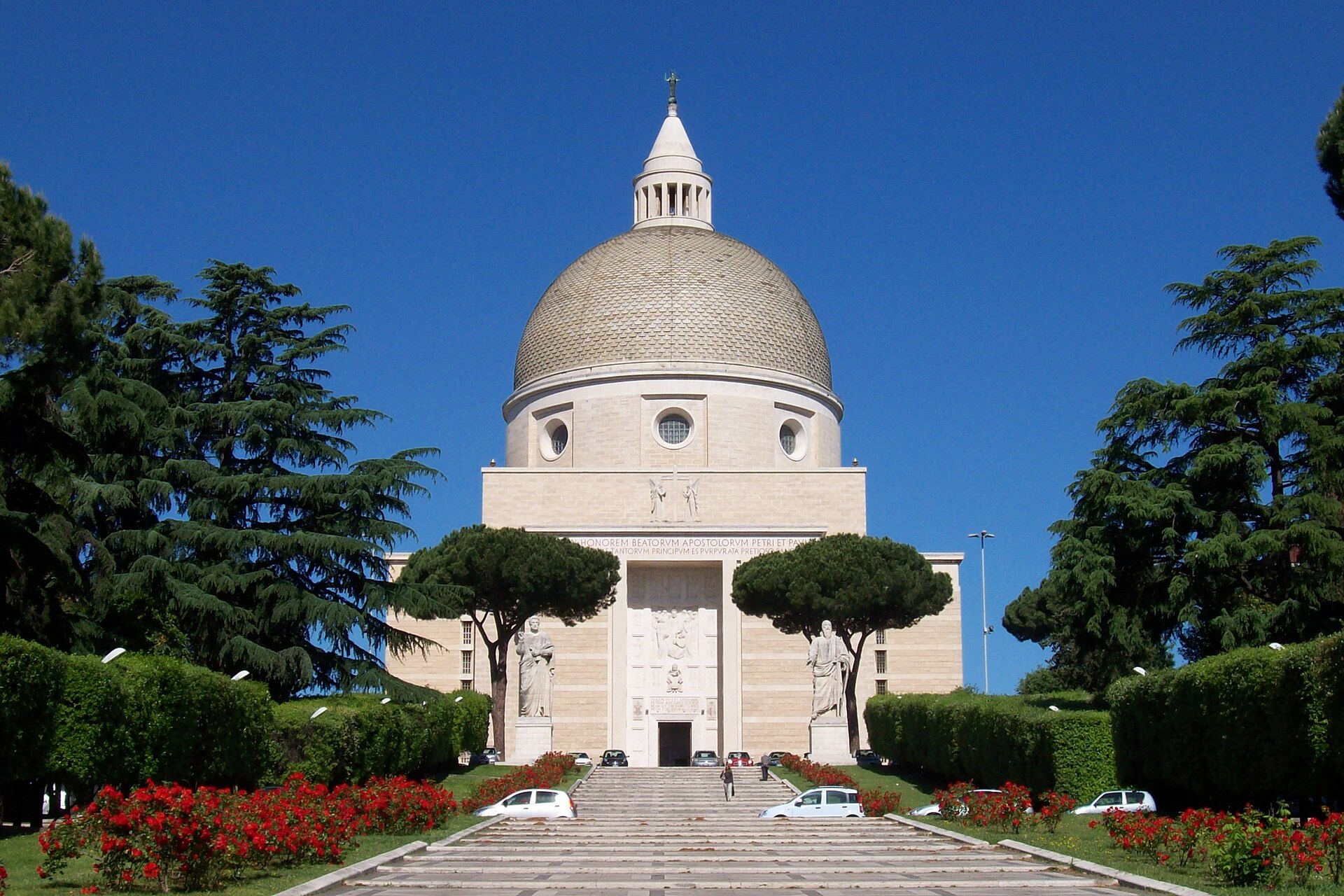
Place of worship · Rome
Basilica parrocchiale dei Santi Pietro e Paolo
The Basilica of Saints Peter and Paul is a Catholic church in Rome’s EUR district, dedicated jointly to the two apostles. Its twentieth-century modernist character sets it apart from the Baroque and Renaissance churches concentrated in the historic centre. The basilica also belongs to the story of EUR, the planned quarter created as an exhibition district during the Fascist era and later developed into a business and residential area. Visit it as both a place of worship and a landmark within Rome’s rationalist urban landscape. The Basilica of Saints Peter and Paul stands as a prominent Roman Catholic church in Rome's EUR district, dedicated to the two apostles who represent the foundational pillars of the early Church. Its modernist architectural character distinguishes it within Rome's diverse sacred landscape. No. This basilica is located in Rome's EUR district and is distinct from Saint Peter's Basilica in Vatican City, which is among the world's largest churches and a major pilgrimage destination.
Checked 2026-08-26 · Source
The interior presents a spacious twentieth-century ecclesiastical environment shaped by modern liturgical design. Its principal interest is the contrast between the basilica’s religious purpose and the planned, geometric character of the surrounding EUR district. The dedication to Saints Peter and Paul gives the church a shared apostolic identity rather than the single dedication found in many Roman churches. Include time for quiet observation, the central nave and the relationship between the interior’s scale and the broad avenues and monumental buildings outside.
Checked 2026-08-26 · Source
Allow thirty to sixty minutes for a respectful visit focused on the church interior, architectural form and time for prayer. The basilica works best as one stop within a wider EUR walk rather than as an isolated trip from central Rome. With additional time, continue toward the Palazzo della Civiltà Italiana, the EUR lake area and the district’s rationalist streets. A half-day gives you enough room to experience the basilica without rushing the open spaces and long perspectives that define this part of the city.
Checked 2026-08-26 · Source
Spring and autumn are comfortable seasons for combining the basilica with an extended walk through EUR. Summer can be hot because the district has broad exposed avenues and large open spaces, so carry water and plan outdoor sections around the strongest heat. The church is a functioning parish, meaning worship shapes the atmosphere and visitor access. Sunday and other liturgical occasions can be especially meaningful for worshippers, while visitors should keep their plans flexible around religious services and moments of prayer.
Checked 2026-08-26 · Source
A visit to this active Catholic basilica is generally approached as entry to a place of worship rather than a ticketed museum attraction. Visitors should dress modestly and maintain a quiet manner inside. Donations can support the church, but the main value of the stop is devotional and architectural rather than a paid exhibition. If a special service or event changes the ordinary experience, follow the arrangements stated by the basilica. Keep the visit considerate: worshippers and parish life take precedence over sightseeing.
Checked 2026-08-26 · Source
EUR is connected to central Rome by Metro Line B. Stations including EUR Palasport and EUR Magliana serve the wider district, followed by a walk through its broad planned streets. Bus services provide additional connections, while driving requires attention to regulated parking and the scale of the avenues. The geometry can feel unfamiliar after the compact historic centre, so use the basilica’s mapped position as your destination. EUR is also comfortable for a walking route linking modernist buildings, gardens, the lake and the church.
Checked 2026-08-26 · Source
This is an active church, so modest clothing, quiet conversation and respectful behaviour are important throughout the visit. Photography should never interfere with Mass, prayer or parish activity. The broad EUR district provides less shade than the historic centre, especially along exposed avenues, making sun protection and water useful in warm weather. Long distances between buildings can make the area feel slower to cross. Give yourself enough walking time, and remember that religious use may affect which parts of the basilica you can enter.
Checked 2026-08-26 · Source
The basilica offers a strong contrast between sacred architecture and EUR’s modernist urban setting. Photograph the exterior from the surrounding open spaces to capture its relationship with the district’s broad geometry, pale stone and long sightlines. Inside, keep equipment discreet and avoid flash or photography during services. Golden-hour light can bring out texture on the exterior and neighbouring rationalist buildings. Rome’s aviation rules restrict drone use, so keep photography ground-based and prioritise the atmosphere of the planned quarter around the church.
Checked 2026-08-26 · Source
No. This basilica is in Rome’s EUR district and is distinct from Saint Peter’s Basilica in Vatican City.
It represents twentieth-century modernist ecclesiastical architecture within Rome’s planned EUR district.
Allow approximately thirty to sixty minutes for the basilica, with extra time for a wider walk through EUR.
It stands in Rome’s EUR district, a planned quarter south of the historic centre known for broad avenues and modernist architecture.
Yes. A visit can be combined with the Palazzo della Civiltà Italiana, the EUR lake area and the district’s rationalist streets.
Wear modest clothing covering shoulders and knees, and keep quiet because the basilica remains an active place of Catholic worship.
Loading the interactive map…
The interactive map could not be loaded.

Last updated:
Source: OpenStreetMap contributors, Wikidata ·