
3 min walk
ヤマミツワ酒販店
- Notable
- Nightlife venue
Language · 11 published
Place of worship · Kyoto
頂法寺
Reviewed by Elena Voss · Roavina Travel Editor
| Monday | 06:00 – 17:00 |
|---|---|
| Tuesday | 06:00 – 17:00 |
| Wednesday | 06:00 – 17:00 |
| Thursday | 06:00 – 17:00 |
| Friday | 06:00 – 17:00 |
| Saturday | 06:00 – 17:00 |
| Sunday | 06:00 – 17:00 |
Parsed from OpenStreetMap opening hours on 2026-09-09.
This place is a Place of worship.
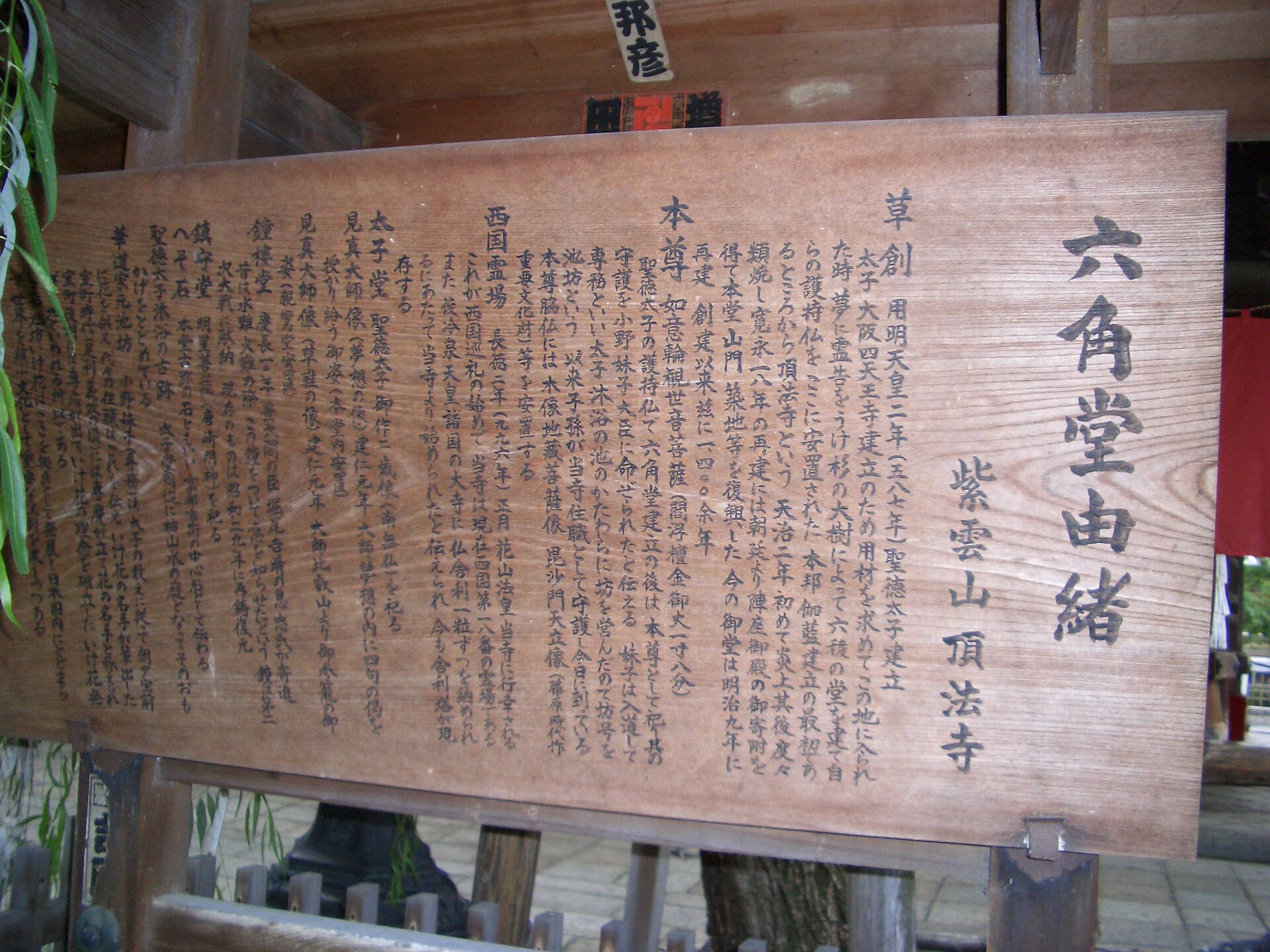
Rokkakudo, formally Chohoji, is a Buddhist temple in central Kyoto near the Karasuma and Sanjo streets. Its common name refers to the hexagonal form associated with the main hall: rokkaku means six angles. The temple is linked with Prince Shotoku and with the Ikenobo school, giving it importance in the story of ikebana. Its downtown position makes it an easy cultural pause between shopping streets, offices and other central Kyoto sights. Rokkakudo is a Buddhist temple in Kyoto, formally known as Chohoji. It occupies a distinctive hexagonal footprint that gives the temple its common name, as rokkaku means six angles or hexagon. The temple is associated with Prince Shotoku, a seminal figure in early Japanese Buddhism. It stands in central Kyoto near the intersection of Karasuma and Sanjo streets, making it an accessible stop amid the city's urban fabric. The site carries significance in Japanese cultural history beyond its religious function. Visitors should verify current admission policies through official channels or on-site information. Official verification is required before visiting.
Checked 2026-08-26 · Source
The defining feature is the hexagonal main hall, which gives the temple its familiar name and distinctive visual identity. The grounds also contain Buddhist religious elements and the living setting of the Ikenobo flower-arrangement tradition. This is a functioning temple rather than a conventional museum, so the experience centres on architecture, religious atmosphere and the compact grounds. Look closely at the geometry of the hall and the contrast between the temple enclosure and the busy central-city streets around it. The temple's hexagonal main hall is its defining architectural feature. Rokkakudo is also known as the birthplace of ikebana, the Japanese art of flower arrangement, through its historical connection to the Ikenobo school.
Checked 2026-08-26 · Source
Most visitors can see Rokkakudo in fifteen to thirty minutes. The site is compact, and its central position makes it easy to include between nearby destinations rather than treating it as a half-day excursion. Allow longer if Buddhist architecture, Prince Shotoku or ikebana interests you, since the temple’s significance rewards a slower look. The small scale also suits travellers who want one focused cultural stop without a lengthy walk across a large complex.
Checked 2026-08-26 · Source
Rokkakudo’s central Kyoto location makes it a practical stop in any season. Spring and autumn bring heavier visitor numbers across the city, while early mornings and weekdays generally create a calmer temple experience. Because the grounds are compact, a busy period can make the visit feel concentrated rather than expansive. Outdoor portions are exposed to weather, so comfortable seasonal clothing helps. Combine the temple with central streets and attractions to make the most of its location.
Checked 2026-08-26 · Source
The supplied guide does not give a confirmed admission amount for Rokkakudo. Carry Japanese yen, since cash is useful for offerings and traditional temple transactions. The modest scale and urban setting make this a short, uncomplicated stop, but your itinerary should leave room for the actual entry arrangement at the temple. Do not describe the visit as free or paid in advance of a current notice, because the guide does not establish either position.
Checked 2026-08-26 · Source
Rokkakudo is near the Karasuma-Sanjo intersection in central Kyoto. Karasuma-Oike Station on the Karasuma Subway Line is within practical walking distance, and the surrounding streets are also served by buses. From Kyoto Station, the subway provides a direct central-city route before the short walk onward. The temple’s location suits visitors staying downtown and makes it straightforward to connect with central shopping, dining and sightseeing on foot.
Checked 2026-08-26 · Source
Rokkakudo is an active religious site set beside busy central streets. Keep your voice low, follow signs and give worshippers room. Some areas may require different footwear arrangements, and interior photography can be restricted. The compact grounds offer little room for large groups or bulky strollers. Watch traffic and cyclists on the approach, particularly around the Karasuma-Sanjo area. A short, flexible visit works best because the temple is one focused stop within a dense urban neighbourhood.
Checked 2026-08-26 · Source
The hexagonal main hall is the natural subject for exterior photographs, especially when framed against the surrounding city streets and temple grounds. Work from public areas and avoid blocking the compact circulation routes. Treat interior religious spaces and statuary with restraint, since photography rules can be stricter inside. Avoid flash unless clearly permitted, and leave tripods and commercial equipment aside in crowded areas. The temple’s geometry rewards close architectural studies as well as wider context shots.
Checked 2026-08-26 · Source
Its hexagonal main hall gives the temple its common name and provides a memorable architectural focus in central Kyoto.
Rokkakudo is associated with the Ikenobo school and is linked with the origins of Japanese flower arrangement.
Allow fifteen to thirty minutes for the compact grounds, or longer if you want to focus on its Buddhist and ikebana connections.
Use the Karasuma Subway Line toward central Kyoto, travel to the Karasuma-Oike area, then continue on foot toward the Karasuma-Sanjo intersection.
The temple stands in central Kyoto near the intersection of Karasuma and Sanjo streets, close to Karasuma-Oike Station.
Focus on the distinctive hexagonal hall, its architectural details and the contrast between the temple enclosure and central Kyoto’s surrounding streets.
Loading the interactive map…
The interactive map could not be loaded.
Last updated:
Source: OpenStreetMap contributors, Wikidata ·