.jpg)
6 min walk
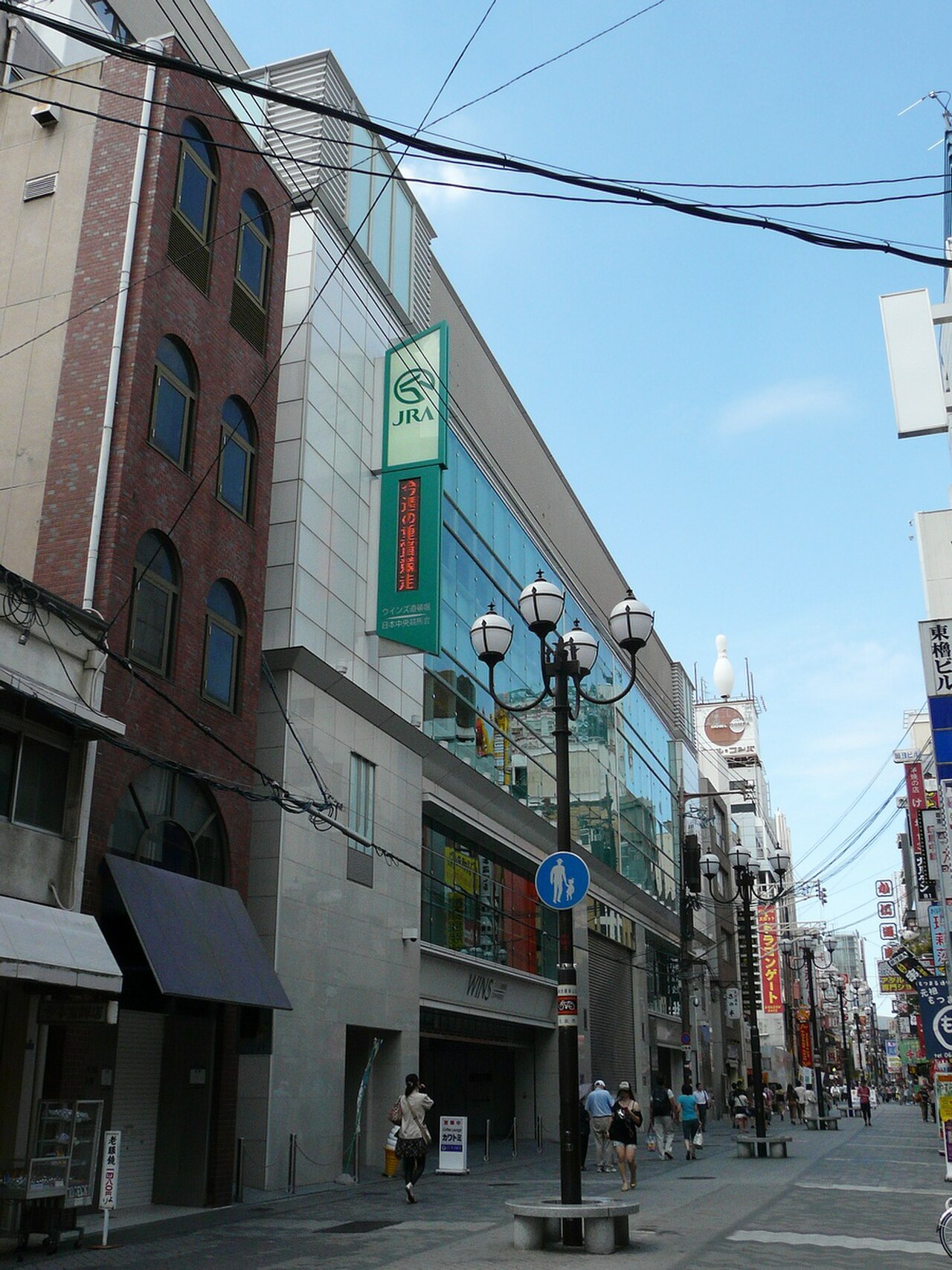
JRAウインズ
- Notable
- Market
Language · 11 published
Market · Osaka
黒門市場
Reviewed by Elena Voss · Roavina Travel Editor
| Monday | 09:00 – 18:00 |
|---|---|
| Tuesday | 09:00 – 18:00 |
| Wednesday | 09:00 – 18:00 |
| Thursday | 09:00 – 18:00 |
| Friday | 09:00 – 18:00 |
| Saturday | 09:00 – 18:00 |
| Sunday | 09:00 – 18:00 |
Checked 2026-08-31 · Source
Read from the OpenStreetMap access tags; anything not listed has no tag recorded.
Set the group type to family in the planner and the day window contracts to about three quarters of a solo day.
This place is a Marketplace.
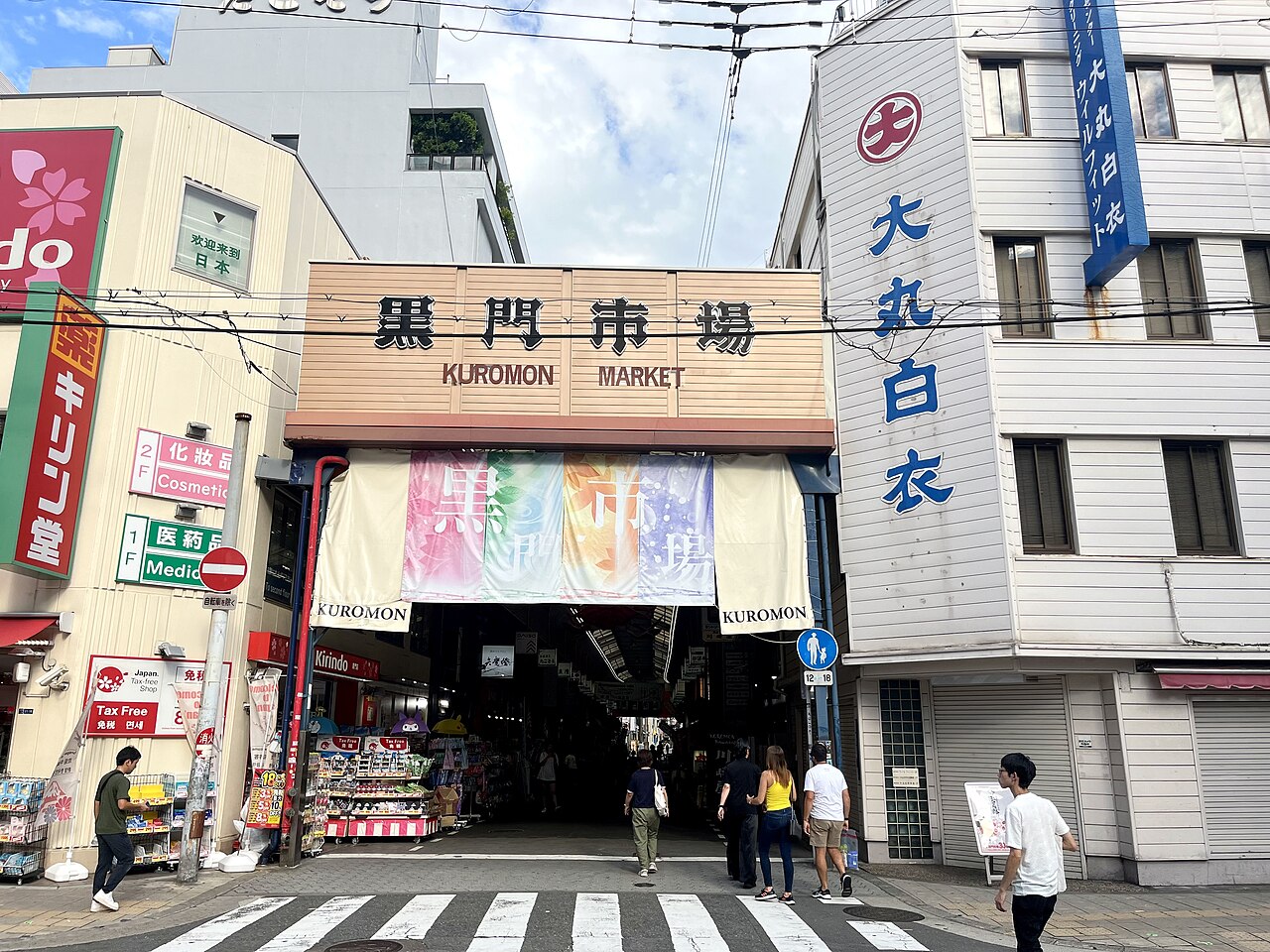
Kuromon Ichiba is a covered shopping street in Nipponbashi, Chuo-ku, in the Minami half of central Osaka. Its own market office gives the address as 2-4-1 Nipponbashi and describes a roofed market stretching about 580 metres with roughly 150 shops. It began and still trades as a fish market — the operator calls it Kuromon Ichiba Fish Market — and seafood continues to set its character: the market names hamo, or conger pike, in summer and fugu in winter as the fish it is known for, and states that at least ten per cent of its seafood shops specialise in those two. What a visitor walks into is not a monument or an attraction with a gate.
Checked 2026-08-31 · Source
The market's own English directory lists 98 shops with published hours, sorted into a food half and a shopping half. The food side runs meat and eggs, fresh seafood, fruit and vegetables, snacks and sweets, restaurants and a catch-all other-food category; 41 of the listed shops are flagged as eat-in, meaning there is somewhere to stand or sit and finish what was just bought. Filters for vegetarian, vegan and halal exist in the same directory, though each returns only a handful of shops — Hana no Ki, open 10:00 to 16:00 and shut on Sundays and public holidays, is the vegetarian entry.
Checked 2026-08-31 · Source
The market publishes no suggested visit length, and this guide records 75 minutes as its own estimate rather than as a sourced fact. The reasoning is simple geometry plus how people actually move here. The arcade is about 580 metres end to end, so walking it once without stopping takes well under ten minutes. Nobody does that. The visit is a sequence of short halts — buy a skewer, wait for it to be grilled, eat it standing, move on — and three or four of those halts with a slow browse between them fills a little over an hour.
Checked 2026-08-31 · Source
The public arcade is accessible daily; most food and retail stalls operate roughly 09:00-18:00 and close independently. Events, ceremonies, maintenance and security measures can alter ordinary access. There is no single market opening time, and the shop-by-shop hours in the operator's directory show why the middle of the morning is the right answer. Of the 98 listed shops, 44 open at 09:00 and another 12 at 08:00; the fish trade starts earlier still, with UOMARU at 06:00 and one shop listed from 05:00. Closing is the tighter constraint: 17:00 is the single most common closing time, given by 29 shops, with 21 more closing at 18:00 and eight at 17:30.
Checked 2026-08-31 · Source
Walking the market is free; food, shopping and tours cost separately. Premium experiences and event products cost separately. There is no admission charge and no ticket of any kind. Kuromon Ichiba is a public covered street with open ends, not an enclosed attraction, and the market's own site publishes no entry price because none exists. What a visitor pays is paid per item, at each shop, and prices are set by the individual trader rather than by the market — the operator's directory lists shops, hours and payment notes but does not publish a price list, so this guide records no price range and does not estimate one.
Checked 2026-08-31 · Source
Osaka Metro and Kintetsu Nipponbashi station. This is the named public-transport approach for an independent visit. The market's access page gives one arrival point for everyone: Osaka Metro Nippombashi Station, Exit No. 10, about five minutes on foot. Nippombashi sits on the Sennichimae Line, three minutes from Namba, which is what makes the market so easy to attach to a Minami day — Dotonbori and Shinsaibashi are already within walking distance and the metro hop is barely worth the fare. From Shin-Osaka the route is the Midosuji Line to Namba, 15 minutes, then the Sennichimae Line three minutes to Nippombashi.
Checked 2026-08-31 · Source
Step-free entrances or public approaches, lifts where required, and accessible toilets serve principal visitor areas. The access description applies to principal visitor areas rather than every historic or operational space. The trap here is treating the market as a single venue with single opening hours. It has none. The practical consequence is that late afternoon disappoints: with 29 shops closing at 17:00, a 16:00 arrival finds a thinning street even though the arcade itself is still open to walk through. Sunday thins it in the same way, with 34 of 98 shops closed. Two further points of manners.
Checked 2026-08-31 · Source
The market publishes no photography rules, and none of what follows is a stated restriction — it is what the place physically gives and what its traders reasonably expect. Kuromon is roofed for its whole length, so the light is flat, even and dim, tinted by the coloured panels and the shop signage overhead. That kills the harsh shadows an open street would give but it also means a phone will reach for a slow shutter; brace against a pillar rather than raising the ISO. There is no golden hour indoors.
Checked 2026-08-31 · Source
The public arcade is accessible daily; most food and retail stalls operate roughly 09:00-18:00 and close independently.
Walking the market is free; food, shopping and tours cost separately.
Step-free entrances or public approaches, lifts where required, and accessible toilets serve principal visitor areas.
Osaka Metro and Kintetsu Nipponbashi station.
Yes. Events, maintenance, weather and ceremonies can change ordinary access.
No. Special tours, exhibitions and upgrades use separate tickets.
Loading the interactive map…
The interactive map could not be loaded.
Last updated:
Source: OpenStreetMap contributors, Wikidata ·