
6 min walk
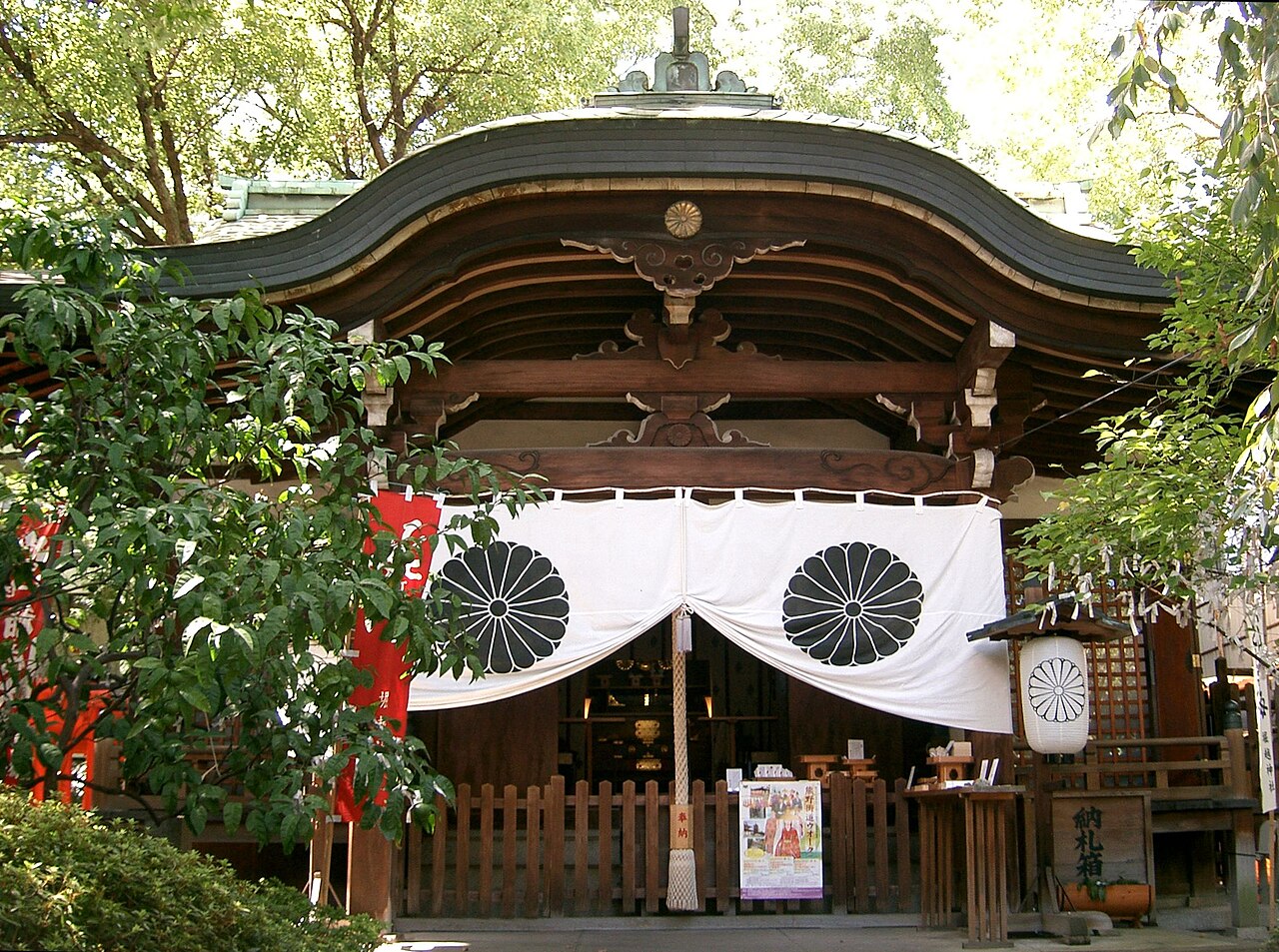
Horikoshi Shrine
- Must see
- Place of worship
Language · 11 published
Place of worship · Osaka
四天王寺
Reviewed by Elena Voss · Roavina Travel Editor
| Monday | 08:30 – 16:30 |
|---|---|
| Tuesday | 08:30 – 16:30 |
| Wednesday | 08:30 – 16:30 |
| Thursday | 08:30 – 16:30 |
| Friday | 08:30 – 16:30 |
| Saturday | 08:30 – 16:30 |
| Sunday | 08:30 – 16:30 |
Checked 2026-08-31 · Source
Read from the OpenStreetMap access tags; anything not listed has no tag recorded.
Set the group type to family in the planner and the day window contracts to about three quarters of a solo day.
This place is a Place of worship. It was established in 593. It was built in the Shitennō-ji style style.
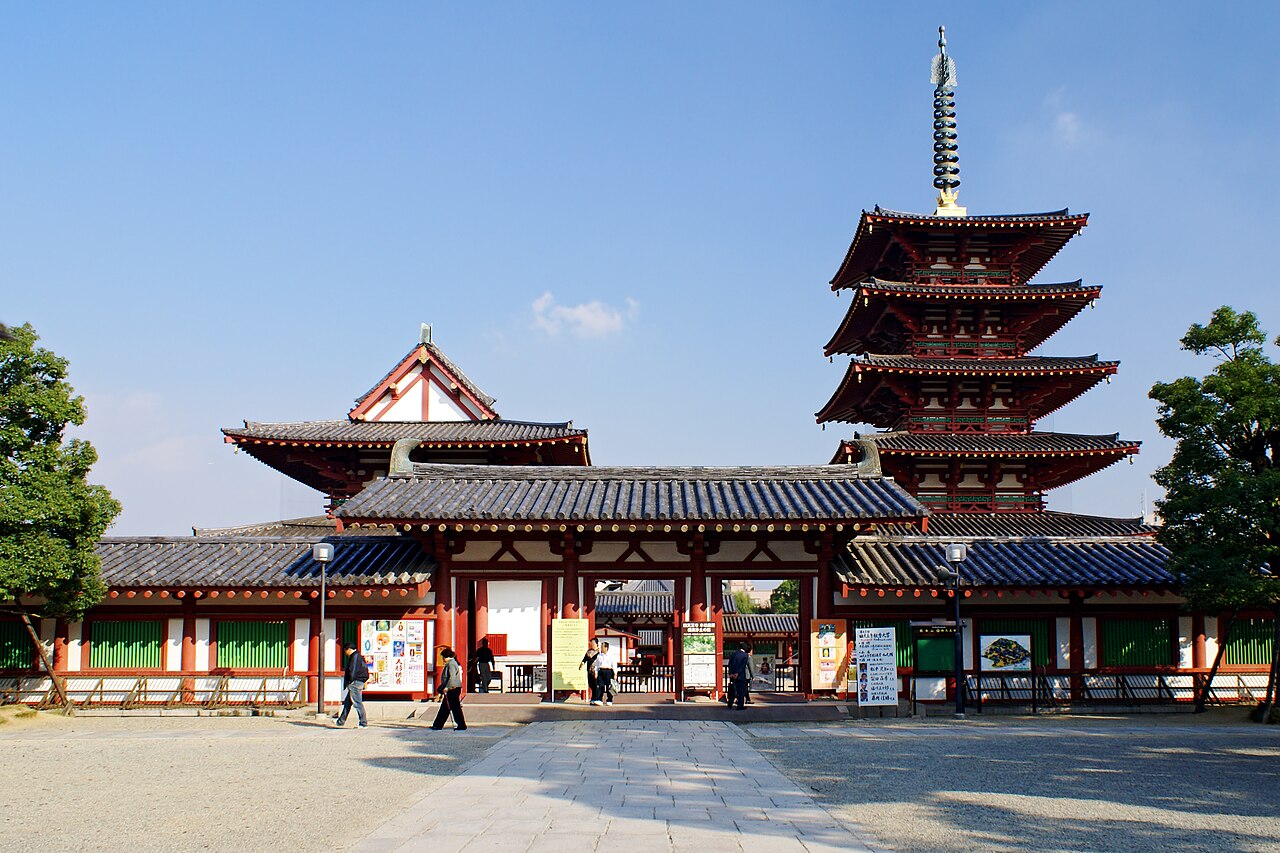
Shitennoji is a working temple in Tennoji ward, in the middle of southern Osaka, and it dates its own founding to 593. The temple's account follows the Nihon Shoki: during the fighting between Mononobe no Moriya and Soga no Umako, Prince Shotoku carved images of the Four Heavenly Kings and vowed that if he won he would build a temple to house them, and Shitennoji is that promise kept. What makes the place worth the walk is the plan rather than the age of any single building.
Checked 2026-08-31 · Source
Three enclosures are ticketed and the rest of the precinct is not, so most of what a visitor sees is free. Inside the central garan, the Kondo holds the Kuse Kannon with the Four Heavenly Kings at the four corners, and a relic rite is performed there every day from eleven in the morning. The five-storey pagoda can be entered, normally from the north side only; the temple calls it the pagoda of the six realms because relics and six strands of Prince Shotoku's hair are said to lie in the foundation stone. The Kodo is divided down the middle into a winter hall with an eleven-headed Kannon and a summer hall with a large Amida.
Checked 2026-08-31 · Source
The temple publishes its own figures, and they are short: about forty minutes for the central garan and the Treasure House together, and about twenty minutes for the Gokuraku-jodo garden. That is an hour of ticketed ground. Around it sits a precinct of roughly 110,000 square metres that costs nothing and takes time to cross, with the Rokuji Reisando, the stone torii, the west gate, the turtle pond and the Taishiden all outside the paid enclosures. Ninety minutes is the honest planning figure for a first visit that buys the garan ticket, looks into the garden and walks the free grounds properly rather than cutting straight through.
Checked 2026-08-31 · Source
Outer grounds open daily; paid central precinct generally 08:30-16:30 April-September and 08:30-16:00 October-March. Events, ceremonies, maintenance and security measures can alter ordinary access. The halls, the central garan and the garden keep two seasons: 8. 30 to 16. 30 from April to September, and 8. 30 to 16. 00 from October to March. The winter closing is early enough to catch out anyone planning a late afternoon, and it applies to the ticketed parts only. The Rokuji Reisando stays open until 18. 00 all year, and the temple's gates never close at all, so the precinct can be walked and the halls prayed at from outside at any hour. On the 21st of each month and on other festival days the ticketed areas open earlier, at 8.
Checked 2026-08-31 · Source
Outer grounds are free; central garden and halls admission is JPY 300 adult. Premium experiences and event products cost separately. There are three separate tickets and no combined one on the temple's price list. The central garan costs 500 yen for adults, university students included, 300 yen for high school students and nothing for anyone at middle school or below. The Gokuraku-jodo garden costs 300 yen for adults, 200 yen for high school students and 200 yen for elementary and middle school students. The Treasure House costs 500 yen for adults and 300 yen for high school students, with middle school and younger free.
Checked 2026-08-31 · Source
Osaka Metro Shitennoji-mae Yuhigaoka station. This is the named public-transport approach for an independent visit. No car is needed and one is a nuisance. The nearest station is Shitennoji-mae Yuhigaoka on the Tanimachi subway line, five minutes on foot to the south. From Tennoji station, where the JR loop line and both the Midosuji and Tanimachi subway lines meet, it is a twelve minute walk north, and from Kintetsu Abenobashi fourteen minutes north. The temple's address is 1-11-18 Shitennoji, Tennoji-ku, and the telephone number on every page of its site is 06-6771-0066.
Checked 2026-08-31 · Source
An accessible route serves principal lower or indoor areas, but shrine bridges, stairs or attraction-specific constraints limit the complete circuit. The access description applies to principal visitor areas rather than every historic or operational space. The garden is the trap. It closes for whole blocks of days through the year rather than on a weekday: 12 to 14 January, then the first ten days of February, March, May, June, July, September, October and November, and the temple adds that it may close for events on top of that. A visitor who has come for the Gokuraku-jodo garden should check the date against that list before buying anything.
Checked 2026-08-31 · Source
The temple publishes no photography rules that could be found on its own site, so treat the halls as places of worship: the interiors are dim, rites run through the day, and a photograph taken during the eleven o'clock relic ceremony in the Kondo is a photograph taken across someone's prayer. Outside, the geometry does the work. Because the Chumon, the pagoda, the Kondo and the Kodo sit on one straight south-to-north line inside a corridor, the strongest frame is the axial one taken from just inside the Chumon with the pagoda centred, and it needs a wide lens because the corridor closes in.
Checked 2026-08-31 · Source
Outer grounds open daily; paid central precinct generally 08:30-16:30 April-September and 08:30-16:00 October-March.
Outer grounds are free; central garden and halls admission is JPY 300 adult.
An accessible route serves principal lower or indoor areas, but shrine bridges, stairs or attraction-specific constraints limit the complete circuit.
Osaka Metro Shitennoji-mae Yuhigaoka station.
Yes. Events, maintenance, weather and ceremonies can change ordinary access.
No. Special tours, exhibitions and upgrades use separate tickets.
Loading the interactive map…
The interactive map could not be loaded.
Last updated:
Source: OpenStreetMap contributors, Wikidata ·