
1 min walk
Shinsekai
- Must see
- Historic monument
Language · 11 published
Viewpoint · Osaka
通天閣
Reviewed by Elena Voss · Roavina Travel Editor
| Monday | 10:00 – 20:00 |
|---|---|
| Tuesday | 10:00 – 20:00 |
| Wednesday | 10:00 – 20:00 |
| Thursday | 10:00 – 20:00 |
| Friday | 10:00 – 20:00 |
| Saturday | 10:00 – 20:00 |
| Sunday | 10:00 – 20:00 |
Checked 2026-08-31 · Source
Read from the OpenStreetMap access tags; anything not listed has no tag recorded.
Set the group type to family in the planner and the day window contracts to about three quarters of a solo day.
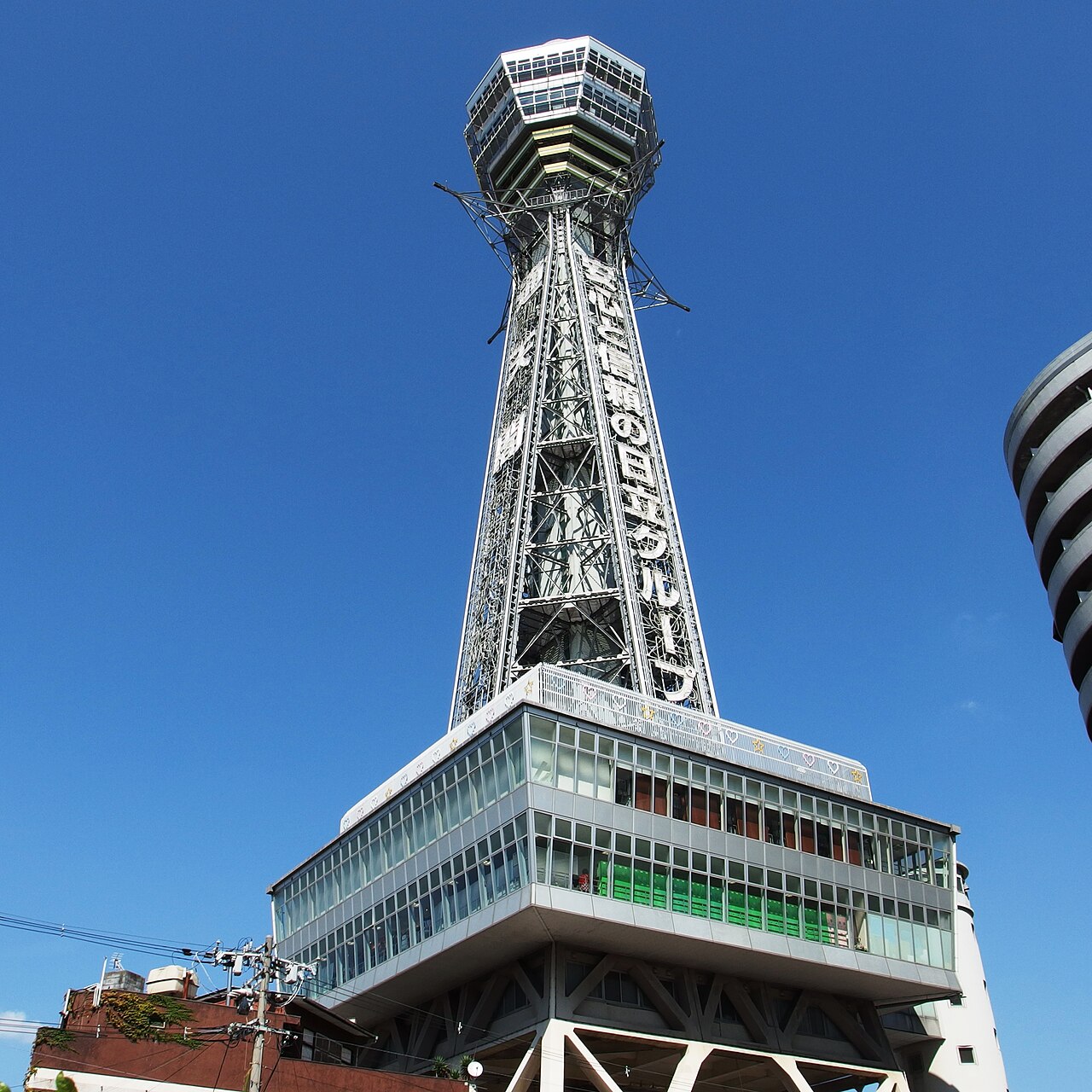
This place is a Viewpoint. It opened in 1956. It was designed by Tachū Naitō. It is built of steel. It carries the Registered Tangible Cultural Property of Japan heritage designation.
Tsutenkaku is an observation tower in Shinsekai, in Osaka's Naniwa ward, and it is the second tower to stand on the spot. The first went up in 1912, a 64-metre hybrid of the Eiffel Tower and the Arc de Triomphe, joined to the Luna Park amusement grounds beside it by an aerial cable car; at the time it was the second tallest structure in Asia. Fire damaged it badly in 1943 and it was not repaired. The frame was taken down and the steel went into the war effort. After the war residents pressed for a replacement, a private company, Tsutenkaku Kanko Co. , Ltd.
Checked 2026-08-31 · Source
The tower is read from the top down, and the operator numbers its floors by their height above ground. The highest point a visitor reaches is the open-air Tenbo Paradise at 94. 5 metres, an 8. 5-metre-wide circular walkway with nothing between the railing and the city, reached by stairs from the deck below. Attached to it at 92. 5 metres is TIP THE TSUTENKAKU, a 5. 4-metre jetty 1. 5 metres wide whose outer end is a 12-square-metre glass floor. Below that, at 87.
Checked 2026-08-31 · Source
Allow about an hour for the tower itself, and treat that as the working figure rather than a published one, because the operator does not state a suggested visit length anywhere on its site. The hour covers the queue at the first-floor ticket centre, the lift up, both indoor decks, the climb to the open-air deck and the walk back down through the Top Floor, the Under Floor and the basement shops, which is the route the building funnels everyone along. Half of that hour is circulation, not viewing; the decks themselves are small and a slow circuit of each takes ten minutes. Two things stretch it.
Checked 2026-08-31 · Source
Open daily 10:00-20:00, last admission 19:30; special outdoor deck and slide products use separate hours. Events, ceremonies, maintenance and security measures can alter ordinary access. The tower keeps one set of hours all week. The general observation deck and the open-air deck both run 9:00 to 21:45, with the last admission to the general deck at 21:15 and the last entry to the open-air deck at 21:35. The shops close earlier: the second-floor official shop and the basement Waku Waku Land at 21:30, the third-floor select shop at 19:30.
Checked 2026-08-31 · Source
General observatory adult admission is around JPY 1,200; slide and special deck products cost extra. Premium experiences and event products cost separately. Admission to the decks is 1,500 yen for adults, meaning anyone 15 or over, and 800 yen for children aged 5 to 14. That single price is a set: the operator sells the general deck and the open-air Tenbo Paradise only together, so there is no cheaper indoor-only ticket. Holders of a disability certificate pay 1,300 and 700 yen respectively on showing the booklet at the ticket counter, a copy being acceptable, and one accompanying person is charged at the same reduced rate while a second and any further companions pay the full fare.
Checked 2026-08-31 · Source
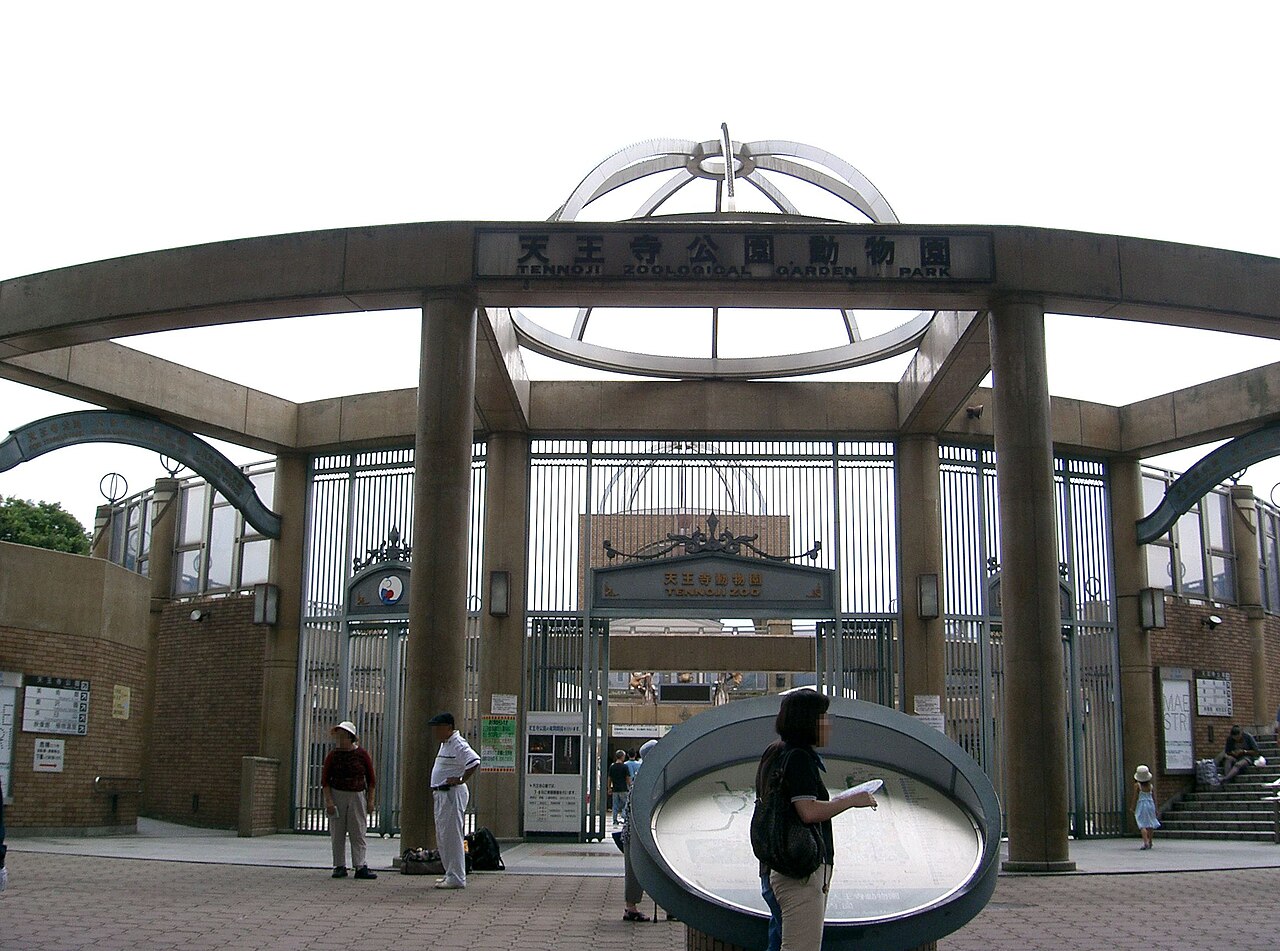
Osaka Metro Ebisucho or JR Shin-Imamiya stations. This is the named public-transport approach for an independent visit. Tsutenkaku stands at 1-18-6 Ebisu-higashi in Naniwa ward, and it is a short walk from four different railways. The closest are Ebisucho on the Osaka Metro Sakaisuji line, three minutes from exit 3, and Ebisucho on the Hankai tram line, also three minutes. Dobutsuen-mae on the Midosuji line is six minutes from exit 1, and JR Shin-Imamiya is six minutes from the east exit, which the station signs label the Tsutenkaku exit. Nankai's Shin-Imamiya station is ten minutes from the west exit.
Checked 2026-08-31 · Source
An accessible route serves principal lower or indoor areas, but shrine bridges, stairs or attraction-specific constraints limit the complete circuit. The access description applies to principal visitor areas rather than every historic or operational space. The open-air deck is the part of the visit that can be taken away. The operator states that it closes without notice in rain, strong wind or dense fog, and since the ticket is sold only as a set there is no separate refund for losing it. It is also reached by stairs, and the operator asks visitors who are unsteady on their feet or using a wheelchair not to go up, for safety.
Checked 2026-08-31 · Source
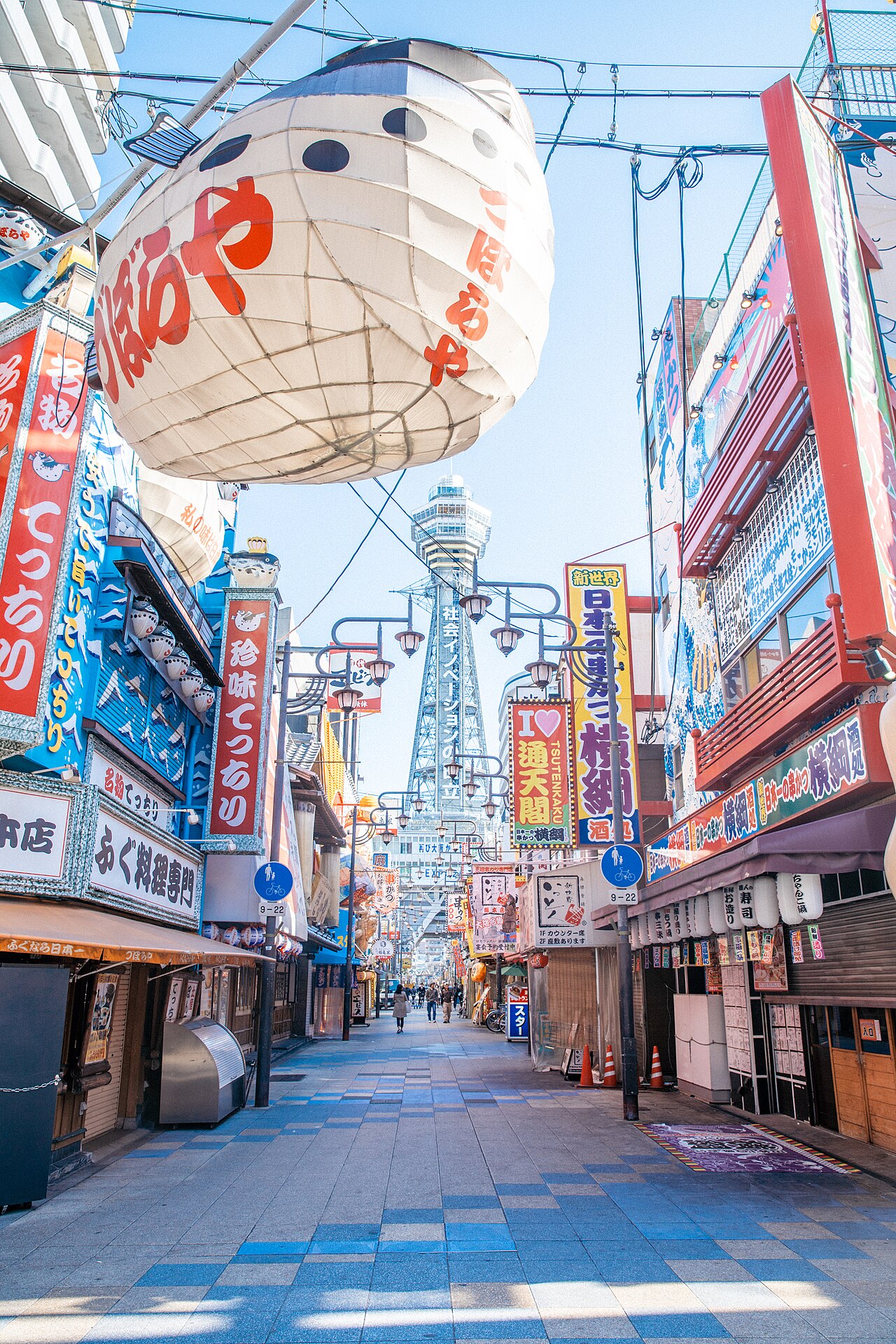
The tower is a better subject than a viewpoint, and the pictures worth planning for are taken from the street. The classic frame is from the middle of one of the covered shopping streets that aim at the tower, where the shaft sits squarely between the shopfronts and the hanging signs give it a foreground; the same shot works from the open crossings on either side, with the older Shinsekai frontages filling the lower half. Both want either flat overcast light or the twenty minutes after sunset, when the tower's LED skin is lit and the sky still holds colour. Full darkness flattens the tower into a bright outline and loses the street around it.
Checked 2026-08-31 · Source
Open daily 10:00-20:00, last admission 19:30; special outdoor deck and slide products use separate hours.
General observatory adult admission is around JPY 1,200; slide and special deck products cost extra.
An accessible route serves principal lower or indoor areas, but shrine bridges, stairs or attraction-specific constraints limit the complete circuit.
Osaka Metro Ebisucho or JR Shin-Imamiya stations.
Yes. Events, maintenance, weather and ceremonies can change ordinary access.
No. Special tours, exhibitions and upgrades use separate tickets.
Loading the interactive map…
The interactive map could not be loaded.
Last updated:
Source: OpenStreetMap contributors, Wikidata ·