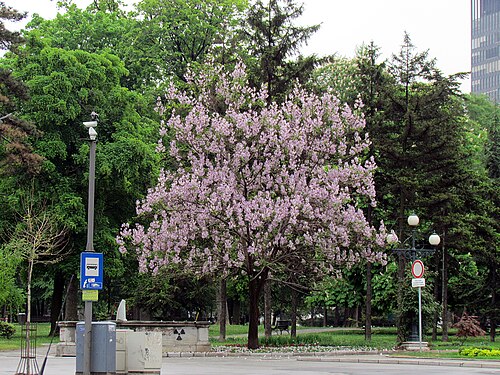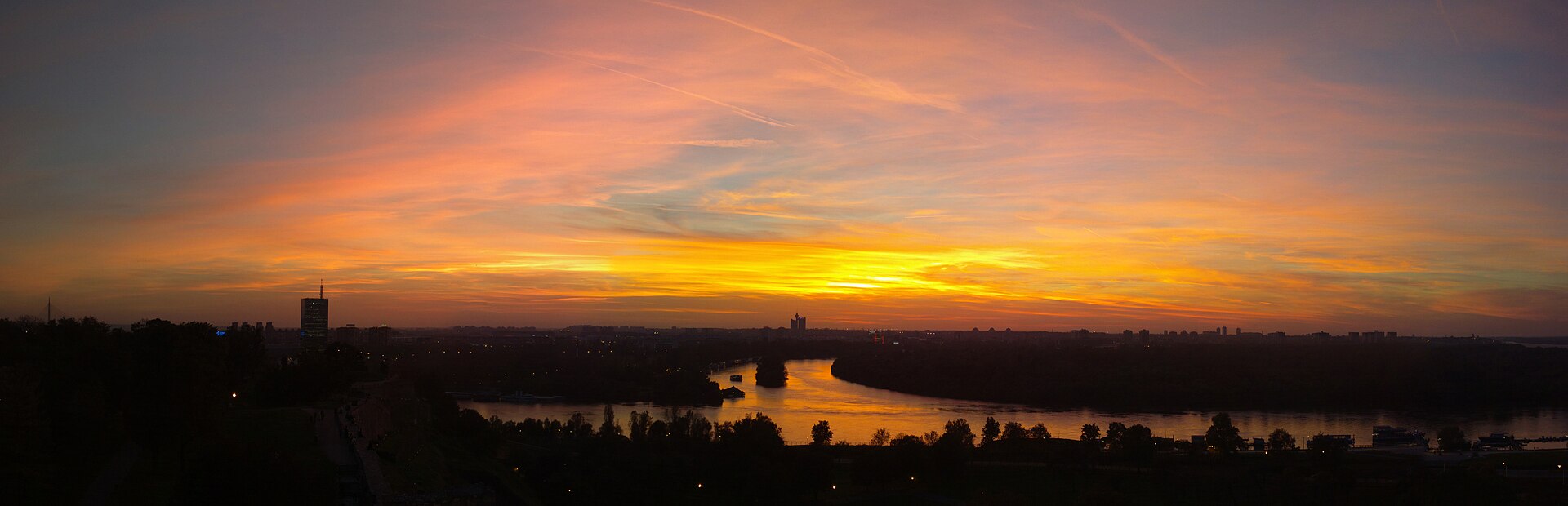
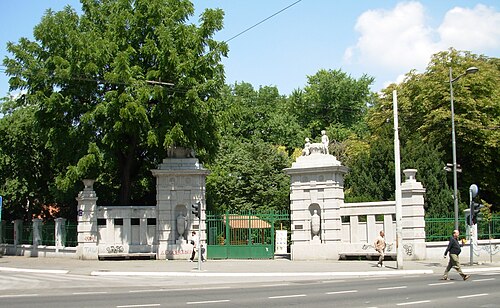
A photograph of Belgrade

City guide · Serbia

Belgrade

Belgrade is 389.12 km² holding 1,197,714 people, and it stands on the point where the Sava runs into the Danube. That confluence is why the city exists and why...

Photograph · Vladimir Nolic · CC BY-SA 4.0

1,817 Places
10 Districts
Suggested stay
2–3 days
Getting around
Tram, bus and on foot

Turn this list into a plan

Set your days, your pace and the hours you actually want to be out. The planner works around closing days and travel time, and leaves room to eat.

Plan Belgrade

Reviewed by Elena Voss · Roavina Travel Editor

Belgrade is 389.12 km² holding 1,197,714 people, and it stands on the point where the Sava runs into the Danube.

That confluence is why the city exists and why it has been fought over so relentlessly: it has been battled over in 115 wars and razed 44 times. The name Beograd means white city.

The administrative area holds 1,682,720 people across 3,234.96 km² in 17 municipalities. The part a visitor uses is a fraction of that — the old town on the ridge above the rivers, and the streets running down from it.

Checked 2026-08-23

Practical information

Language spoken
Serbian
Written in both Cyrillic and Latin; English is understood in tourist districts
Dialling code
+381 11
Belgrade landlines; drop the leading 0 of 011 when calling from abroad
Currency
Serbian dinar (RSD)
Euros are not accepted; cards are widely taken in Belgrade
Emergency number
112
One number across the country; 194 reaches an ambulance directly
Plug type
Type C and F · 230 V
Standard European two-pin
Tap water
Not recorded
No verified national source in the dataset

Planning a visit

September · September moderates to a 23.9°C mean high in Belgrade with 204 sunshine hours and 55.3 mm of rain.

  1. January: viable with meaningful trade-offs
  2. February: viable with meaningful trade-offs
  3. March: good time to visit
  4. April: best time to visit
  5. May: best time to visit
  6. June: good time to visit
  7. July: viable with meaningful trade-offs
  8. August: viable with meaningful trade-offs
  9. September: best time to visit — current month
  10. October: best time to visit
  11. November: good time to visit
  12. December: viable with meaningful trade-offs

Sources

Top things to see

Ranked by importance — sitelinks, pageviews and heritage status, not editor preference.

  1. Topčider Topčider
    02 1 hour

    Topčider

    Топчидерски парк

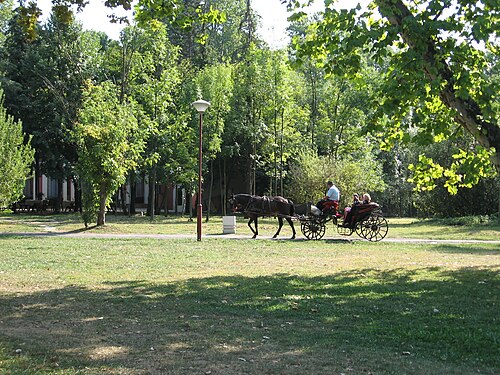
    Topčider is a forest park in Belgrade built around the country residence of Prince Miloš Obrenović, the ruler who founded modern Serbia.

    • Must see
    • Nature site
    • Savski Venac
  2. Great War Island Great War Island
    03 3 hours

    Great War Island

    ПИО Велико ратно острво

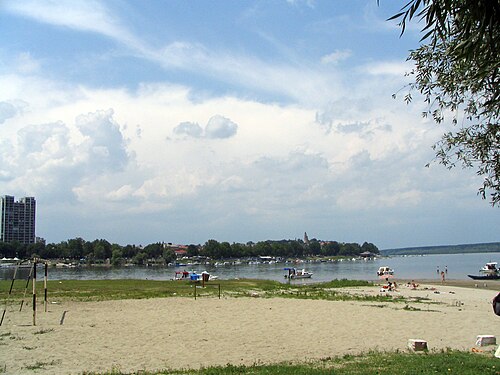
    Great War Island is an uninhabited river island at the point where the Sava flows into the Danube, inside Belgrade's Zemun municipality.

    • Must see
    • Nature site
    • Zemun
  3. Kalemegdan Park Kalemegdan Park
    04 1 hour

    Kalemegdan Park

    Калемегдан

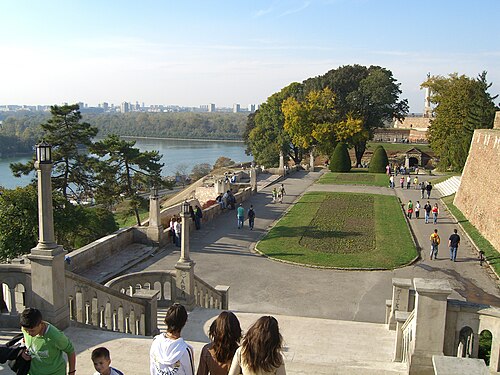
    Kalemegdan Park is the 53-hectare public park that wraps around Belgrade Fortress on a 125-metre-high cliff at the junction of the Sava and Danube rivers.

    • Must see
    • Nature site
    • Stari Grad
  4. Dedinje Royal Compound Dedinje Royal Compound
    05 2 hr 30 min

    Dedinje Royal Compound

    Краљевски комплекс

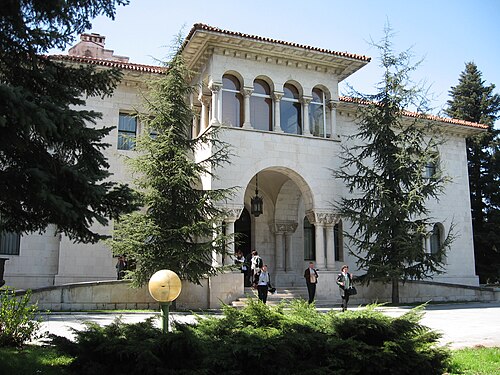
    The Royal Compound (Kraljevski kompleks) is the enclosed park in Dedinje, on the wooded ridge south-west of central Belgrade, that King Alexander I Karadordevic chose in the 1920s as the site for a new royal residence away from the old…

    • Must see
    • Nature site
    • Savski Venac
  5. Pioneers Park Pioneers Park
    06 1 hour

    Pioneers Park

    Пионирски парк

    Pioneers Park is a compact green space in central Belgrade between the Old Palace and New Palace. Its importance comes from this civic setting: lawns, planted areas and paths sit beside two prominent palace buildings in the capital’s administrative centre.

    • High
    • Nature site
    • Stari Grad

Source: OpenStreetMap contributors, Wikidata ·

Where to base yourself

District boundaries come from OSM administrative relations, so a district page holds exactly the places inside it — plus, for the islands and the coast, the nearest district by proximity.

How the city is laid out

Two Belgrades, split by the Sava.

Old Belgrade sits on the ridge on the right bank, above the confluence. The fortress is at the point; Stari Grad, the old town, runs back from it; Vračar rises behind that with the Church of Saint Sava on top; Dorćol drops north towards the Danube and Savamala south towards the Sava.

New Belgrade is on the left bank of the Sava, built from 1948 onward on empty ground to demonstrate that Yugoslavia was at the forefront of progress. It is towers and boulevards on a grid and it is a different city.

Zemun, further up the Danube on the left bank, was a separate town under Austria-Hungary until the twentieth century and still reads as one — low houses, a hill with a tower, and the border of an empire running through it.

Checked 2026-08-23

Getting around

Trams, buses, trolleybuses and walking. There is no metro.

A metro has been discussed for decades and is not in operation; anyone reading about the Belgrade metro is reading about a construction programme, not a way to get across the city today.

The old town is compact and the walk from the fortress to the Church of Saint Sava takes about half an hour, all of it through the parts a visitor came for. New Belgrade and Zemun need transport.

Taxis are cheap by western European standards and are the usual way across the river at night.

Checked 2026-08-23

More city guides

Common questions

How many days does Belgrade need?

Two to three. Two cover the fortress, Kalemegdan, the old town and the Church of Saint Sava. A third adds Zemun on the Danube and a look at New Belgrade.

Is there a metro?

No. Belgrade runs trams, buses and trolleybuses, and a metro has been discussed for decades without entering service. The old town is walkable and taxis are cheap.

What does Beograd mean?

White city. The name is literal.

Why is the city so scarred?

It stands where the Sava meets the Danube, which made it the frontier between empires. It has been fought over in 115 wars and razed 44 times.

What is the difference between Old and New Belgrade?

The Sava. Old Belgrade is the ridge above the confluence with the fortress at its point. New Belgrade is on the left bank, built from 1948 on empty ground as a demonstration of Yugoslav modernity.

Which districts should I stay in?

Stari Grad for the old town, Vračar behind it for a quieter residential base, Dorćol towards the Danube and Savamala on the Sava for the nightlife. Zemun is a separate town in feel and is further out.