A photograph of Belgrade

City guide · Serbia

Up to 1 hour in Belgrade, Serbia — page 2

Belgrade is 389.12 km² holding 1,197,714 people, and it stands on the point where the Sava runs into the Danube. That confluence is why the city exists and why...

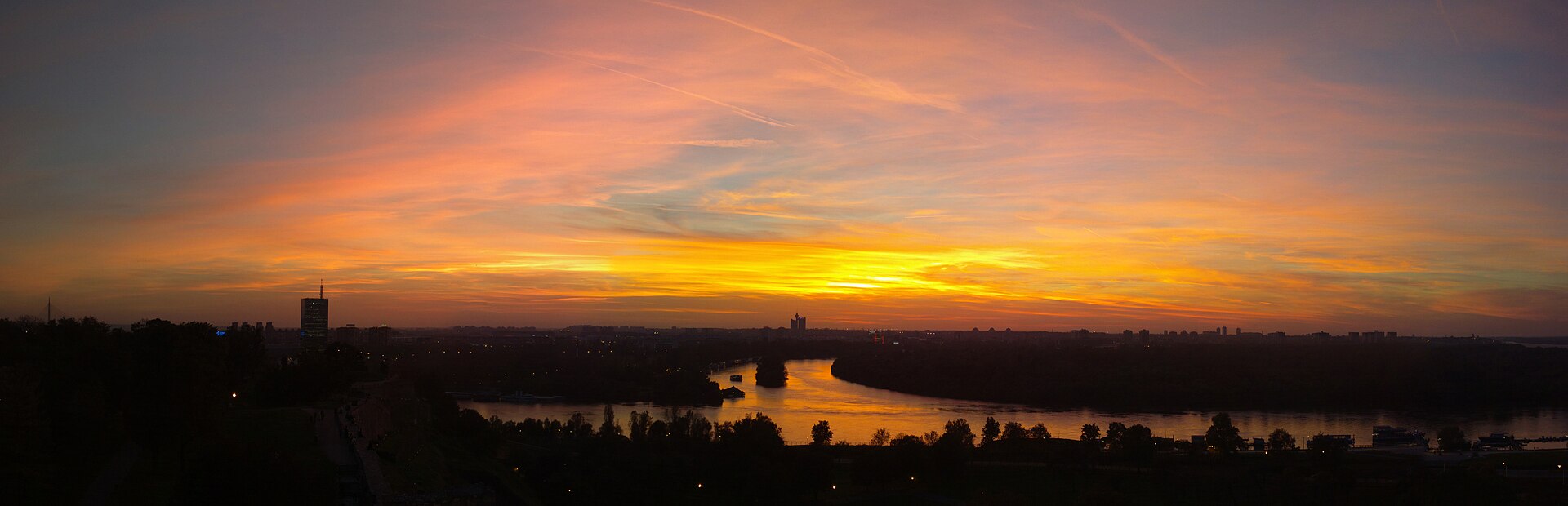
Photograph · Vladimir Nolic · CC BY-SA 4.0

1,817 Places
10 Districts
Suggested stay
2–3 days
Getting around
Tram, bus and on foot

Turn this list into a plan

Set your days, your pace and the hours you actually want to be out. The planner works around closing days and travel time, and leaves room to eat.

Plan Belgrade

Reviewed by Elena Voss · Roavina Travel Editor

Belgrade is 389.12 km² holding 1,197,714 people, and it stands on the point where the Sava runs into the Danube.

That confluence is why the city exists and why it has been fought over so relentlessly: it has been battled over in 115 wars and razed 44 times. The name Beograd means white city.

The administrative area holds 1,682,720 people across 3,234.96 km² in 17 municipalities. The part a visitor uses is a fraction of that — the old town on the ridge above the rivers, and the streets running down from it.

Checked 2026-08-23

Practical information

Language spoken
Serbian
Written in both Cyrillic and Latin; English is understood in tourist districts
Dialling code
+381 11
Belgrade landlines; drop the leading 0 of 011 when calling from abroad
Currency
Serbian dinar (RSD)
Euros are not accepted; cards are widely taken in Belgrade
Emergency number
112
One number across the country; 194 reaches an ambulance directly
Plug type
Type C and F · 230 V
Standard European two-pin
Tap water
Not recorded
No verified national source in the dataset

Planning a visit

September · September moderates to a 23.9°C mean high in Belgrade with 204 sunshine hours and 55.3 mm of rain.

  1. January: viable with meaningful trade-offs
  2. February: viable with meaningful trade-offs
  3. March: good time to visit
  4. April: best time to visit
  5. May: best time to visit
  6. June: good time to visit
  7. July: viable with meaningful trade-offs
  8. August: viable with meaningful trade-offs
  9. September: best time to visit — current month
  10. October: best time to visit
  11. November: good time to visit
  12. December: viable with meaningful trade-offs

Sources

Top things to see

Ranked by importance — sitelinks, pageviews and heritage status, not editor preference.

  1. Monument of Gratitude to France Monument of Gratitude to France
    26 10 min

    Monument of Gratitude to France

    Споменик захвалности Француској

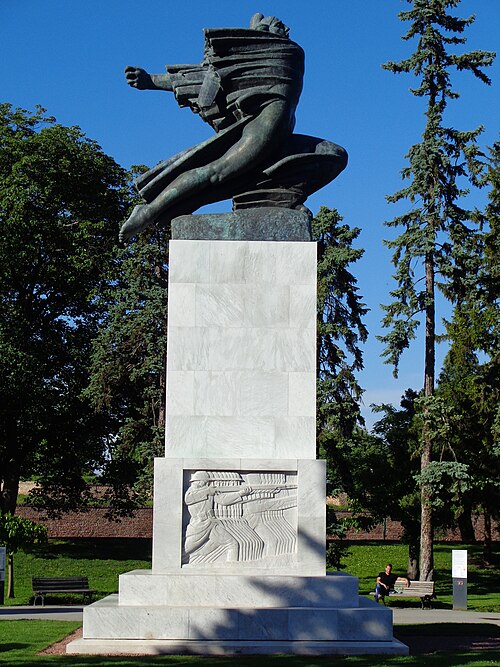
    Twenty thousand people filled Kalemegdan Park on 11 November 1930 to watch King Alexander I, Queen Maria, Prince Paul and Princess Olga unveil a bronze woman striding forward with one arm raised — Belgrade's Monument of Gratitude to France, dedicated…

    • Must see
    • Historic monument
    • Stari Grad
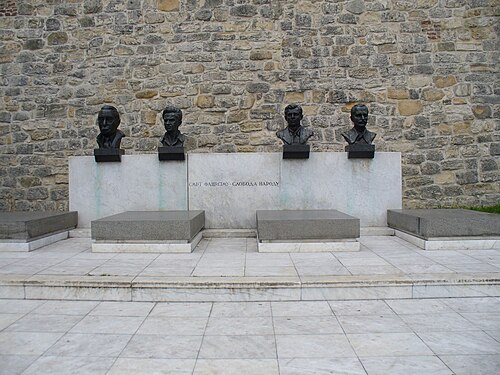
  2. Tomb of national heroes on Kalemegdan Tomb of national heroes on Kalemegdan
    27 10 min

    Tomb of national heroes on Kalemegdan

    Гробница народних хероја

    The Tomb of National Heroes is a memorial in Kalemegdan Park at Belgrade Fortress. The public enterprise that manages the fortress dates the tomb to 1948.

    • Must see
    • Historic monument
    • Stari Grad
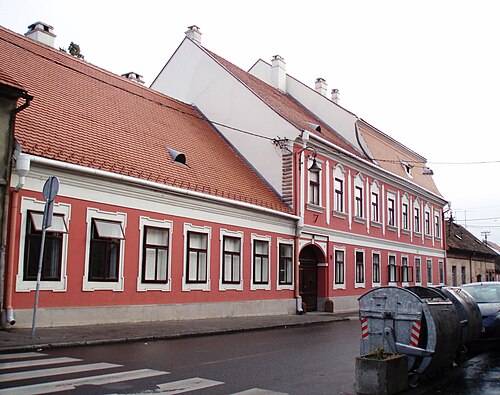
  3. Ičko’s House Ičko’s House
    28 20 min

    Ičko’s House

    Ičkova kuća

    Ičko's House at 18 Bežanijska street in Zemun is one of the oldest surviving town houses in the Belgrade area, built in 1793 in a plain Classical style — and it takes its name from a diplomat who hid there…

    • Must see
    • Historic monument
    • Zemun
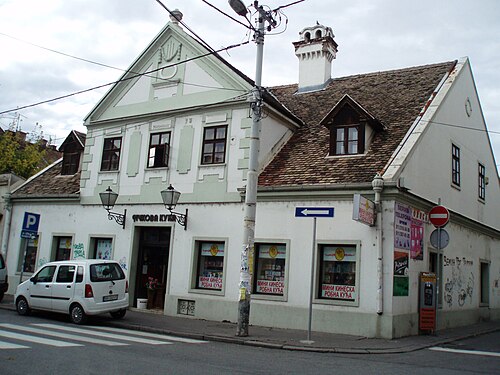
  4. Jevrem Grujić's House Jevrem Grujić's House
    29 10 min

    Jevrem Grujić's House

    Дом Јеврема Грујића

    The house known today as Jevrem Grujic's House is one of the oldest preserved civic houses in Belgrade's old town, built in the early decades of the nineteenth century, in the years after the Serbian uprisings when the town's Ottoman-era…

    • Must see
    • Museum
    • Stari Grad
  5. Historical Museum of Serbia Historical Museum of Serbia
    30 1 hour

    Historical Museum of Serbia

    Историјски музеј Србије

    The Historical Museum of Serbia (Istorijski muzej Srbije) was established in 1963 as the national institution charged with collecting material on Serbian history from the medieval state through the twentieth century, distinct from the archaeology-focused National Museum next to Republic…

    • Must see
    • Museum
    • Stari Grad
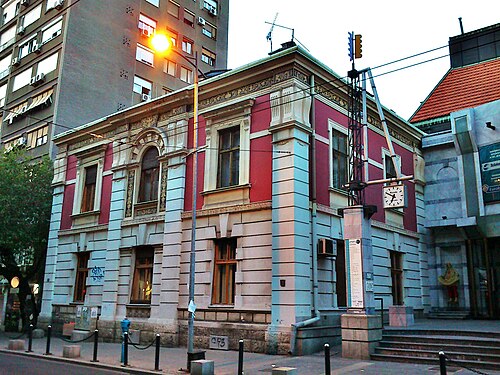
  6. Jewish Historical Museum Jewish Historical Museum
    31 1 hour

    Jewish Historical Museum

    Јеврејски историјски музеј

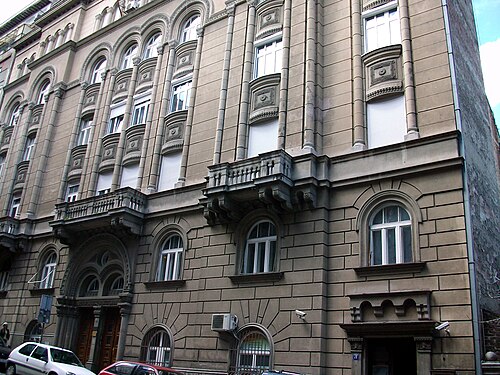
    The Jewish Historical Museum (Jevrejski istorijski muzej) opened in 1948, founded by the historian Lavoslav Kadelburg and colleagues under the Federation of Jewish Communities of Yugoslavia, and it remains housed inside the federation's own building on Kralja Petra street in…

    • Must see
    • Museum
    • Stari Grad
  7. Manak's House Manak's House
    32 45 min

    Manak's House

    Манакова кућа

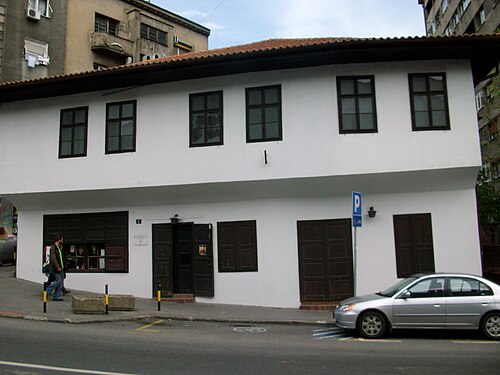
    Manak House is a timber-framed merchant house in Savamala, Belgrade, that now holds an ethnographic collection inside the walls it was actually lived in.

    • Must see
    • Museum
    • Savski Venac
  8. Mehmed Paša Sokolović's Fountain Mehmed Paša Sokolović's Fountain
    33 45 min

    Mehmed Paša Sokolović's Fountain

    Чесма Мехмед-паше Соколовића

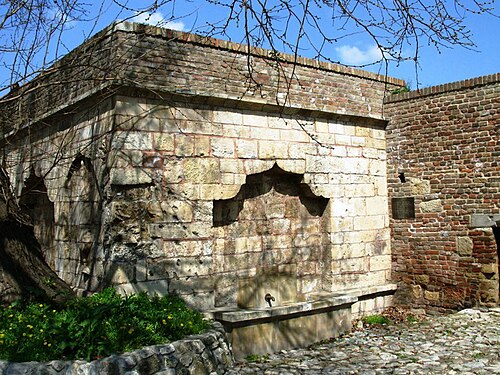
    Mehmed Paša Sokolović's Fountain is a sixteenth-century Ottoman drinking fountain in the Upper Town of Belgrade Fortress. Erected between 1576 and 1577, it is the only endowment of Ottoman vizier Mehmed Paša Sokolović in Belgrade.

    • Must see
    • Historic monument
    • Stari Grad
  9. Zindan Gate Zindan Gate
    34 45 min

    Zindan Gate

    Зиндан капија

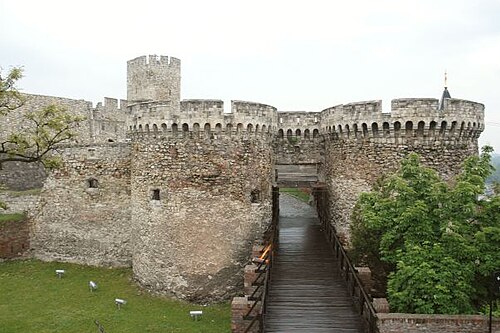
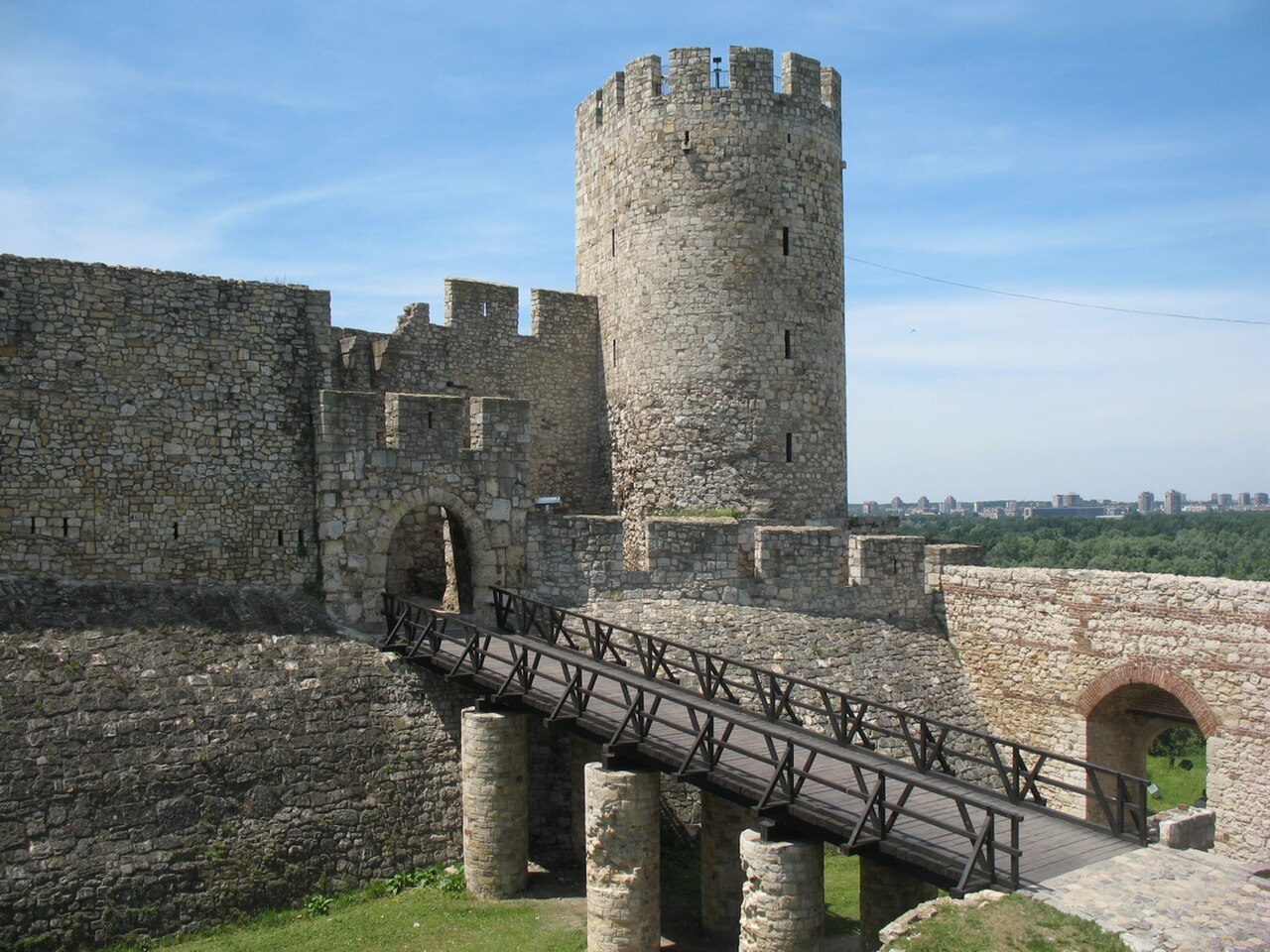
    Zindan Gate is a mid-15th-century barbican at Belgrade Fortress, built as a small forward defence for the Eastern Gate.

    • High
    • Historic monument
    • Stari Grad
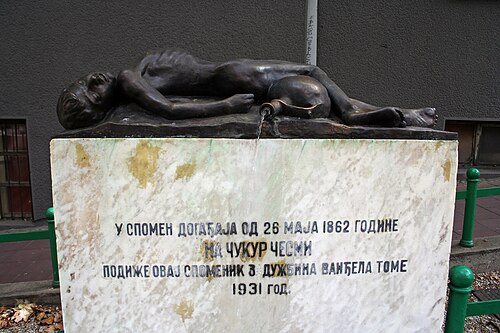
  10. Čukur Fountain Čukur Fountain
    35 5 min

    Čukur Fountain

    Чукур чесма

    The Čukur Fountain is a monument in Dobračina Street, Dorćol, marking the spot where a killing in 1862 set off a night of street fighting and, two days later, an Ottoman bombardment of Belgrade.

    • High
    • Historic monument
    • Stari Grad
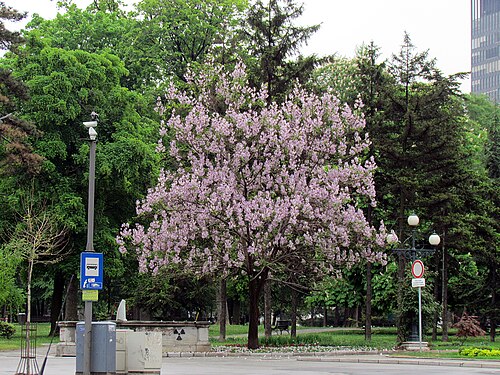
  11. Pioneers Park Pioneers Park
    36 1 hour

    Pioneers Park

    Пионирски парк

    Pioneers Park is a compact green space in central Belgrade between the Old Palace and New Palace. Its importance comes from this civic setting: lawns, planted areas and paths sit beside two prominent palace buildings in the capital’s administrative centre.

    • High
    • Nature site
    • Stari Grad
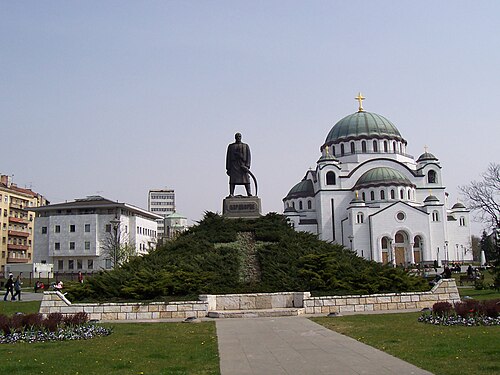
  12. Karađorđev Park Karađorđev Park
    37 1 hour

    Karađorđev Park

    Карађорђев парк

    Karađorđev Park is a memorial green space beside Bulevar oslobođenja, set between the National Library of Serbia and the Church of Saint Sava.

    • High
    • Nature site
    • Vračar
  13. Vračar plateau Vračar plateau
    38 1 hour

    Vračar plateau

    Врачарски плато

    Vračar plateau is an open civic and religious setting on one of Belgrade’s most recognisable hills.

    • High
    • Nature site
    • Vračar
  14. Topovske Šupe concentration camp Topovske Šupe concentration camp
    39 1 hour

    Topovske Šupe concentration camp

    Спомен-парк Топовске шупе

    Topovske Šupe was a German occupation camp in Belgrade that operated from August to November 1941. It held Jewish men from Belgrade, Smederevo and Banat, alongside Roma men from Belgrade.

    • High
    • Nature site
    • Voždovac
  15. Lido Lido
    40 1 hour

    Lido

    Лидо

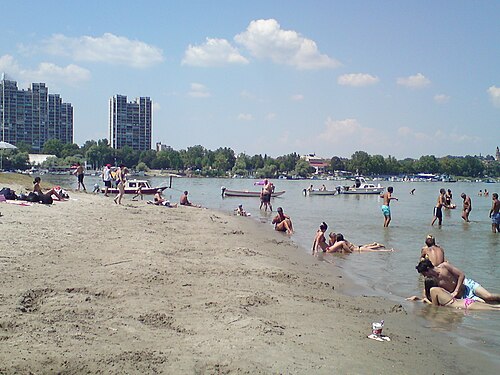
    Lido is Belgrade’s seasonal city beach on Great War Island, set across the Danube from Zemun. Its character comes from the combination of a sandy shore, river surroundings and a temporary summer connection from the Zemun riverfront.

    • High
    • Nature site
    • Zemun
  16. Park of Friendship Park of Friendship
    41 1 hour

    Park of Friendship

    Парк пријатељства

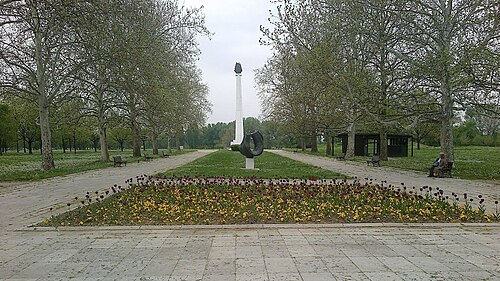
    Park of Friendship is a memorial park in Belgrade’s Ušće area, beside the Danube and Sava. Established in 1961, it combines diplomatic history with an open riverside landscape.

    • High
    • Nature site
    • New Belgrade
  17. Banjica Forest Banjica Forest
    42 1 hour

    Banjica Forest

    СП Бајфордова шума

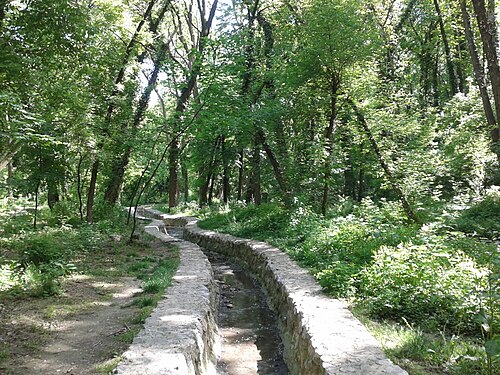
    Banjica Forest is the local name for Byford’s Forest, or Bajfordova šuma, a protected natural monument in Belgrade’s Voždovac municipality. This public woodland is designated for sport and recreation, while its ecological importance comes from its rich birdlife.

    • High
    • Nature site
    • Voždovac
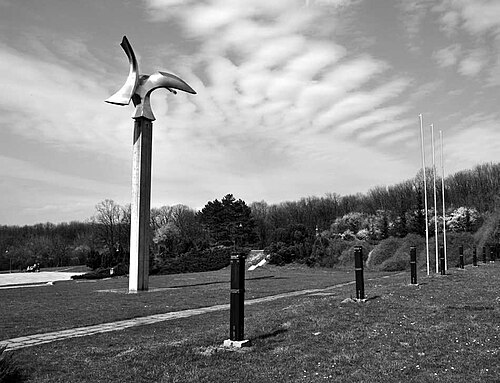
  18. Straževica
    43 20 min

    Straževica

    Стражевица

    Straževica is a hill in Belgrade’s Rakovica municipality and includes the outdoor memorial site known as “Glasnik sa Straževice.” This is a place of remembrance in a hillside landscape, not a conventional museum or enclosed sightseeing complex.

    • High
    • Viewpoint
    • Rakovica
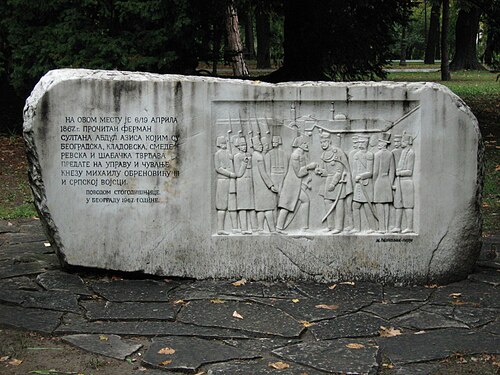
  19. Keys Handover Memorial Keys Handover Memorial
    44 45 min

    Keys Handover Memorial

    Место предаје кључева Београда 1867.

    The Keys Handover Memorial is a compact outdoor monument at the entrance to Kalemegdan Park from Knez Mihailova Street.

    • High
    • Historic monument
    • Stari Grad
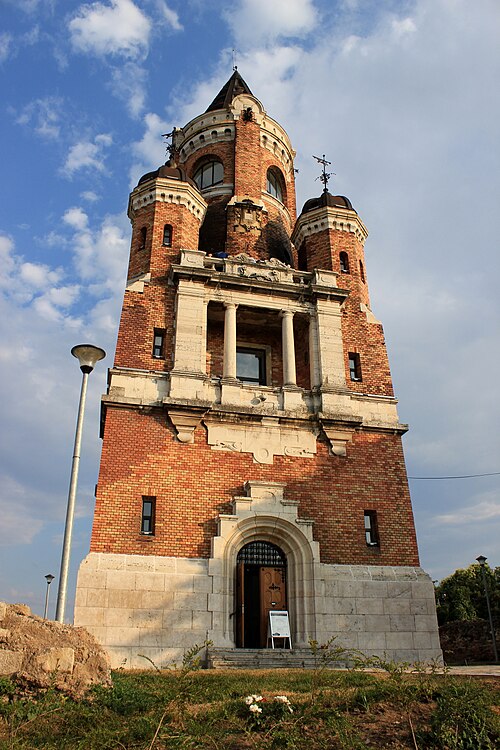
  20. Zemun Fortress Zemun Fortress
    45 45 min

    Zemun Fortress

    Земунска тврђава

    Zemun Fortress is an outdoor heritage remnant on Gardoš Hill in the historic centre of Zemun, within Belgrade.

    • High
    • Historic monument
    • Zemun
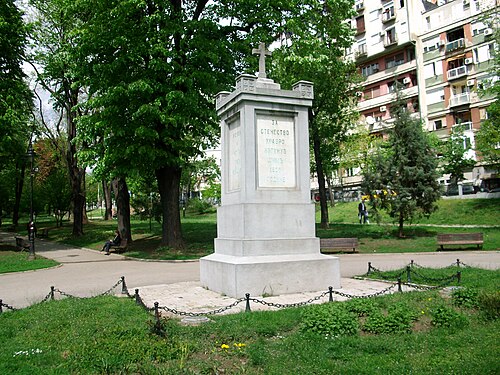
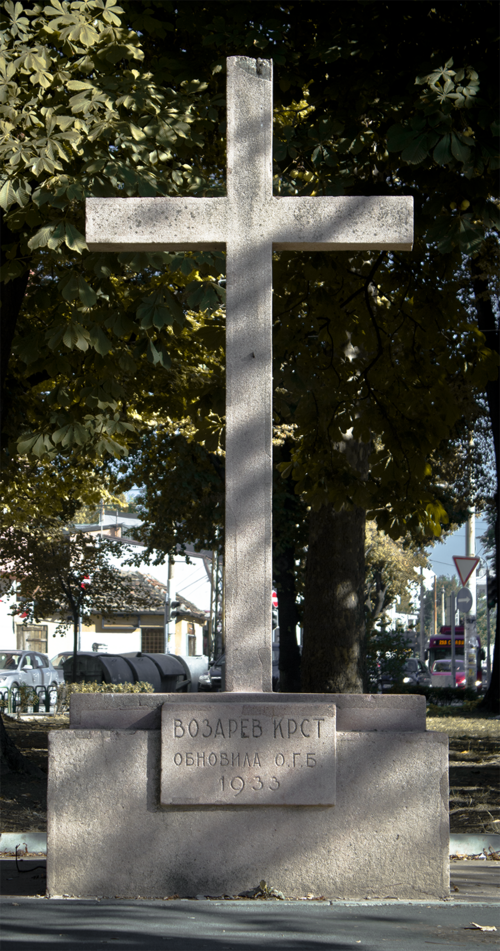
  21. Vozarev Cross Vozarev Cross
    46 45 min

    Vozarev Cross

    Возарев крст

    Vozarev Cross is a compact red artificial-stone monument set in a small urban park at the junction of Mileševska Street and Vojvode Šupljikca Street in Belgrade’s Vračar area.

    • High
    • Historic monument
    • Vračar
  22. Memorial Park Jajinci Memorial Park Jajinci
    47 45 min

    Memorial Park Jajinci

    Спомен-парк Јајинци

    Memorial Park Jajinci is a wartime remembrance site in Belgrade’s Voždovac municipality, on the grounds of a former military shooting range. During the Second World War, civilians and other victims were killed here.

    • High
    • Historic monument
    • Voždovac
  23. Karamata Family House Karamata Family House
    48 45 min

    Karamata Family House

    Кућа породице Карамата

    Karamata Family House is a protected historic residence at Karamatina 17 in Old Zemun, Belgrade, rather than a purpose-built museum. The oldest part dates from 1763, and the complex was enlarged and unified in stages through 1827.

    • High
    • Historic monument
    • Zemun
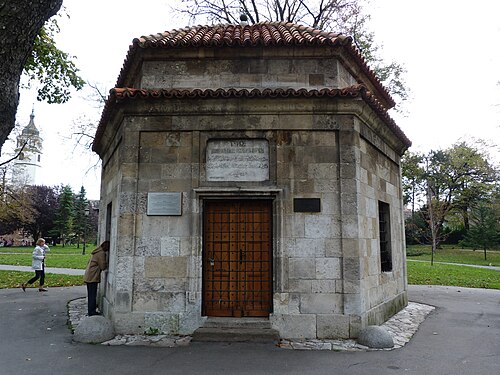
  24. Damat Ali-Paša's Turbeh Damat Ali-Paša's Turbeh
    49 45 min

    Damat Ali-Paša's Turbeh

    Дамад Али-пашино турбе

    Damat Ali-Paša's Turbeh is a compact hexagonal Ottoman mausoleum in the Upper Town of Belgrade Fortress, near the remains of the former Sultan Suleiman Mosque.

    • High
    • Historic monument
    • Stari Grad
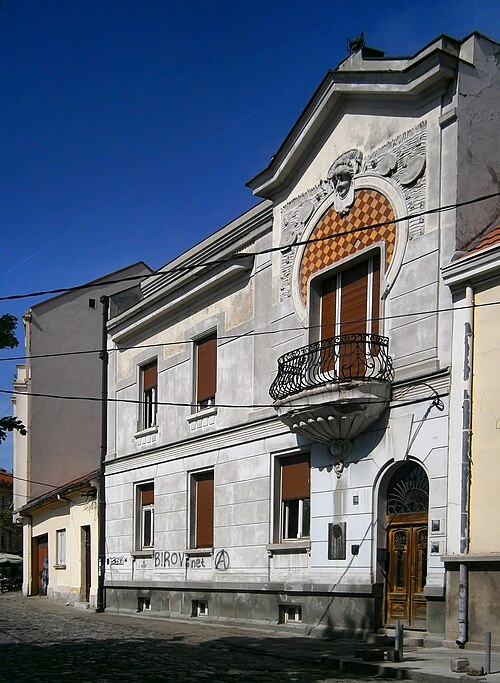
  25. Mika Alas's House Mika Alas's House
    50 45 min

    Mika Alas's House

    Дом Мике Аласа

    Mika Alas's House is a protected historic residence at 22 Kosančićev Venac in Belgrade’s Stari Grad municipality. Built in 1910, it was designed by architect Petar Bajalović for Mihailo Petrović, the mathematician and scientist known as Mika Alas.

    • High
    • Historic monument
    • Stari Grad

Source: OpenStreetMap contributors, Wikidata ·

Where to base yourself

District boundaries come from OSM administrative relations, so a district page holds exactly the places inside it — plus, for the islands and the coast, the nearest district by proximity.

How the city is laid out

Two Belgrades, split by the Sava.

Old Belgrade sits on the ridge on the right bank, above the confluence. The fortress is at the point; Stari Grad, the old town, runs back from it; Vračar rises behind that with the Church of Saint Sava on top; Dorćol drops north towards the Danube and Savamala south towards the Sava.

New Belgrade is on the left bank of the Sava, built from 1948 onward on empty ground to demonstrate that Yugoslavia was at the forefront of progress. It is towers and boulevards on a grid and it is a different city.

Zemun, further up the Danube on the left bank, was a separate town under Austria-Hungary until the twentieth century and still reads as one — low houses, a hill with a tower, and the border of an empire running through it.

Checked 2026-08-23

Getting around

Trams, buses, trolleybuses and walking. There is no metro.

A metro has been discussed for decades and is not in operation; anyone reading about the Belgrade metro is reading about a construction programme, not a way to get across the city today.

The old town is compact and the walk from the fortress to the Church of Saint Sava takes about half an hour, all of it through the parts a visitor came for. New Belgrade and Zemun need transport.

Taxis are cheap by western European standards and are the usual way across the river at night.

Checked 2026-08-23

More city guides

Common questions

How many days does Belgrade need?

Two to three. Two cover the fortress, Kalemegdan, the old town and the Church of Saint Sava. A third adds Zemun on the Danube and a look at New Belgrade.

Is there a metro?

No. Belgrade runs trams, buses and trolleybuses, and a metro has been discussed for decades without entering service. The old town is walkable and taxis are cheap.

What does Beograd mean?

White city. The name is literal.

Why is the city so scarred?

It stands where the Sava meets the Danube, which made it the frontier between empires. It has been fought over in 115 wars and razed 44 times.

What is the difference between Old and New Belgrade?

The Sava. Old Belgrade is the ridge above the confluence with the fortress at its point. New Belgrade is on the left bank, built from 1948 on empty ground as a demonstration of Yugoslav modernity.

Which districts should I stay in?

Stari Grad for the old town, Vračar behind it for a quieter residential base, Dorćol towards the Danube and Savamala on the Sava for the nightlife. Zemun is a separate town in feel and is further out.