
2 min walk
CaixaForum Barcelona
- Notable
- Museum
Language · 11 published
Historic monument · Barcelona
Pavelló Mies van der Rohe
Reviewed by Elena Voss · Roavina Travel Editor
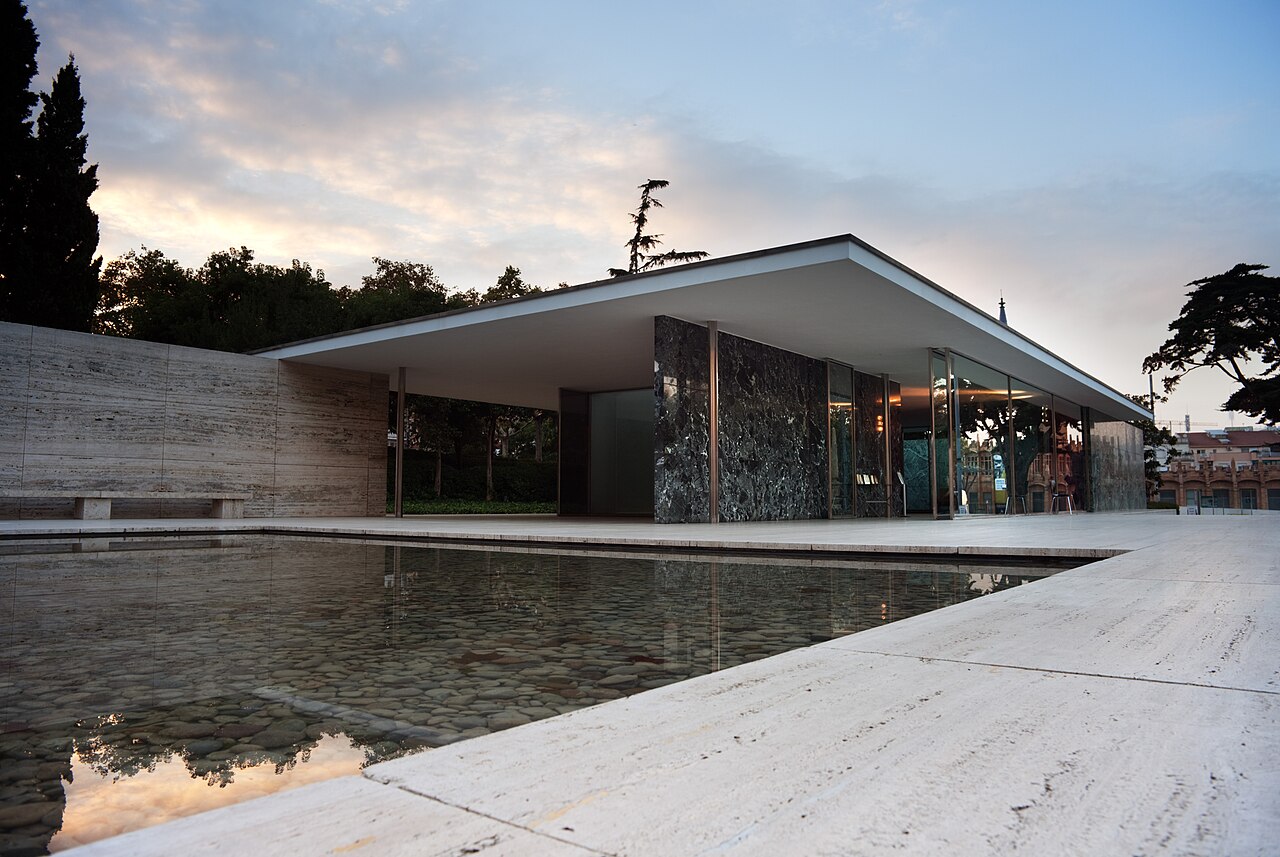
This place is a Attraction. It opened in 1929. It was built in the rationalism style. It was designed by Ludwig Mies van der Rohe. It is built of travertine. It carries the bien de interés cultural heritage designation.
The German Pavilion, or Pavelló Mies van der Rohe, was created as Germany’s national pavilion for the 1929 Barcelona International Exposition. Ludwig Mies van der Rohe and Lilly Reich designed a building whose apparent simplicity depends on exact proportion, carefully placed walls, and a restrained palette of marble, glass, and steel. The original structure was dismantled after the exposition, then rebuilt in the 1980s. Today it remains one of Barcelona’s clearest encounters with twentieth-century modernist architecture. The German Pavilion, locally known as Pavelló Mies van der Rohe, is a modernist building in Barcelona originally constructed as the German national pavilion for the 1929 Barcelona International Exposition. Designed by Ludwig Mies van der der Rohe and Lilly Reich, it was dismantled after the exposition and rebuilt in the 1980s. The structure exemplifies the Barcelona School and represents a landmark achievement in twentieth-century architecture, celebrated for its radical simplicity and innovative use of materials. No. The original pavilion was dismantled after the 1929 exposition. The current structure is a reconstruction completed in the 1980s, faithful to Mies van der Rohe's design.
Checked 2026-08-26 · Source
There are no conventional museum galleries filled with a large collection. Instead, the pavilion itself is the exhibit. Flowing partitions divide an open plan, while polished marble, tinted glass, and chromed steel create changing relationships between surface, reflection, and movement. The Barcelona chairs belong to the building’s design language, not merely its furniture. Beside the structure, a reflecting pool and Georg Kolbe’s bronze sculpture Alba add water, figure, and open space to the composition. The pavilion contains no traditional exhibition rooms.
Checked 2026-08-26 · Source
Most visitors need about twenty minutes to one hour. The pavilion is compact, so a quick circuit reveals its major spaces and materials. Give yourself longer if you enjoy architecture, furniture, photography, or close observation of how light moves across marble and glass. The pool and sculpture invite a pause outside. Because the building sits near other Montjuïc attractions, it works particularly well as one carefully chosen stop within a half-day or full-day route.
Checked 2026-08-26 · Source
Light changes the pavilion’s character throughout the day. Midday sun produces sharper shadows and stronger reflections across the pool and glass, while overcast weather softens the contrasts between materials. Morning visits can feel quieter and make it easier to study the plan without constant interruptions. Late afternoon is attractive for warmer, more reflective views. Barcelona’s Mediterranean climate generally permits outdoor-adjacent sightseeing in every season, although the open design gives little protection from rain or intense summer sun.
Checked 2026-08-26 · Source
The pavilion is experienced as a cultural institution with an admission process, rather than as an open public square. Set aside time for entry before beginning your visit, especially if you are coordinating it with other Montjuïc sights. The compact building does not require a long stay, but its value comes from being inside the complete architectural composition: walls, materials, furniture, reflecting pool, and sculpture. Once admitted, the visit is self-paced and focused on looking rather than collecting objects.
Checked 2026-08-26 · Source
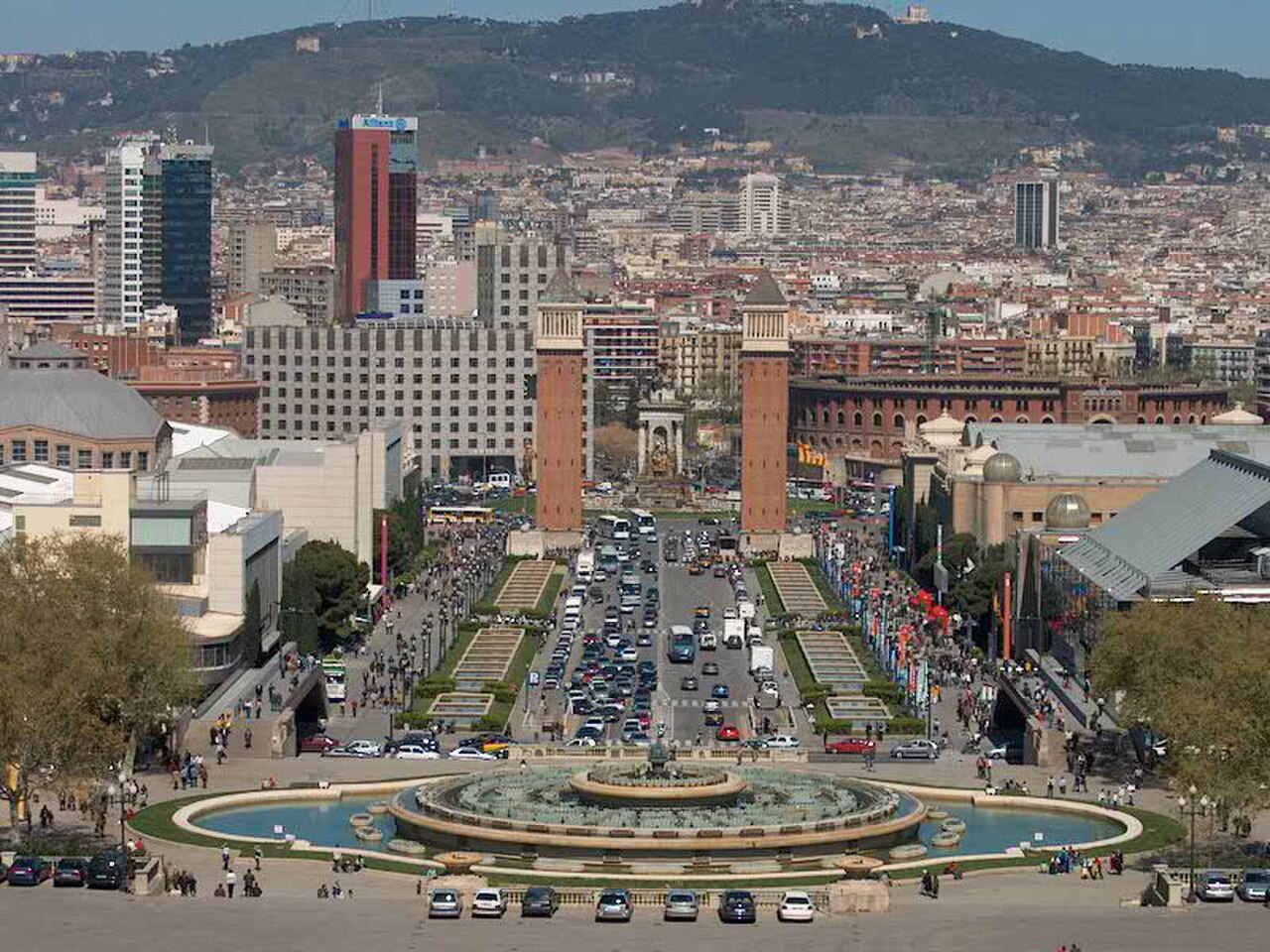
The German Pavilion stands on Montjuïc near Plaça d’Espanya, the Magic Fountain, and the Olympic Ring. Espanya metro station, served by lines L1 and L3, is a practical approach, followed by an uphill walk toward the cultural and museum district. Buses also serve Montjuïc, while taxis can reduce the climb. The route from the metro includes inclines and steps, so travelers with mobility concerns should plan their approach carefully. The final setting is pedestrian and open around the pavilion.
Checked 2026-08-26 · Source
Marble floors, water, and polished surfaces demand attention, particularly beside the reflecting pool and during wet weather. The open plan offers little shade or rain cover, so summer visitors should protect themselves from sun and travelers in rainy conditions should move cautiously. The approach from public transport includes slopes and steps. The building is small and can feel crowded at busy times. Its famous chairs are part of the designed display, not a place to rest, and personal belongings should stay clear of the pool edge.
Checked 2026-08-26 · Source
Photography is especially rewarding here because the pavilion is built from reflections, alignments, and contrasts. Use the pool to mirror walls and sculpture, then move slowly through the interior to compare marble, tinted glass, and steel from different angles. Morning and late-afternoon light create distinct moods, while overcast skies reveal softer material transitions. Keep tripods, selfie sticks, and bulky equipment from blocking narrow paths. Flash can undermine the calm atmosphere, so natural light suits the building best.
Checked 2026-08-26 · Source
No. The original pavilion was dismantled after the 1929 exposition. The building standing today is a reconstruction completed in the 1980s and based on the original design.
Its design is defined by polished marble, tinted glass, chromed steel, carefully proportioned walls, and reflective water.
No. The pavilion itself is the principal exhibit, with its open plan, materials, furniture, reflecting pool, and sculpture creating the visitor experience.
It is on Montjuïc near Plaça d’Espanya, the Magic Fountain, and the Olympic Ring in Barcelona.
Most visitors spend approximately twenty minutes to one hour, with longer visits suited to architecture enthusiasts, photographers, and design students.
The visit includes the Barcelona chairs, the reflecting pool, and Georg Kolbe’s bronze sculpture Alba, alongside the building’s marble, glass, and steel surfaces.
Loading the interactive map…
The interactive map could not be loaded.
Last updated:
Source: OpenStreetMap contributors, Wikidata ·