Stockholm Synagogue
Stora synagogan
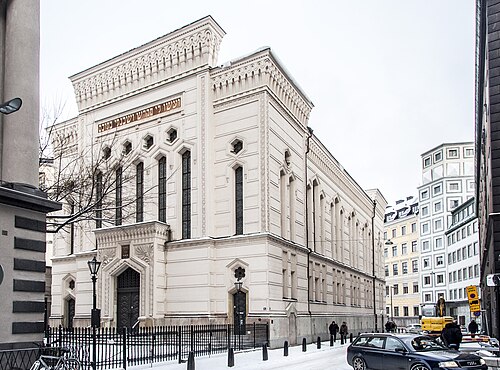
Stockholm Synagogue, also known as Stora synagogan, is the largest synagogue in Sweden and an active place of worship in central Stockholm.
- High
- Place of worship
City guide · Sweden
Stockholm spreads across islands joined by bridges, ferries and rail, but its central visitor districts form a manageable chain. Gamla Stan, Norrmalm, Djurgårde...
Photograph · JZ · CC BY-SA 3.0
Set your days, your pace and the hours you actually want to be out. The planner works around closing days and travel time, and leaves room to eat.
Reviewed by Elena Voss · Roavina Travel Editor
Stockholm spreads across islands joined by bridges, ferries and rail, but its central visitor districts form a manageable chain. Gamla Stan, Norrmalm, Djurgården, Östermalm and Södermalm each reward a separate walking block. Public transport closes the gaps, while boats are part of the useful network rather than only sightseeing. Plan by island and district so repeated water crossings do not consume the day.
Checked 2026-08-26
September · September in Stockholm has mean high 16.6°C, mean low 10.2°C, rainfall 53.3 mm, 12.0 rain days. Mild temperatures make outdoor sightseeing workable despite regular precipitation. A mixed indoor-outdoor plan keeps a September visit to Stockholm comfortable.
Ranked by importance — sitelinks, pageviews and heritage status, not editor preference.
66 places match
Category
Typical visit duration
Interests
Stora synagogan
Stockholm Synagogue, also known as Stora synagogan, is the largest synagogue in Sweden and an active place of worship in central Stockholm.
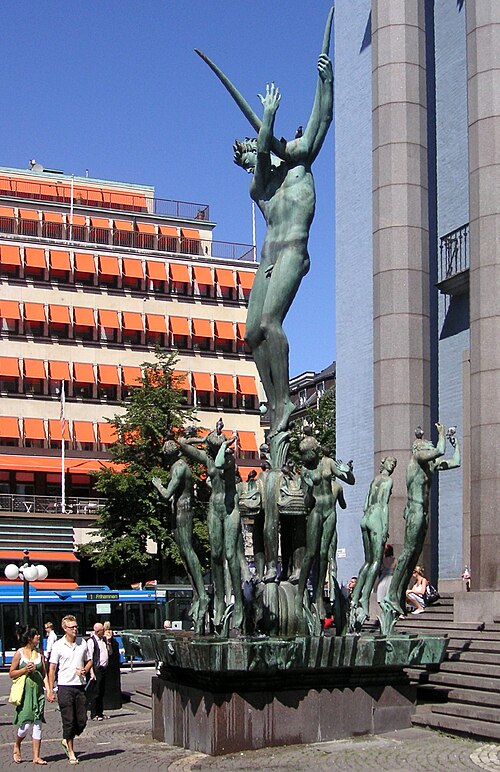
Orpheusgruppen
Orpheus' Well, also known locally as Orpheusgruppen, is an outdoor sculptural fountain installation in Stockholm. The work takes its name from Orpheus, the musician and poet of Greek mythology.
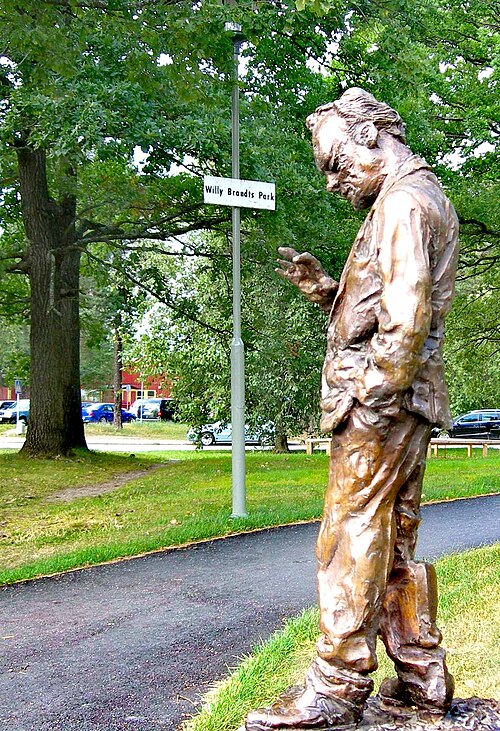
Willy Brandts park
Willy Brandts Park is a small urban green space in Stockholm named after Willy Brandt, the German chancellor and Nobel Peace Prize laureate.
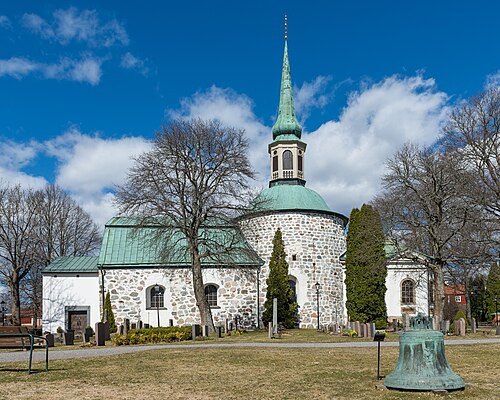
Bromma kyrka
Bromma Church, or Bromma kyrka, is an active Church of Sweden church in Stockholm’s Bromma district. It is both a local place of worship and a historic religious landmark within western Stockholm.
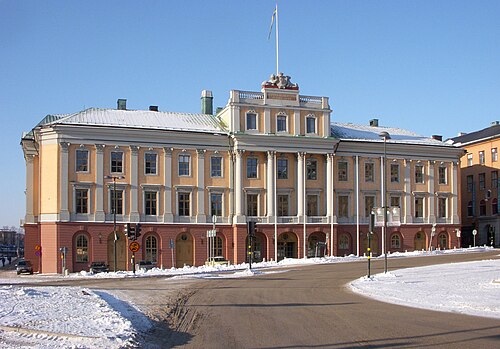
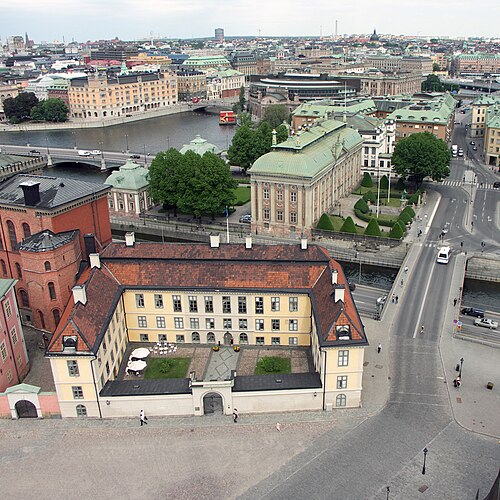
Arvfurstens palats is a palace building in central Stockholm and a distinctive part of the capital’s built heritage. Its importance for a traveller lies primarily in the architecture and the building’s position within the historic city centre.
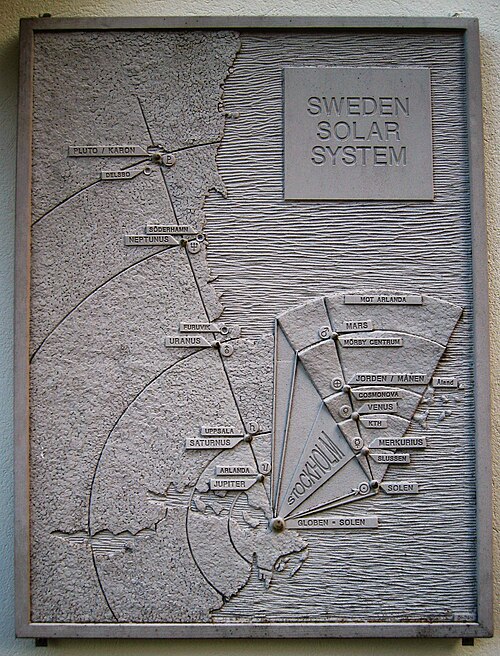
Sweden Solar System is a large-scale model of the solar system spread across Sweden, with Stockholm serving as the central reference point. Celestial bodies are represented by spherical installations placed at scaled distances.
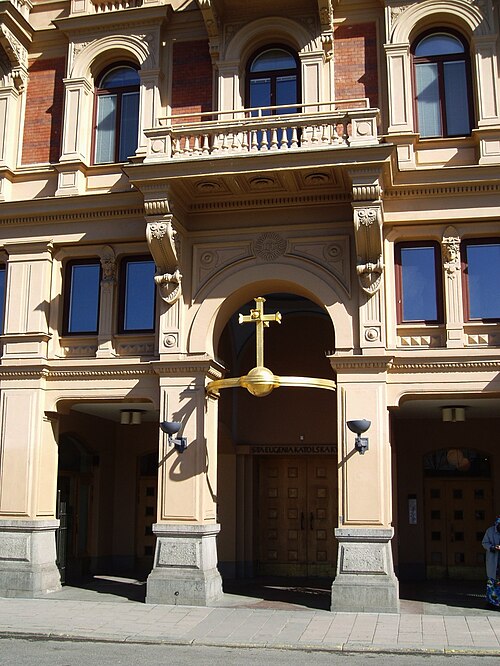
Sankta Eugeniakyrkan
St. Eugenia’s Church, or Sankta Eugeniakyrkan, is a Roman Catholic church in Stockholm. It serves the Catholic community in the Swedish capital and remains an active parish rather than a museum arranged solely for visitors.
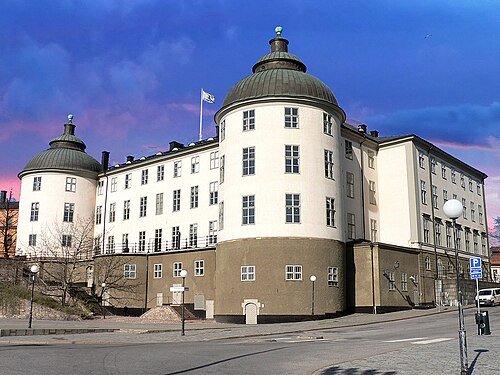
Wrangelska palatset
Wrangel Palace, or Wrangelska palatset, stands on Riddarholmen in central Stockholm. Built for Count Carl Gustaf Wrangel during Sweden’s seventeenth-century great-power era, it is a prominent example of Swedish Baroque architecture.
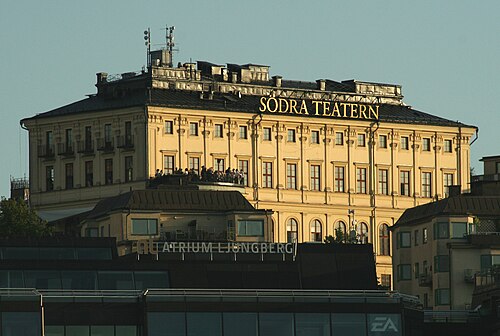
Södra Teatern is a historic theatre and entertainment venue on Södermalm, set above Stockholm from Mosebacke Torg. The nineteenth-century venue combines performance spaces with bars, dining areas and a terrace.
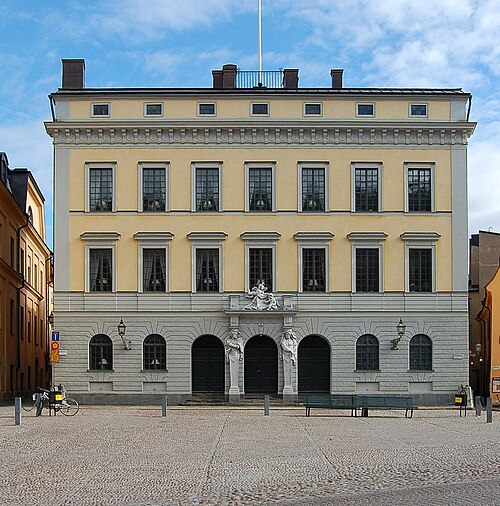
Tessinska palatset
Tessin Palace stands in Stockholm’s Gamla Stan and was designed by Nicodemus Tessin the Younger as his private residence. The building represents Swedish Baroque architecture and reflects the ambitions of one of Sweden’s leading court architects.
Bondeska palatset
Bonde Palace, also known as Bondeska palatset, is a historic Stockholm building associated with noble residence and the city’s older urban fabric. Its architectural presence reflects the long political and social history of central Stockholm.
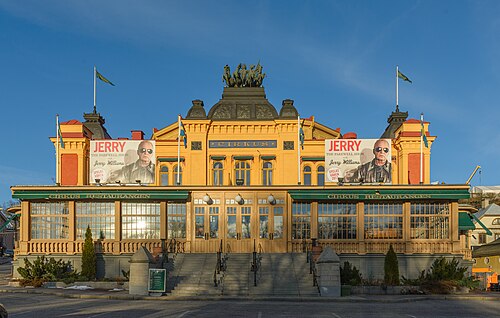
Cirkus is a historic performance venue on Stockholm’s Djurgården island. Built for circus entertainment, it has continued as a cultural space for concerts, theatre and other programmed events.
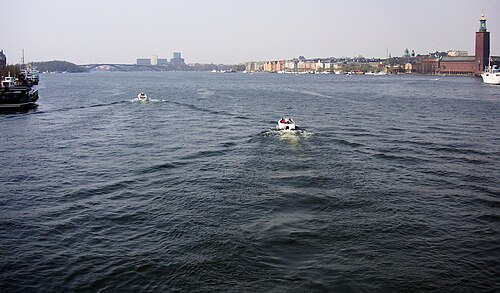
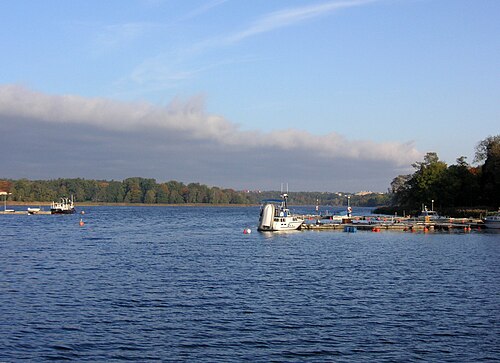
Riddarfjärden is a bay of Lake Mälaren in central Stockholm. Its water separates and connects several of the city’s best-known islands, including Södermalm, Gamla Stan, Riddarholmen and Kungsholmen.
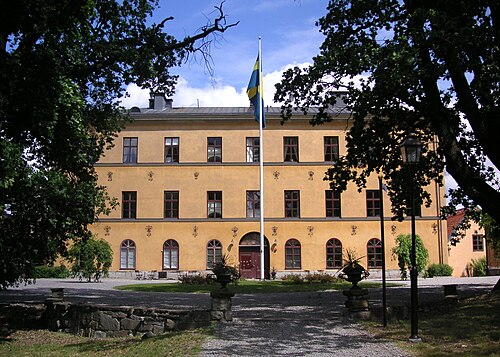
Ulvsunda slott
Ulvsunda Castle, known locally as Ulvsunda slott, is a historic castle and manor house in western Stockholm.
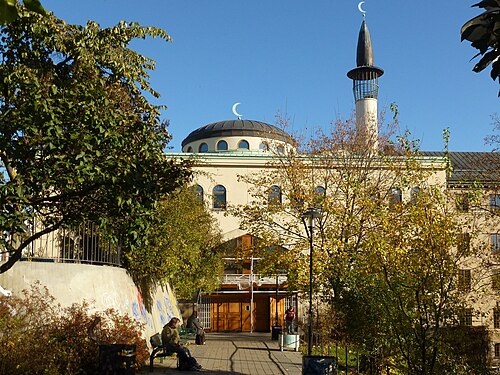
Stockholms moské
Stockholm Mosque, locally known as Stockholms moské, is a place of Islamic worship and a community centre in Sweden’s capital.
Brunnsviken is a freshwater bay north of Stockholm’s centre, surrounded by parks, woodland, historic estates, and cultural institutions. Its shoreline creates one of the city’s most rewarding green escapes, combining water views with long walks and varied landscapes.
Hessensteinska palatset is a historic palace in Stockholm, Sweden. The building represents classical Swedish architectural heritage and stands as one of the notable palatial structures in the city.
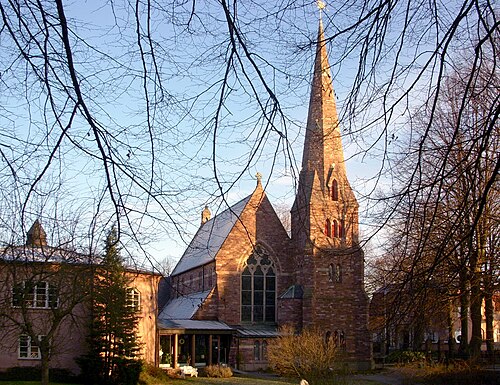
Engelska kyrkan
Church of St Peter and St Sigfrid is Stockholm’s English Church, known locally as Engelska kyrkan. It serves Anglican worship in English and offers an important point of connection for English-speaking residents, visitors and international communities.
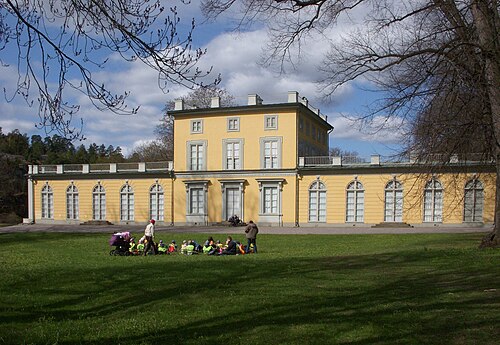
Gustav III:s paviljong
Gustav III’s Pavilion is a royal pleasure pavilion in Hagaparken, north of Stockholm. Built for King Gustav III in the late eighteenth century, it is a notable expression of Swedish Gustavian architecture.
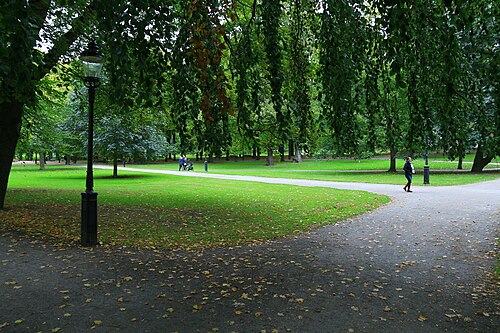
Humlegården is a historic public park in Stockholm's Östermalm district, beside the Royal Library. Its name is linked to hops, which were cultivated here in the seventeenth century.
Hässelby slott
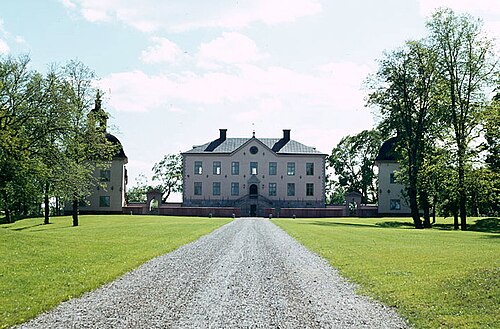
Hässelby Castle, or Hässelby slott, is a historic landmark in Stockholm's western Hässelby district. The castle extends Stockholm's heritage beyond the central islands and offers a different scale of city experience, shaped by historic architecture and its surrounding setting.
Kungliga begravningsplatsen is the Royal Cemetery on Karlsborg island in Lake Brunnsviken, in Solna Municipality beside Stockholm. It is the principal burial ground for members of the Swedish royal family and combines royal history with a quiet wooded setting.
Klara kyrka
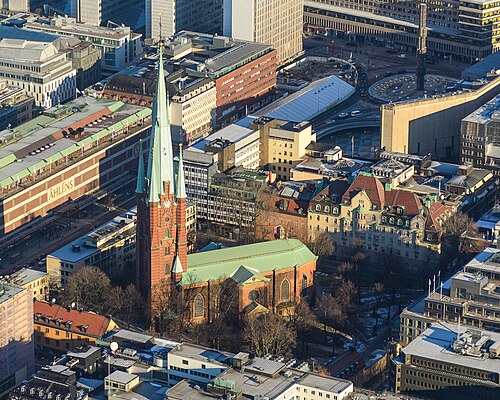
Klara Church, or Klara kyrka, is a historic church in Stockholm’s central Klara district. Its tower is a visible part of the city skyline, and the building remains both a landmark and a functioning place of worship.
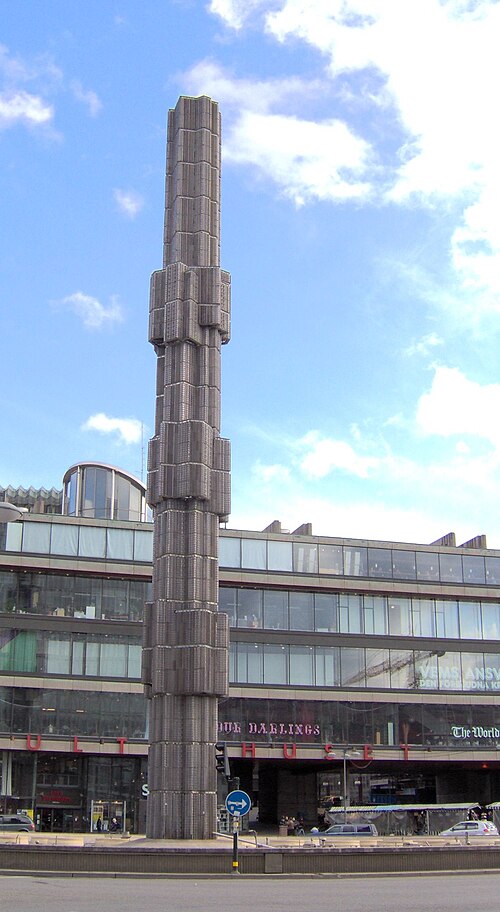
Kristallvertikalaccent is a permanent outdoor glass and crystal artwork in central Stockholm. It functions as a compact urban landmark rather than an enclosed attraction, so the experience comes from seeing the sculpture in its streetscape.
Stureparken is a small urban park in Stockholm's Östermalm district. Its compact, triangular plot sits among central residential and commercial streets, offering a modest patch of greenery within a dense city neighborhood.
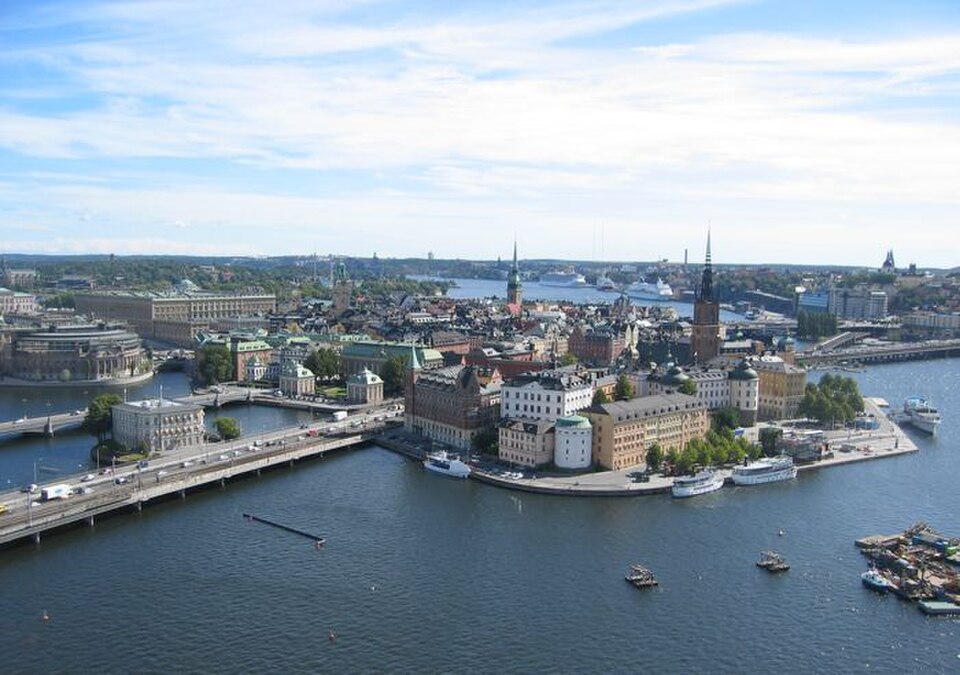
Gamla Stan is the historic hinge between the northern and southern halves of central Stockholm. Norrmalm, the main commercial and transport centre, lies immediately north; Östermalm and museum-rich Djurgården continue east. Södermalm rises south of the old town, while Kungsholmen and Vasastan extend west and northwest. The official visitor guide identifies seven central districts with distinct characters. Combine adjacent districts on foot, and treat the archipelago or distant suburbs as separate outings.
Checked 2026-08-26
Use the SL network of metro, commuter rail, tram, bus and selected local boats for moves between districts. The centre is compact enough for substantial walking, but water and rail lines determine the quickest route more than straight-line distance. Use one valid SL ticket product consistently and check the official journey planner before island connections. Djurgården can be reached by tram or ferry, while outer archipelago travel requires separate route planning.
Checked 2026-08-26
Three to four days suit a first visit. Use the first days for Gamla Stan, Norrmalm, Djurgården and Södermalm, then reserve additional time for a longer island or archipelago route.
May through September gives the most useful daylight for walking between districts and using boat connections. Winter can still work for museums and indoor culture, but outdoor sightseeing time is much shorter.
Yes, within one district and between several central islands. Bridges, hills and water make some apparently short cross-city routes slower, so use public transport when changing from one side of the centre to another.
Yes. Selected local boat services form part of the wider public transport network. Check the SL journey planner and ticket conditions for the specific route rather than assuming every sightseeing or archipelago boat is included.
Gamla Stan and Norrmalm combine naturally, while Östermalm and Djurgården make another coherent block. Södermalm deserves its own walking route, especially when viewpoints and evening stops are included.