57
45 min
Akhisar Kalesi
Akhisar Kalesi is the separately mapped castle feature that gives a physical focus to Akhisar’s name in central Manisa.
- High
- Historic monument
Region guide · Türkiye
553 places catalogued in Manisa Province so far.
Ranked by importance — sitelinks, pageviews and heritage status, not editor preference.
95 places match
Category
Typical visit duration
Akhisar Kalesi is the separately mapped castle feature that gives a physical focus to Akhisar’s name in central Manisa.
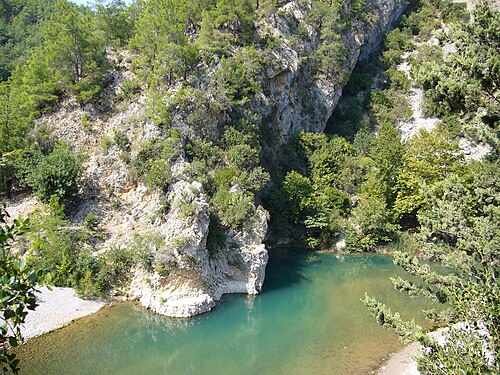
Çakallar is a protected open-air heritage locality on a volcanic hillside near Sindel, also called Akçeşme, in Salihli district, Manisa. Its defining evidence is a group of fossilised human and animal footprints preserved as impressions in volcanic tuff.
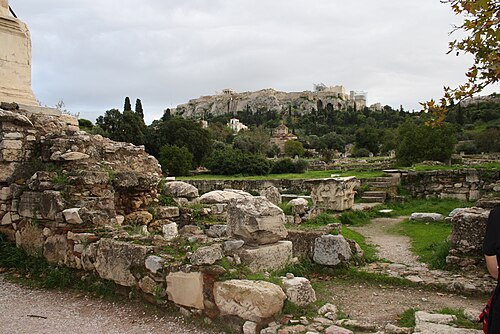
Odeon is a compact ancient performance building within Aigai, near Yuntdağıköseler Mahallesi in Yunusemre, Manisa. Its importance comes from being a distinct cultural space inside a hilltop settlement, not from functioning as a modern theatre.
Tepe Mezarı is a compact archaeological site in Ragıpbey Mahallesi, at the heart of Akhisar in Manisa. Its remains belong to Thyateira, the ancient city whose name survives in Akhisar’s historical identity.
Merkez Çarşı'yı Canlandırma Projesi (Özhan) identifies an urban redevelopment project in Akhisar’s Merkez Çarşı, within Şeyhisa Mahallesi, rather than a completed visitor attraction. The project concerns an excavation area in the town centre where commercial renewal intersects with archaeological history.

Ancient Sardis Ruins preserve Sardis, capital of the Lydian Kingdom, in Sart in Salihli district of Manisa. Lydian, Persian, Hellenistic, Roman and Byzantine layers meet across this open archaeological landscape.
Yarenli Dede Türbesi is a named türbe, or tomb, in the rural Gördes area of Manisa Province.
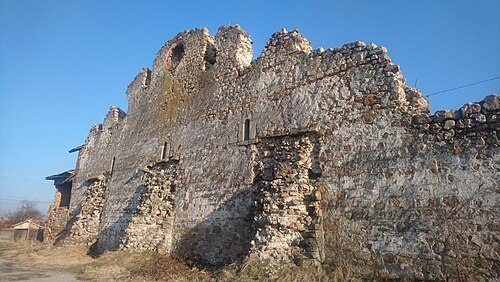
Yeni Han
Yeni Han is a two-storey trading inn in Şehzadeler, Manisa, organised around an internal courtyard. Its identity comes from this inward-facing arrangement: rooms and businesses meet the open centre, creating a compact architectural space within the city’s everyday commercial fabric.
Dağdeviren Höyüğü is a registered archaeological mound in the Kayalıoğlu area of Akhisar, Manisa Province. It is also known as Dağdeviren Çiftliği Höyüğü, while older references call it Akırbey Çiftliği.
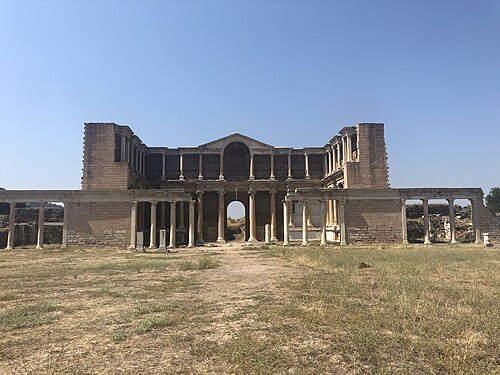
The Bath-Gymnasium Complex is one of the major surviving architectural groups at Sardes, the ancient city known today as Sardis, near Sart in Manisa Province.
Ömer Dede Türbesi
Ömer Dede Tomb is a small, named religious heritage site in Eskicami Mahallesi, within Selendi İlçe Mezarlığı in Manisa. Its character comes from the place itself: a tomb set inside an active cemetery, rather than a museum or formal exhibition.
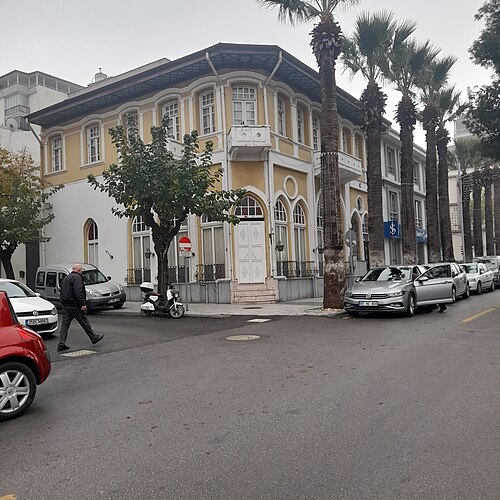
Park Otel (Demokrat Parti Lokali) is a compact two-storey masonry heritage building at the corner of Atatürk Bulvarı and 1205 Sokak in Manisa’s Nişancıpaşa neighbourhood.
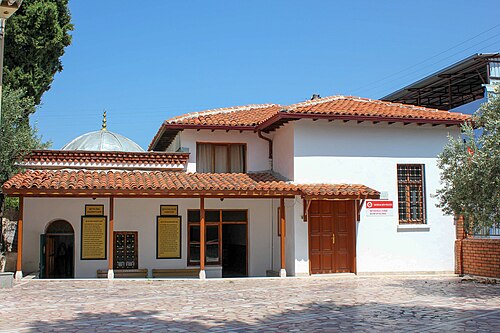
Şeyh İsa ve Şeyh İlyas Çelebi Türbesi is a compact religious heritage site at Şeyh İsa Mosque in Şeyhisa Mahallesi, Akhisar, Manisa.
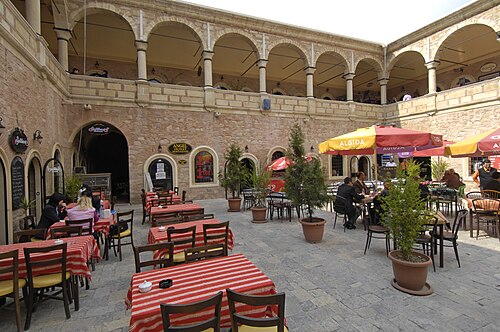
Kurşunlu Hanı is a late-fifteenth-century Ottoman han in Manisa, built in 1488 as part of the Hatuniye Külliyesi beside Hatuniye Mosque. Hüsnüşah Sultan, the wife of Sultan Bayezid II, commissioned the building.
İStasyon binası ve lojman is a railway heritage complex in central Manisa, at Fabrika Tımarı Mevkii in 2. Anafartalar Mahallesi. Its identity comes from the relationship between historic architecture and a working station, rather than from a separate museum function.
Müftü Alim Efendi Evi is a registered historic residence in Çarşı Mahallesi, within Manisa’s Şehzadeler district, at the junction of Dr. Sadık Ahmet Caddesi and Dumlupınar Caddesi.

Sultan Hamamı is a protected Ottoman double bathhouse in central Manisa, built in 1539 according to the official cultural inventory.
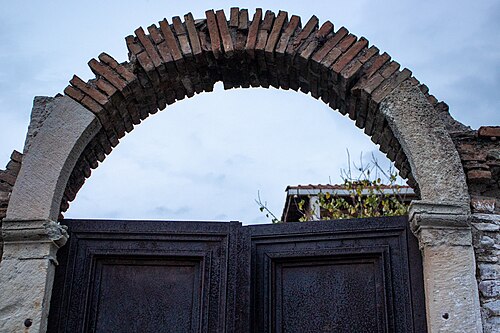
Akhisar Sinagogu is a surviving Jewish-heritage fragment in Paşa Mahallesi, Akhisar, rather than a complete synagogue preserved as a conventional attraction. Historical material identifies it with Akhisar’s former Jewish community, while the visible survival is chiefly the historic doorway.
Rum Mehmet Paşa Hanı, also known as Rum Mehmet Paşa Bedesteni, is a restored historic covered commercial building in Manisa’s Çarşı Mahallesi.
Ancient site at Sarıçam is a recorded archaeological area in Saruhanlı district of Manisa Province.
Jupiter Launch Base 5 is the mapped location of a former Turkish launch position associated with the United States Jupiter intermediate-range ballistic-missile deployment. It was the fifth of five positions established in Turkey near İzmir during the Cold War.
At Sardes, the Gymnasium is a Roman Imperial bath-and-exercise complex rather than an isolated ruin. Its eastern palaestra, western bath halls and connecting Marble Court form a legible architectural sequence within the archaeological area near Sart.
İrpek Tepe is a natural summit in Manisa Province’s Yuntdağı area, in countryside associated with Davutlar and Demirci. The summit stands at approximately 670 metres and is an outdoor walking destination rather than a staffed attraction, museum or archaeological site.
Yağcı Dağı is a 1,516-metre mountain in Selendi district of Manisa Province, among the principal elevations north of Selendi. Its appeal is the high, forested landscape rather than buildings or exhibitions.
Buğday Tepe is a 1,308-metre natural summit in the mountainous surroundings of Buldan district in Denizli Province, close to the Manisa provincial border. Its appeal is the open mountain landscape rather than a building, collection or staffed attraction.
District boundaries come from OSM administrative relations, so a district page holds exactly the places inside it — plus, for the islands and the coast, the nearest district by proximity.