


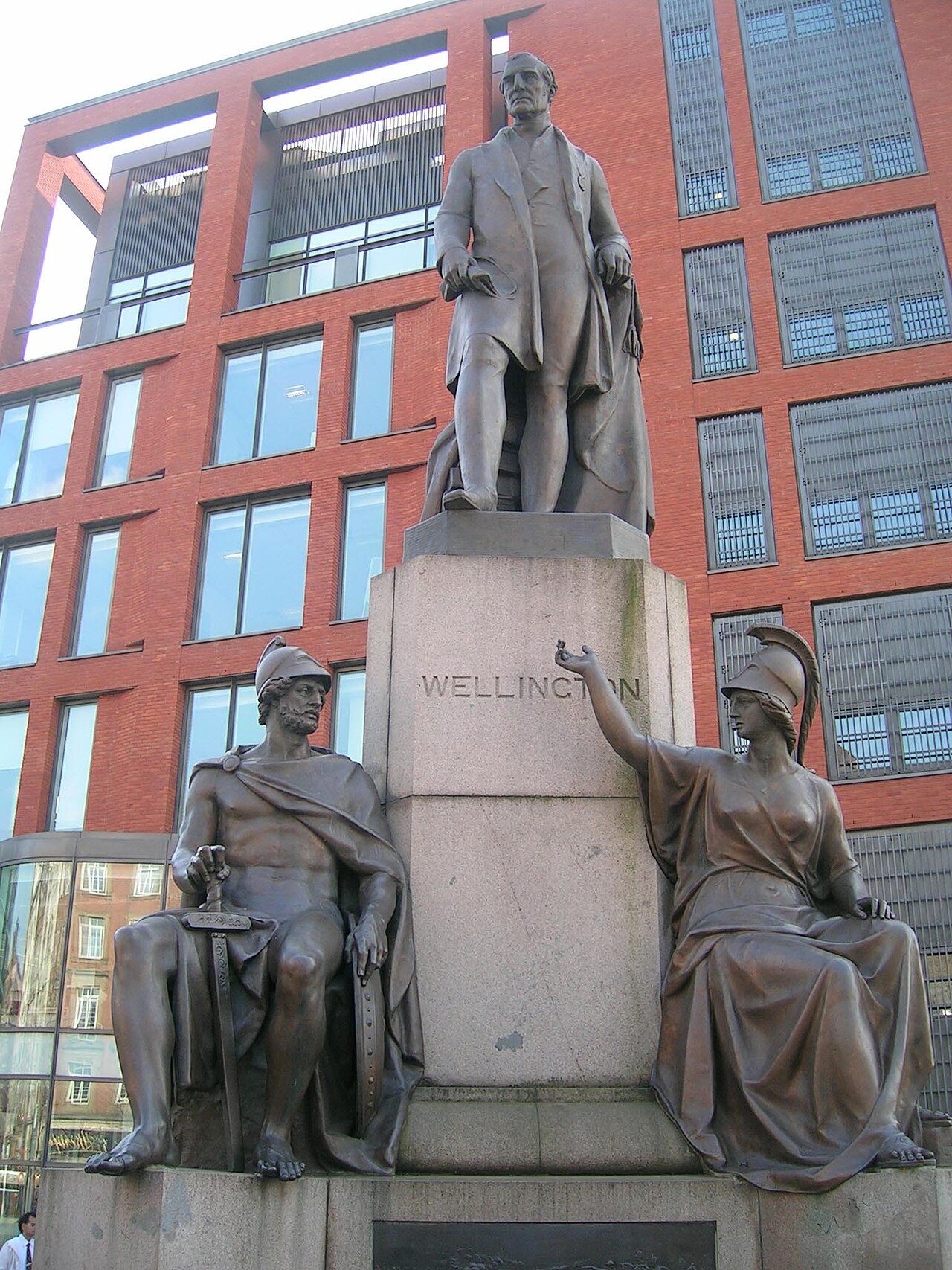
4 min walk
Wellington Statue
- High · Heritage site
- Art and culture venue
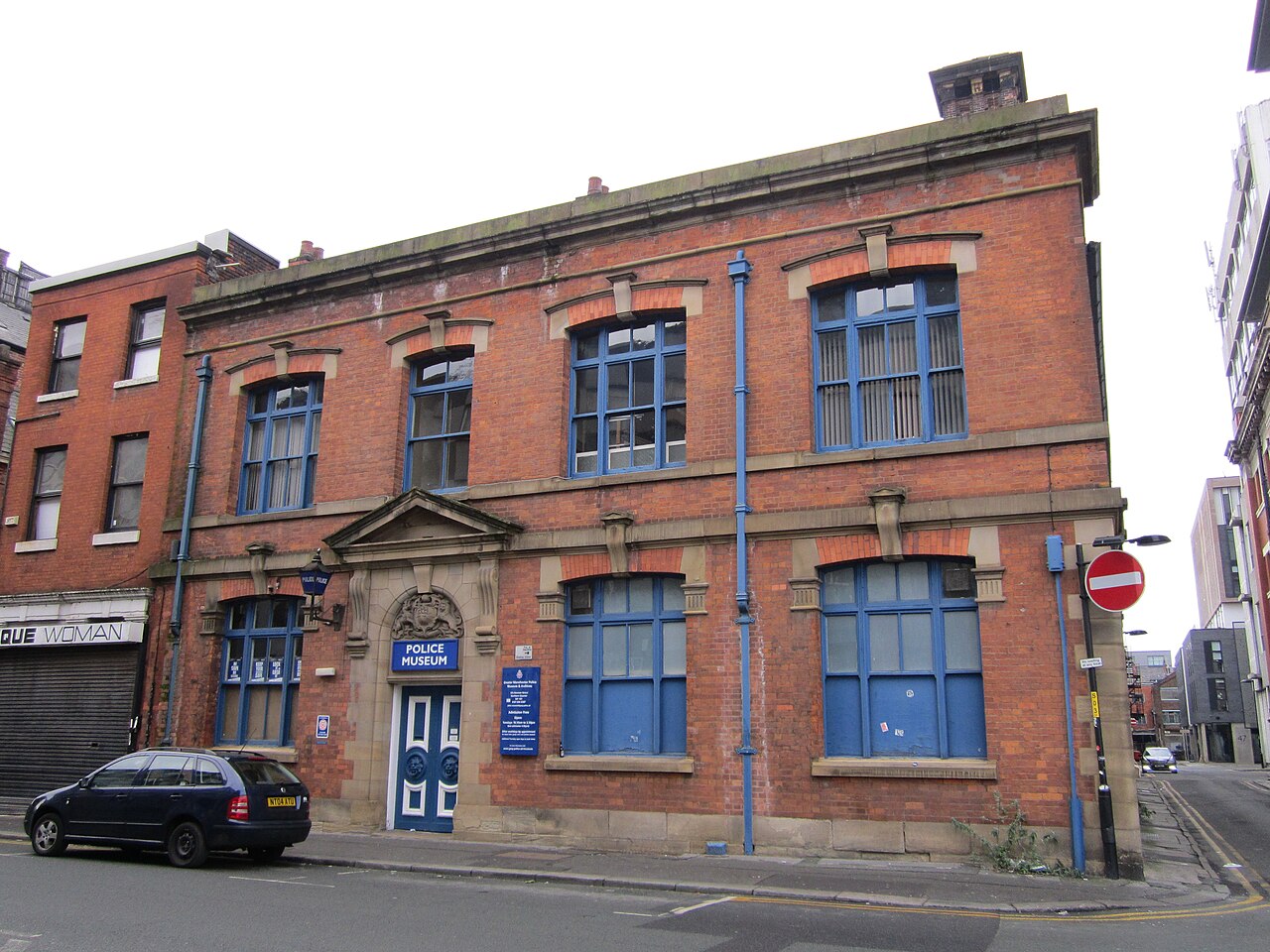
Museum · Manchester
Greater Manchester Police Museum & Archives
Closed today, Friday. Next open Tuesday at 10:30 — the planner will not place a stop here on a Friday.
Plan around it| Monday | Closed |
|---|---|
| Tuesday |
10:30 – 16:00
Last entry at 15:00 for 10:30 – 16:00 |
| Wednesday | Closed |
| Thursday | Closed |
| Friday | Closed |
| Saturday | Closed |
| Sunday | Closed |
Checked 2026-11-04 · Source

Greater Manchester Police Museum and Archives occupies the former Newton Street Police Station at 57A Newton Street, rather than a purpose-built gallery. Historic England dates the building to 1879, records substantial alterations in 1902, and lists it at Grade II. The police station closed in 1979 and became a museum in 1981. This makes the building part of the evidence: a visitor can connect the force's objects and records with the rooms where policing once happened. Choose it for Manchester social history and preserved working spaces, not for a general survey of crime museums.
Checked 2026-10-08 · Source

The museum collects material about policing across Greater Manchester, including vehicles, uniforms, equipment, photographs and archive records. Its former station setting adds cells and a charge office to that story; the first-floor courtroom is an interior from the former Denton Police Court, installed here in 2000, rather than an original Newton Street court. That distinction helps visitors understand what belongs to the 1879/1902 station and what was moved in for preservation. The museum's own collection pages include vehicles, wartime policing, women in policing and former station records. Temporary displays may change, so treat a particular object as a possibility rather than a guaranteed exhibit.
Checked 2026-10-08 · Source
Set aside roughly 90 minutes to explore the public galleries and historic rooms at a comfortable pace. This is a planning allowance, not a timed admission rule; it can be shorter if you focus on the cells and longer if you read the displays carefully. The museum says a private guided tour lasts about one and a half to two hours, which is a useful upper guide for a fuller visit. Archive research is a separate appointment service, so do not add it to a casual walk-in itinerary. If the courtroom is central to your visit, allow time to ask staff about first-floor access.
Checked 2026-10-08 · Source
For an ordinary walk-in visit, plan around Tuesday: the museum currently states public opening from 10:30 to 16:00, with last admission at 15:00. It does not open on bank holidays. Extra school-holiday dates depend on volunteers and are announced separately, so a Thursday or another weekday should not be assumed open just because a past event used that day. The museum's weekday staffing hours are for enquiries, not public admission. Check the operator's opening-hours and events pages shortly before travelling, especially when a trip falls around a school holiday or bank holiday.
Checked 2026-11-04 · Source
Admission on the museum's regular public Tuesday is free and the operator says no booking is needed. Arrive before the stated 15:00 last admission; a 16:00 closing time is not a promise that visitors can enter at the end of the afternoon. Private group visits and archive research use advance arrangements and should not be confused with Tuesday walk-in entry. Donations support the collection, but they are voluntary rather than an entrance price. If your schedule cannot accommodate Tuesday, contact the museum about a private group booking instead of relying on an unannounced extra opening day.
Checked 2026-10-08 · Source

The museum's address is 57A Newton Street in the Northern Quarter of central Manchester. Its directions page estimates around fifteen minutes on foot from both Manchester Piccadilly and Manchester Victoria stations and from the Piccadilly Gardens bus and tram area. Free Bus route 2 serves Stevenson Square, which the museum describes as under five minutes' walk away. That makes a public-transport arrival practical; the operator says there is no visitor parking at the museum on open days. If arriving by car, it points to pay-and-display bays on Newton Street or Port Street rather than a guaranteed museum space.
Checked 2026-10-08 · Source
The preserved station has physical constraints. Most ground-floor galleries are step-free, but the route to the police-station area crosses a cobbled yard. The first-floor courtroom has 22 stone steps or a customer lift; the museum says visitors unable to use stairs in an emergency cannot access that floor under its fire rules. An accessible ground-floor toilet and a portable hearing loop are listed, and assistance dogs are welcome. Open days can also produce queues because occupancy is limited. Contact staff before travelling if the courtroom, wheelchair route or a quieter visit is essential to your plan.
Checked 2026-11-04 · Source
The red-brick Newton Street exterior, the original police-station rooms and the preserved cells are natural subjects for a record of the visit. Historic England's listing describes sandstone dressings, the doorway and the Faraday Street return; those details can also be seen without entering the museum. The operator's public pages consulted for this guide do not state a general photography permission for every exhibit or archive item. Ask staff about a specific room or object before photographing it, and respect other visitors and any on-site notices. This avoids turning an attractive historic interior into an unsupported promise that all photography is allowed.
Checked 2026-10-08 · Source
The museum states that the public can walk in on Tuesdays from 10:30 to 16:00, with last admission at 15:00; bank holidays are excluded.
Yes. The operator says Tuesday public admission is free and no booking is needed; a donation is optional.
No. Archive research is by appointment, separate from ordinary museum entry; contact the museum before planning a research visit.
A customer lift exists, but the operator restricts first-floor access for anyone unable to use stairs in an emergency. Most ground-floor areas are step-free.
About 90 minutes is a useful self-guided planning allowance. The museum says private guided visits last around one and a half to two hours.
It is at 57A Newton Street in Manchester’s Northern Quarter, about a fifteen-minute walk from Piccadilly or Victoria station according to the museum.
Loading the interactive map…
The interactive map could not be loaded.
Last updated:
Source: OpenStreetMap contributors, Wikidata ·