
07
20 min
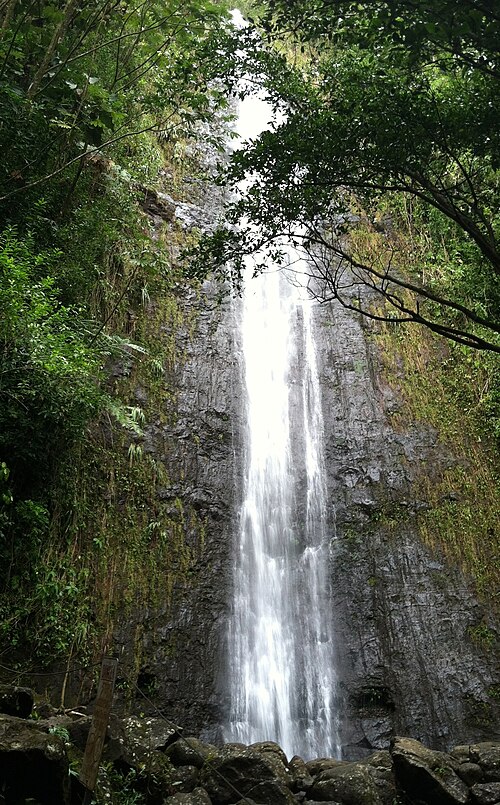
Manoa Falls
Mānoa Falls is a rainforest waterfall reached by a popular valley trail above Honolulu.
- Must see
- Viewpoint
City guide · United States
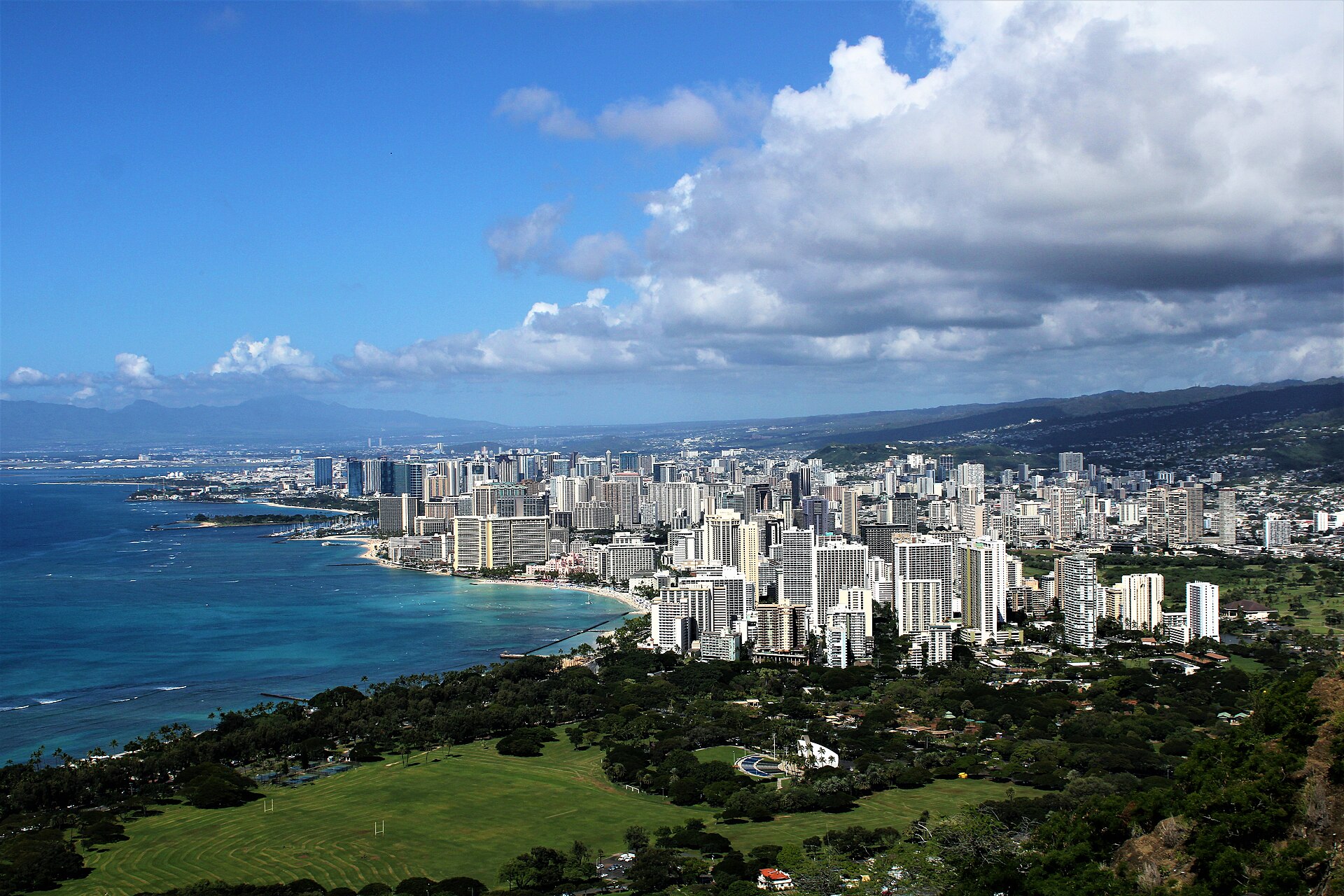
Honolulu is the urban centre of Oʻahu, with Waikīkī, Downtown and the south shore forming the principal visitor base. Pearl Harbor lies west, while the Windward...
Photograph · Farragutful · CC BY-SA 4.0
Set your days, your pace and the hours you actually want to be out. The planner works around closing days and travel time, and leaves room to eat.
Reviewed by Elena Voss · Roavina Travel Editor
Honolulu is the urban centre of Oʻahu, with Waikīkī, Downtown and the south shore forming the principal visitor base. Pearl Harbor lies west, while the Windward Coast, Central Oʻahu, the Leeward Coast and the North Shore are separate island regions rather than city neighbourhoods. Keep city days focused on Honolulu and treat farther Oʻahu sites as planned excursions with their own transport time.
Checked 2026-08-26
September · September in Honolulu, Hawaii has mean high 31.4°C, mean low 23.6°C, rainfall 17.8 mm, and 6.9 rain days. Low rainfall keeps the month's warmth manageable for planned stops. September supports a full day of outdoor stops in Honolulu, Hawaii.
Ranked by importance — sitelinks, pageviews and heritage status, not editor preference.
32 places match
Category
Typical visit duration
Interests
Mānoa Falls is a rainforest waterfall reached by a popular valley trail above Honolulu.
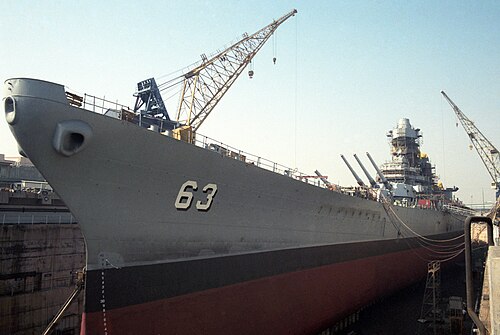
USS Missouri
The Battleship Missouri Memorial is a museum ship and war memorial located at Pearl Harbor. The USS Missouri is an Iowa-class battleship that served in World War II, the Korean War, and the Gulf War.
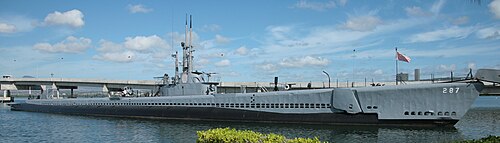
The USS Bowfin Submarine Museum and Park is a World War II submarine museum located adjacent to the Pearl Harbor visitor centre on Oahu, Hawaii.
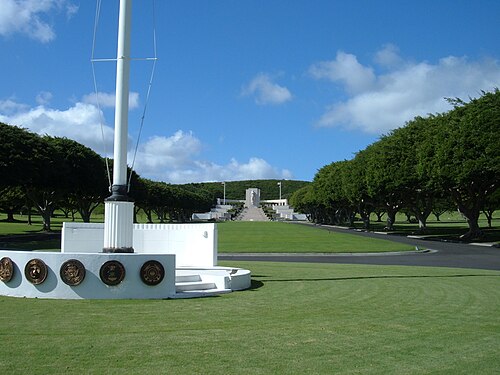
Punchbowl Cemetery
The National Memorial Cemetery of the Pacific, locally called Punchbowl Cemetery, is a United States national cemetery located inside Punchbowl Crater, an extinct volcanic tuff cone above central Honolulu.
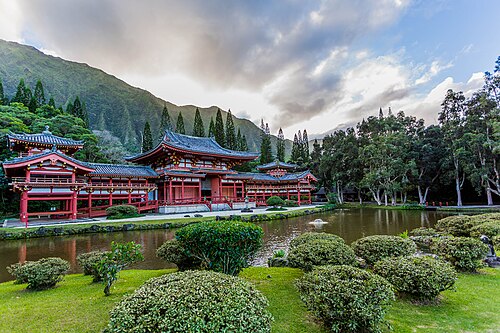
The Byodo-In Temple is a non-denominational Buddhist temple located in the Valley of the Temples Memorial Park on Oahu. It is a scaled replica of the 950-year-old Byodo-In Temple of Equality in Uji, Japan, a United Nations World Heritage Site.
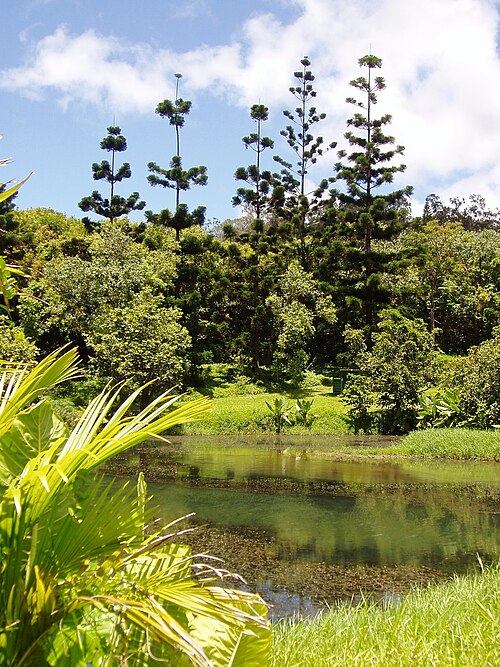
Ho'omaluhia Botanical Garden is a large botanical garden on the windward side of O'ahu, Hawaii. Established in 1982, the garden spans approximately 400 acres in the Kane'ohe area.

Pearl Harbor National Memorial is a National Park Service memorial landscape in Honolulu devoted to the attack on Pearl Harbor and its consequences. The place combines historical interpretation with remembrance beside the harbour.
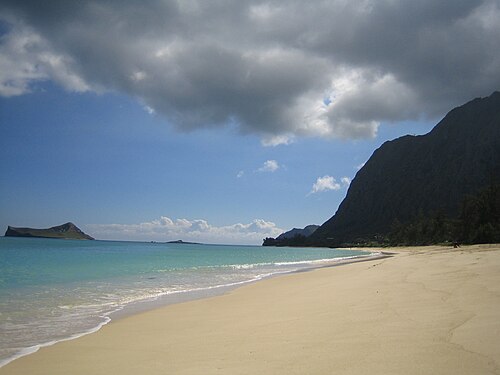
Waimānalo Beach is a long sandy shoreline on Oahu’s Windward Coast, set beneath the Koʻolau mountain range. Its broad coastal setting feels quieter and less urban than Waikiki, with residential communities inland and open views across the ocean.
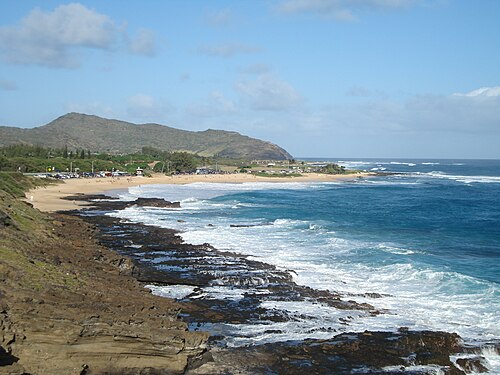
Sandy Beach Park is a public beach park on the south-east shore of Oahu, Hawaii, within the city and county of Honolulu. It is known for its powerful shorebreak and is a notable destination for body-surfing.
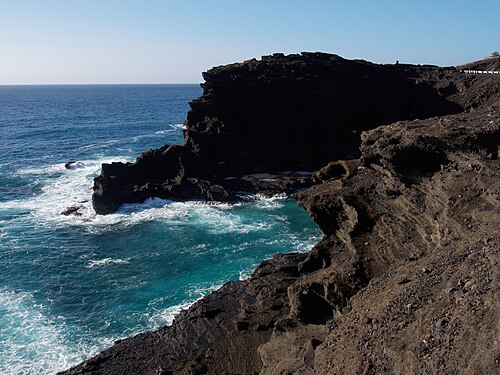
Halona Beach Cove
Halona Beach Cove is a small, scenic coastal inlet located beneath the Halona Blowhole Lookout on the southeastern shore of Oahu, near Honolulu.
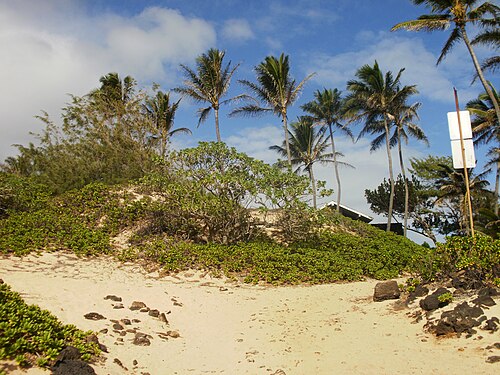
Makapuʻu Beach Park is a beach on Oʻahu’s Windward Coast, backed by sea cliffs and facing the exposed ocean below Makapuʻu Point.
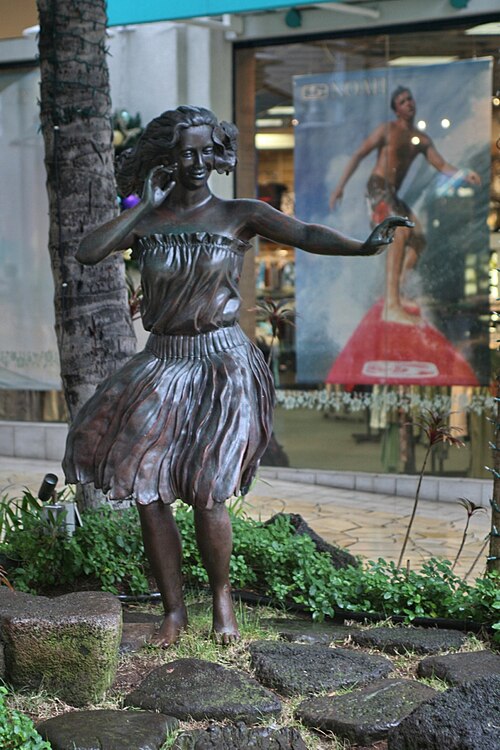
Aloha Tower is a historic lighthouse and landmark located at Honolulu Harbor on the island of Oahu, Hawaii. The tower was completed in 1926 and served as a welcoming beacon for arriving ships.
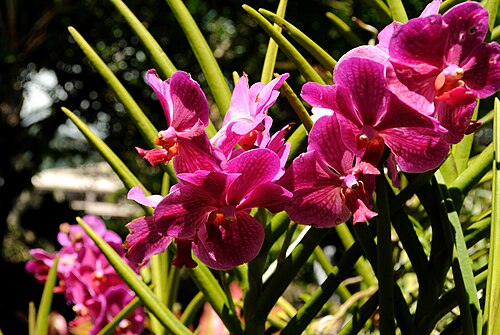
Foster Botanical Garden is a historic botanical garden located in central Honolulu. It is one of the five sites comprising the Honolulu Botanical Gardens system, which is managed by the City and County of Honolulu.
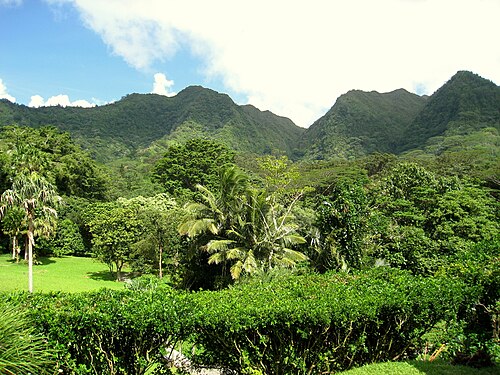
Lyon Arboretum and Botanical Garden
Harold L. Lyon Arboretum is a University of Hawaiʻi at Mānoa botanical garden in Mānoa Valley on Oʻahu. It combines tropical plant collections, rainforest habitat, conservation work, horticultural study, and public education.
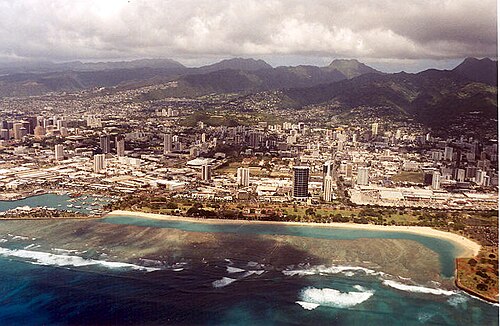
Ala Moana Beach Park is a large sheltered urban beach park located opposite the Ala Moana Center in Honolulu, Hawaii.
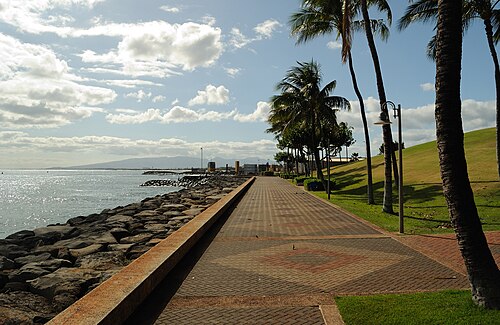
Kakaʻako Waterfront Park is an open coastal park in Honolulu’s Kakaʻako district. Built on reclaimed industrial land, it gives visitors a broad Pacific outlook and a direct connection with the shoreline.
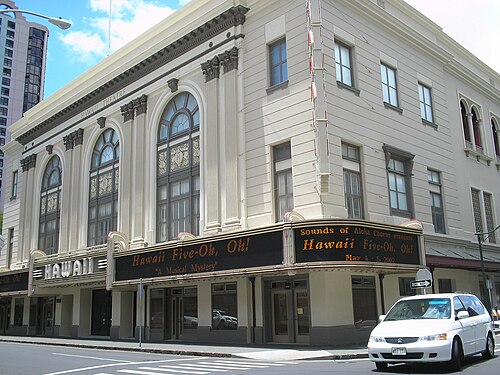
Hawaiʻi Theatre is a restored 1922 theatre and landmark performance venue in downtown Honolulu. Its historic character gives an evening at the theatre a different mood from a modern concert hall: the building itself forms part of the cultural experience.

International Marketplace
International Market Place is a historic-name shopping and dining complex located in Waikīkī, Honolulu. The site carries the name of a well-known former marketplace that operated in this area for decades.
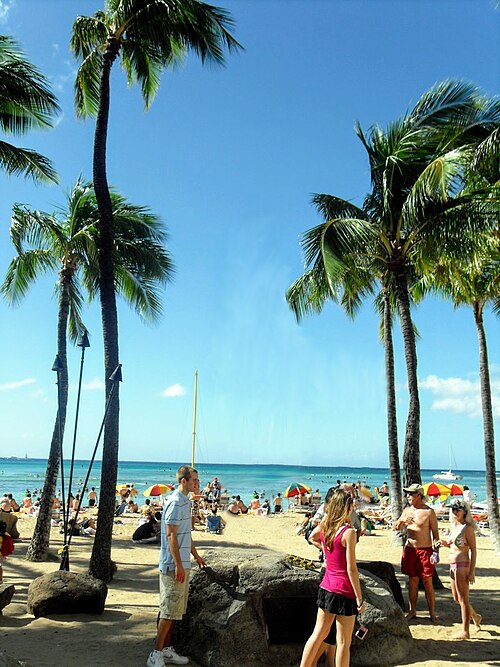
The Duke Kahanamoku Statue stands beside Waikīkī Beach as a bronze memorial to Duke Paoa Kahanamoku, the Hawaiian Olympic swimmer and surfer who helped popularize surfing around the world.
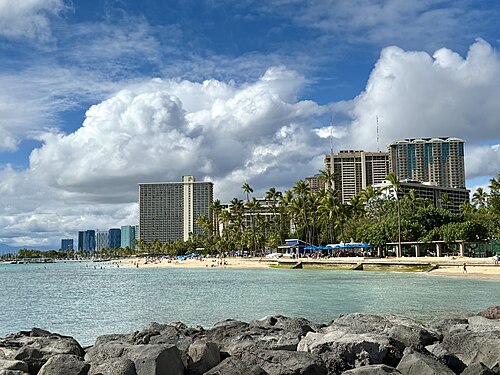
Fort DeRussy Beach Park is a broad sandy beach on the western edge of Waikīkī in Honolulu, Hawaiʻi.
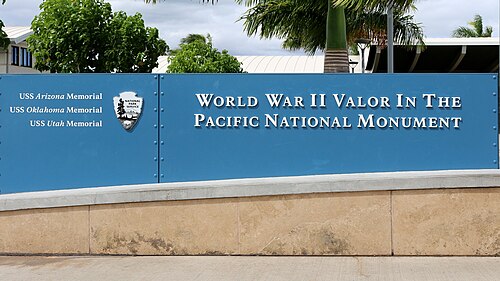
The Pearl Harbor Visitor Center serves as the National Park Service gateway to Pearl Harbor National Memorial in Honolulu, Hawaii.
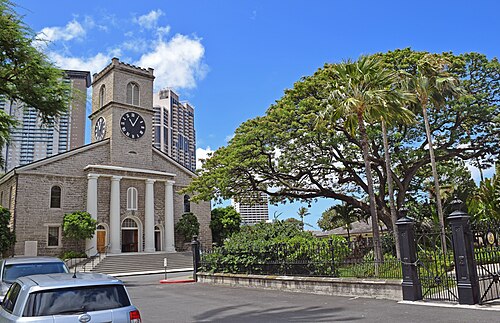
Kawaiaha'o Church
Kawaiahaʻo Church is a historic coral-block church in downtown Honolulu. Built in the nineteenth century, it served as the national church of the Hawaiian Kingdom and stood at the centre of the monarchy's religious and political life.
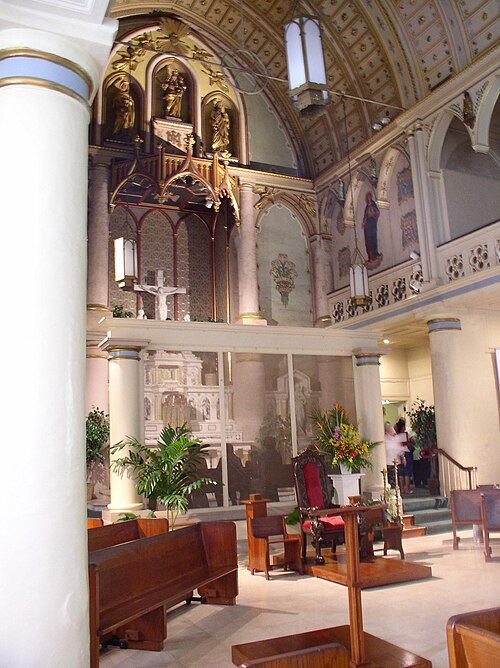
The Cathedral Basilica of Our Lady of Peace is a Catholic cathedral in downtown Honolulu. Its origins reach back to the Hawaiian Kingdom era and the establishment of Catholicism in the islands.
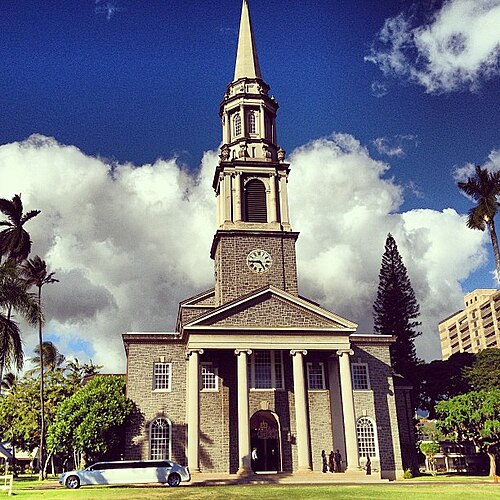
Central Union Church is an active Honolulu church campus centered on a Gothic-revival sanctuary. The building serves worship and community life, so visitors encounter a functioning religious institution rather than a museum arranged for sightseeing.
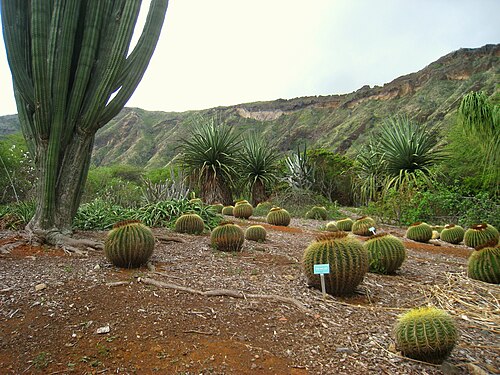
Koko Crater Botanical Garden is a dryland botanical garden inside the basin of an extinct volcanic tuff cone in East Honolulu. It belongs to the Honolulu Botanical Gardens system and combines plant conservation with an unusual geological setting.
Waikīkī occupies the south shore east of Downtown Honolulu. Downtown contains the civic and historic core, while Ala Moana sits between them and Diamond Head marks the eastern end of the main urban visitor strip. Pearl Harbor is west of the centre. Beyond Honolulu, the island divides into Windward, Central, Leeward and North Shore regions, each requiring deliberate travel rather than an extension of a city walk.
Checked 2026-08-26
Walk within Waikīkī and compact parts of Downtown, then use TheBus, shuttles, taxis, rideshares or a rental vehicle for longer trips. Biki bike share serves Honolulu and Waikīkī, while island attractions outside the urban core can require substantially more travel time. Public transport reaches many cultural and scenic sites, but check current routes and the return schedule before committing to a distant Oʻahu excursion.
Checked 2026-08-26
A fixed stay length is not recorded. Separate Honolulu and Waikīkī sightseeing from excursions to Pearl Harbor, the Windward Coast or the North Shore.
No. Waikīkī is the main resort district on the south shore, while Downtown contains the civic and historic core farther west.
Yes. Walking, TheBus, Biki, shuttles, taxis and rideshares cover the main urban areas. A car can be useful for dispersed island destinations outside Honolulu.
No. It is a separate Oʻahu region and requires a planned island journey. Do not treat it as a quick extension of a Waikīkī walking day.
Biki is Honolulu's bike-share system and serves Honolulu and Waikīkī. Check the current station map before relying on it for a specific route.