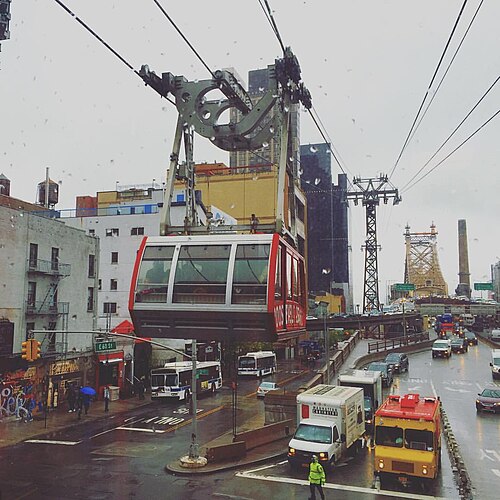
Roosevelt Island Tramway
The Roosevelt Island Tramway is an aerial tramway in New York City. It spans the East River, connecting Roosevelt Island to Manhattan. The system operates as a public transit option alongside the subway.
- High
- Nature site
City guide · United States
New York City spans five boroughs, but most first visits concentrate on Manhattan and selected parts of Brooklyn, Queens and the Bronx. Manhattan itself is a lo...
Photograph · Fred Hsu on en.wikipedia · CC BY-SA 4.0
Set your days, your pace and the hours you actually want to be out. The planner works around closing days and travel time, and leaves room to eat.
Reviewed by Elena Voss · Roavina Travel Editor
New York City spans five boroughs, but most first visits concentrate on Manhattan and selected parts of Brooklyn, Queens and the Bronx. Manhattan itself is a long island of distinct districts, so a day should move north or south rather than zigzagging across the map. The subway is the essential connector and runs around the clock, while walking is the best way to understand each neighbourhood once you arrive.
Checked 2026-08-26
September · September cools to a 76.2°F average maximum and 62.3°F minimum in Central Park, a strong early-autumn balance.
Ranked by importance — sitelinks, pageviews and heritage status, not editor preference.
99 places match
Category
Typical visit duration
Interests
The Roosevelt Island Tramway is an aerial tramway in New York City. It spans the East River, connecting Roosevelt Island to Manhattan. The system operates as a public transit option alongside the subway.
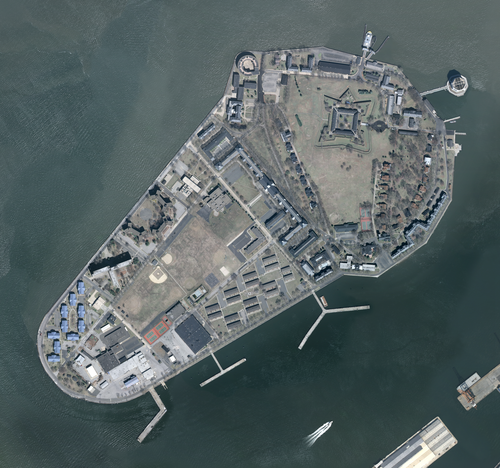
Governors Island is a 172-acre island in New York Harbor, situated approximately 800 yards south of Manhattan. The island has served multiple historical functions, including as a military base for the U.S.
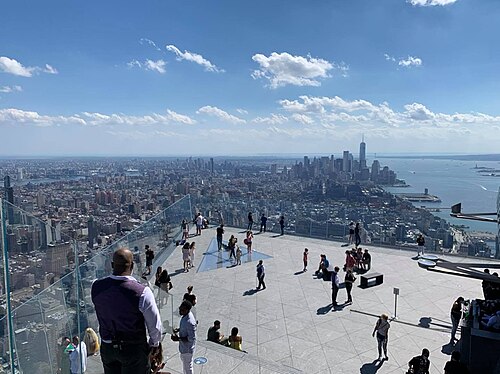
Edge is an outdoor observation deck high above Hudson Yards on Manhattan’s West Side. Its platform projects outward from the skyscraper, creating a floating sensation above the city.
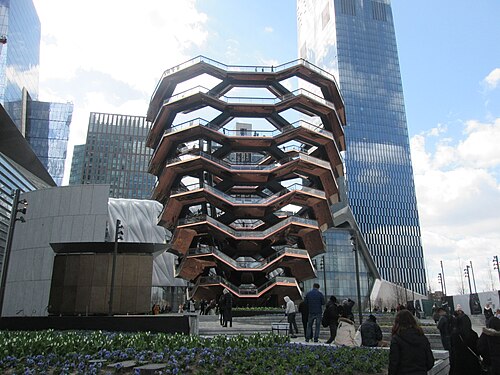
Vessel is a honeycomb-like landmark in Hudson Yards on Manhattan’s far West Side. Designed by Thomas Heatherwick, it is formed from an interconnected network of staircases rising above the surrounding plaza.
Hudson Yards is a neighborhood and real estate development on Manhattan's West Side in New York City. Built over a working rail yard, it represents one of the largest private real estate developments in United States history.
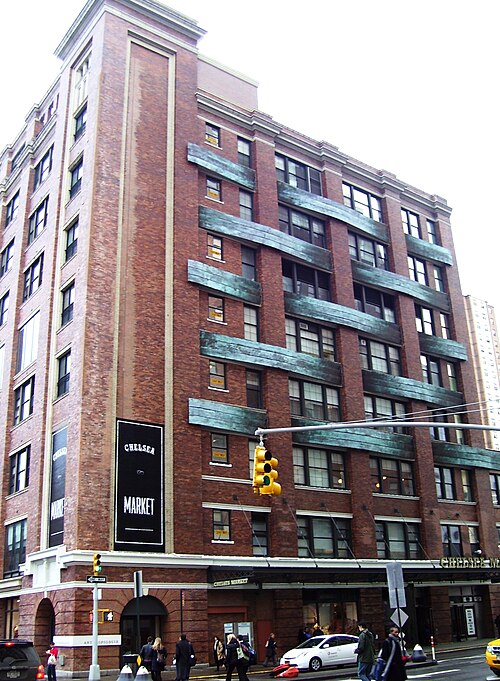
Chelsea Market is an indoor food hall and shopping destination in Manhattan’s Chelsea neighbourhood. It occupies the ground floor of the former Nabisco factory complex, a setting connected with the invention of the Oreo cookie.
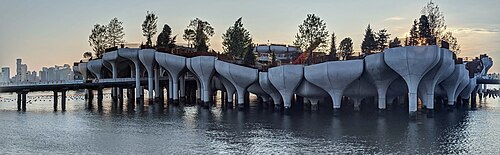
Little Island
Little Island at Pier 55 is an artificial island park in the Hudson River, connected to Manhattan's West Side. The structure sits on tulip-shaped concrete pilings rising from the water, creating an elevated landscape above the river.
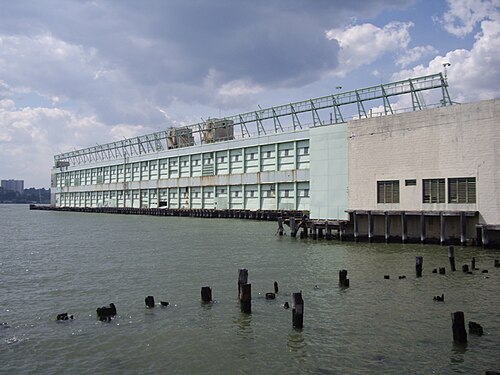
Pier 57 is a historic pier structure on the Hudson River waterfront in Manhattan, New York City. The pier has undergone significant redevelopment and now functions as a mixed-use public space with commercial, cultural, and recreational elements.
Museum of the Moving Image is a museum in Astoria, Queens, devoted to film, television, and digital media. It brings together the creative, technical, and cultural sides of moving images in one visit.
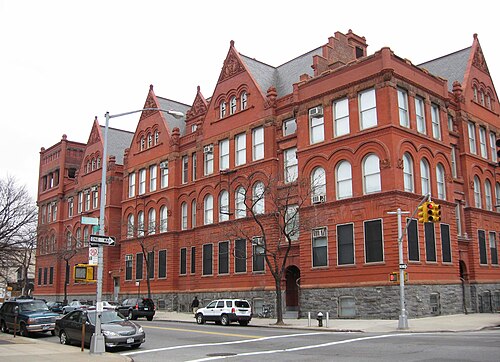
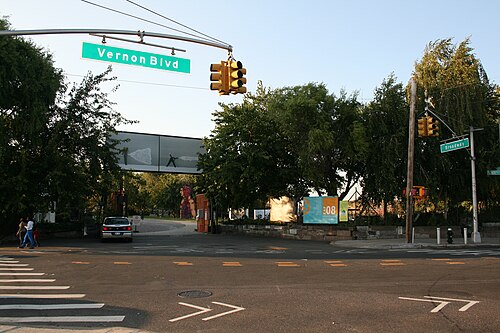
MoMA PS1 is a contemporary art institution in New York City affiliated with the Museum of Modern Art. It occupies a former public school building in Queens, repurposed as an exhibition space for experimental and emerging art.
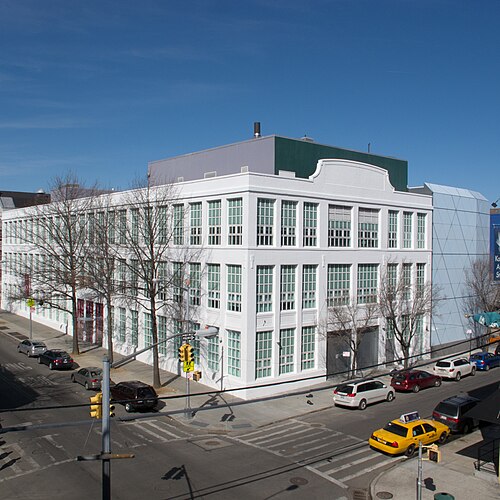
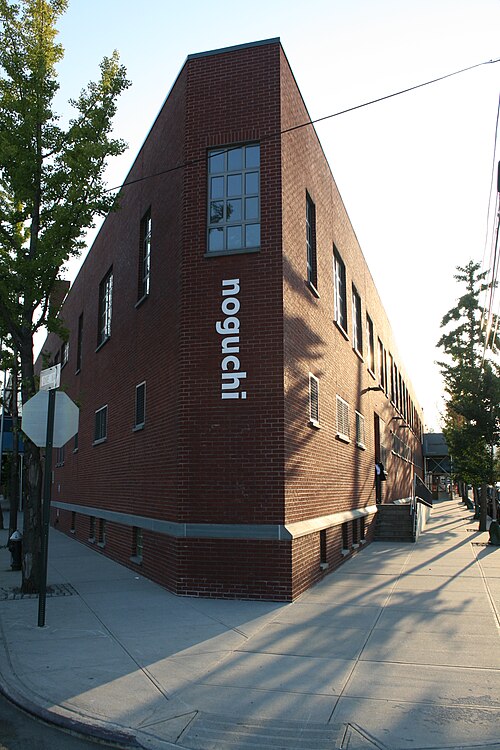
The Noguchi Museum
The Noguchi Museum is a Long Island City museum devoted to the work of Japanese-American sculptor Isamu Noguchi. Noguchi founded the institution to present his art in a setting shaped around his ideas about space, light, material, and movement.
Socrates Sculpture Park is an outdoor museum and public park located in Long Island City, Queens. Established on a former landfill site along the East River, it occupies waterfront land with views of the Manhattan skyline.
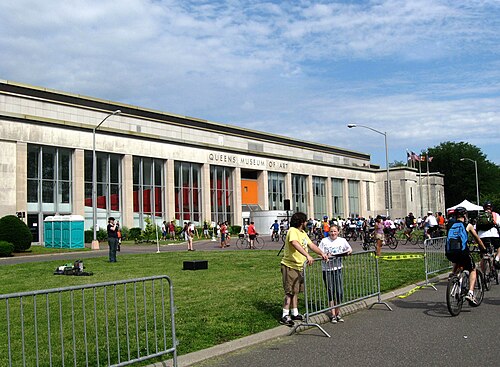
The Queens Museum is a public art museum located in Flushing Meadows Corona Park in Queens, New York City.
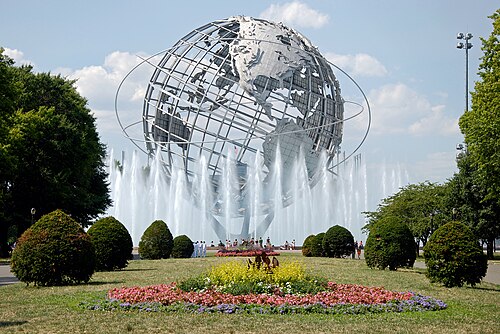
Flushing Meadows-Corona Park
Flushing Meadows-Corona Park is a large public park in the northern part of Queens, New York City. It was created for the 1939 New York World's Fair and later hosted the 1964 World's Fair.
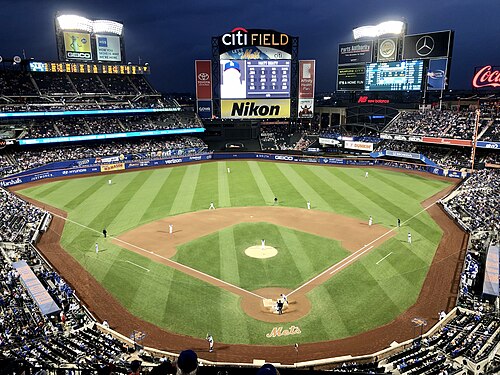
Citi Field is a baseball stadium located in Flushing Meadows-Corona Park in Queens, New York City. It serves as the home ballpark of Major League Baseball's New York Mets franchise.
Louis Armstrong House Museum
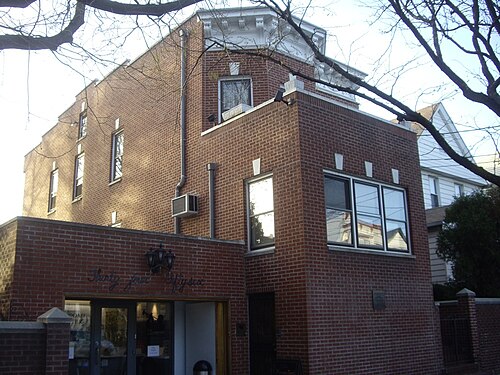
The Louis Armstrong House Museum preserves the Corona, Queens home where Louis Armstrong and his wife, Lucille, lived from 1943 until Armstrong’s death in 1971.
Lower East Side Tenement Museum
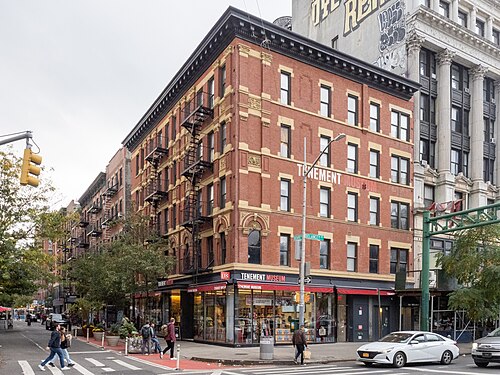
The Tenement Museum occupies the former tenement at 97 Orchard Street on Manhattan’s Lower East Side. The building preserves and interprets the lives of working-class immigrant families who lived there between 1863 and 1935.
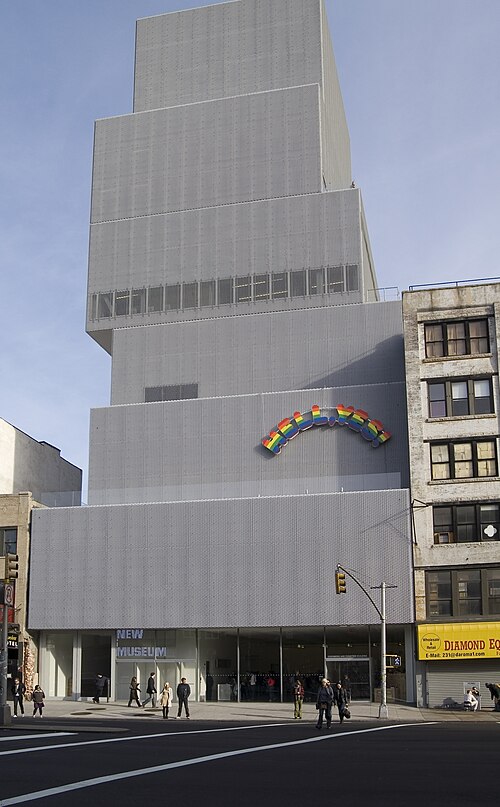
The New Museum is a contemporary art museum located on the Bowery in Manhattan's Lower East Side. Founded in 1977, it was conceived as a venue dedicated to new art and new ideas.
Cooper–Hewitt, Smithsonian Design Museum
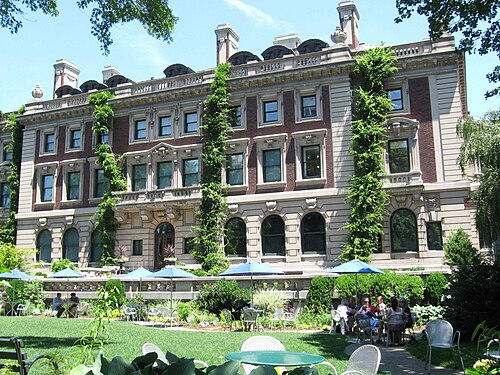
The Andrew Carnegie Mansion houses the Cooper–Hewitt, Smithsonian Design Museum, a design museum forming part of the Smithsonian Institution. Located on the Upper East Side of Manhattan, the building was constructed as a private residence for industrialist Andrew Carnegie.
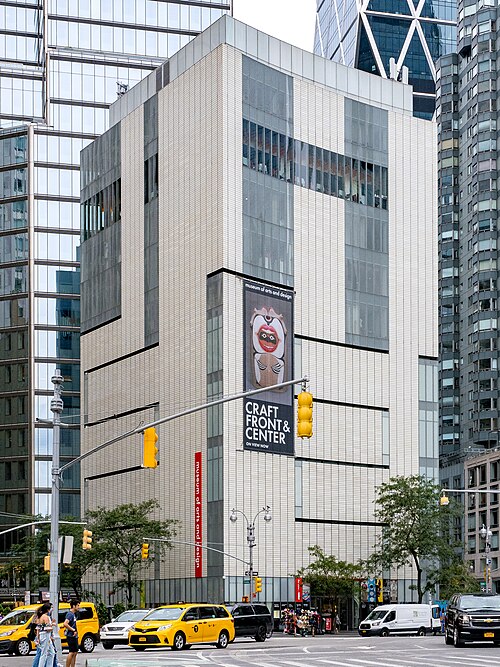
The Museum of Arts and Design is a contemporary museum at Columbus Circle, on the southwest corner of Central Park.
Neue Galerie New York
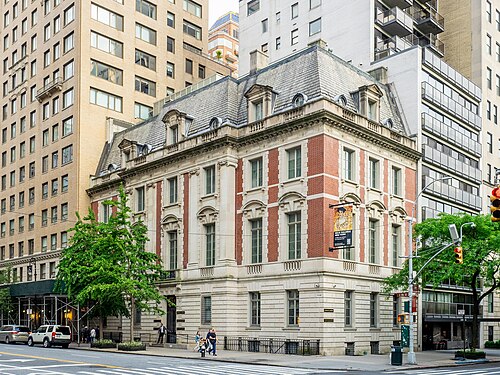
Neue Galerie New York is a museum devoted to early twentieth-century German and Austrian art and design. It occupies a historic mansion on Manhattan's Museum Mile.
The Museum of the City of New York is a history and art museum located on Fifth Avenue in Manhattan, facing Central Park. Founded in 1923, it occupies a Georgian Colonial Revival building designed to house its collections.
The Jewish Museum
The Jewish Museum is a museum of Jewish culture, history, and art on Fifth Avenue in Manhattan’s Upper East Side. It occupies a former mansion in the Museum Mile district, placing it among several major cultural institutions.
National Museum of the American Indian
The National Museum of the American Indian George Gustav Heye Center occupies the historic Alexander Hamilton U.S. Custom House in Lower Manhattan.
The Morgan Library & Museum is a cultural institution in New York City centered on the personal library of financier Pierpont Morgan.
Manhattan is organised broadly from Downtown to Midtown and Uptown. Lower Manhattan holds the Financial District and the harbour; Greenwich Village, SoHo and the Lower East Side sit above it; Midtown contains Times Square, the theatre district and the main rail terminals; Central Park separates the Upper East and Upper West Sides. Brooklyn's waterfront neighbourhoods face Lower Manhattan, Queens extends east beyond the East River, the Bronx begins north of Manhattan, and Staten Island is reached across the harbour. Give outer-borough destinations their own geographic blocks.
Checked 2026-08-26
Use the subway for long moves and walk within neighbourhoods. New York City Tourism describes subways and buses as inexpensive, fast and operating 24 hours, while NYC Ferry connects waterfront districts and the Staten Island Ferry provides a separate harbour crossing. Service changes are common outside weekday peaks, so check the MTA route status before a late-night or weekend journey. Express and local trains may share platforms but stop at different stations; confirm both the route letter or number and the direction before boarding.
Checked 2026-08-26
Five to six days suit a first visit. Four days can cover Manhattan's main zones, while the additional time makes room for Brooklyn, Queens or the Bronx without reducing each neighbourhood to a station stop.
April through June and September through October generally provide comfortable walking weather and useful daylight. Summer can be hot and humid, while winter conditions can shorten outdoor sightseeing days.
Yes, the system operates 24 hours, but an individual line may be rerouted or run less frequently overnight and on weekends. Check live service status before relying on a specific late connection.
Manhattan is the simplest base for a short first visit because its subway hubs connect directly to the greatest concentration of sights. Brooklyn and Queens bases also work when they are close to a direct subway line.
Keep Lower Manhattan together, pair Midtown with the theatre district, and give Central Park and the adjacent museums a separate block. Brooklyn waterfront areas combine naturally with Lower Manhattan by subway or ferry.