St Mary’s Cathedral
St Mary's Cathedral
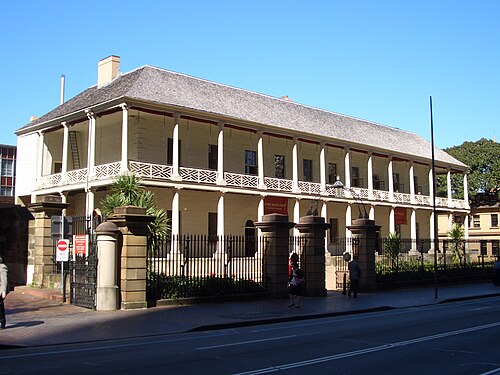
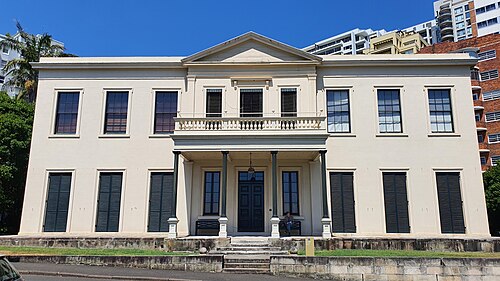
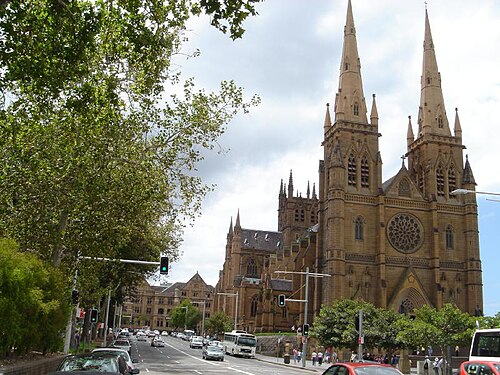
St Mary's Cathedral is Sydney's active Catholic cathedral and the seat of its archbishop, facing Hyde Park rather than tucked away in a museum precinct.
- Must see
- Place of worship
City guide · Australia
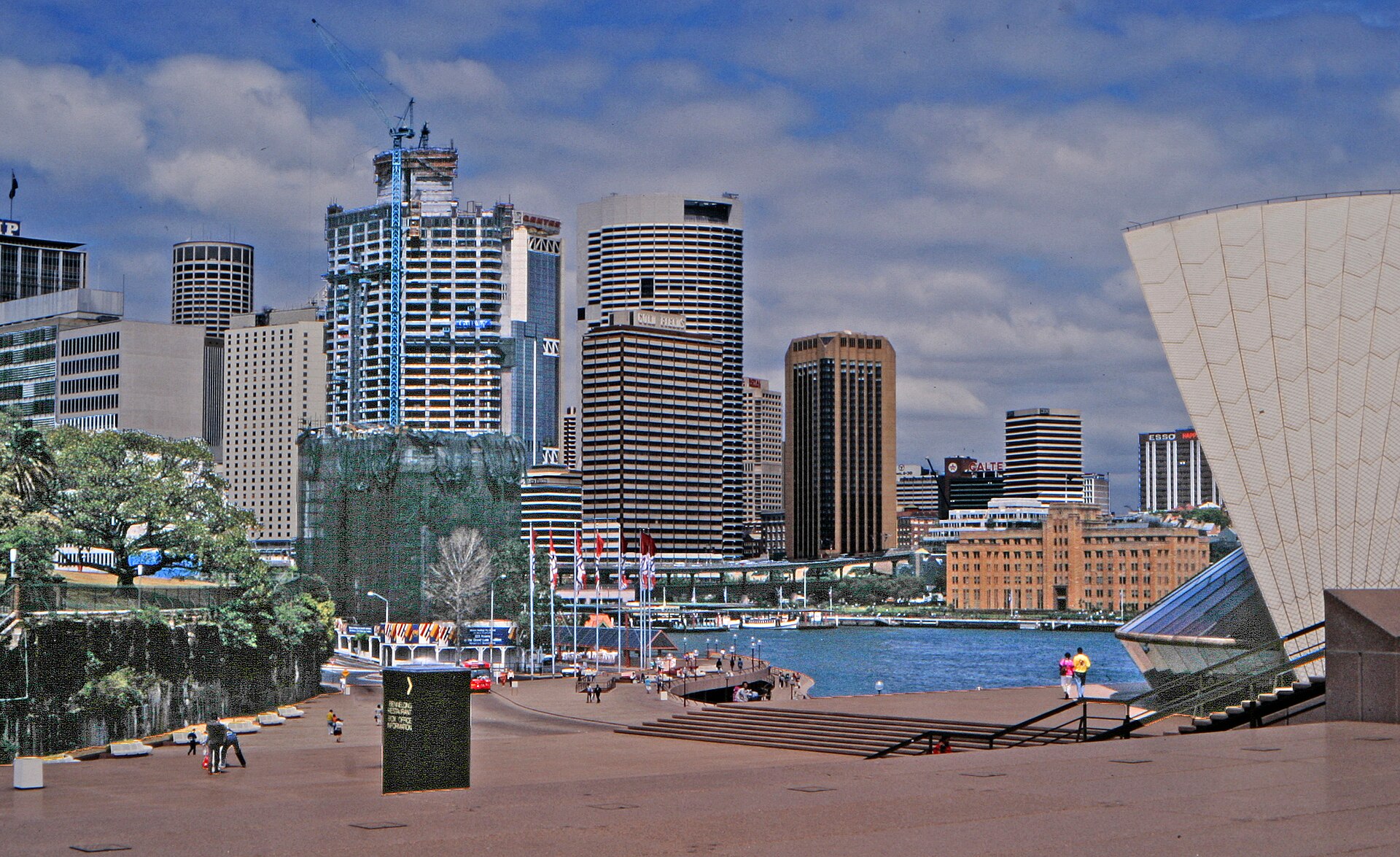
Sydney is divided by a drowned harbour, steep headlands and long coastal corridors. Circular Quay anchors the Opera House, The Rocks and harbour crossings, whil...
Photograph · W. Bulach · CC BY-SA 4.0
Set your days, your pace and the hours you actually want to be out. The planner works around closing days and travel time, and leaves room to eat.
Editorial responsibility: Elena Voss · Roavina Travel Editor
Sydney is divided by a drowned harbour, steep headlands and long coastal corridors. Circular Quay anchors the Opera House, The Rocks and harbour crossings, while the central business district runs south toward Town Hall and Darling Harbour. Bondi and the eastern beaches occupy a different corridor; Manly begins with a harbour crossing. The city's geography makes transport choices part of the sightseeing plan.
Checked 2026-08-26
November · November in Sydney has mean high 23.8°C, mean low 16.3°C, rainfall 104.0 mm, 12.6 rain days. Mild southern-hemisphere shoulder-season temperatures support long outdoor days. November visitors can plan longer days outside in Sydney with relatively little weather friction.
Ranked by importance — sitelinks, pageviews and heritage status, not editor preference.
76 places match
Category
Typical visit duration
Good for
Interests
St Mary's Cathedral
St Mary's Cathedral is Sydney's active Catholic cathedral and the seat of its archbishop, facing Hyde Park rather than tucked away in a museum precinct.
St James Church
St James' Church, commonly known as St James', King Street, is a heritage-listed Anglican parish church at 173 King Street in the Sydney CBD.
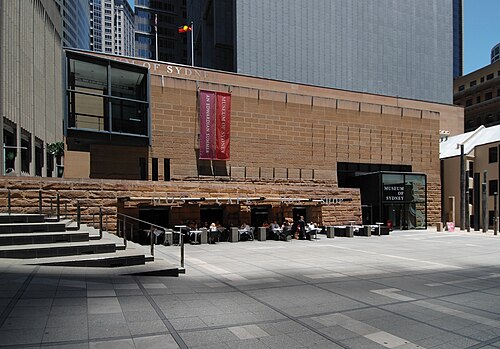
The Museum of Sydney is a history museum near Circular Quay on the site of Australia’s first Government House, built in 1788. It explores Sydney’s colonial foundations, Indigenous history and continuing urban development through archaeology, objects, art and multimedia.
Powerhouse Museum
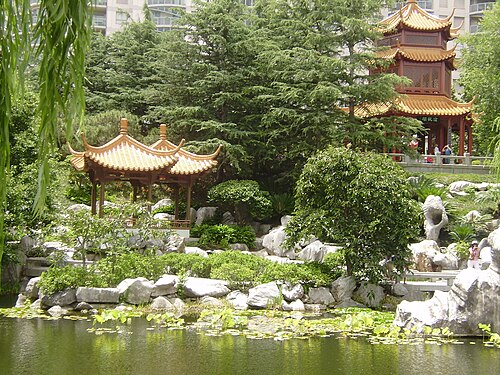
The Chinese Garden of Friendship is a traditional Chinese garden located in Sydney. It was established as a symbol of friendship between Sydney and its sister city in China, Guangzhou.
Chinatown is an urban enclave in the southern part of the Sydney central business district, covering most of the Haymarket suburb between Central station and Darling Harbour, and it is Australia's largest Chinatown.
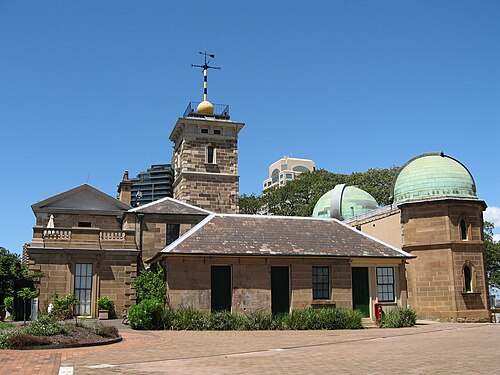
Sydney Observatory is a heritage astronomical observatory and museum located in The Rocks area of Sydney. Established in 1858, it occupies a prominent position on Observatory Hill near the harbour.
Cadman's Cottage
Cadmans Cottage is a historic sandstone building in The Rocks, beside Sydney Cove. Built during Sydney’s early colonial period, it is one of the city’s oldest surviving residential buildings.
Barangaroo Reserve
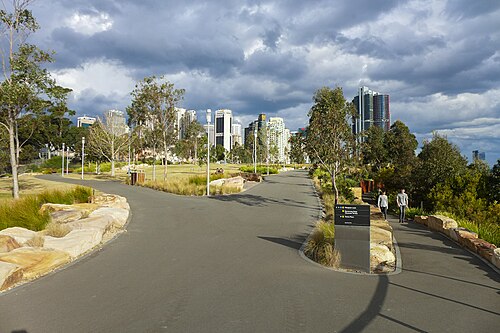
Barangaroo Reserve is a landscaped harbour headland built around sandstone terraces, foreshore paths, and views across western Sydney Harbour.
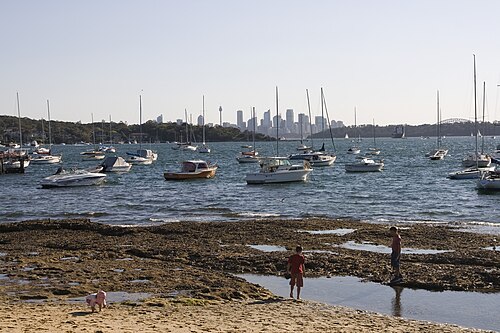
Watsons Bay is a harbourside suburb and visitor destination in eastern Sydney, New South Wales. It sits at the southern head of the entrance to Sydney Harbour, offering views across the water to the North Head.
The State Library of New South Wales is Australia's oldest library, established in 1826. It occupies a prominent position on Macquarie Street in Sydney's central business district, adjacent to the Royal Botanic Garden.
The Mint
The Mint is a heritage building in Sydney associated with Australia’s colonial period and the early development of the city. Its sandstone construction reflects the architectural character of historic Sydney.
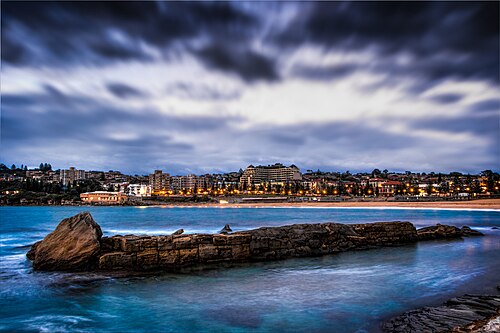
Coogee Beach is a sandy ocean beach in Sydney’s eastern suburbs, facing the Tasman Sea. It is a straightforward place for swimming, sunbathing, shoreline walks and relaxed coastal views.
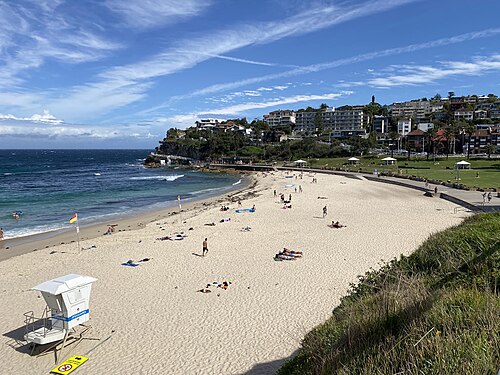
Bronte Beach is a coastal beach within the Sydney metropolitan area, located in the eastern suburbs. It forms part of the sequence of beaches along Sydney's southeastern coastline.
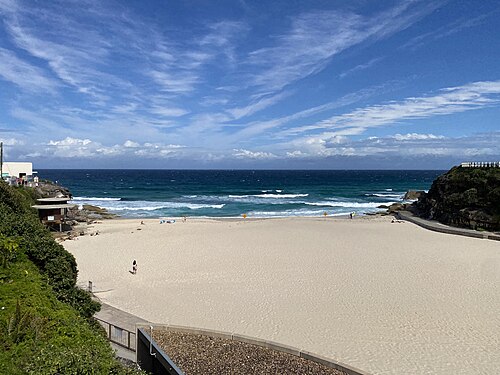
Tamarama Beach is a compact crescent on Sydney’s eastern suburbs coast, positioned between Bondi Beach and Bronte Beach. Steep sandstone headlands press close around the sand, making the Pacific feel immediate and powerful.
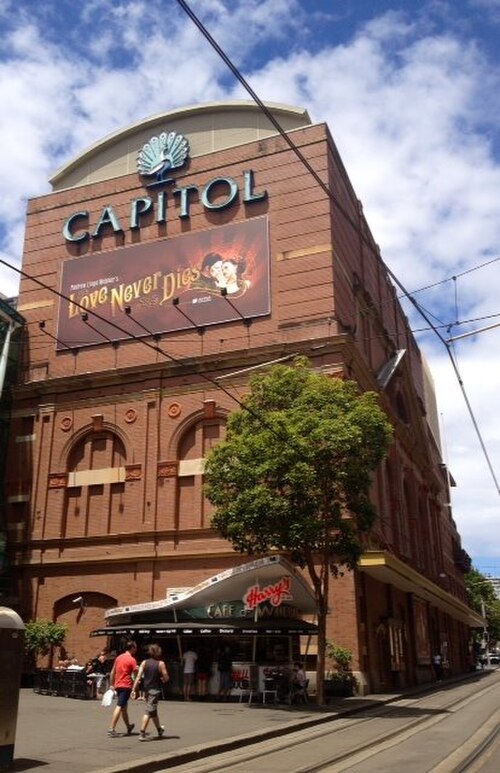
Capitol Theatre is a heritage-listed theatre located in Sydney, Australia. The building occupies a prominent position within the city's entertainment district. Originally constructed in the early twentieth century, the theatre has undergone various transformations throughout its history.
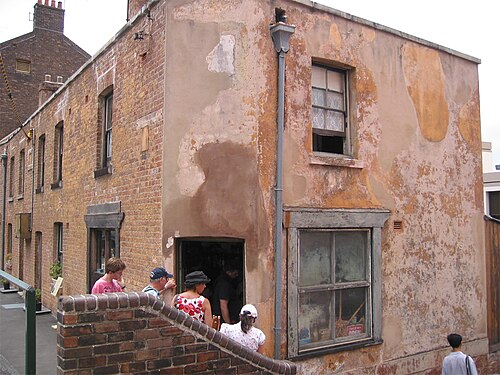
Susannah Place Museum preserves a terrace of four houses built in 1844 in Sydney’s The Rocks. The site presents working-class domestic life across more than 150 years, showing how successive families lived within a compact urban terrace.
Angel Place Birdcages, also known as Forgotten Songs, is an outdoor artwork in Sydney’s central business district. Suspended cages fill the pedestrian laneway overhead, while recorded birdcalls recall species that once lived around the Tank Stream valley before European settlement.
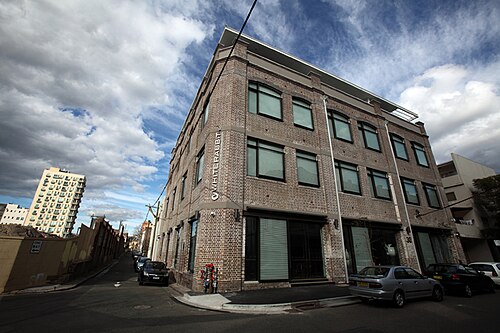
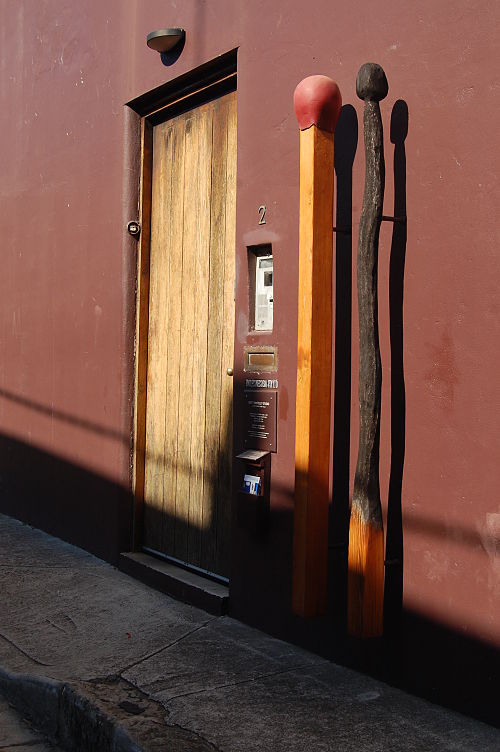
White Rabbit Gallery is a contemporary art museum in Chippendale, Sydney, founded by Judith Neilson to present her collection of twenty-first-century Chinese art. The gallery occupies a converted four-storey knitting factory, giving the visit an industrial architectural setting.
Brett Whiteley Studio is a gallery and studio museum in Sydney dedicated to the life and work of Australian artist Brett Whiteley. The preserved working environment offers a more intimate encounter than a large museum collection.
Elizabeth Bay House is an 1830s colonial residence built for Alexander Macleay, the colony’s colonial secretary, in Sydney’s inner east.
Nielsen Park is a heritage-listed public park situated within Sydney Harbour National Park in the eastern suburbs of Sydney. The park occupies a prominent harbour foreland position in Vaucluse, offering sheltered swimming beaches and picnic grounds.
Begin at Circular Quay for the Opera House, The Rocks and the harbour edge, then continue south through the city only if the day's museums fit. Darling Harbour forms a western loop from the central grid. Give Bondi and the eastern beaches their own route, and make Manly a ferry-led outing. The Blue Mountains are a regional rail day, not an addition to a central afternoon.
Checked 2026-08-26
Transport for NSW coordinates metro, trains, buses, ferries and light rail, but each mode answers a different piece of Sydney's geography. Ferries serve harbour destinations, rail handles long urban and regional corridors, and light rail or buses connect areas away from heavy rail. Walk within The Rocks, the central grid or one beach district. Check live service information before relying on a harbour or outer-suburban return.
Checked 2026-08-26
Suggested stay for a first visit: 3–5 days. Cover Circular Quay, The Rocks and the central city first, then budget separate time for an eastern-beaches route, Manly or a regional excursion.
Group the Opera House and The Rocks around Circular Quay. Continue through the central grid to Darling Harbour on another loop, and avoid combining Bondi with Manly merely because both are coastal names.
Choose among metro, train, bus, ferry and light rail according to the corridor. Transport for NSW publishes the current journey and disruption information; harbour crossings should be checked like any other scheduled service.
Circular Quay, The Rocks and much of the central grid connect well on foot. Harbour water, steep approaches and the distance to the beaches prevent the wider destination from becoming one continuous walk.
Manly depends on a harbour crossing, the eastern beaches use a different urban corridor, and the Blue Mountains require a regional journey. Check the final workable return for whichever outward trip is chosen.