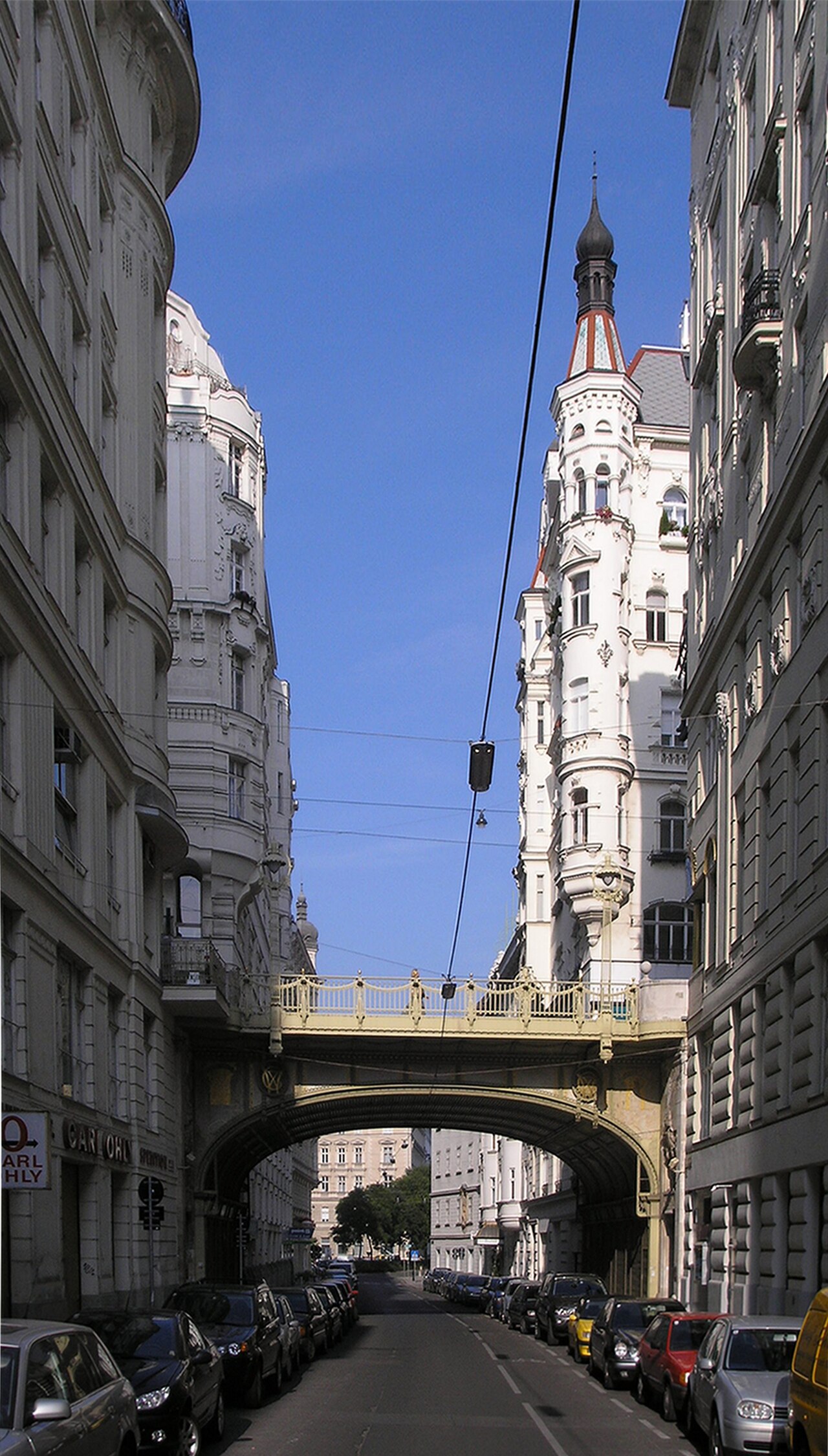
Hohe Brücke is a historic bridge in Vienna. The German name means “High Bridge,” and the structure belongs to the city’s network of crossings, streets and walkways. Unlike a palace or museum, Hohe Brücke is experienced through movement: the visitor reaches the bridge, crosses or observes it, and reads its relationship with the surrounding urban fabric. Its interest comes from the combination of practical infrastructure and architectural heritage. The bridge can form a small but distinctive stop during an exploration of Vienna’s historic core, especially for travellers who enjoy details that connect streets, buildings and circulation routes rather than only the city’s largest landmarks.
Hohe Brücke has no interior in the conventional visitor-attraction sense. The experience is the bridge deck, its supporting elements and the surrounding streetscape. Read the crossing from several positions: first from the approach, then from the deck, and finally from a nearby viewpoint that shows how the bridge connects the urban spaces around it. Stonework, metal components or later repairs may contribute to the visual character of a historic bridge, but the essential subject remains the crossing itself. Nearby façades and street movement provide context, turning a few minutes on the bridge into a compact lesson in how Vienna’s older urban fabric functions.
A straightforward crossing of Hohe Brücke takes only a few minutes. Allow fifteen to thirty minutes when you want to pause for architectural details, observe the surrounding streets or make photographs from more than one angle. Hohe Brücke is best treated as a brief urban sight within a longer walk through Vienna, not as a destination requiring a half-day schedule. Its compact scale makes it easy to combine with nearby historic streets and buildings. The most satisfying visit is unhurried enough to notice the bridge’s elevation, materials and position within the city, while remaining short enough to preserve time for larger attractions.
Hohe Brücke is an outdoor urban crossing, so daylight, temperature and weather shape the visit. Daytime is useful for reading the bridge’s materials and its relationship with nearby architecture. Evening changes the mood of the streets and can make the crossing feel more atmospheric, while winter conditions require warmer clothing and greater care on wet or icy surfaces. Spring and autumn often suit walking routes because the bridge can be combined with longer periods outdoors. Visit when the surrounding streets fit your itinerary, and allow flexibility for changing pedestrian or traffic conditions. Hohe Brücke rewards repeated views more than a fixed appointment.
Hohe Brücke functions as a public bridge rather than a commercial attraction, so crossing it does not require an attraction ticket. There is no separate admission experience described for the structure itself. Travellers may still spend money on transport, food or nearby attractions during the wider Vienna outing, but those costs belong to the rest of the route. The bridge is therefore useful for a budget-conscious walking itinerary: it contributes historic character without adding an entrance charge. Treat the crossing as part of the public city rather than as a separately enclosed venue with a ticket desk.
Hohe Brücke lies within Vienna’s urban network and is naturally reached as part of a walking route through the historic city. Vienna’s underground trains, trams and buses connect the city’s districts, after which the final approach is made on foot. The bridge itself is easiest to understand when approached from the surrounding streets rather than reached only for a quick crossing. Use the mapped place name to orient the route, then pause at the approaches and on the deck. Travellers already exploring central Vienna can include Hohe Brücke as a linking point between architectural sights, public streets and other crossings.
Hohe Brücke is an urban crossing, so pedestrians should pay attention to traffic, bicycles and other people using the route. Wet or freezing weather can make bridge surfaces uncomfortable or slippery, and historic materials may feel less even than a modern pavement. Stand to one side when examining details or taking photographs so the crossing remains clear. Normal city awareness is appropriate in a busy capital, including care with personal belongings. The bridge’s practical function matters: visitors should not block movement, enter restricted areas or treat the deck as a private viewing platform. A respectful, alert approach keeps the stop simple and safe.
Hohe Brücke is most photogenic when the image shows both the structure and the city around it. Photograph the bridge from an approach to emphasize its raised position, then use the deck for views along the crossing and toward adjacent architecture. Morning and evening light can change the balance between the bridge, façades and street shadows. A compact camera or phone is practical because the bridge remains a functioning public route. Keep the walking line open, avoid obstructing other users and frame people incidentally with consideration. Contextual images usually say more about Hohe Brücke than a close crop of bridge materials alone.
Hohe Brücke is a historic bridge and public urban crossing whose interest comes from its structure and relationship with Vienna’s surrounding streets and buildings.
How long does it take to visit Hohe Brücke?
Crossing takes a few minutes; allow around fifteen to thirty minutes for architectural observation, surrounding views and photography.
Does Hohe Brücke require an entrance ticket?
No separate attraction ticket is required for the public bridge crossing itself.
How should I explore Hohe Brücke?
Approach it on foot, pause at both ends, cross the deck and look back at the bridge in relation to the surrounding Vienna streetscape.
When is Hohe Brücke best for photography?
Daylight makes the materials and nearby architecture easier to read, while morning or evening light can create stronger shadows and atmosphere.
What should pedestrians remember on Hohe Brücke?
Keep the crossing clear, watch for traffic and bicycles, take care on wet or icy surfaces, and step aside before stopping for photographs.
Nothing non-essential is set before you choose, in regions where consent is required. If you decline, ads still appear and analytics is switched off entirely.