

01
45 min
The Last Supper
Ultima Cena
Il Cenacolo Vinciano is a one-room state museum built around a single wall.
- Must see
- Art and culture venue
City guide · Italy
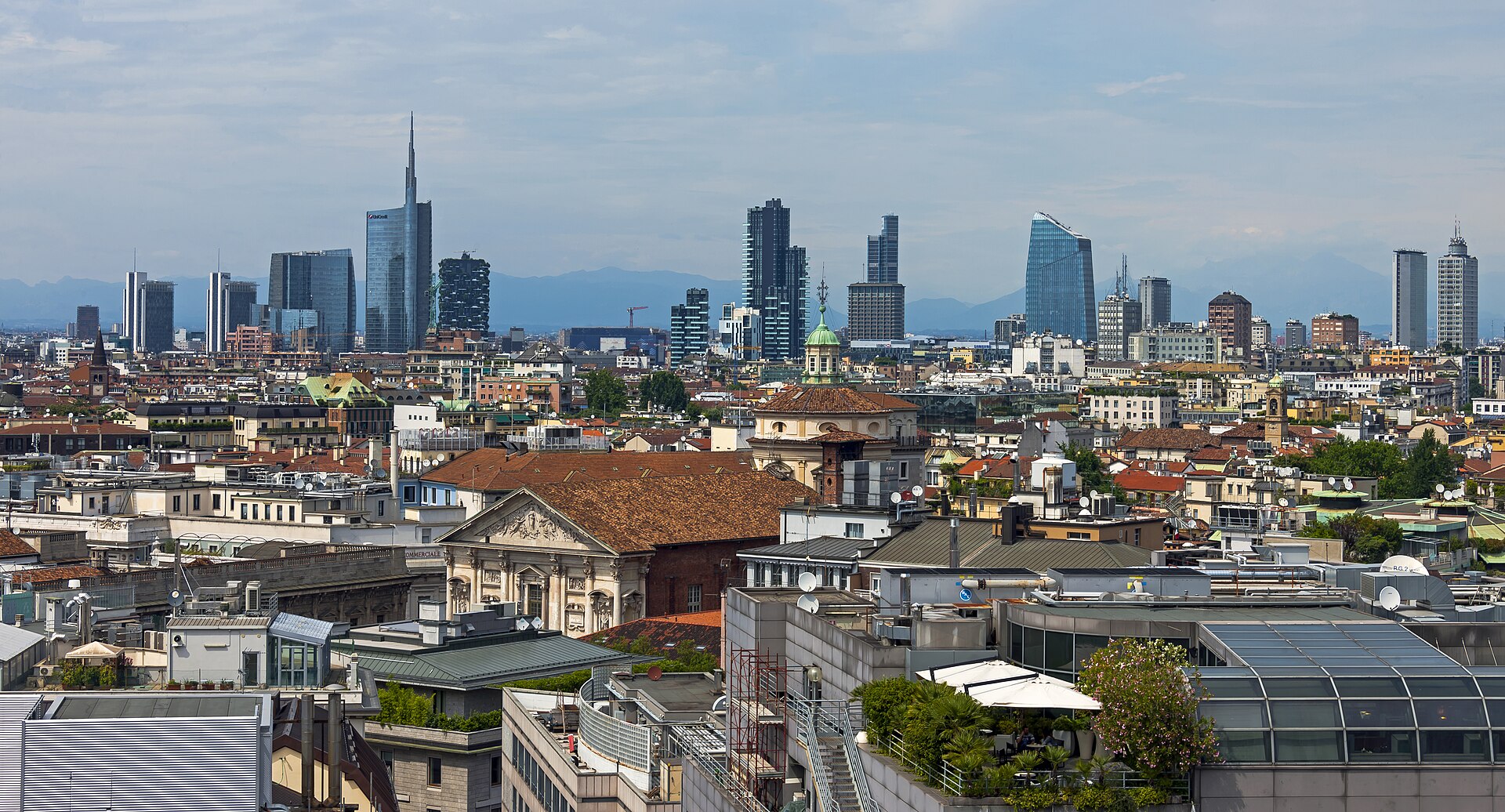
Milan is organised around a compact historic centre, with the Duomo, Galleria Vittorio Emanuele II and La Scala close enough to combine on foot. Brera lies imme...
Photograph · Daniel Case · CC BY-SA 3.0
Set your days, your pace and the hours you actually want to be out. The planner works around closing days and travel time, and leaves room to eat.
Editorial responsibility: Elena Voss · Roavina Travel Editor
Milan is organised around a compact historic centre, with the Duomo, Galleria Vittorio Emanuele II and La Scala close enough to combine on foot. Brera lies immediately north, the Navigli canals sit to the southwest, and the modern Porta Nuova district rises around Garibaldi station. Longer journeys connect the centre with Santa Maria delle Grazie, San Siro and outer design districts.
Checked 2026-08-26
November · November is cool and damp in Milan, with a 10.7°C mean high and 76.7 mm of rain.
Ranked by importance — sitelinks, pageviews and heritage status, not editor preference.
54 places match
Category
Typical visit duration
Good for
Interests
Ultima Cena
Il Cenacolo Vinciano is a one-room state museum built around a single wall.

Santa Maria delle Grazie is a Dominican convent church in central Milan, designated a UNESCO World Heritage Site jointly with Leonardo da Vinci's Last Supper housed within its refectory.

Galleria Vittorio Emanuele Secondo
The Galleria Vittorio Emanuele II is a historic shopping arcade in central Milan, Italy. Named after the first king of unified Italy, it opened in 1877 and represents one of Europe's oldest covered shopping galleries.
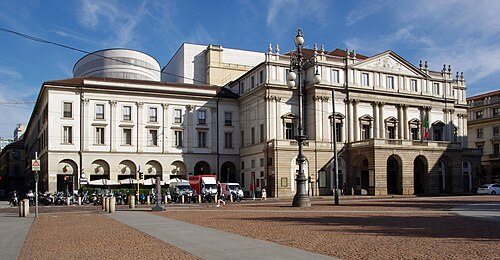
Teatro alla Scala
Teatro alla Scala is Milan's opera house, and the block it occupies on Piazza della Scala is two visitable things at once: a working theatre with a season that sells out, and a museum inside the same walls that anyone…
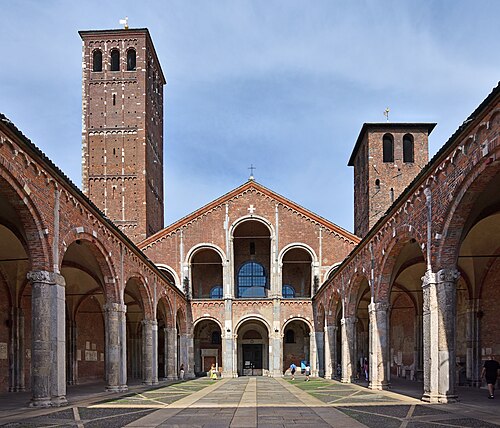
Basilica di Sant'Ambrogio
The Basilica of Sant'Ambrogio is a historic church in Milan and one of the most ancient in the city. Founded by Saint Ambrose in 379 AD, it was rebuilt in the Romanesque style during the eleventh and twelfth centuries.
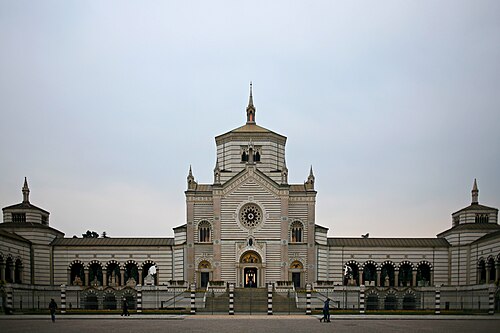
Cimitero Monumentale
Cimitero Monumentale is Milan’s monumental cemetery and an open-air collection of sculpture, architecture and memorial art. Founded in 1866, it remains an active burial ground while welcoming visitors interested in Italian artistic heritage.
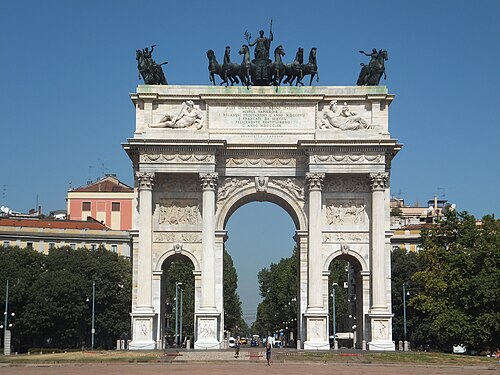
Arco della Pace
The Arco della Pace is a neoclassical triumphal arch in Milan, standing at the edge of Parco Sempione near the historic centre.
Sempione Park is a historic urban park in central Milan, next to the Sforza Castle, covering 386,000 square metres; it is completely fenced and under video surveillance, and is run by the City of Milan.

Basilica di San Lorenzo Maggiore
The Basilica of San Lorenzo, locally named Basilica di San Lorenzo Maggiore, stands as one of Milan's most ancient churches.

Colonne di San Lorenzo is a prominent Roman ruin in Milan, consisting of sixteen Corinthian columns that stand in front of the Basilica di San Lorenzo Maggiore.
Basilica di Sant'Eustorgio
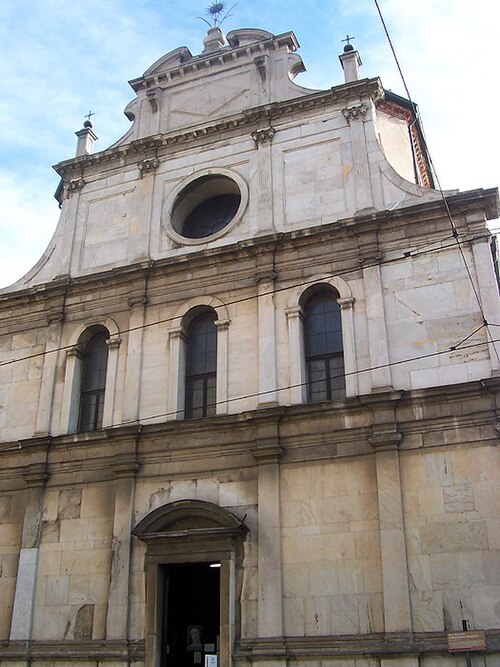
San Maurizio al Monastero Maggiore is a historic church complex in central Milan, originally constructed as part of a Benedictine convent. The building dates to the sixteenth century and occupies a significant place in Milanese religious architecture.
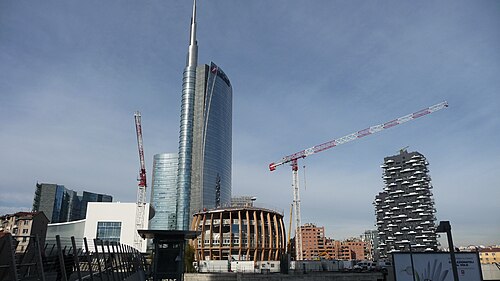
Bosco Verticale is a pair of residential towers in Milan, Italy, distinguished by extensive vegetation integrated into their architectural design. The complex stands in the Porta Nuova district.
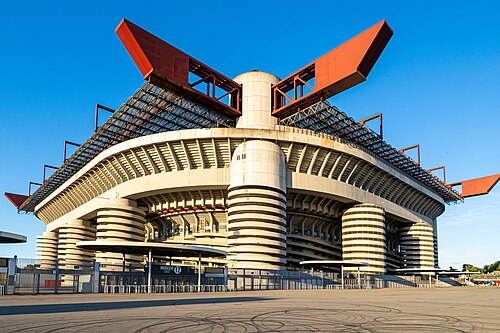
Stadio Giuseppe Meazza
Stadio Giuseppe Meazza is a major football stadium in Milan, Italy, known colloquially as San Siro. It serves as the shared home ground for two prominent Italian football clubs, AC Milan and Inter Milan.
Parco di CityLife
Basilica San Nazaro in Brolo
Basilica di San Simpliciano
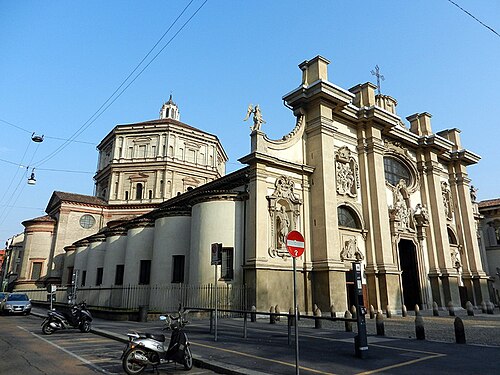
Chiesa di Santa Maria della Passione
Santa Maria della Passione is a historic Catholic church in central Milan, also known locally as Chiesa di Santa Maria della Passione. It belongs to the city’s rich ecclesiastical landscape and offers a quieter alternative to Milan’s busiest monumental churches.
Chiesa parrocchiale di San Marco
Cavallo di Leonardo da Vinci
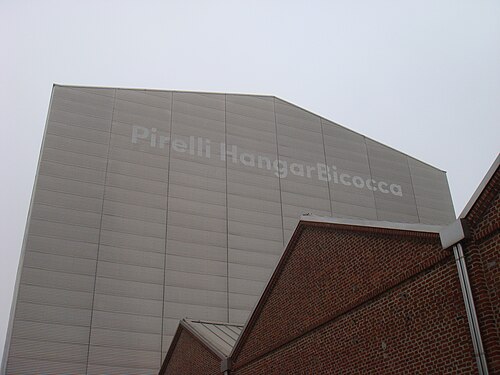
Pirelli HangarBicocca is a non-profit contemporary art foundation in a former locomotive-manufacturing plant in Milan's Bicocca district. The institution opened in 2004 and occupies approximately 15,000 square metres on one ground-level floor.

Chiesa di San Bernardino alle Ossa
San Bernardino alle Ossa is a historic church in central Milan, Italy. Its local name is Chiesa di San Bernardino alle Ossa.
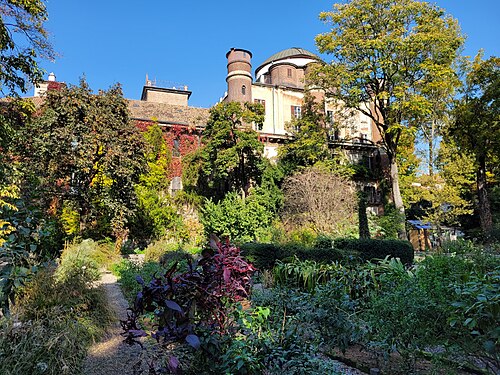
Orto Botanico di Brera is a historic botanical garden in Milan’s Brera district. Founded in 1774 under Maria Theresa of Austria, it was created as an academic setting for cultivating medicinal plants and supporting pharmaceutical education.
Use the Duomo as the central reference point. The fashion quadrilateral and Brera are north of it, Castello Sforzesco and Parco Sempione are west, and the Navigli and Porta Ticinese districts are south and southwest. Milano Centrale is northeast of the old centre, while Porta Garibaldi serves the Porta Nuova business district. Grouping sights by these zones avoids repeated cross-city travel.
Checked 2026-08-26
Walk inside the historic centre and use ATM metro, tram and bus services for longer moves. Milan has five metro lines, while surface routes connect neighbourhoods beyond the rail corridors. Contactless bank cards and mobile devices can be used on ATM services, and the system calculates the applicable fare. Check the operator map before travelling to outer sites or changing fare zones.
Checked 2026-08-26

Suggested stay for a first visit: 2–3 days. Build the visit around the historic centre, Brera and the castle, then add Navigli, Porta Nuova or an outer attraction as time allows.
Yes. The Duomo, Galleria Vittorio Emanuele II, La Scala, Brera and Castello Sforzesco form a practical walking core, although the metro is useful for crossing between wider districts.
ATM operates the city's metro, tram, bus and trolleybus network. Use rail for cross-city movement and surface services where the metro does not directly reach the destination.
Yes. ATM accepts supported contactless cards and mobile devices on its services and calculates the applicable fare, provided the same payment method is used throughout the journey.
Treat Navigli, Porta Nuova, San Siro and other outer districts as separate clusters. They sit beyond the compact Duomo-Brera-castle core and usually require a dedicated transit leg.

