_-_2021-08-28_-_2.jpg)
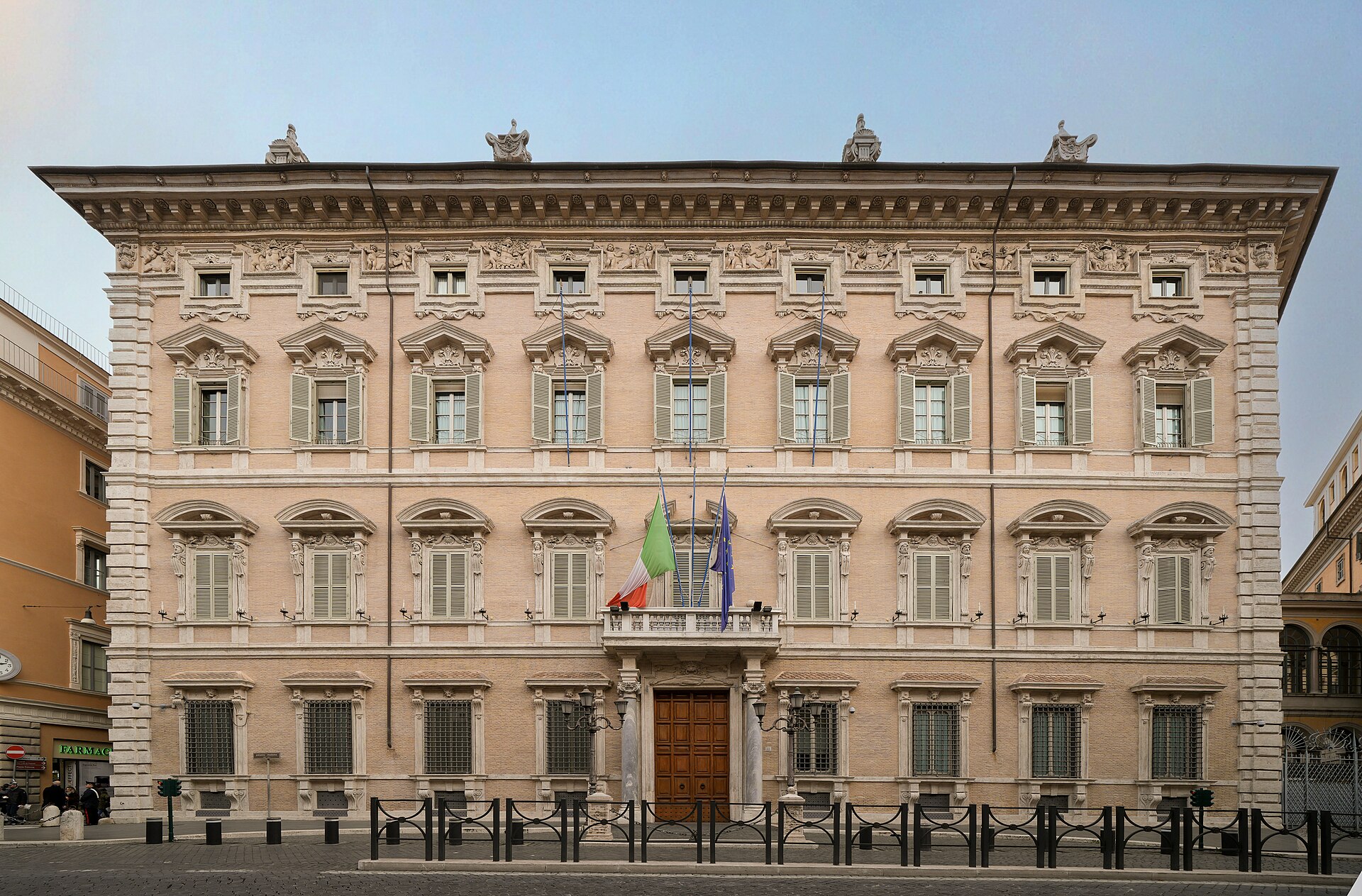
1 min walk
Palazzo Madama
- Must see · Heritage site
- Historic monument

Place of worship · Rome
Chiesa di San Luigi dei Francesi
| Monday | 09:30 – 18:30 |
|---|---|
| Tuesday | 09:30 – 18:30 |
| Wednesday | 09:30 – 18:30 |
| Thursday | 09:30 – 18:30 |
| Friday | 09:30 – 18:30 |
| Saturday | 09:30 – 18:30 |
| Sunday | 11:30 – 18:30 |
Closed to visitors between 12:45 – 14:30
Closed to visitors between 12:15 – 14:30
Parsed from OpenStreetMap opening hours on 2026-09-09.
San Luigi dei Francesi is Rome’s national church of France, located between the Pantheon and Piazza Navona in the historic centre. The active church has served the French community since the sixteenth century and presents a Baroque setting designed in part by Giacomo della Porta. For travellers, its greatest draw is the close connection between a working religious building and one of Rome’s essential artistic experiences: Caravaggio’s three paintings devoted to Saint Matthew. San Luigi dei Francesi is the national church of France in Rome, serving the French community since the sixteenth century. Located between the Pantheon and Piazza Navona in the historic centre, this Baroque church holds significant cultural importance for French nationals in Italy. The building represents a key example of Counter-Reformation architecture in Rome, with its facade designed by Giacomo della Porta. It remains an active place of worship alongside its function as a major art destination. Many Roman churches do not charge entrance fees, though donations support maintenance.
Checked 2026-08-26 · Source
The Contarelli Chapel contains Caravaggio’s Calling of Saint Matthew, Inspiration of Saint Matthew and Martyrdom of Saint Matthew, painted between 1599 and 1602. Together they demonstrate his dramatic use of light, gesture and human presence. The rest of the church adds ornate altars, stucco decoration, frescoes and Baroque architectural detail. Spend a few moments looking beyond the chapel: the contrast between the celebrated paintings and the surrounding devotional setting explains why the church deserves more than a quick glance. The church contains three celebrated paintings by Caravaggio depicting the life of Saint Matthew: The Calling of Saint Matthew, The Inspiration of Saint Matthew, and The Martyrdom of Saint Matthew. These works, created between 1599 and 1602, are considered among the artist's masterpieces and demonstrate his revolutionary use of chiaroscuro.
Checked 2026-08-26 · Source
Most visitors need thirty to sixty minutes. The church is compact, and the Contarelli Chapel concentrates the main artistic focus, but a slower visit lets you examine all three Caravaggio paintings and the wider Baroque decoration. Add time if you are studying chiaroscuro, Counter-Reformation art or the church’s other chapels. If a service is taking place, keep your visit silent and allow the congregation priority over sightseeing.
Checked 2026-08-26 · Source
An early visit can make it easier to view the Caravaggio paintings before the busiest period around Piazza Navona and the Pantheon. Central Rome remains active throughout the day, especially during major travel seasons and holidays. Religious services can restrict movement or alter the atmosphere inside, so build flexibility into your walking route. The church fits naturally between the Pantheon, Piazza Navona and other historic-centre landmarks.
Checked 2026-08-26 · Source
The church is an active place of worship whose central attraction is the permanent setting of Caravaggio’s Saint Matthew paintings. Visitors may encounter a donation request, and the chapel’s coin-operated lighting is an important practical detail for seeing the canvases clearly. Carry small-denomination coins for the lighting system. The experience is primarily a church visit rather than a ticketed museum tour, so allow time for both the artwork and the religious setting.
Checked 2026-08-26 · Source
San Luigi dei Francesi is highly central and easy to reach on foot from both the Pantheon and Piazza Navona. Buses serve nearby Corso del Rinascimento and surrounding streets, while Metro stations require an onward walk. The historic district has cobbles, narrow streets and restrictions on vehicle access. Taxis can approach nearby streets but may not reach the church entrance directly. Walking is the most natural way to include it in a central Rome route.
Checked 2026-08-26 · Source
San Luigi dei Francesi remains a working church, so wear clothing covering shoulders and knees and keep quiet inside. The Contarelli Chapel can become congested, particularly when visitors gather around the paintings. Coin-operated lighting may need patience. Keep belongings secure in the busy streets near Piazza Navona, and take care on steps and uneven floors. During services, remain unobtrusive and follow any directions that preserve the congregation’s use of the building.
Checked 2026-08-26 · Source
The Caravaggio paintings are the main photographic subjects, but their viewing light can affect image quality. Flash can harm artworks and disturb worshippers, while tripods and professional equipment may be restricted inside the church. Follow posted instructions and keep photography discreet. The façade and surrounding street can be photographed from the public way. Inside, give priority to looking carefully at the paintings and to the quiet devotional atmosphere of the Contarelli Chapel.
Checked 2026-08-26 · Source
The Contarelli Chapel contains The Calling of Saint Matthew, The Inspiration of Saint Matthew and The Martyrdom of Saint Matthew.
Allow thirty to sixty minutes to see the three Caravaggio paintings and the church’s wider Baroque decoration. Art specialists may want longer.
Walking from the Pantheon or Piazza Navona is practical. Buses serve nearby Corso del Rinascimento, while the nearest Metro stations require further walking.
All three Saint Matthew paintings are in the Contarelli Chapel inside San Luigi dei Francesi, where they form the church’s main artistic focus.
Wear respectful clothing covering shoulders and knees because San Luigi dei Francesi is an active place of worship.
The lighting used to illuminate the Caravaggio paintings is coin-operated, so small-denomination coins are useful when viewing the works in the Contarelli Chapel.
Loading the interactive map…
The interactive map could not be loaded.

Last updated:
Source: OpenStreetMap contributors, Wikidata ·