24 min walk
Parco degli Acquedotti
- High
- Nature site
Historic monument · Rome
Villa dei Quintili
| Monday | 09:00 – 18:00 |
|---|---|
| Tuesday | 09:00 – 18:00 |
| Wednesday | 09:00 – 18:00 |
| Thursday | 09:00 – 18:00 |
| Friday | 09:00 – 18:00 |
| Saturday | 09:00 – 14:00 |
| Sunday | Closed |
Parsed from OpenStreetMap opening hours on 2026-09-09.
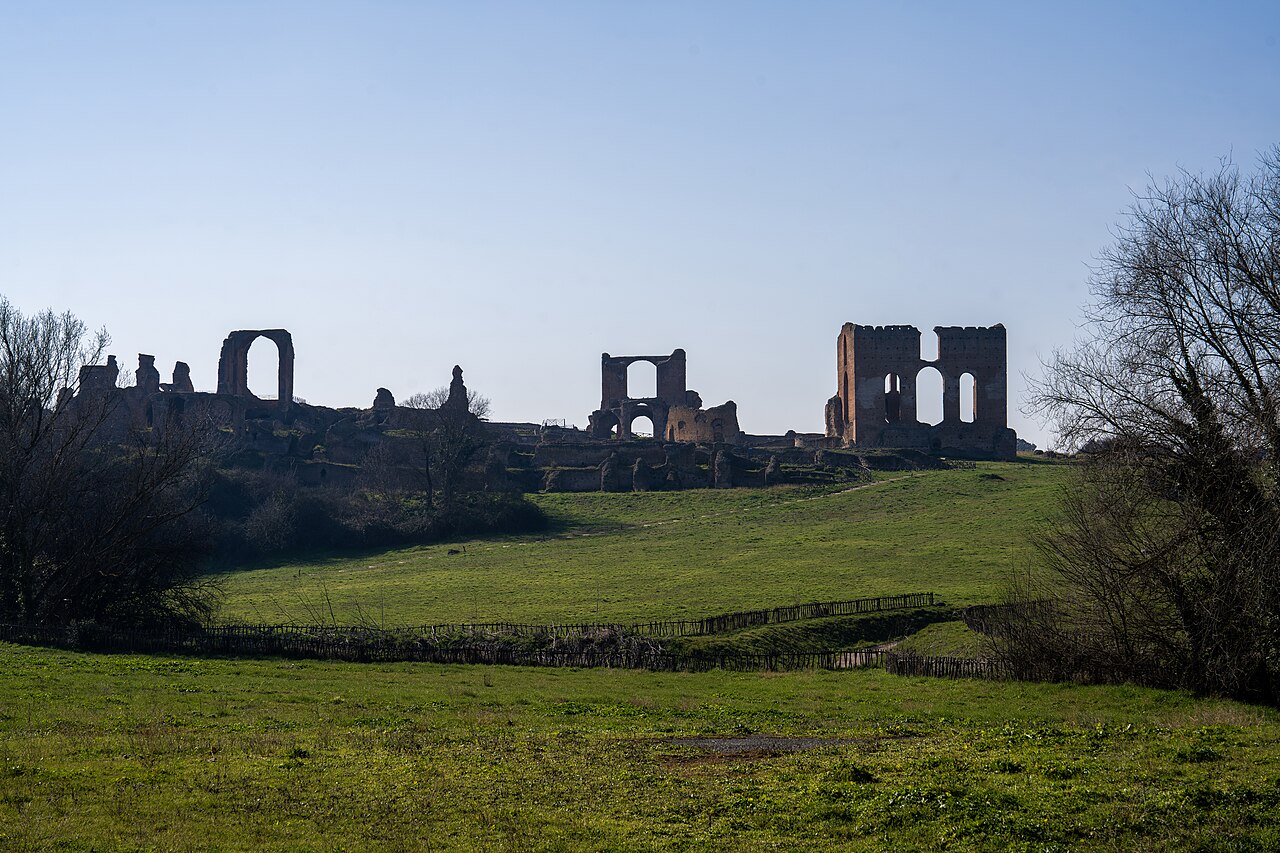
The Villa dei Quintili is a large Roman aristocratic estate on the Via Appia southeast of Rome. The Quintilii brothers, wealthy consuls in 151 CE, owned the residence before Emperor Commodus seized it and had them executed. Today the archaeological area reveals the scale of suburban luxury and the political power behind imperial appropriation. Its open ruins offer a quieter way to encounter Roman domestic architecture beyond the busiest monuments of the historic centre. The Villa dei Quintili is an ancient Roman villa located on the Via Appia in Rome. It was once one of the largest and most luxurious residences in the suburbs of ancient Rome. The villa belonged to the wealthy Quintilii brothers, who were consuls in 151 CE. The emperor Commodus later seized the property and had the brothers executed. The site now stands as an archaeological area managed within Rome's network of ancient monuments, offering visitors insight into aristocratic Roman life and imperial appropriation of private estates. No. These are separate archaeological sites. The Villa dei Quintili is a private aristocratic residence on the Via Appia, while the Baths of Caracalla are imperial public baths located closer to Rome's center.
Checked 2026-08-26 · Source
The remains cover residential quarters, service areas, and extensive bath complexes. Floor mosaics, marble decoration, sculptures, architectural fragments, and water-management features show how comfort and engineering supported elite Roman life. The original estate also included gardens, fountains, and agricultural land. As you move through the grounds, focus on the relationship between the thermal spaces and the larger residential layout. The surviving scale communicates wealth even where walls and decorative elements are fragmentary. The archaeological remains include extensive bath complexes with well-preserved floor mosaics and marble decorations. Visitors can observe the layout of residential quarters, service areas, and thermal facilities. The villa featured advanced engineering for its time, including water management systems.
Checked 2026-08-26 · Source
Allow one to two hours to explore the exposed ruins at a comfortable pace. The area covers substantial ground, and uneven surfaces slow the walk. Add time if mosaics, bath technology, Roman domestic life, or architectural fragments are your main interests. The open setting encourages pauses for landscape views and photographs. Because the villa is spread across an archaeological zone rather than a single building, the experience comes from gradually reading the estate’s scale and organisation.
Checked 2026-08-26 · Source
Spring and autumn are comfortable for walking among the exposed remains. Summer midday can be demanding because shade is limited across the archaeological grounds. Morning light is gentle on the mosaics and architectural fragments, while later light can give the ruins stronger relief. Rain makes ancient surfaces slippery and can complicate movement across the site. Plan the villa as part of a Via Appia day, allowing enough energy for walking rather than treating it like a short indoor museum visit.
Checked 2026-08-26 · Source
The Villa dei Quintili belongs to Rome’s archaeological heritage network along the Via Appia and may be connected with combined admission arrangements for nearby sites. Consider the villa when planning a broader archaeological route, since the usefulness of any combined arrangement depends on which other monuments you intend to visit. The principal reward is the extensive remains, especially the baths, mosaics, and estate layout.
Checked 2026-08-26 · Source
The villa lies on the Via Appia southeast of Rome’s historic centre. Public buses reach the general Appia Antica area, followed by a walk to the archaeological grounds. Cycling suits visitors who want to connect several Appian Way sites, while walking from central Rome is a substantial undertaking. The peripheral setting has less frequent transport and fewer nearby services than central districts. Plan the journey as an excursion and allow time for the return trip.
Checked 2026-08-26 · Source
Uneven ancient surfaces create trip hazards throughout the grounds, and exposed ruins may not have modern guardrails. Wear sturdy shoes and move carefully around fragmented walls, stones, and pathways. Shade is limited, so bring water and protect yourself from strong sun. Services are more limited in this peripheral archaeological zone. Stay with established routes around the remains, and keep your belongings secure while exploring the quieter open landscape.
Checked 2026-08-26 · Source
The bath complexes, mosaics, marble details, and broad ruin-filled landscape provide varied subjects. Wide compositions show the villa’s scale, while lower viewpoints can emphasise surviving walls and floor patterns. Morning and late afternoon light give the fragments more texture than flat midday sun. Walk slowly before choosing a frame, since the relationship between residential spaces, baths, and open ground is central to the site. Keep equipment compact and protect ancient surfaces from contact.
Checked 2026-08-26 · Source
The estate belonged to the wealthy Quintilii brothers, who were consuls in 151 CE. Emperor Commodus later seized the property for imperial use.
The archaeological area includes bath complexes, floor mosaics, marble decoration, residential quarters, service spaces, water-management features, sculptures, and architectural fragments.
Most visitors need one to two hours to walk across the grounds, examine the ruins, and spend time with the mosaics, baths, and architectural remains.
The Villa of the Quintilii was an aristocratic suburban residence on the Via Appia, while the Baths of Caracalla were large imperial public bathing complexes closer to central Rome.
The archaeological grounds include uneven ancient surfaces and exposed ruins. Sturdy footwear, careful movement, water, and sun protection make the walk more comfortable.
Morning and late afternoon provide more directional light for mosaics, bath remains, and architectural fragments. Wide views help communicate the villa’s extensive scale.
Loading the interactive map…
The interactive map could not be loaded.
Last updated:
Source: OpenStreetMap contributors, Wikidata ·