

76 min walk
Cup Noodles Museum Osaka Ikeda
- Must see
- Museum
Language · 11 published
Nature site · Osaka
Reviewed by Elena Voss · Roavina Travel Editor
| Monday | 00:00 – 23:59 |
|---|---|
| Tuesday | 00:00 – 23:59 |
| Wednesday | 00:00 – 23:59 |
| Thursday | 00:00 – 23:59 |
| Friday | 00:00 – 23:59 |
| Saturday | 00:00 – 23:59 |
| Sunday | 00:00 – 23:59 |
Checked 2026-08-31 · Source
Read from the OpenStreetMap access tags; anything not listed has no tag recorded.
Set the group type to family in the planner and the day window contracts to about three quarters of a solo day.
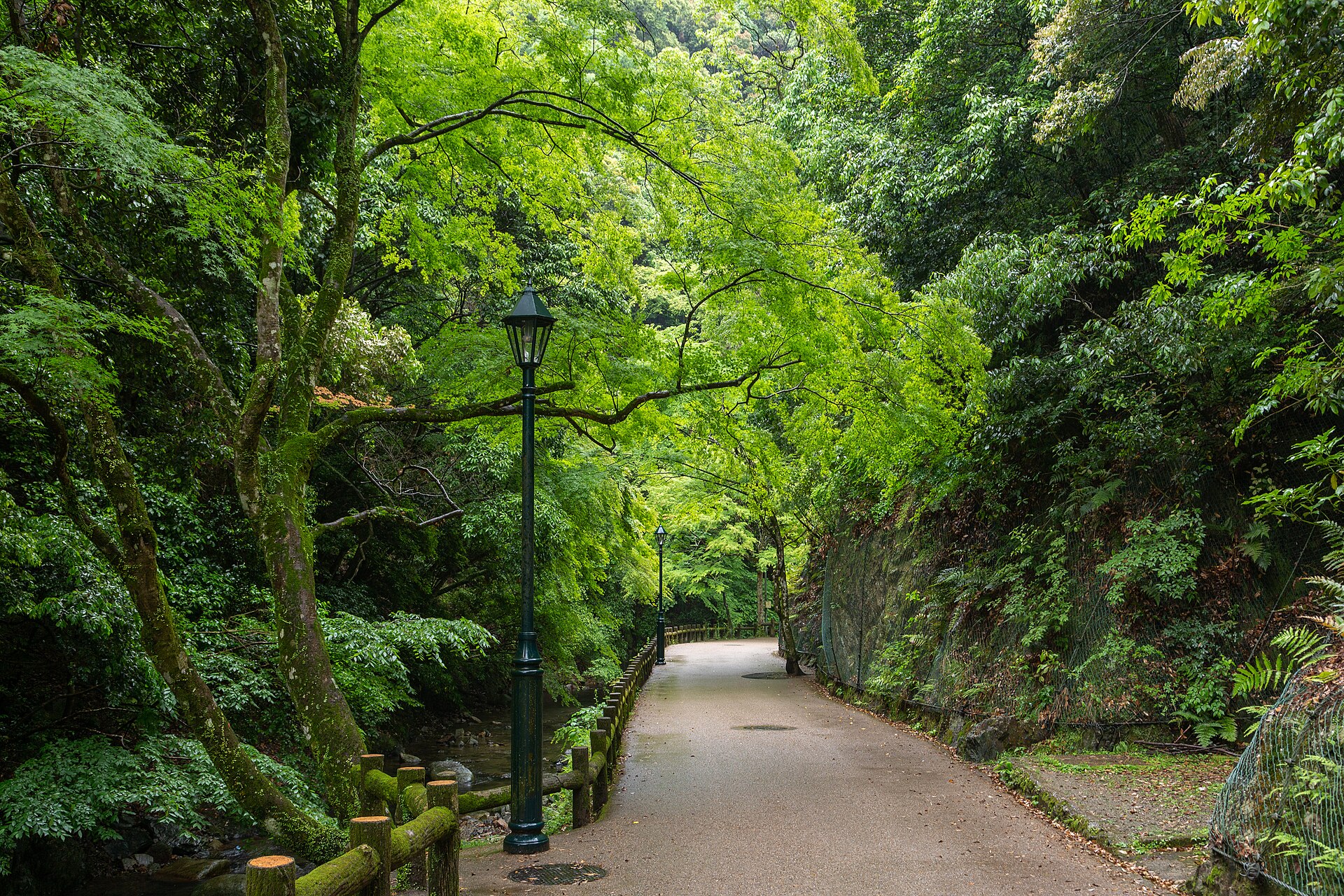
Minoh Park is a forested recreational area in northern Osaka Prefecture, centered on the Minoh Waterfall. The site forms part of Meiji no Mori Minoh Quasi-National Park, one of Japan's earliest quasi-national park designations. The valley follows the Minoh River through a mountainous corridor, offering an accessible natural retreat from Osaka's urban core. The area has long served as a destination for seasonal excursions, particularly during autumn foliage periods when maple trees color the slopes.
Checked 2026-08-31 · Source
The park's central feature is Minoh Waterfall, a cascade reached via a paved walking trail from the town center. The route passes through deciduous forest, with maple and other broadleaf species dominating. Small shops and stalls line the approach path, some selling local specialties including maple-leaf tempura. Several Buddhist temples and shrine structures occupy the hillsides, including Ryuanji Temple. The quasi-national park designation extends beyond the immediate waterfall precinct into surrounding forested hills. Minoh Park also earns time in a osaka itinerary because A major forested waterfall excursion within greater Osaka, independently worthwhile for hiking and seasonal scenery.
Checked 2026-08-31 · Source
The standard out-and-back walk from Minoh Station to the waterfall and return typically occupies a half-day. Visitors walking at a moderate pace without extended stops should allow roughly two to three hours for the round trip. Those incorporating temple visits, photography stops, or breaks at riverside rest points should extend accordingly. The main trail is paved and negotiable for most fitness levels, though the continuous gentle ascent toward the waterfall requires sustained walking effort. A flexible visit lets travellers connect Minoh Park with the rest of the day without treating one room, viewpoint or photograph as the whole experience. The useful pace depends on personal interest and conditions on arrival.
Checked 2026-08-31 · Source
The public park and waterfall trail are accessible 24 hours daily; visitor facilities and shops keep daytime hours. Events, worship, maintenance and security measures can alter ordinary access. Autumn foliage season draws peak visitation when maple leaves turn color, typically November into early December depending on seasonal temperature patterns. Spring offers fresh greenery and fewer crowds. Summer provides dense canopy shade but brings humidity and potential afternoon rainfall. Winter visits are possible but reduced leaf cover alters the valley's character. Hankyu Minoh station is the trailhead for the paved waterfall route.
Checked 2026-08-31 · Source
Park and waterfall trail access are free. Premium experiences and event products cost separately. No entrance fee applies to the main walking trail or waterfall viewing area. Individual temple buildings may request separate donations or admission fees. The maple-leaf tempura and other food items sold by trail vendors carry variable costs. Visitors should carry cash, as rural vendors may not accept card payments. Budget planning should accommodate potential temple entry donations, refreshments, and return transportation without relying on specific published price structures.
Checked 2026-08-31 · Source
Hankyu Minoh station is the trailhead for the paved waterfall route. This is the named public-transport approach for an independent visit. Minoh Park is reached via Minoh Station on the Hankyu Railway Minoh Line, connecting from Ishibashi Station on the Hankyu Takarazuka Main Line. The journey from central Osaka takes approximately thirty minutes by rail, followed by a walk from the station through the town to the trailhead. The walking route to the waterfall begins at the northern end of the town's main street. Private vehicle access is possible but parking near the trailhead is limited and subject to seasonal congestion.
Checked 2026-08-31 · Source
An accessible route serves selected lower or paved areas, but shrine thresholds, slopes or trail conditions limit the complete circuit. The access description applies to principal visitor areas rather than every historic or operational space. The paved trail follows the river through a narrow valley and can become crowded during peak autumn weekends, creating pedestrian congestion at narrow points. Slippery conditions may occur after rainfall on the stone surfaces. Wildlife encounters include Japanese macaques, which should not be fed or approached closely. Evening darkness falls earlier in the forested valley than in open areas. Visitors should carry water and basic supplies, as facilities thin out beyond the town center. Mobile phone signal may weaken in deeper valley sections.
Checked 2026-08-31 · Source
The waterfall serves as the primary photographic subject, best captured from the designated viewing platform at the trail's terminus. Morning light penetrates the east-facing valley with variable results depending on season and canopy density. The paved trail offers numerous river and forest composition points, though tripod use requires awareness of passing pedestrian traffic. Autumn color photography competes with crowds for clear sightlines. Overcast conditions often produce more balanced exposures than harsh midday sun filtering through incomplete canopy cover.
Checked 2026-08-31 · Source
The public park and waterfall trail are accessible 24 hours daily; visitor facilities and shops keep daytime hours.
Park and waterfall trail access are free.
An accessible route serves selected lower or paved areas, but shrine thresholds, slopes or trail conditions limit the complete circuit.
Hankyu Minoh station is the trailhead for the paved waterfall route.
Yes. Events, maintenance, weather and ceremonies can change ordinary access.
No. Special tours, exhibitions and upgrades use separate tickets.
Loading the interactive map…
The interactive map could not be loaded.
Last updated:
Source: OpenStreetMap contributors ·