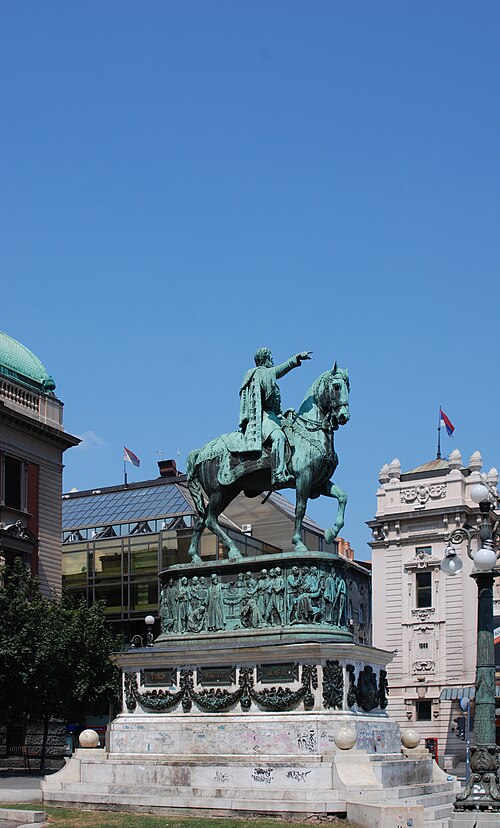
Prince Mihailo Monument
Споменик кнезу Михаилу
The Monument to Prince Mihailo is a bronze equestrian statue standing at the centre of Republic Square, Belgrade's main square.
- Must see
- Historic monument
- Belgrade
Country guide
Serbia is landlocked, 88,499 square kilometres, about 6.5 million people, and its rivers explain it better than its borders do. Belgrade stands where the Sava m...
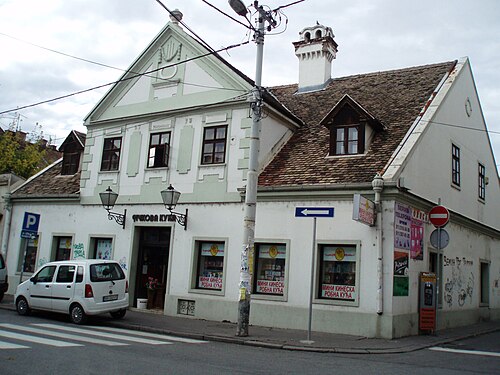
Photograph · Damir Simovic · CC BY-SA 4.0
Reviewed by Elena Voss · Roavina Travel Editor
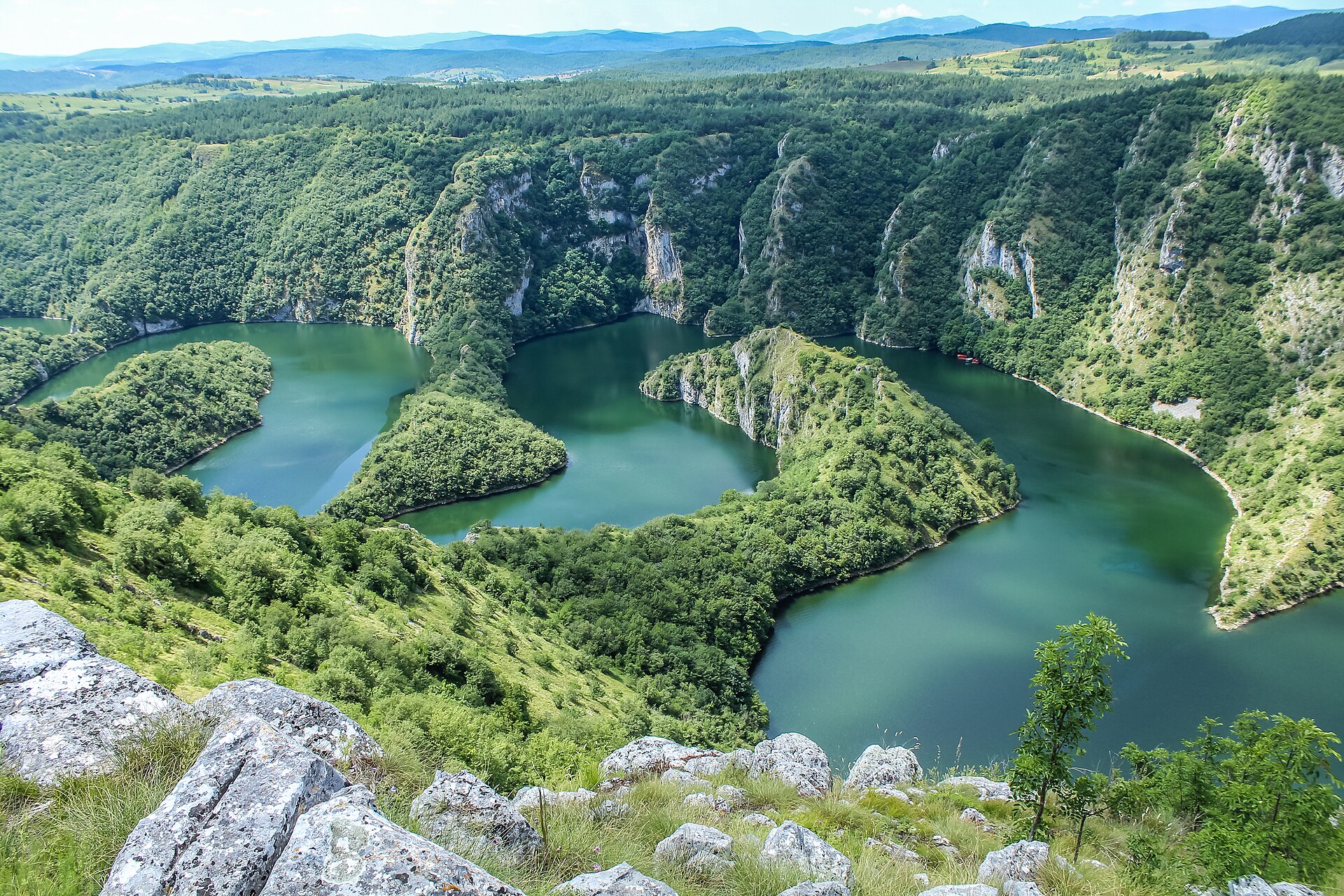
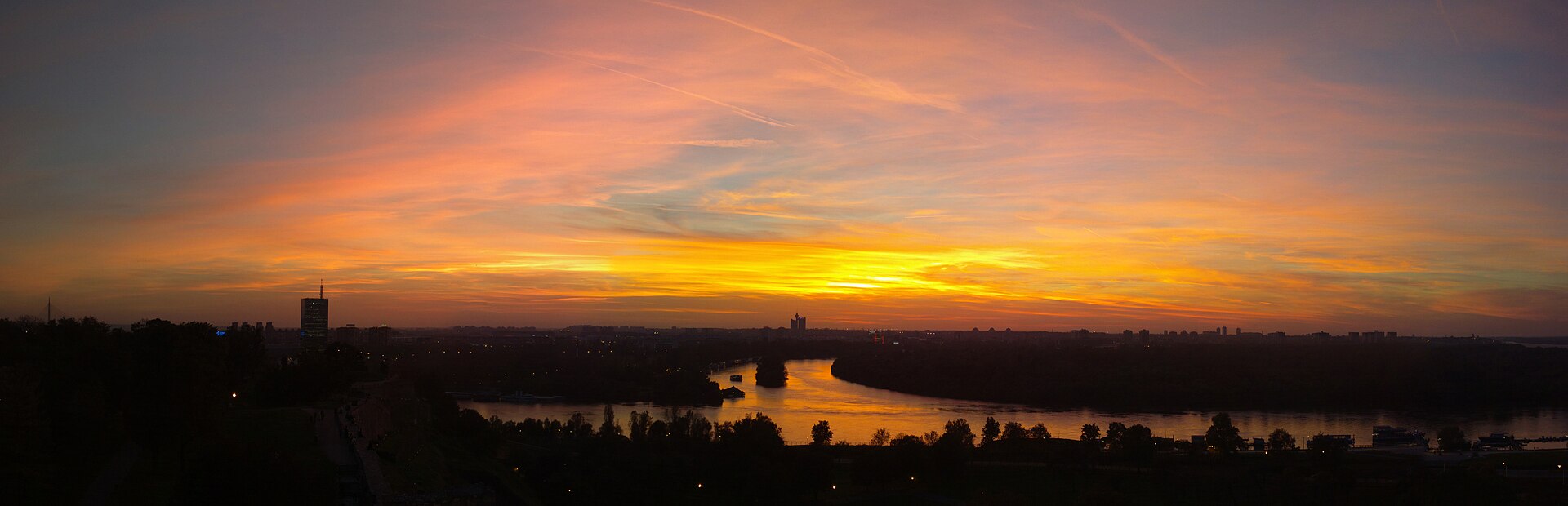
Serbia is landlocked, 88,499 square kilometres, about 6.5 million people, and its rivers explain it better than its borders do. Belgrade stands where the Sava meets the Danube, and the fortress, the old town and the river traffic all gather at that junction. North of the capital, Vojvodina is flat farmland with Novi Sad and its own fortress on the Danube; south of it the land climbs into hills, monasteries and spa towns that see far fewer foreign visitors. The country is crossed in a few hours, so Serbia is usually visited as Belgrade plus one more thing.
Checked 2026-08-25
Every city catalogued in this country so far, ranked by how much there is to see.
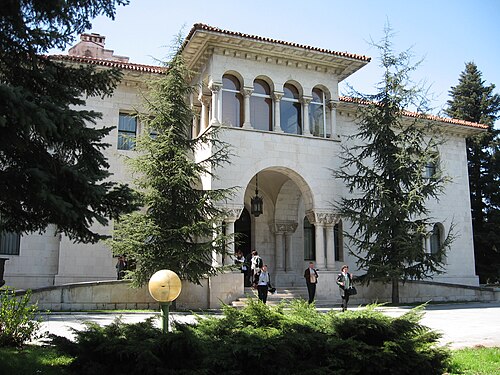
Photograph · Vladimir Nolic · CC BY-SA 4.0
Seasonal closures come from recorded opening hours.
Ranked by importance — sitelinks, pageviews and heritage status, not editor preference.
141 places match
Category
Typical visit duration
Споменик кнезу Михаилу
The Monument to Prince Mihailo is a bronze equestrian statue standing at the centre of Republic Square, Belgrade's main square.
Музеј Вука и Доситеја
The Museum of Vuk and Dositej is a single-house museum in the Stari Grad district of Belgrade dedicated to two figures of the Serbian Enlightenment: Dositej Obradović (1742–1811), writer and Serbia's first Minister of Education, and Vuk Stefanović Karadžić (1787–1864)…
Конак кнеза Милоша Обреновића
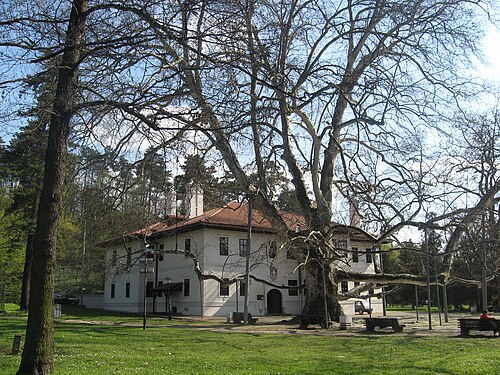
The Residence of Prince Miloš was built between 1830 and 1834 for Miloš Obrenović, the prince who led Serbia's second uprising against Ottoman rule and secured its autonomy, and it is one of the few surviving buildings from that transitional…
Саборни храм Светог архангела Михаила
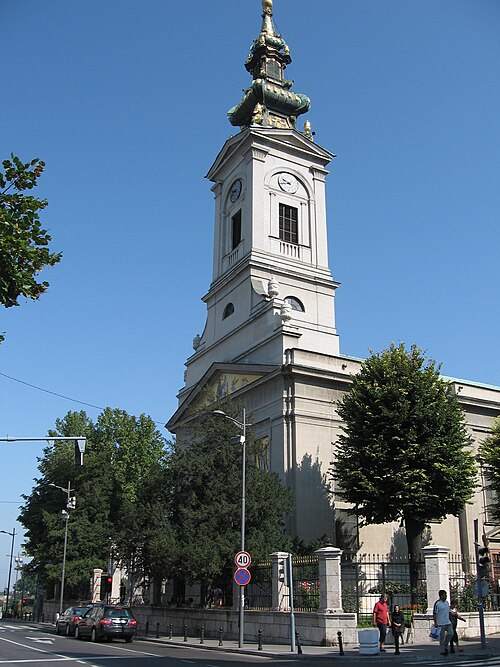
St. Michael's Cathedral is the seat of the Serbian Orthodox Metropolitanate of Belgrade, built between 1837 and 1845 on the site of an earlier church destroyed in the Ottoman era.
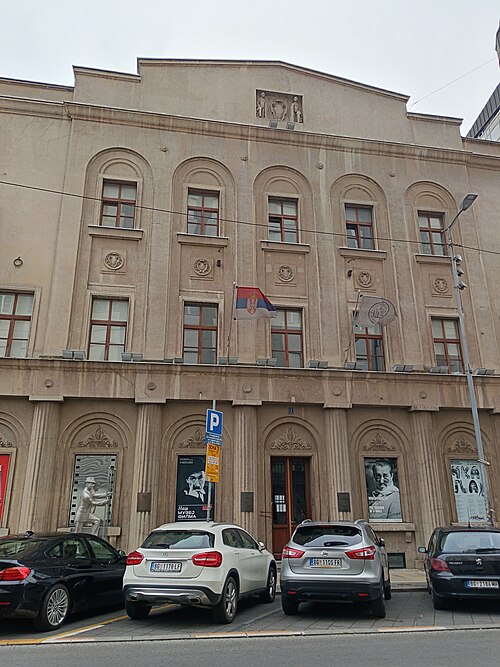
Атеље 212
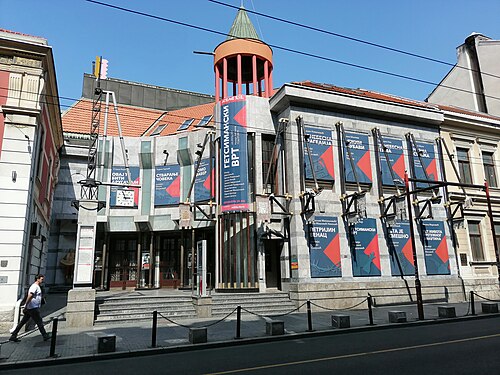
Atelje 212 is a repertory theatre in central Belgrade, opened on 12 November 1956 with a staging of Goethe's Faust directed by Mira Trailović.
Београдска надбискупија
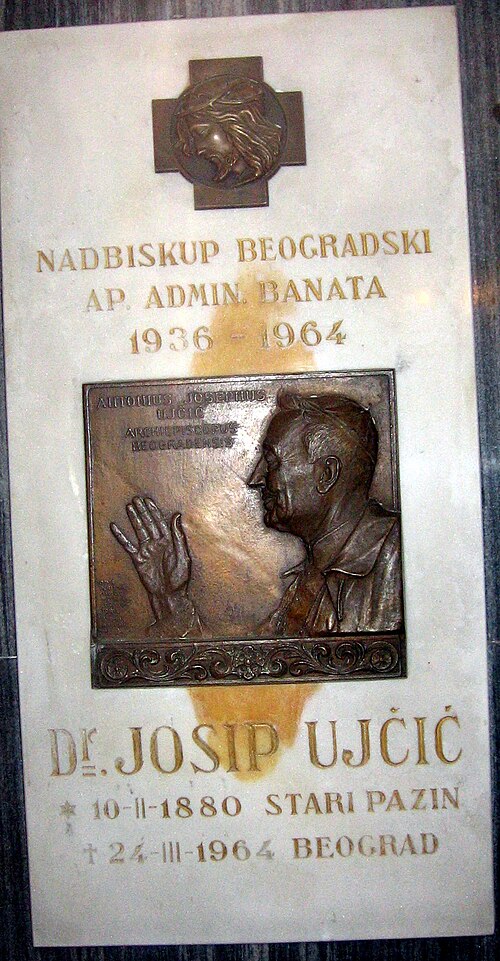
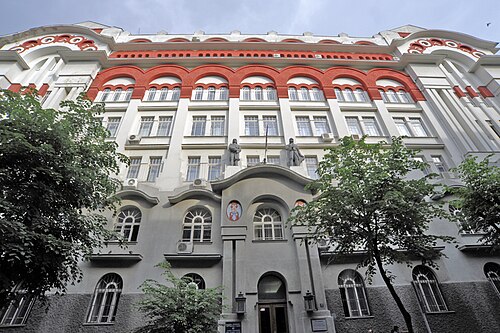
This building on Svetozara Markovića street is the Episcopal Palace, seat of the Metropolitan Archdiocese of Belgrade — the Roman Catholic archdiocese covering Central Serbia, with the Diocese of Subotica and the Diocese of Zrenjanin as its suffragans.
Храм Светог Александра Невског
The Church of St. Alexander Nevsky is a Serbian Orthodox parish church in Belgrade's Dorćol neighborhood, standing on Cara Dušana Street in the Stari Grad municipality.
Железнички музеј
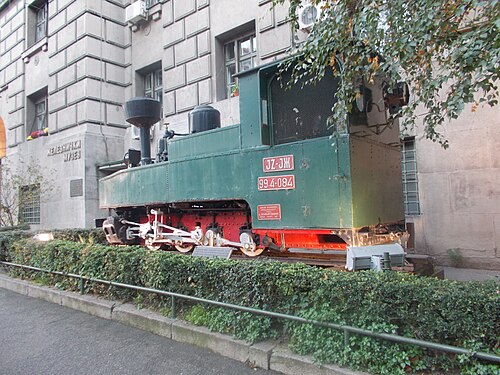
The Railway Museum in Savski Venac is the national collection of Serbian and former Yugoslav railway history, founded on 1 February 1950. Its first exhibition, in 1953, was titled "Through the History of Yugoslav Railways".
Музеј примењене уметности
The Museum of Applied Art on Vuka Karadžića street holds over 37,000 objects spanning 2,400 years of applied art, founded on 6 November 1950. Its oldest pieces are Ancient Greek coins from the fourth century BC.
Кафана „?”
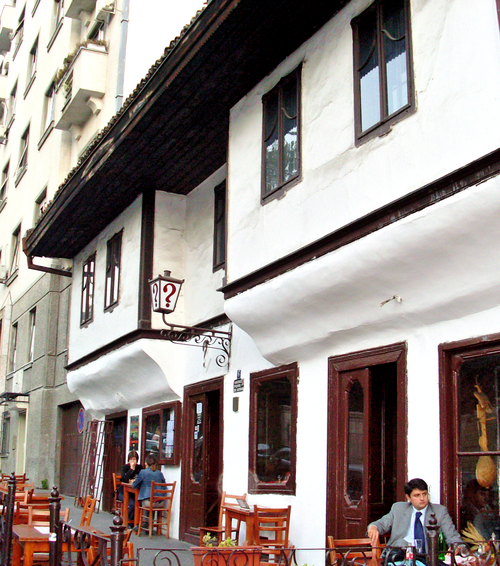
Kafana “?” is Belgrade's oldest still-operating tavern, and it wears its name as a scar from a fight with the church across the street.
Црква Криста Краља
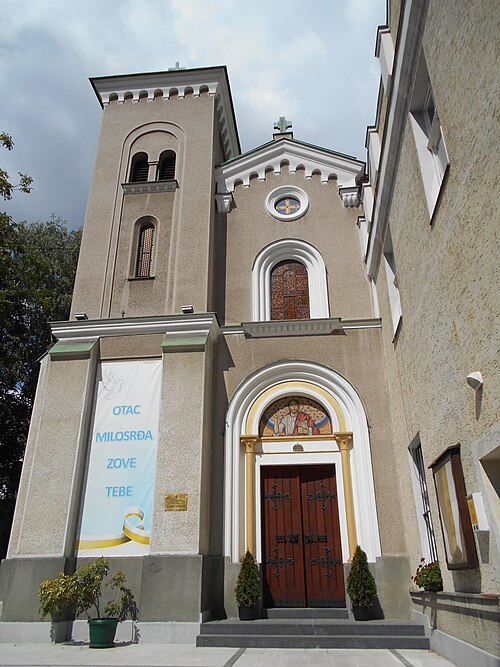
The Co-cathedral of Christ the King on Krunska street is the oldest Catholic place of worship in Belgrade, a city where the Catholic minority has always shared ground with an Orthodox majority.
Амам кнеза Милоша
The Hammam of Prince Miloš is a Turkish-style bathhouse built in 1836-37, and it is currently a bath nobody can bathe in: OpenStreetMap's own record of the site, last checked 27 April 2026, lists its opening hours as switched off.
Музеј Иве Андрића
The Museum of Ivo Andrić is a memorial museum in Belgrade dedicated to Ivo Andrić, the writer and Nobel Prize laureate whose work is central to Yugoslav and Serbian literary memory.
Споменик захвалности Француској
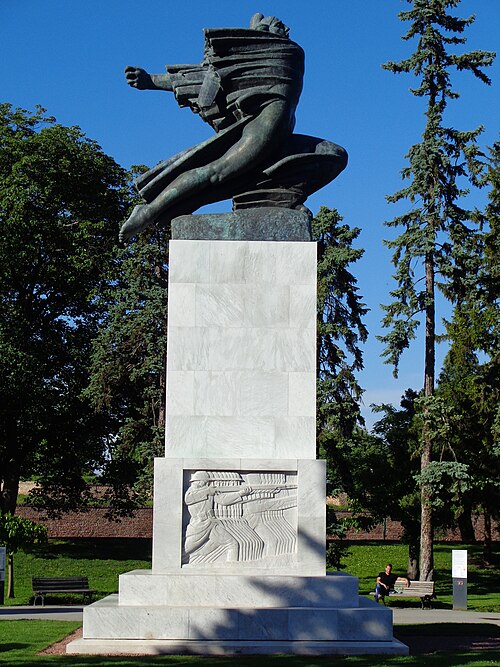
Twenty thousand people filled Kalemegdan Park on 11 November 1930 to watch King Alexander I, Queen Maria, Prince Paul and Princess Olga unveil a bronze woman striding forward with one arm raised — Belgrade's Monument of Gratitude to France, dedicated…
Гробница народних хероја
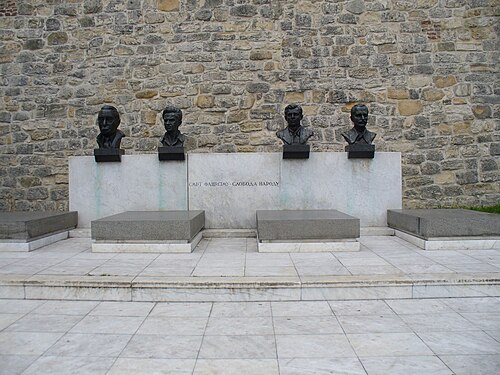
The Tomb of National Heroes is a memorial in Kalemegdan Park at Belgrade Fortress. The public enterprise that manages the fortress dates the tomb to 1948.
Ičkova kuća
Ičko's House at 18 Bežanijska street in Zemun is one of the oldest surviving town houses in the Belgrade area, built in 1793 in a plain Classical style — and it takes its name from a diplomat who hid there…
Музеј града Београда
The Belgrade City Museum (Muzej grada Beograda) was founded in 1903, when the city assembly voted to build a collection documenting Belgrade itself rather than the wider Serbian state.
Краљевски комплекс
The Royal Compound (Kraljevski kompleks) is the enclosed park in Dedinje, on the wooded ridge south-west of central Belgrade, that King Alexander I Karadordevic chose in the 1920s as the site for a new royal residence away from the old…
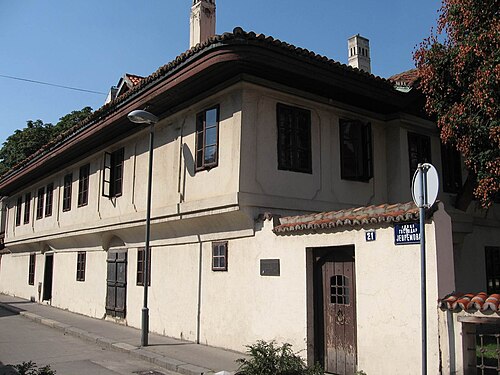
Дом Јеврема Грујића
The house known today as Jevrem Grujic's House is one of the oldest preserved civic houses in Belgrade's old town, built in the early decades of the nineteenth century, in the years after the Serbian uprisings when the town's Ottoman-era…
ПТТ музеј
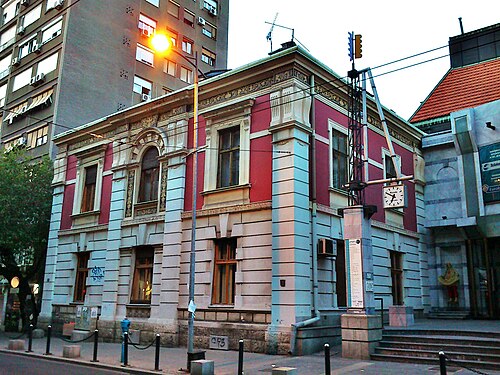
Belgrade Post Museum presents Serbia’s postal, telegraph and telephone heritage through historical equipment, documents and postal artefacts. The museum occupies the ground floor of the First Telephone Exchange building at Majke Jevrosime 13, at the corner of Palmotićeva Street.
Историјски музеј Србије
The Historical Museum of Serbia (Istorijski muzej Srbije) was established in 1963 as the national institution charged with collecting material on Serbian history from the medieval state through the twentieth century, distinct from the archaeology-focused National Museum next to Republic…
Јеврејски историјски музеј
The Jewish Historical Museum (Jevrejski istorijski muzej) opened in 1948, founded by the historian Lavoslav Kadelburg and colleagues under the Federation of Jewish Communities of Yugoslavia, and it remains housed inside the federation's own building on Kralja Petra street in…
Манакова кућа
Manak House is a timber-framed merchant house in Savamala, Belgrade, that now holds an ethnographic collection inside the walls it was actually lived in.
Југословенска кинотека
At Uzun Mirkova 1 beside Student Square, the Yugoslav Film Archive brings together a permanent museum exhibition and a working cinema institution.
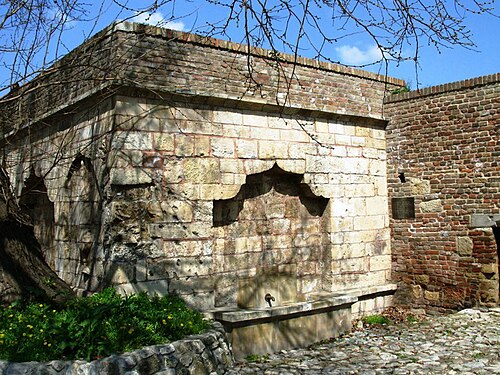
Чесма Мехмед-паше Соколовића
Mehmed Paša Sokolović's Fountain is a sixteenth-century Ottoman drinking fountain in the Upper Town of Belgrade Fortress. Erected between 1576 and 1577, it is the only endowment of Ottoman vizier Mehmed Paša Sokolović in Belgrade.