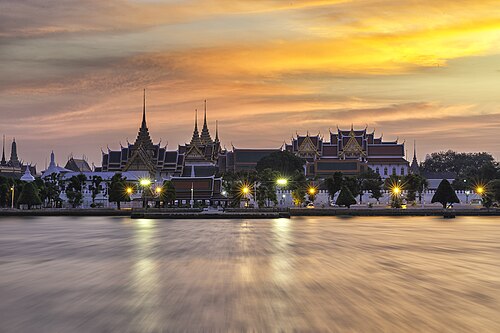
Grand Palace
พระบรมมหาราชวัง
The Grand Palace is the walled royal compound on the east bank of the Chao Phraya that Rama I began on 6 May 1782, an act that also founded Bangkok.
- Must see
- Historic monument
- Bangkok
Country guide
Thailand is 513,120 km² and 76 provinces, plus Bangkok, which is not a province at all but a special administrative area with an elected governor of its own. Th...
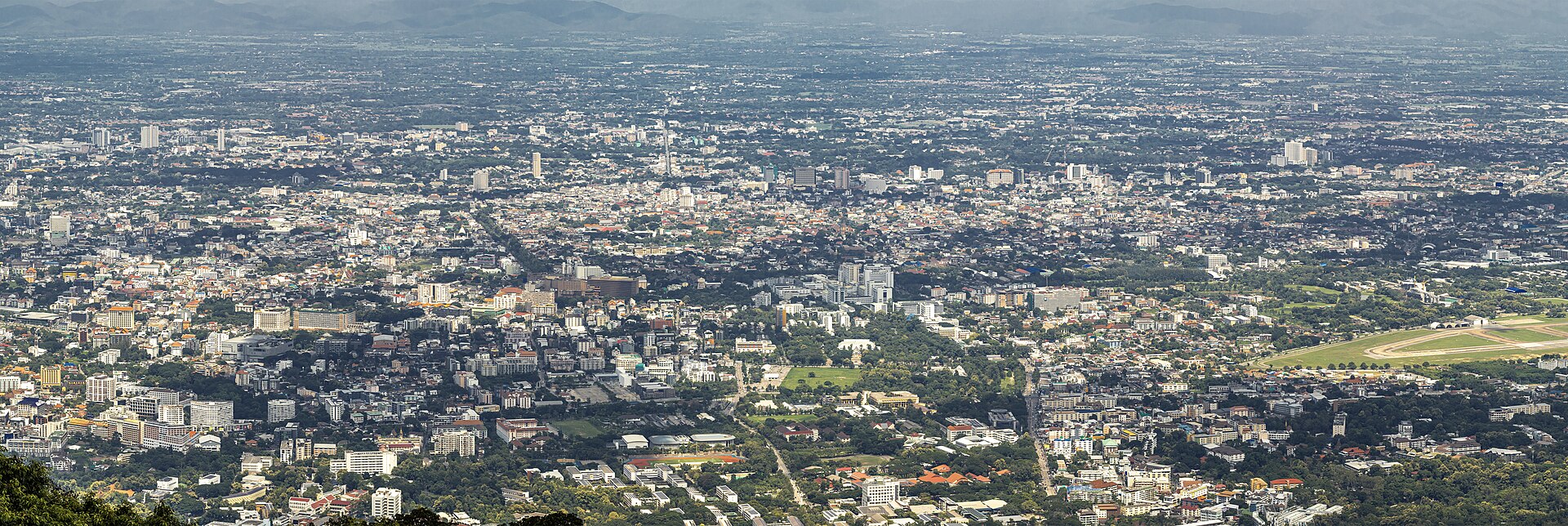
Photograph · Diego Delso · CC BY-SA 3.0
Reviewed by Elena Voss · Roavina Travel Editor
Thailand is 513,120 km² and 76 provinces, plus Bangkok, which is not a province at all but a special administrative area with an elected governor of its own. The 65,975,198 people counted in 2024 spread across four regions that behave like four separate trips: the central plain along the Chao Phraya, the north around Chiang Mai and the old Lan Na kingdom, the Khorat Plateau in the northeast, and the long strip of the Malay Peninsula in the south. Most itineraries take two of the four. Taking all four is largely a schedule of internal flights.
Checked 2026-08-25
Every city catalogued in this country so far, ranked by how much there is to see.
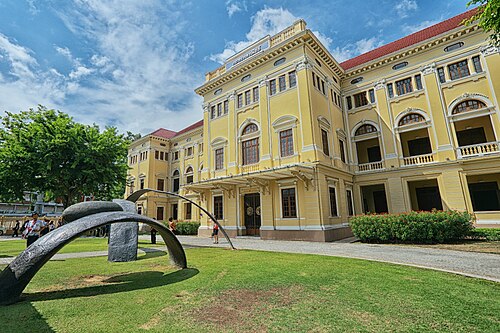
Photograph · Preecha.MJ · CC BY-SA 4.0
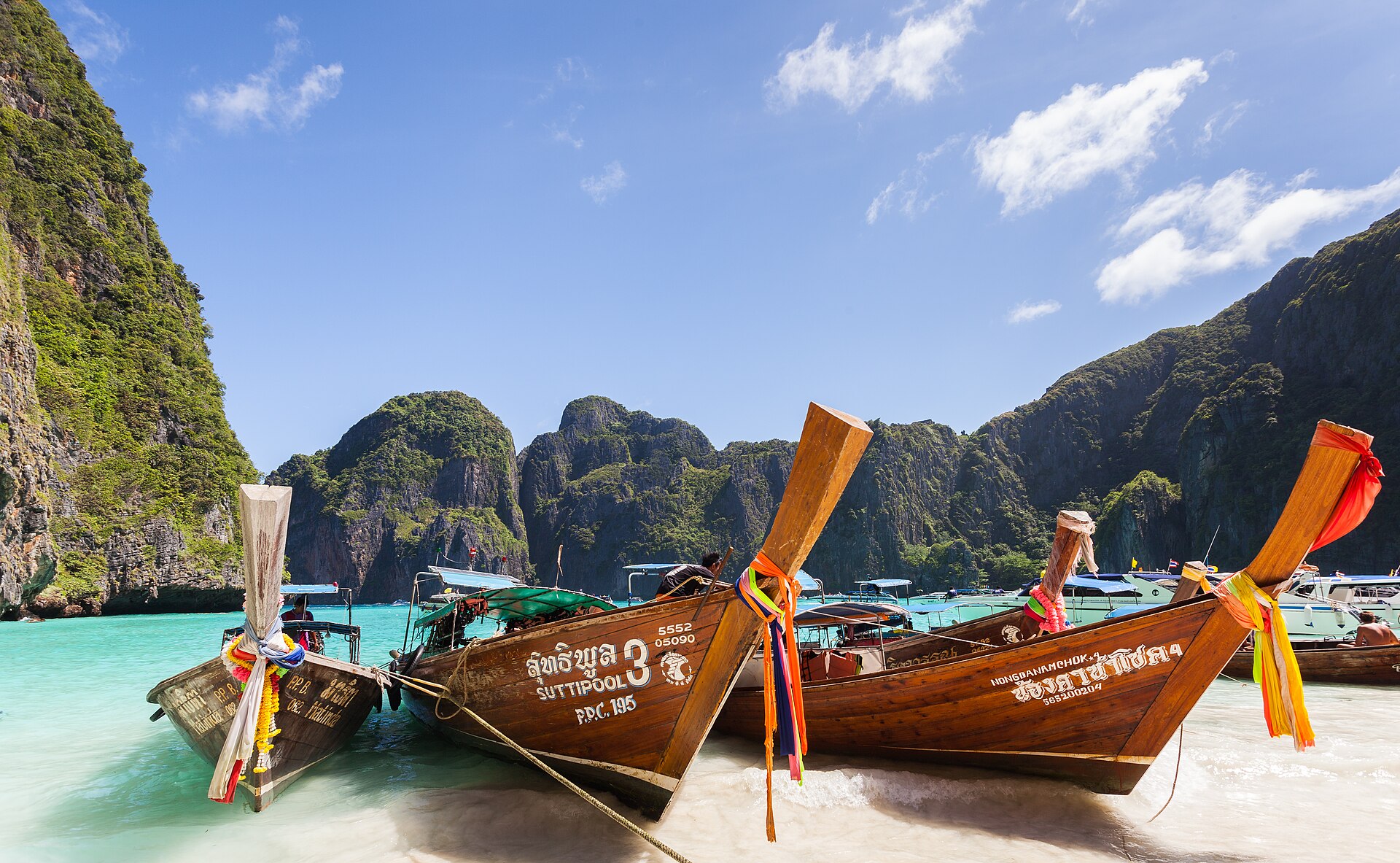
Photograph · Ryomaandres · CC BY-SA 4.0
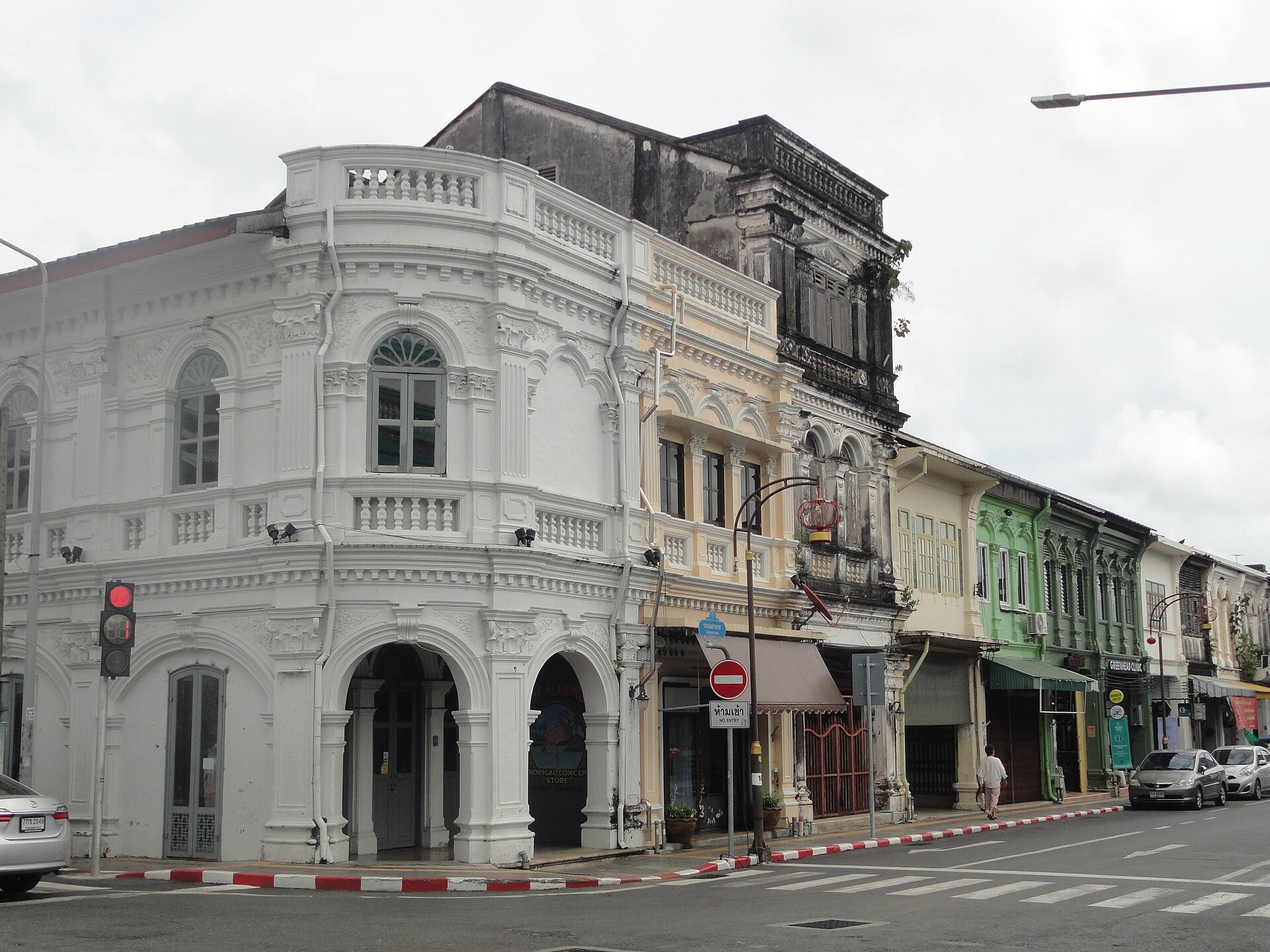
Photograph · Supanut Arunoprayote · CC BY 4.0
Seasonal closures come from recorded opening hours.
Ranked by importance — sitelinks, pageviews and heritage status, not editor preference.
71 places match
Category
Typical visit duration
พระบรมมหาราชวัง
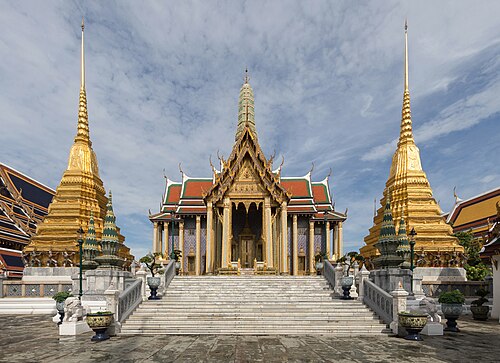
The Grand Palace is the walled royal compound on the east bank of the Chao Phraya that Rama I began on 6 May 1782, an act that also founded Bangkok.
วัดอรุณ
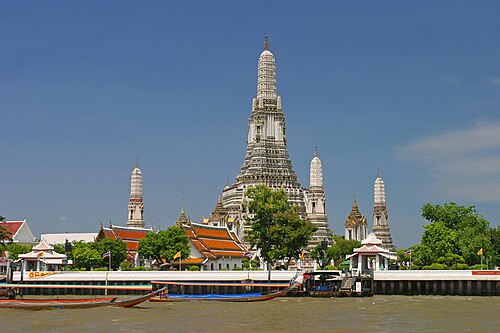
Wat Arun is a Buddhist temple on Bangkok’s Thonburi bank, beside the Chao Phraya River. Its best-known feature is the central prang, a tall tower decorated with porcelain and surrounded by four smaller prangs.
วัดพระศรีรัตนศาสดาราม
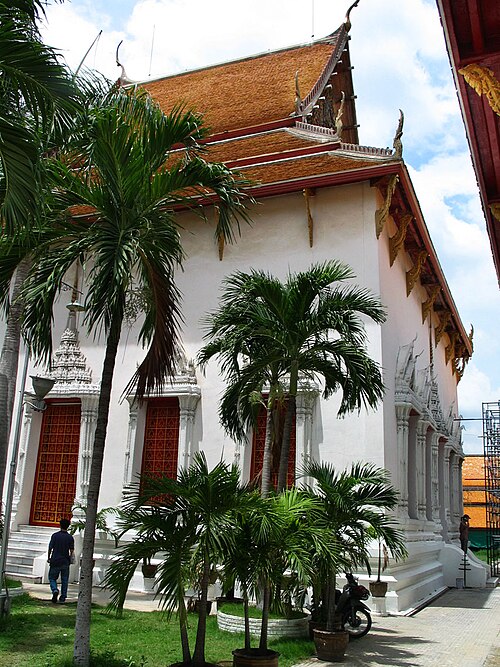
Wat Phra Kaew is the royal chapel standing inside the Grand Palace wall, and it is the most sacred Buddhist temple in Thailand, by function rather than by consensus of guidebooks.
วัดพระเชตุพนวิมลมังคลารามราชวรมหาวิหาร
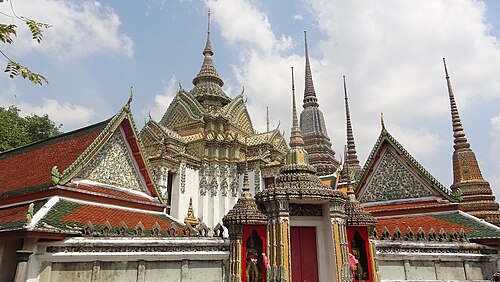
Wat Pho, in full Wat Phra Chetuphon, is the temple immediately south of the Grand Palace, and it is the only monument in Bangkok carrying an international documentary-heritage inscription.
ถนนข้าวสาร
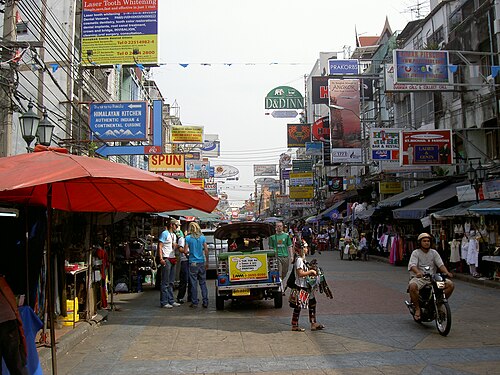
Khao San Road is a 410-metre street in Phra Nakhon, a few minutes' walk from the Chao Phraya, whose name means milled rice and whose reputation has nothing to do with rice.
พิพิธภัณฑสถานแห่งชาติ พระนคร
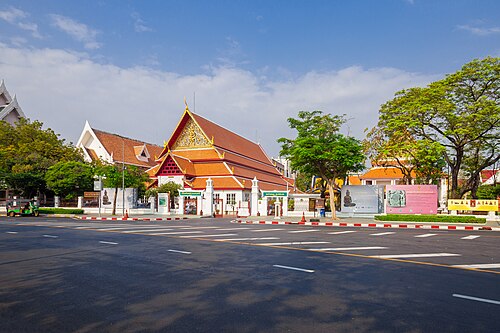
Bangkok National Museum occupies the Wang Na, or Front Palace of the Second King, beside Sanam Luang on Na Phra That Road.
วัดสุทัศนเทพวรารามราชวรมหาวิหาร
Wat Suthat Thepwararam is one of only ten first-class royal temples in Bangkok, and the one written into the city's original plan rather than added beside it.
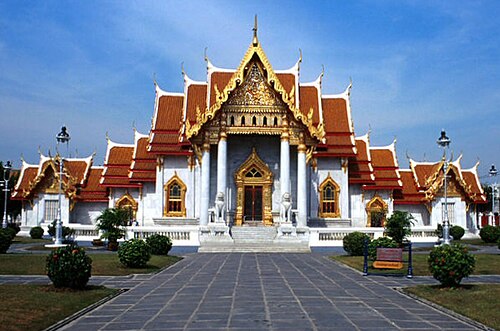
วัดเบญจมบพิตรดุสิตวนารามราชวรวิหาร
Wat Benchamabophit is Rama V's marble temple, built in 1900 as part of the Dusit district he laid out for himself, and the clearest surviving statement of what the Thai monarchy meant by modernisation.
ตลาดนัดจตุจักร
Chatuchak is the weekend market that the Thai government's own Bangkok page calls the largest in the world, and it is large enough that the claim is hard to argue with: Wikivoyage records roughly 8,000 vendors on 35 acres and…
พระราชวังดุสิต
Dusit Palace is not a palace to tour but a royal quarter of Bangkok, roughly 64,749 square metres bounded by Ratchwithi Road to the north, Si Ayutthaya Road to the south, Ratchasima Road to the west and U-Thong Nai Road…
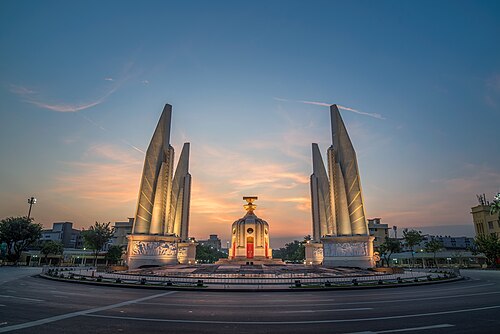
อนุสาวรีย์ประชาธิปไตย
The Democracy Monument stands on a traffic circle where Ratchadamnoen Avenue crosses Dinso Road, in Phra Nakhon district, roughly halfway between Sanam Luang and the Golden Mount.
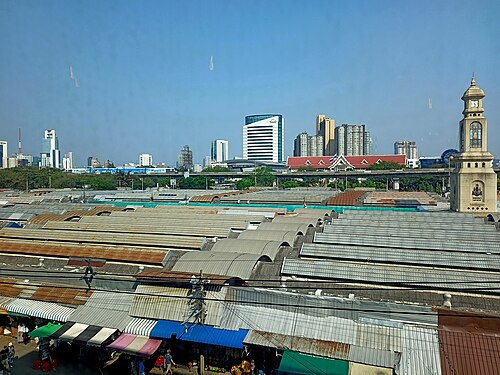
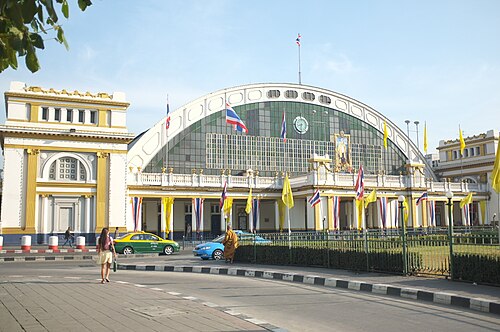
สถานีรถไฟกรุงเทพ
Bangkok (Hua Lamphong) railway station is the former central passenger terminal of Thailand, a domed Italian neo-Renaissance building in Pathum Wan operated by the State Railway of Thailand.
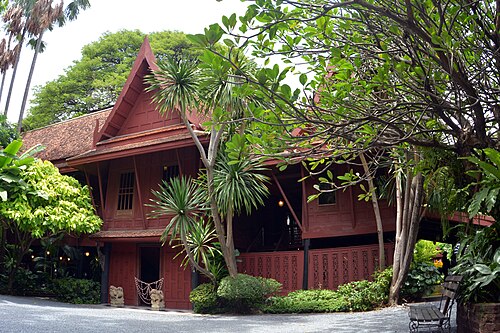
พิพิธภัณฑ์บ้านจิม ทอมป์สัน
The Jim Thompson House is the preserved Bangkok home of the American who rebuilt the Thai silk trade after the Second World War, and the standard reference example of Thai vernacular domestic architecture kept as a museum.
วัดราชบพิธสถิตมหาสีมารามราชวรวิหาร
Wat Ratchabophit Sathit Maha Simaram is Rama V's own foundation of 1869 and the most formally peculiar of Bangkok's royal temples, which is exactly why it is worth seeing after the canonical ones rather than before them.
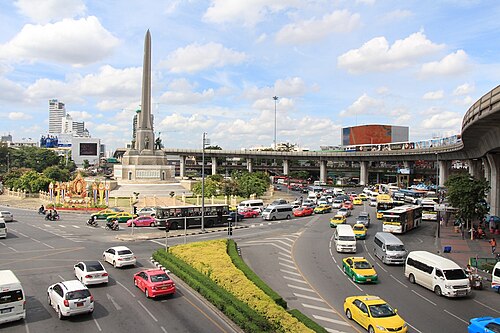
อนุสาวรีย์ชัยสมรภูมิ
Victory Monument, in Thai Anusawari Chai Samoraphum, is a military memorial at the centre of a large traffic circle in Ratchathewi district, where Phahonyothin, Phaya Thai and Ratchawithi roads meet northeast of central Bangkok.
วัดมหาธาตุยุวราชรังสฤษฎิ์ราชวรมหาวิหาร
Wat Mahathat Yuwaratrangsarit is a first-class royal temple of the highest grade — one of only six ratchaworamahawihan temples in Thailand — with an Ayutthaya-period foundation and a position that is itself a statement: it stands on Maha Rat Road…
สะพานพระราม 8
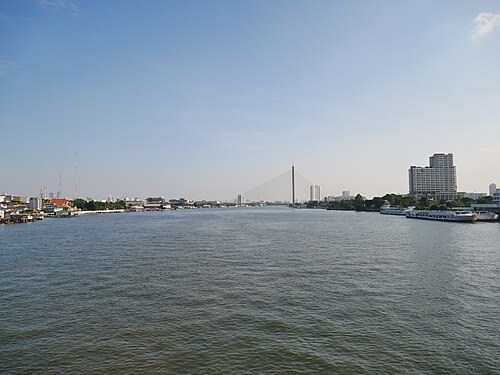
The Rama VIII Bridge is an asymmetric cable-stayed crossing of the Chao Phraya River, 475 metres long with a 300-metre main span, hung from a single inverted-Y pylon 160 metres tall that stands on the Thonburi bank.
ถนนเยาวราช
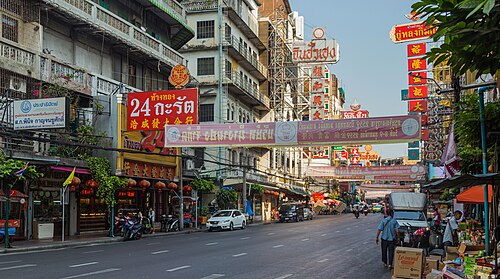
Yaowarat Road is the mile and a half of Chinatown that records the commercial history of Bangkok, as against the royal history a few streets north.
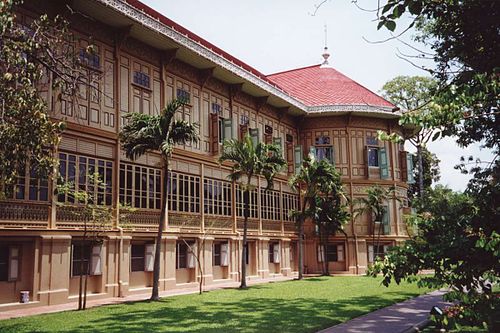
พระที่นั่งวิมานเมฆ
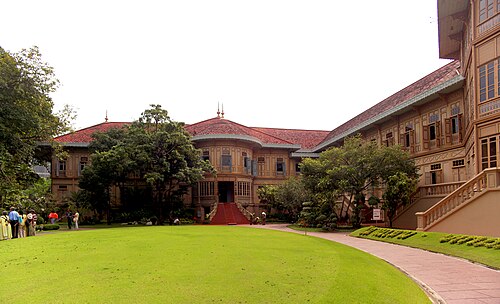
Vimanmek Mansion is a former royal villa in the Dusit Palace complex in Dusit district, and it cannot currently be visited.
วัดราชนัดดารามวรวิหาร
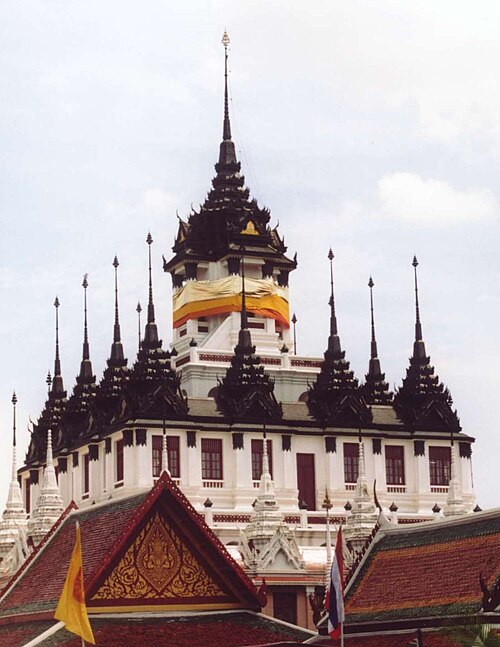
Wat Ratchanatdaram Worawihan stands where Ratchadamnoen Klang meets Maha Chai Road in Phra Nakhon, and it is on itineraries for one building inside it: Loha Prasat, the metal-spired monastery.
อาสนวิหารอัสสัมชัญ
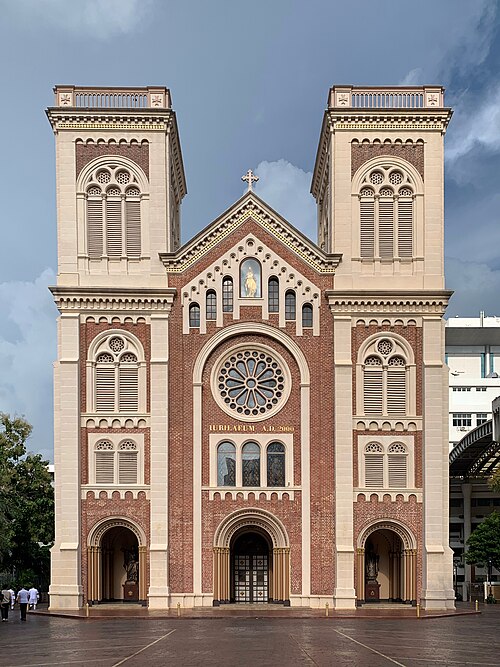
Assumption Cathedral is the cathedral church of the Roman Catholic Archdiocese of Bangkok, standing in Soi Oriental off Charoen Krung 40 in Bang Rak, a short walk back from the Chao Phraya river.
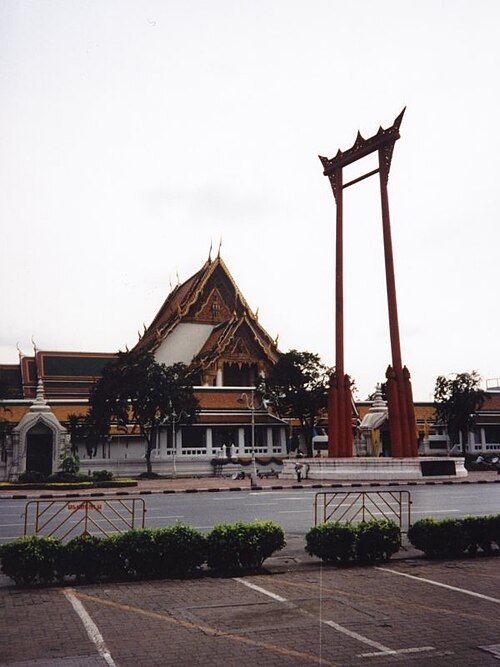
เสาชิงช้า
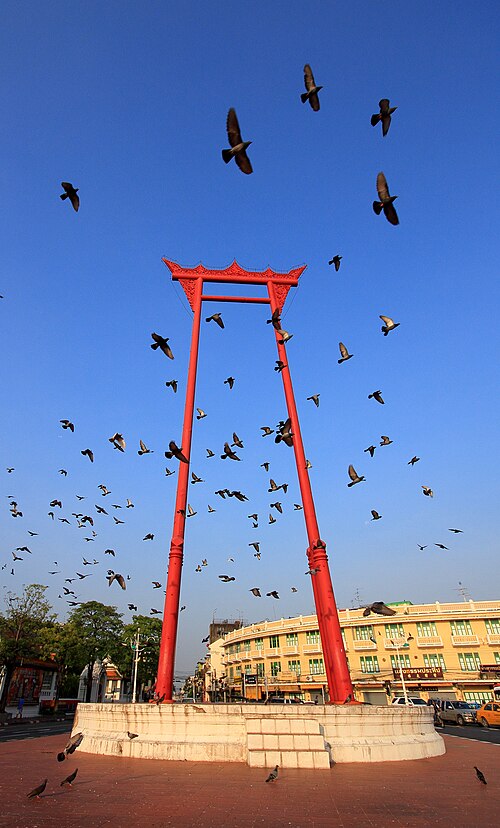
The Giant Swing, Sao Chingcha in Thai, is a 21.15-metre red teak frame standing on an open island in front of Wat Suthat in Phra Nakhon, and it is the last physical trace of a Brahmin ceremony that Bangkok stopped…
พระที่นั่งอนันตสมาคม
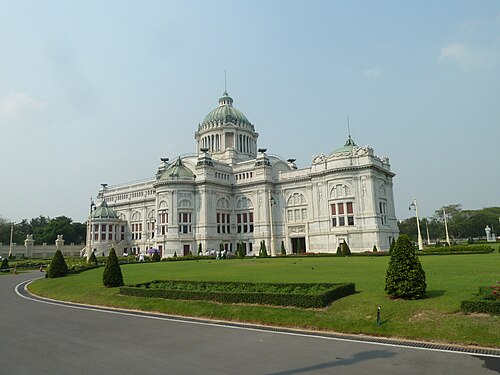
Ananta Samakhom Throne Hall is the domed marble building at the head of the Royal Plaza in Dusit, and it is the one entry on this list that cannot be entered.
มิวเซียมสยาม
Museum Siam is a museum about being Thai, in a building that was designed by an Italian.
พิพิธภัณฑ์กองทัพอากาศและการบินแห่งชาติ
The National Aviation Museum of the Royal Thai Air Force is the air force's own collection, established in 1952 and laid out along the edge of Don Mueang air base in northern Bangkok, next to the domestic airport it shares…
Ten to fourteen days allows three or four days in Bangkok, about three in Chiang Mai, and a separate southern base. If an island follows an international arrival, keep a spare transfer day because the last road or ferry connection may not align with the flight.
Thailand's entry permission depends on the traveller's passport, purpose, and stay length. Use the linked Thai immigration guidance to confirm the applicable visa route and whether a Thailand Digital Arrival Card is required for the arrival date.
Bangkok anchors Thailand's transport network. The Tourism Authority of Thailand lists buses, trains, urban rail, vans and songthaews for land journeys, alongside domestic aviation and boat services. Check any island's final sea or road connection separately before booking the inbound leg.
November through February is the broad starting point for this route, not a nationwide weather guarantee. Northern conditions and the monsoon timing on each coast differ, so choose dates around the island or ferry leg rather than Bangkok alone.
Thailand uses the Thai baht (THB). Cards may work in larger hotels and businesses, but market purchases and some island transport can require cash, so retain a modest baht reserve without assuming a particular exchange fee.
Record 191 for police and 1669 for medical emergencies in Thailand. Power is 220 V with Type A, B, C, and O sockets; tap-water safety is not recorded here, so ask the accommodation rather than treating the missing entry as approval.