
51
45 min
DSM
DSM is an open-air monument in Salihli, within Manisa province, set in the everyday urban landscape rather than inside a museum or visitor complex.
- High
- Historic site
- Salihli
City guide · Türkiye
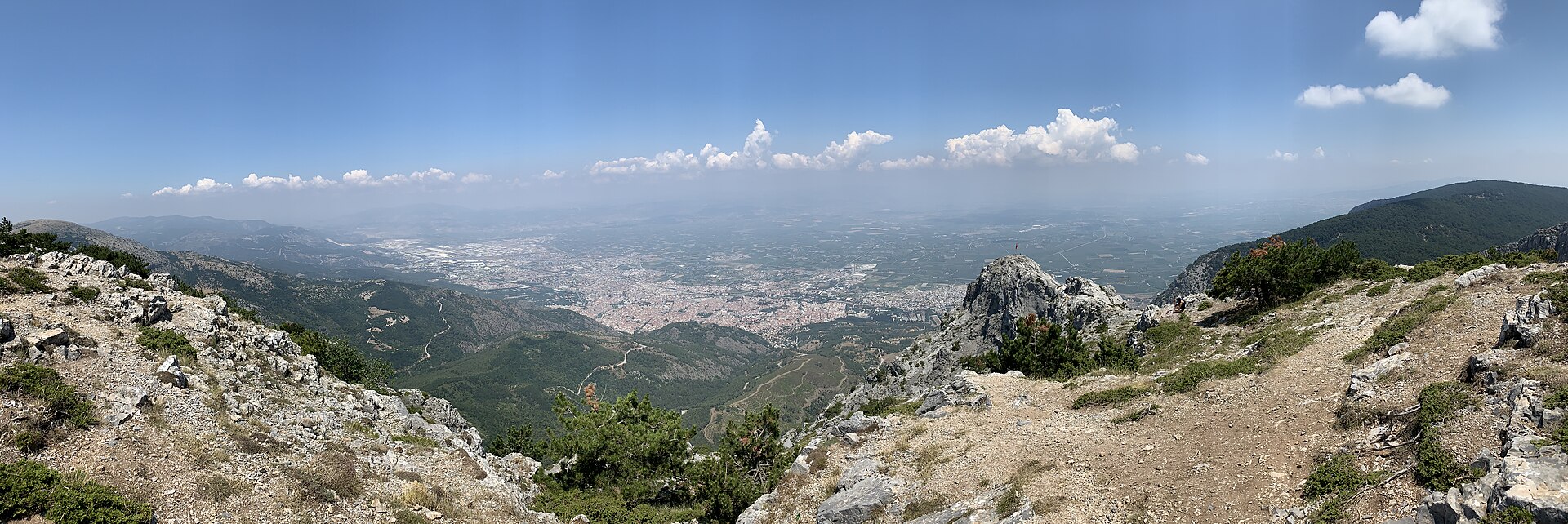
Manisa sits on the Gediz plain about 40 km northeast of İzmir, with Mount Spil rising 1,513 m directly behind it. The old town climbs the mountain's lower slope...
Photograph · Egemenakgul · CC BY-SA 4.0
Set your days, your pace and the hours you actually want to be out. The planner works around closing days and travel time, and leaves room to eat.
Editorial responsibility: Elena Voss · Roavina Travel Editor
Manisa sits on the Gediz plain about 40 km northeast of İzmir, with Mount Spil rising 1,513 m directly behind it. The old town climbs the mountain's lower slopes; everything built since spreads north across the plain.
The city is an Ottoman provincial capital rather than a resort. Süleyman the Magnificent governed here as a prince, and the mosques his family endowed are still the reason to come: the Sultan Mosque of 1522, the Muradiye of 1586 by Mimar Sinan, and the museum that occupies the Muradiye's medrese. Above them the national park holds the Weeping Rock of Niobe and an eight-metre Anatolian relief cut into the cliff along the D250.
Checked 2026-08-23
November · November cools to a 17.6°C mean high in Manisa while rainfall rises to 89.2 mm across about nine wet days.
Ranked by importance — sitelinks, pageviews and heritage status, not editor preference.
81 places match
Category
Typical visit duration
Good for
DSM is an open-air monument in Salihli, within Manisa province, set in the everyday urban landscape rather than inside a museum or visitor complex.
M.Kemal Atatürk Havuzu is a compact civic memorial in Salihli, Manisa, positioned at approximately 38.48308° north and 28.12486° east.
18 Mart Şehitleri Anıtı is a dedicated Çanakkale remembrance complex in Manisa’s Laleli Mahallesi, on Mimar Sinan Bulvarı beside the Manisa–İzmir road.
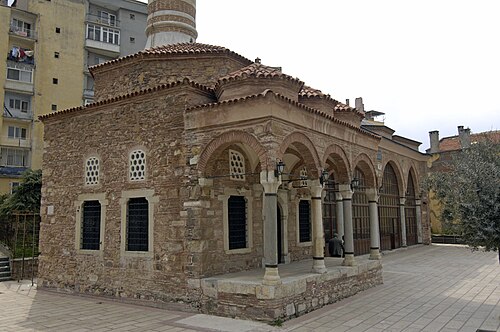
Çeşnigir Cami
The Çeşnigir Camii of 1474 is one of the oldest mosques in Manisa, built by Çeşnigir Sinan Bey — a man who had been enslaved and was freed by Mehmed II, the sultan who took Constantinople.
Kırtık Mezarlığı
Kırtık Mezarlığı is the largest cemetery in Manisa, a Muslim civil burial ground of 333,000 m² in Şehzadeler, still in use. It is also known as Kırtık Asri Mezarlığı or the Manisa Municipality Asri Cemetery.
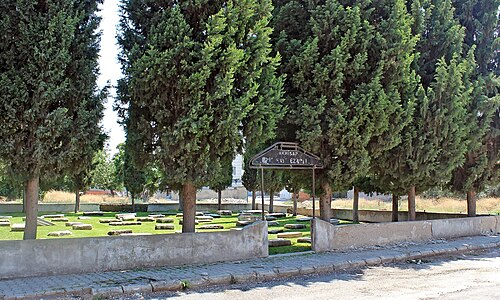
Akhisar Musevi Mezarlığı
This is the burial ground of Akhisar's Jewish community, a Sephardic congregation that at its peak numbered around 400 people and no longer exists in the town.
Apollonis is an ancient settlement in Manisa Province’s Akhisar district, identified with the rural remains around Konurca Kalesi. The site is reached from the vicinity of Mecidiye/Palamut village, with the archaeological area lying approximately 2 kilometres north of the village.
Koca Bektaş Dede Türbesi stands in Beyoba Mahallesi, within Manisa’s Akhisar district. The municipality presents the site as the Koca Bektaş Dede Dergâhı and a hayır alanı, meaning that the tomb belongs to a wider devotional and charitable setting.
Akhisar Kalesi is the separately mapped castle feature that gives a physical focus to Akhisar’s name in central Manisa.
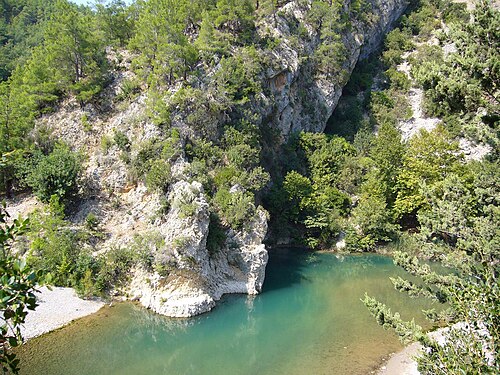
Çakallar is a protected open-air heritage locality on a volcanic hillside near Sindel, also called Akçeşme, in Salihli district, Manisa. Its defining evidence is a group of fossilised human and animal footprints preserved as impressions in volcanic tuff.
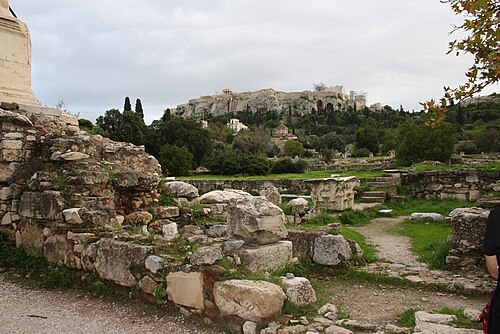
Odeon is a compact ancient performance building within Aigai, near Yuntdağıköseler Mahallesi in Yunusemre, Manisa. Its importance comes from being a distinct cultural space inside a hilltop settlement, not from functioning as a modern theatre.
TEPE MEZARI
Tepe Mezarı is a compact archaeological site in Ragıpbey Mahallesi, at the heart of Akhisar in Manisa. Its remains belong to Thyateira, the ancient city whose name survives in Akhisar’s historical identity.
Merkez Çarşı'yı Canlandırma Projesi (Özhan) identifies an urban redevelopment project in Akhisar’s Merkez Çarşı, within Şeyhisa Mahallesi, rather than a completed visitor attraction. The project concerns an excavation area in the town centre where commercial renewal intersects with archaeological history.

Ancient Sardis Ruins preserve Sardis, capital of the Lydian Kingdom, in Sart in Salihli district of Manisa. Lydian, Persian, Hellenistic, Roman and Byzantine layers meet across this open archaeological landscape.
Yarenli Dede Türbesi is a named türbe, or tomb, in the rural Gördes area of Manisa Province.
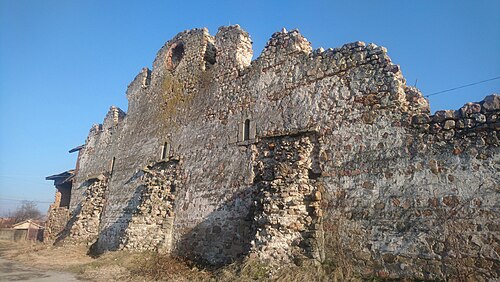
Yeni Han
Yeni Han is a two-storey trading inn in Şehzadeler, Manisa, organised around an internal courtyard. Its identity comes from this inward-facing arrangement: rooms and businesses meet the open centre, creating a compact architectural space within the city’s everyday commercial fabric.
Dağdeviren Höyüğü is a registered archaeological mound in the Kayalıoğlu area of Akhisar, Manisa Province. It is also known as Dağdeviren Çiftliği Höyüğü, while older references call it Akırbey Çiftliği.
Ömer Dede Türbesi
Ömer Dede Tomb is a small, named religious heritage site in Eskicami Mahallesi, within Selendi İlçe Mezarlığı in Manisa. Its character comes from the place itself: a tomb set inside an active cemetery, rather than a museum or formal exhibition.
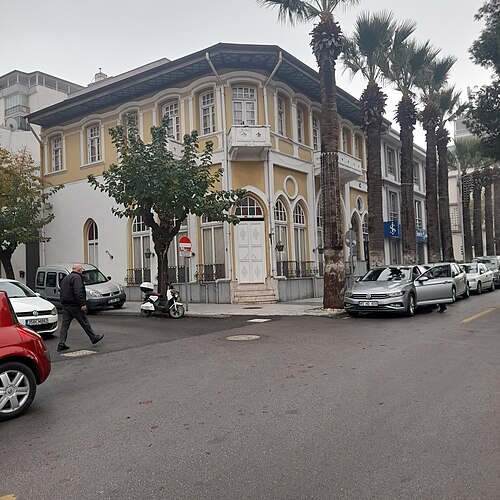
Park Otel (Demokrat Parti Lokali) is a compact two-storey masonry heritage building at the corner of Atatürk Bulvarı and 1205 Sokak in Manisa’s Nişancıpaşa neighbourhood.
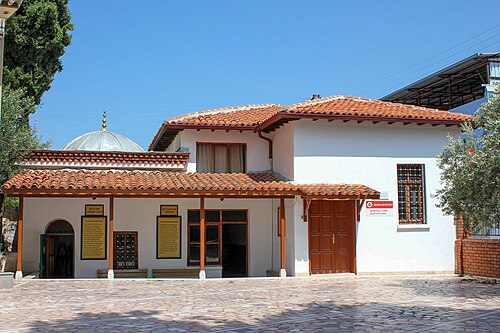
Şeyh İsa ve Şeyh İlyas Çelebi Türbesi is a compact religious heritage site at Şeyh İsa Mosque in Şeyhisa Mahallesi, Akhisar, Manisa.
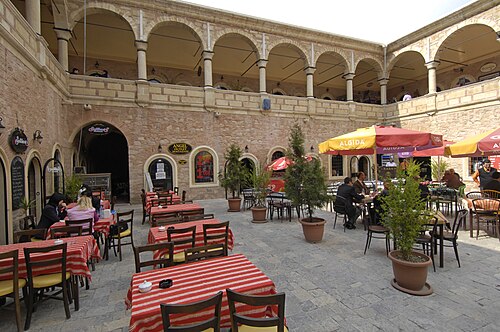
Kurşunlu Hanı is a late-fifteenth-century Ottoman han in Manisa, built in 1488 as part of the Hatuniye Külliyesi beside Hatuniye Mosque. Hüsnüşah Sultan, the wife of Sultan Bayezid II, commissioned the building.
İStasyon binası ve lojman is a railway heritage complex in central Manisa, at Fabrika Tımarı Mevkii in 2. Anafartalar Mahallesi. Its identity comes from the relationship between historic architecture and a working station, rather than from a separate museum function.
Müftü Alim Efendi Evi is a registered historic residence in Çarşı Mahallesi, within Manisa’s Şehzadeler district, at the junction of Dr. Sadık Ahmet Caddesi and Dumlupınar Caddesi.

Sultan Hamamı is a protected Ottoman double bathhouse in central Manisa, built in 1539 according to the official cultural inventory.
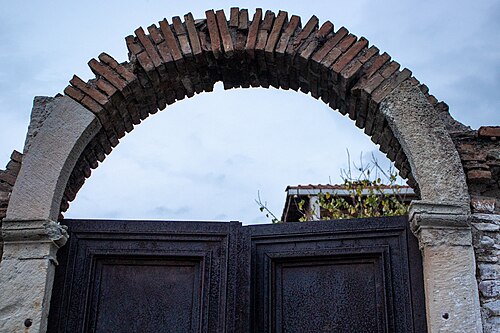
Akhisar Sinagogu is a surviving Jewish-heritage fragment in Paşa Mahallesi, Akhisar, rather than a complete synagogue preserved as a conventional attraction. Historical material identifies it with Akhisar’s former Jewish community, while the visible survival is chiefly the historic doorway.
District boundaries come from OSM administrative relations, so a district page holds exactly the places inside it — plus, for the islands and the coast, the nearest district by proximity.
Manisa reads as two strips: the historic quarter on the slope, and the modern city on the plain below it. The two central districts follow that split — Şehzadeler holds the Ottoman core, Yunusemre the newer development and the Celal Bayar University campus.
Everything a visitor comes for is in Şehzadeler, and it is walkable. The Sultan Mosque, the Muradiye and the museum stand within a few hundred metres of each other on the slope, and the bazaar streets run downhill from them. The hill attractions begin roughly 1 km south of the centre, where the streets give out and the national park starts.
North of that line the city is a working Aegean provincial capital: apartment blocks, the university, industry on the Gediz plain. It is not hostile to visitors, it simply has nothing for them. Plan on foot in Şehzadeler and on wheels for anything above or beyond it.
Checked 2026-08-23
Manisa is a walking city in the part that matters, and a driving one everywhere else.
The central monuments sit within a few hundred metres of each other on the slope, so the Ottoman core needs no transport at all. Town buses run the main streets for the rest of the city. Mount Spil National Park, the Weeping Rock and the Cybele relief are outside walking range — the relief is carved into the cliff along the D250 — and a car or a taxi is the practical way to reach them.
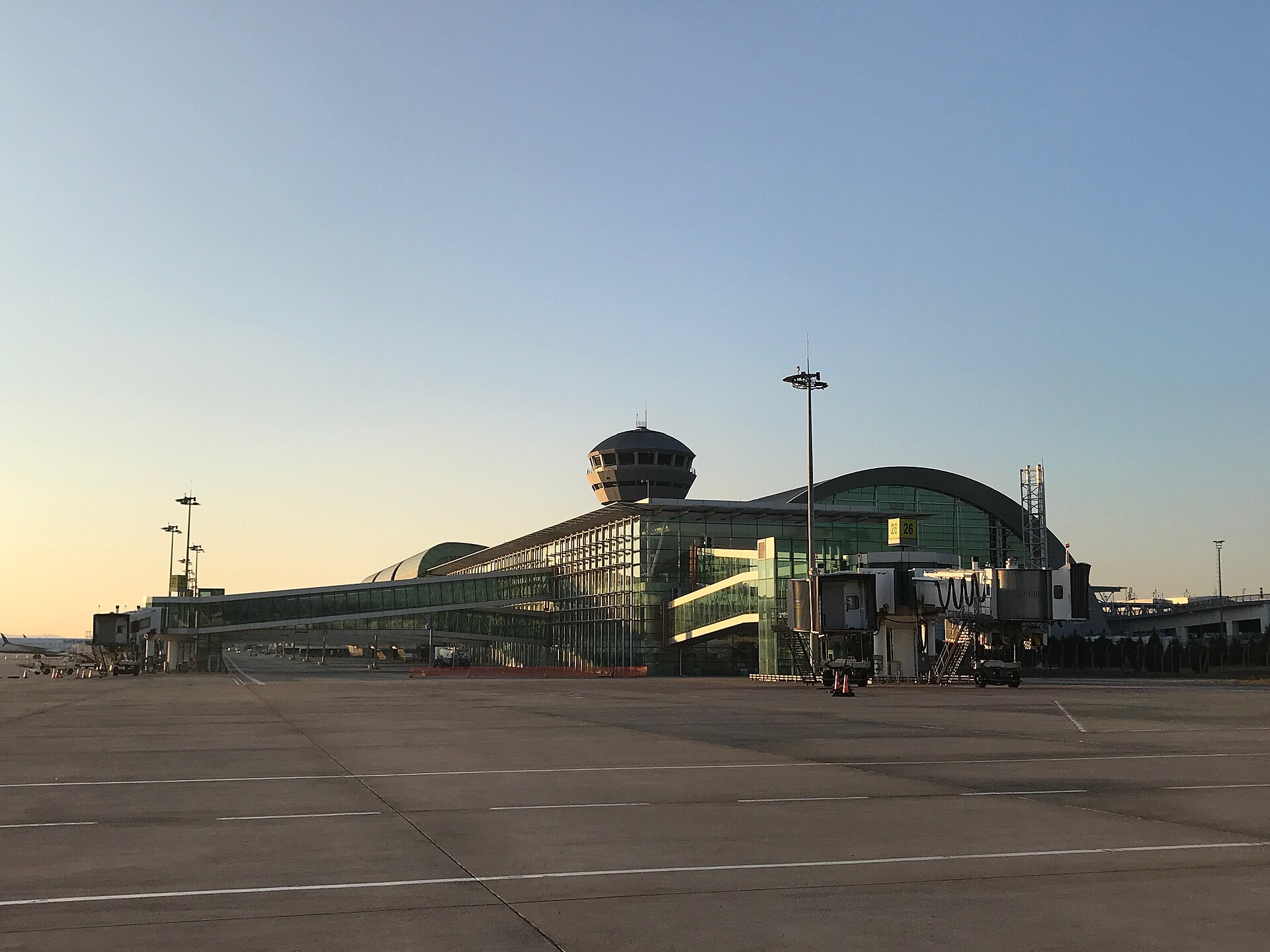
Arriving is easy from İzmir. Four trains a day leave İzmir Basmane and take about 90 minutes; local buses cover the same 40 km in about 35 minutes on the six-lane highway. Buses running between İstanbul and İzmir call at Manisa, hourly or better, and take about six and a half hours from İstanbul. The nearest airport is İzmir Adnan Menderes, roughly 65 km away.
Checked 2026-08-23

Suggested stay for a first visit: 1–2 days. A second day is worth it only if you are going up Mount Spil or out to the Cybele relief, both of which need a car.
Every year from 21 to 24 March, at the Sultan Mosque. The paste is prepared from 41 spices and herbs, wrapped in paper, and thrown from the minaret and domes to the crowd below. UNESCO inscribed the festival on its Representative List of the Intangible Cultural Heritage of Humanity in 2012.
Four trains a day leave İzmir Basmane and take about 90 minutes. Local buses cover the same 40 km in about 35 minutes on the six-lane highway. İzmir Adnan Menderes is the nearest airport, roughly 65 km away.
Mount Spil — Mount Sipylus — is the 1,513 m mountain immediately south of the city, and its national park is the reason most Turkish visitors come. It holds forest, wild horses and hiking routes, along with the Weeping Rock associated with the legend of Niobe. The hill attractions start about 1 km south of the centre and a car or taxi is the practical way up.
It works as a day trip: 90 minutes by train each way leaves a full day for the Ottoman core. Stay overnight if you want Mount Spil as well, or if you are here in the last week of March for the Mesir festival, when the city fills.
An eight-metre figure of an Anatolian mother goddess cut into a cliff face along the D250, several kilometres east of the city. It is Hittite work and predates everything Ottoman in Manisa by well over two thousand years.


