
32
1 hour
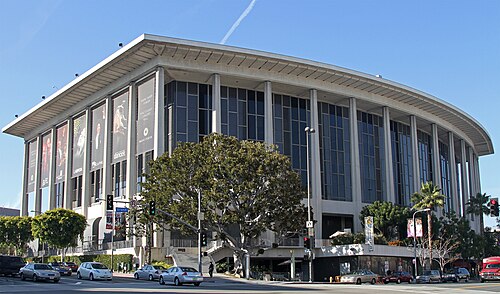
Dorothy Chandler Pavilion
The Dorothy Chandler Pavilion is a major performing arts venue within the Los Angeles Music Center in downtown Los Angeles.
- Must see
- Art and culture venue
City guide · United States
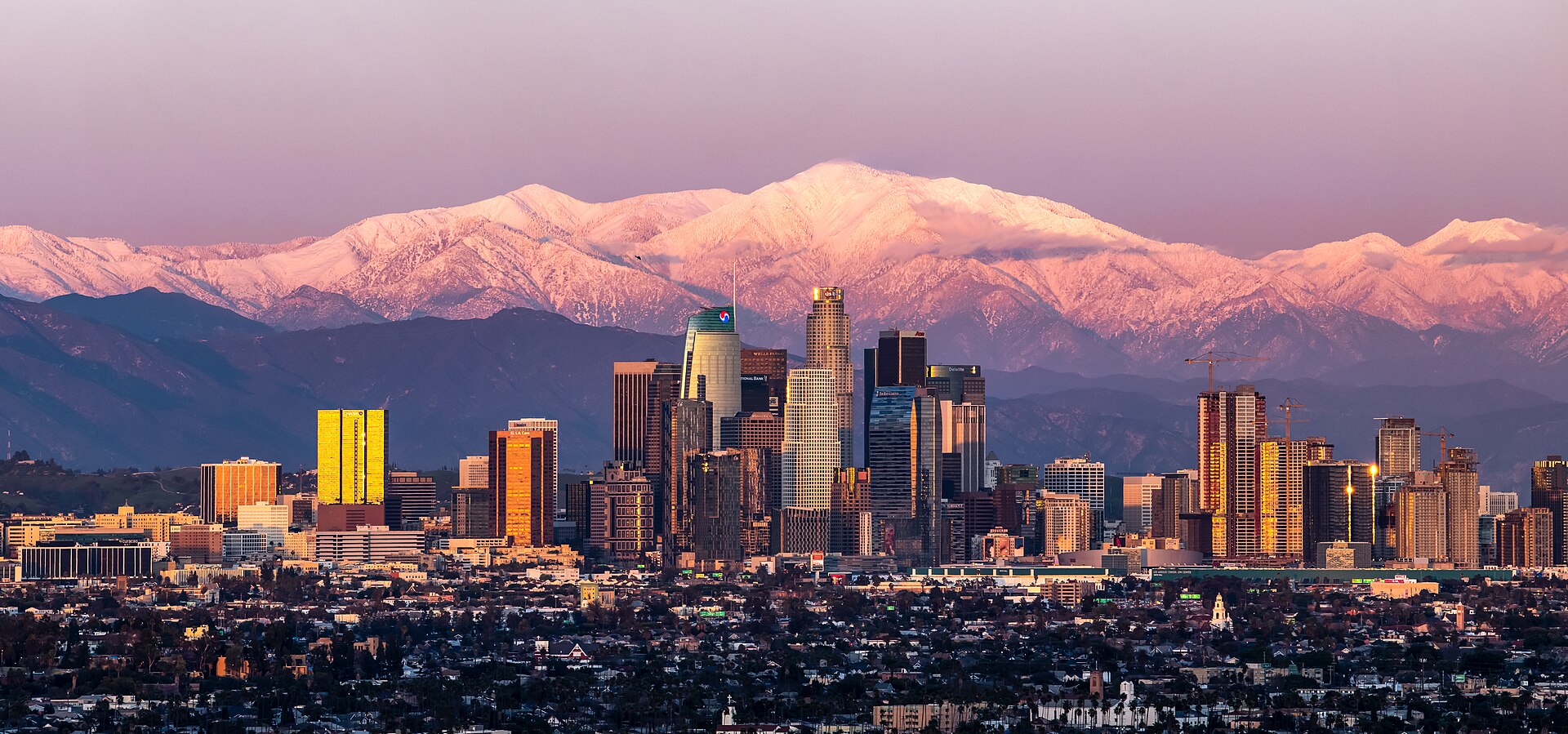
Los Angeles is a network of distant districts rather than one continuous centre. Downtown, Hollywood, the Westside, the beach cities and the Valley each form se...
Photograph · Alek Leckszas · CC BY-SA 4.0
Set your days, your pace and the hours you actually want to be out. The planner works around closing days and travel time, and leaves room to eat.
Reviewed by Elena Voss · Roavina Travel Editor
Los Angeles is a network of distant districts rather than one continuous centre. Downtown, Hollywood, the Westside, the beach cities and the Valley each form separate visitor zones, and crossing between them can dominate a day. Metro rail and buses connect many major corridors, but route planning must include the final local connection. Choose one geographic cluster per day and avoid repeated east-west travel.
Checked 2026-08-26
September · September remains warm in Los Angeles at a 28.4°C mean high, although its 6.1 mm rainfall normal stays very low.
Ranked by importance — sitelinks, pageviews and heritage status, not editor preference.
66 places match
Category
Typical visit duration
Interests
The Dorothy Chandler Pavilion is a major performing arts venue within the Los Angeles Music Center in downtown Los Angeles.
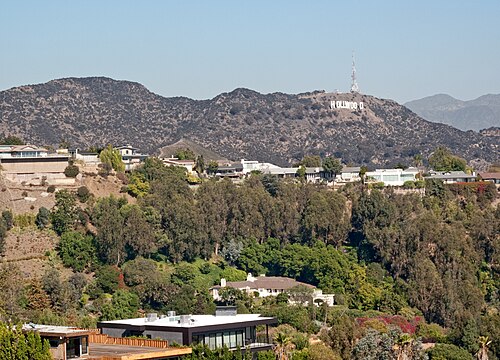
Runyon Canyon Park is a public park located in the Hollywood Hills neighborhood of Los Angeles, California. It occupies a canyon area near the intersection of Hollywood Boulevard and North Fuller Avenue.
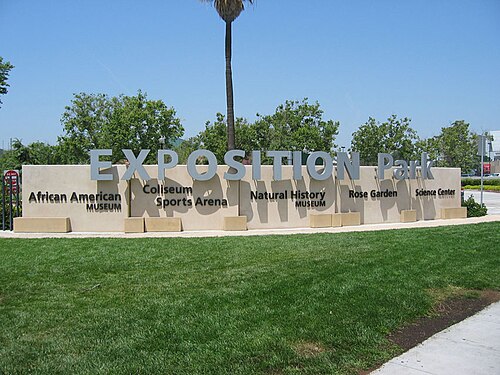
Exposition Park is a public urban park in Los Angeles, California. It functions as a cultural campus containing multiple institutions within its grounds. The park serves as a recreational green space while hosting significant cultural, educational, and sporting venues.
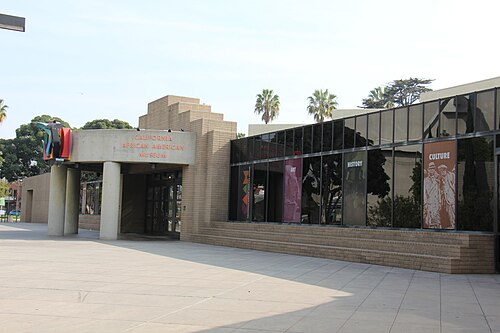
The California African American Museum is a state-supported institution in Los Angeles dedicated to African American art, history, and culture.
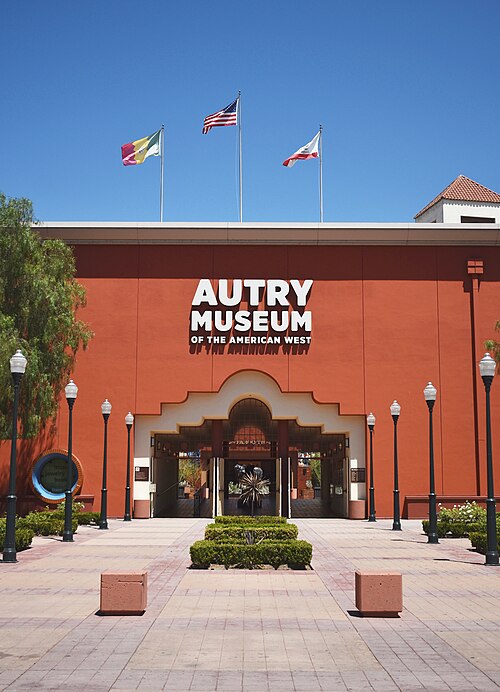
The Autry Museum of the American West is a major museum in Los Angeles dedicated to interpreting the history, art, and cultures of the American West.
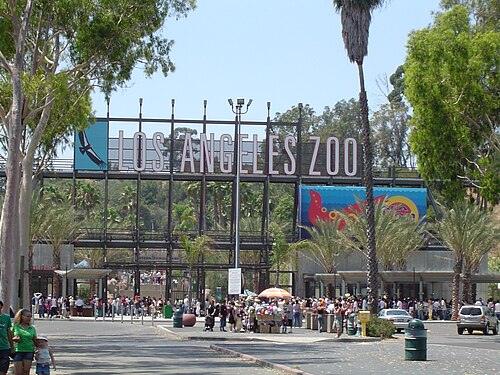
The Los Angeles Zoo is a municipal zoo located within Griffith Park, one of the largest urban parks in North America. Established as a city-owned facility, it serves as one of the principal attractions of the park complex.

The Skirball Cultural Center is a Jewish cultural institution located in Los Angeles, California. It was founded in 1996 and sits in the Sepulveda Pass near the Santa Monica Mountains.
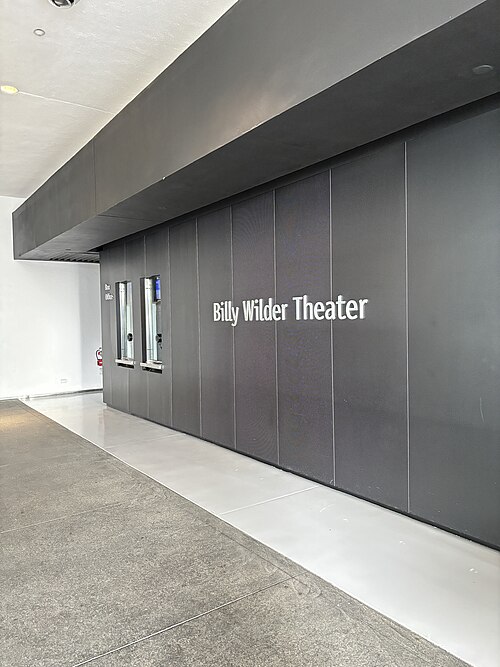
The Hammer Museum is a UCLA-affiliated art museum located in Los Angeles, California. Founded by industrialist Armand Hammer, it opened in 1990 and became part of the University of California, Los Angeles in 1994.
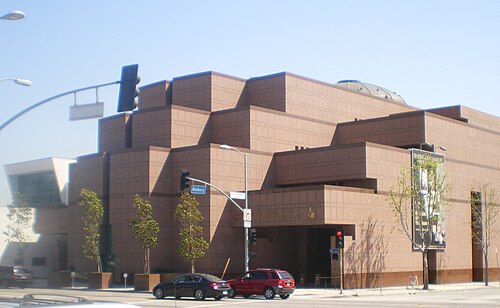
The Museum of Tolerance in Los Angeles is a Holocaust and human-rights museum in the Pico-Robertson neighbourhood. Its exhibitions connect the history of the Holocaust with wider questions about prejudice, racism, discrimination and social justice.
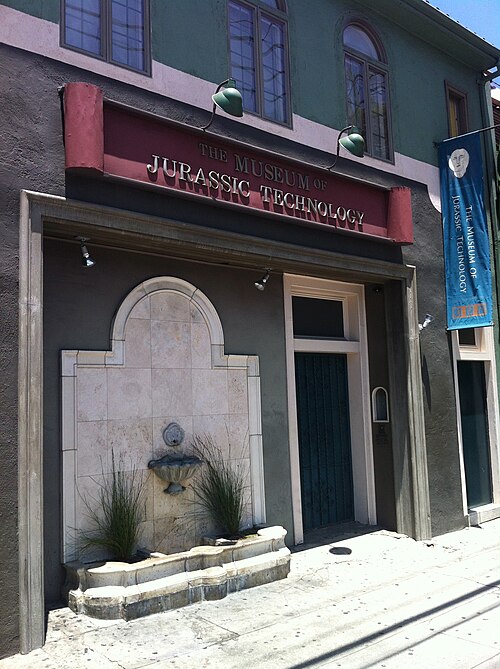
The Museum of Jurassic Technology is a small museum in Culver City, Los Angeles, founded by David Hildebrand Wilson and Diana Drake Wilson in 1988.
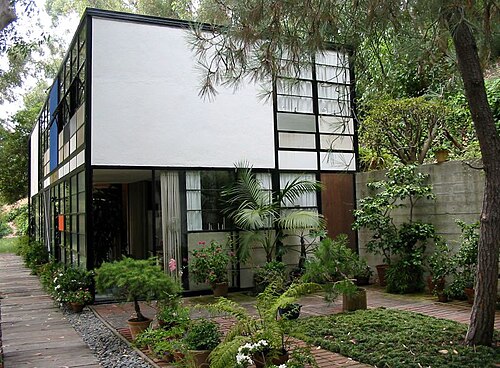
The Eames House, also known as Case Study House No. 8, is a landmark modernist residence in Los Angeles, California.

The Venice Canal Historic District comprises a network of man-made canals in the Venice neighborhood of Los Angeles, California. Developer Abbot Kinney created these canals in 1905 as part of his Venice of America resort, modeling them after Venice, Italy.
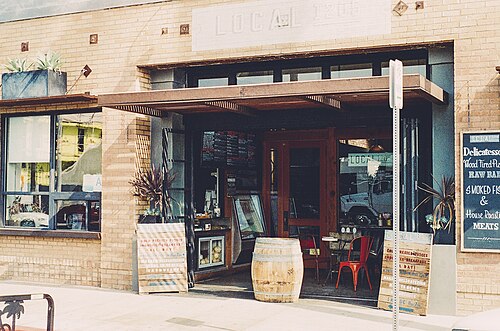
Abbot Kinney Boulevard is a prominent retail and dining corridor located in the Venice neighborhood of Los Angeles, California.
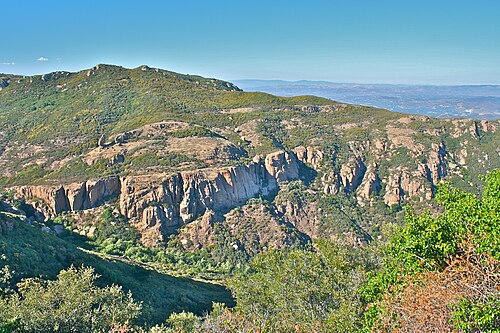
Santa Monica Mountains National Recreation Area is a United States national recreation area protecting the Santa Monica Mountains and adjacent shorelines in Southern California.
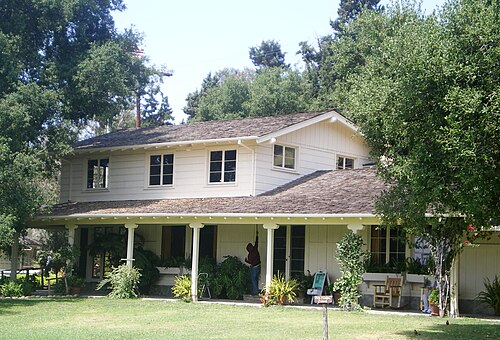
Will Rogers State Historic Park is a California state historic park preserving the former ranch of Will Rogers, the American humorist, actor, and writer. The property sits in the Pacific Palisades area of Los Angeles.
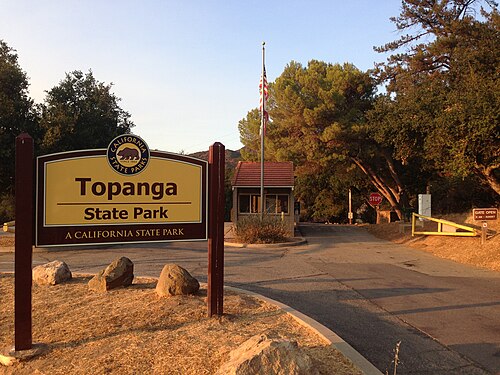
Topanga State Park is a broad protected landscape in the Santa Monica Mountains within Los Angeles.
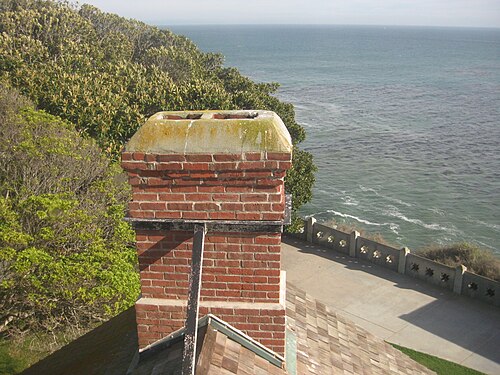
Point Fermin Lighthouse
Point Fermin Lighthouse is a historic Victorian lighthouse situated at the southern edge of Los Angeles, in the San Pedro neighborhood. Constructed in 1874, it represents one of the surviving examples of 19th-century lighthouse architecture on the California coast.
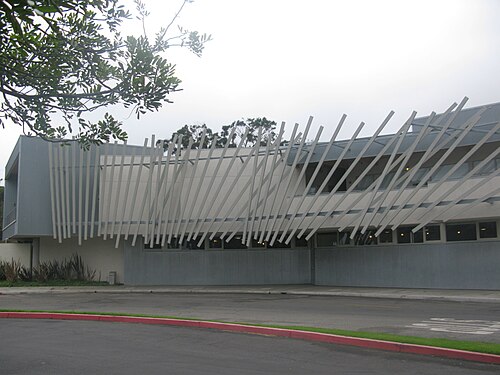
Cabrillo Marine Aquarium is a public marine-science aquarium located on the waterfront in San Pedro, Los Angeles. It serves as both an educational facility and research center focused on Southern California marine life.
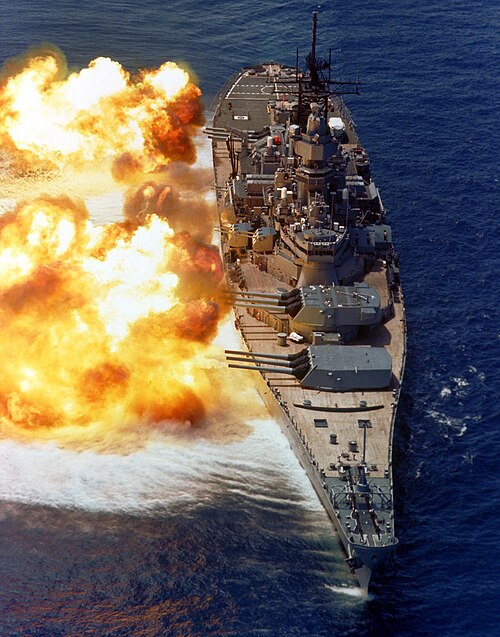
Battleship USS Iowa
USS Iowa, also known as BB-61, is a retired United States Navy battleship preserved as a museum ship in San Pedro at the Port of Los Angeles.
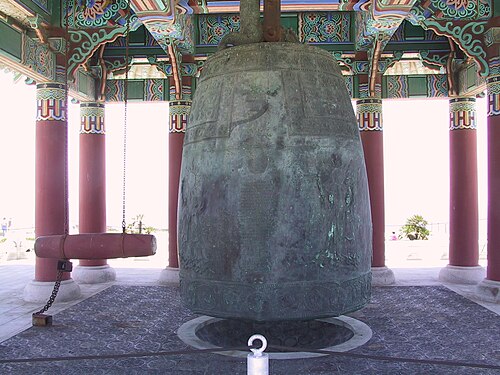
Korean Friendship Bell
The Korean Bell of Friendship is a prominent civic monument in Los Angeles, located at Angels Gate Park in San Pedro.
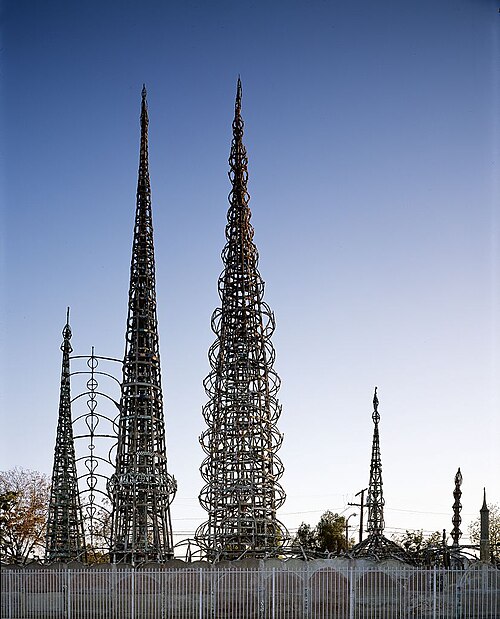
Watts Towers is a singular self-built art environment in the Watts neighborhood of Los Angeles, California. Constructed by Italian immigrant Sabato Rodia over thirty-three years from 1921 to 1954, the site comprises seventeen interconnected sculptural structures.
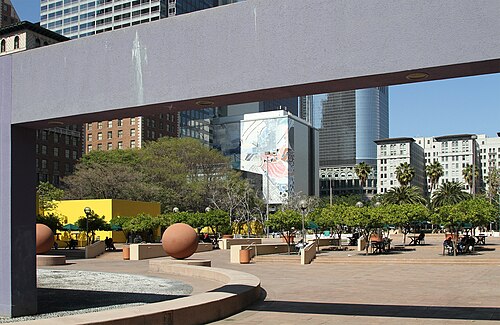
Pershing Square is a historic public square in downtown Los Angeles, California. Named after General John J. Pershing, it has served as a central gathering place since the late nineteenth century.
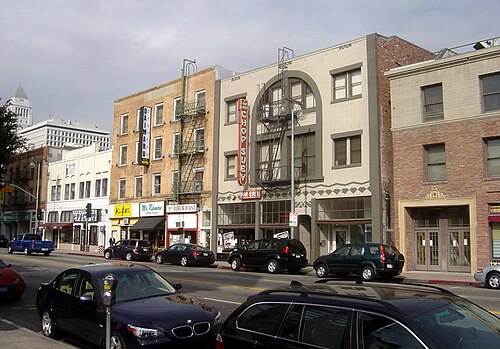
Little Tokyo is a historic Japanese American district in downtown Los Angeles. Established in the late nineteenth and early twentieth centuries, it became the cultural and commercial center for Japanese immigrants and their descendants.
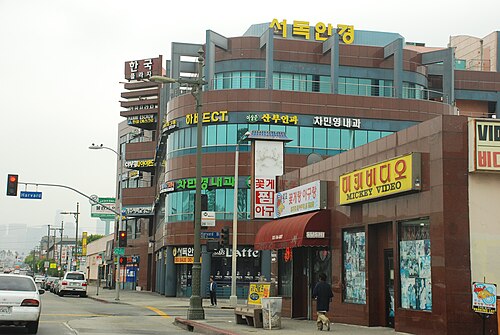
Koreatown is a dense cultural district in central Los Angeles, California. It is one of the most concentrated Korean-American communities in the United States, though it also encompasses significant Latino and other populations.
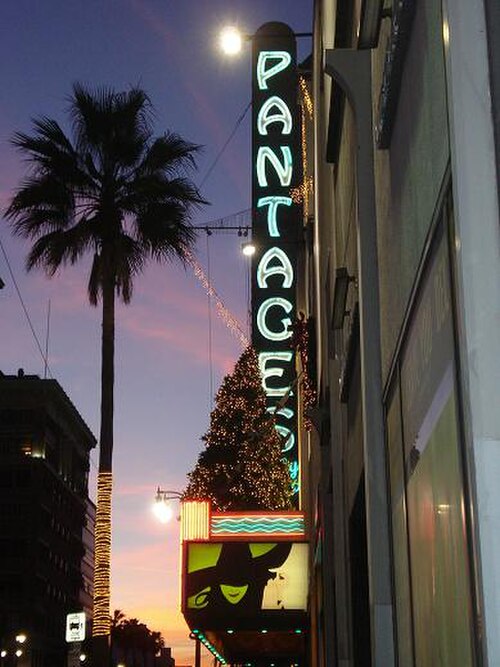
Pantages Theater
Pantages Theatre is a historic Art Deco performance venue on Hollywood Boulevard in Los Angeles. Opened in 1930 and designed by B.
Downtown is the historic and transit-focused core, with museums, civic buildings and entertainment districts close together. Hollywood lies northwest, the Westside continues toward museums and coastal communities, and the beach cities stretch along the Pacific near and beyond LAX. The Valley sits across the Santa Monica Mountains, while South Los Angeles and Exposition Park form another distinct corridor. Los Angeles city, county and commonly marketed visitor regions overlap, so check the actual location before grouping stops.
Checked 2026-08-26
Use Metro rail and frequent bus corridors where they match the day’s geography, then fill the last connection by local bus, walking or another transport option. Rail is useful for Downtown, Hollywood, Universal, Santa Monica and selected southern corridors, but it does not make every attraction adjacent to a station. Driving adds parking and traffic uncertainty. Plan the route before the day begins and keep each itinerary inside one side of the basin.
Checked 2026-08-26
Four to five days suit a first visit because the main districts are far apart. Assign separate days to Downtown, Hollywood, the Westside and the coast rather than crossing the basin repeatedly.
March through May and September through November usually provide comfortable conditions for long outdoor days. Coastal and inland districts can feel different on the same day, so check the local forecast.
Yes, when the itinerary follows Metro rail and major bus corridors and stays geographically focused. Some attractions still require a final local connection, so check the complete route before choosing accommodation.
Keep Downtown and Exposition Park in their own central-southern blocks, Hollywood with nearby studio and hill destinations, and the Westside with the coast. The Valley generally needs a separate day.
Downtown has strong transit connections, but it is not central to every visitor district. A Westside or Hollywood base may reduce travel when most planned stops lie west or northwest.