
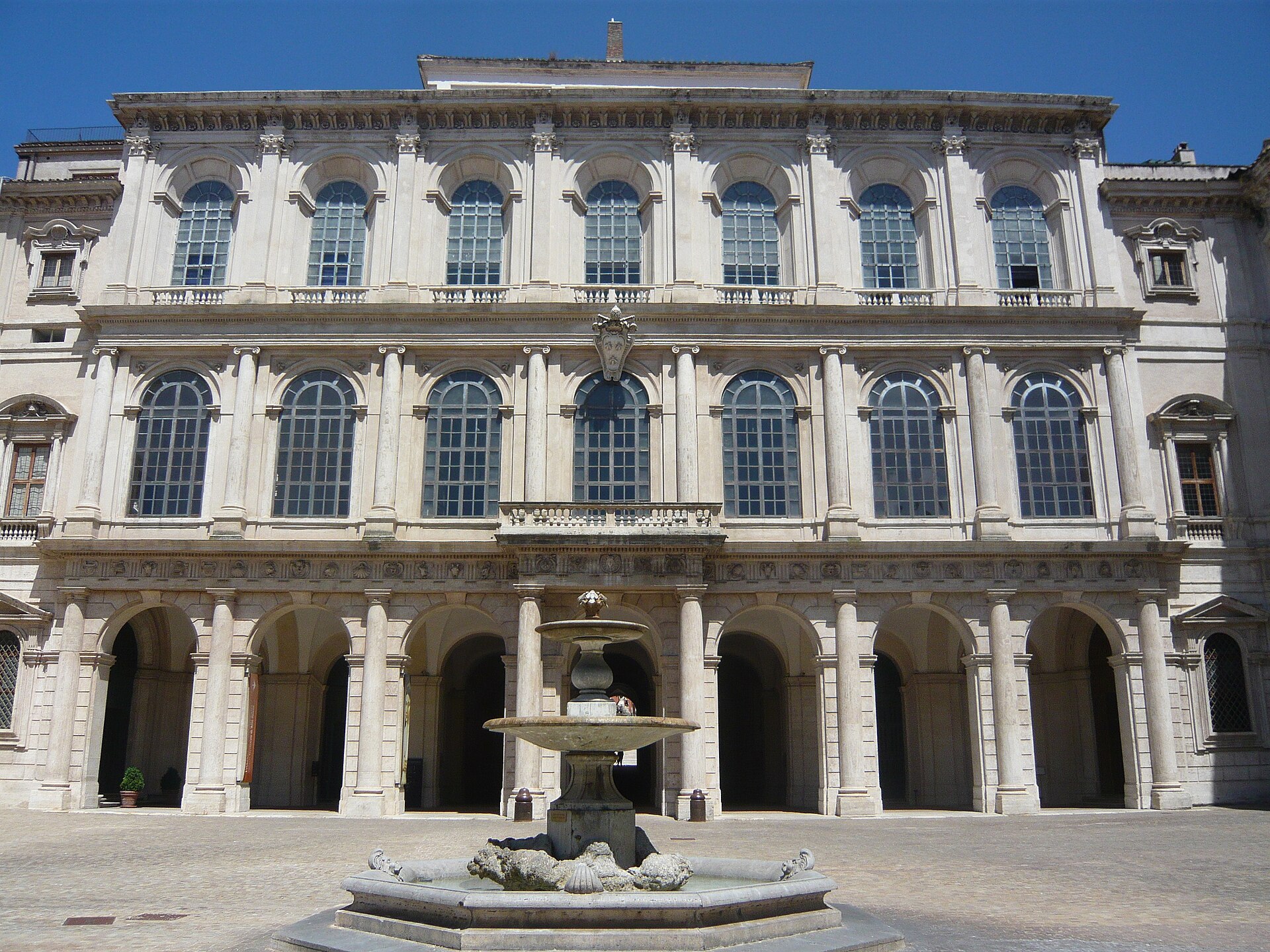
3 min walk
Galleria Nazionale d'Arte Antica
- Must see · Heritage site
- Museum
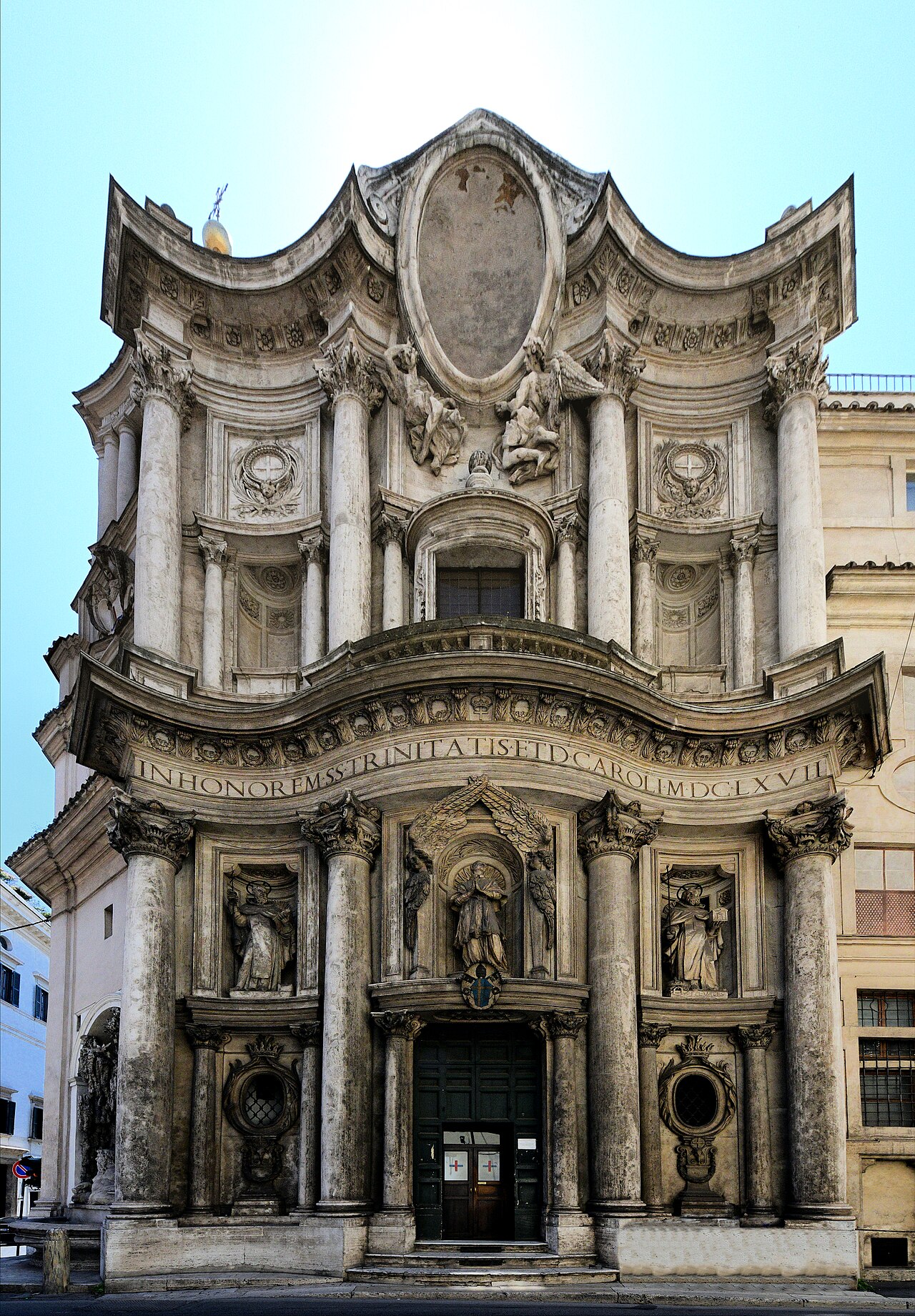
Place of worship · Rome
San Carlo alle Quattro Fontane
San Carlo alle Quattro Fontane, known in English as Saint Charles at the Four Fountains, is a Baroque church in Rome designed by Francesco Borromini. It stands at an intersection marked by four fountains, giving the site its distinctive name. The church represents a pivotal work of Roman Baroque architecture, constructed for the Spanish Discalced Trinitarians. Its remarkably compact footprint belies an extraordinarily complex geometric interior, demonstrating Borromini's innovative architectural vision within severe spatial constraints. Saint Charles at the Four Fountains also earns time in a rome itinerary because Exact unique production name match within the declared city scope. Its value becomes clearer when the stop is compared with the surrounding streets and the other ranked places nearby.
Checked 2026-08-26
The interior reveals Borromini's mastery of geometric complexity, featuring an oval plan with undulating walls that create dynamic spatial movement. Coffered dome patterns draw the eye upward through progressively smaller octagons, triangles, and crosses. The main altar and side chapels contain works of religious significance. Visitors observe intricate stucco decoration throughout. The architectural composition achieves remarkable vertical emphasis despite the church's constrained urban site, with natural light manipulated through concealed windows to enhance the mystical atmosphere of this sacred space. A flexible visit lets travellers connect Saint Charles at the Four Fountains with the rest of the day without treating one room, viewpoint or photograph as the whole experience. The useful pace depends on personal interest and conditions on arrival.
Checked 2026-08-26
Most visitors spend approximately twenty to forty minutes inside San Carlo alle Quattro Fontane. The compact dimensions allow thorough examination of architectural details without extended duration. Those with particular interest in Baroque architecture or Borromini's work may remain longer, studying the geometric refinements and proportional systems. Photography and contemplation add time. The adjacent exterior merits brief observation to appreciate how the facade addresses the unusual corner site. Combined with the surrounding Quattro Fontane intersection, total visit duration typically remains under one hour.
Checked 2026-08-26
Visitors should verify current opening times before planning their visit, as religious sites in Rome frequently maintain variable schedules reflecting liturgical functions and community needs. Morning hours generally offer better natural illumination of the interior architectural features. The church's central Rome location means it integrates conveniently into broader itineraries. Seasonal considerations apply to Rome generally, with summer bringing larger tourist volumes throughout the historic center. Advance verification remains essential for this functioning religious institution. Check the operator's own site for the travel date before relying on a schedule or fare.
Checked 2026-08-26
As an active church under ecclesiastical administration, San Carlo alle Quattro Fontane may not impose entry fees, following common practice for Roman religious sites. However, visitors should confirm current arrangements, as some churches introduce suggested donations or modest charges for maintenance. Any applicable costs would typically remain minimal compared to state museums. Visitors carrying appropriate small denominations demonstrate preparedness. Verification through official channels before visiting eliminates uncertainty regarding current financial arrangements for entry. Check the operator's own site for the travel date before relying on a schedule or fare.
Checked 2026-08-26
San Carlo alle Quattro Fontane occupies a prominent position where Via del Quirinale and Via delle Quattro Fontane intersect, identifiable by the four corner fountains. The Barberini metro station on Line A provides nearby underground access. Multiple bus routes serve this central district. Walking from major landmarks including the Trevi Fountain, Spanish Steps, or Termini station proves feasible given compact historic center dimensions. Street signage and the distinctive fountains facilitate location. The site integrates naturally into Quirinal Hill exploration itineraries on foot.
Checked 2026-08-26
Visitors must observe appropriate conduct within this active place of worship. Photography restrictions may apply; visitors should ascertain current policies upon entry. The compact interior space means congestion during popular periods. The corner location creates traffic awareness necessities when approaching and photographing the exterior facade. Step and floor irregularities require attention. As with all Roman churches, modest dress covering shoulders and knees demonstrates respect. Service times may interrupt visitor access without advance notice. The surrounding intersection presents standard urban vigilance requirements.
Checked 2026-08-26
Photography policies within San Carlo alle Quattro Fontane are Not recorded pending review. Visitors should observe posted regulations or inquire upon arrival rather than assuming permission. The interior's complex geometry and dramatic lighting present compelling subjects for architectural documentation. Tripod use typically faces restrictions in churches. Natural light varies considerably throughout the day, affecting interior photography conditions. The distinctive facade and corner position offer exterior photographic opportunities, though street traffic and confined space constrain composition options. Flash usage generally proves inappropriate in sacred spaces.
Checked 2026-08-26
Yes, these are English and Italian names for the same church.
Francesco Borromini designed San Carlo alle Quattro Fontane.
The Spanish Discalced Trinitarians.
The church stands at an intersection marked by four fountains at its corners.
Check the operator's own site for the travel date before relying on a schedule or fare.
Check the operator's own site for the travel date before relying on a schedule or fare.
Loading the interactive map…
The interactive map could not be loaded.
Last updated:
Source: OpenStreetMap contributors, Wikidata ·