Roavina

City guide · Italy

Venice

A photograph of Venice
Photograph · Martin Falbisoner · CC BY-SA 4.0

Venice's historic centre occupies islands linked by bridges, with no road traffic inside the core. San Marco holds the best-known monuments, San Polo and Santa Croce sit across the Grand Canal, and Cannaregio, Castello and Dorsoduro form distinct walking districts. Murano, Burano, Torcello and the Lido require water transport and should be planned as separate lagoon journeys.

Reviewed by Elena Voss · Roavina Travel Editor

Practical information

Language spoken
Italian
National practical orientation; regional and minority languages may also be used
Dialling code
+39
International calling code; local area and mobile prefixes still apply
Currency
Euro (EUR)
Use the official local currency; card acceptance varies by place
Emergency number
112
Use only for an emergency; tourist assistance may use a separate number
Plug type
Type C, F and L · 230 V
Check that chargers support the recorded voltage before using an adapter
Tap water
Not recorded
No verified nationwide visitor statement was recorded

Turn this list into a plan

Set your days, your pace and the hours you actually want to be out. The planner works around closing days and travel time, and leaves room to eat.

Plan Venice

Planning a visit

Suggested stay
Not recorded
Getting around
Walking and ACTV water bus
  1. January: viable with meaningful trade-offs
  2. February: viable with meaningful trade-offs
  3. March: good time to visit
  4. April: best time to visit
  5. May: best time to visit
  6. June: good time to visit
  7. July: good time to visit
  8. August: good time to visit
  9. September: best time to visit — current month
  10. October: good time to visit
  11. November: viable with meaningful trade-offs
  12. December: viable with meaningful trade-offs
  • Best time
  • Good time
  • Viable with trade-offs
  • Difficult conditions

Sources

Top things to see

Ranked by importance — sitelinks, pageviews and heritage status, not editor preference.

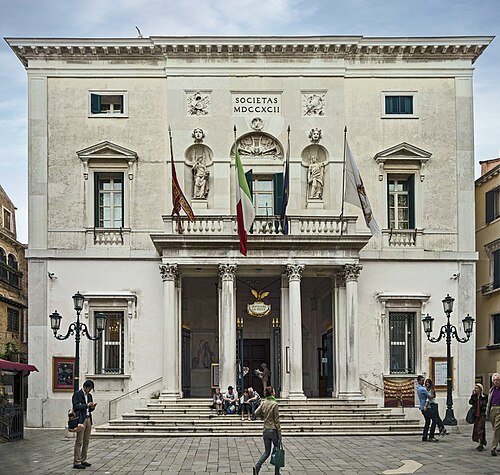
  1. Teatro La Fenice Teatro La Fenice
    02 1 hour

    Teatro La Fenice

    Teatro La Fenice is Venice's principal opera house and among Italy's most renowned theatres. The name La Fenice, meaning The Phoenix, references the theatre's history of rising from devastating fires.

    • Must see
    • Art and culture venue
  2. Punta della Dogana Punta della Dogana
    03 1 hour

    Punta della Dogana

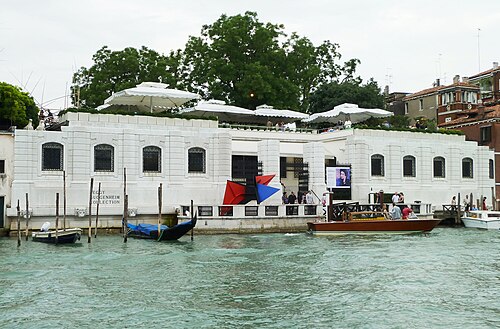
    Punta della Dogana is the triangular tip between Venice’s Grand Canal and Giudecca Canal.

    • Must see
    • Art and culture venue
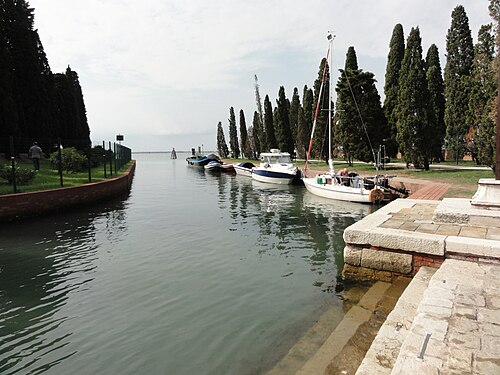
  3. San Francesco del deserto San Francesco del deserto
    04 1 hour

    San Francesco del deserto

    San Francesco del Deserto is a small island monastery in the Venetian Lagoon, located between Venice proper and Burano.

    • Must see
    • Art and culture venue
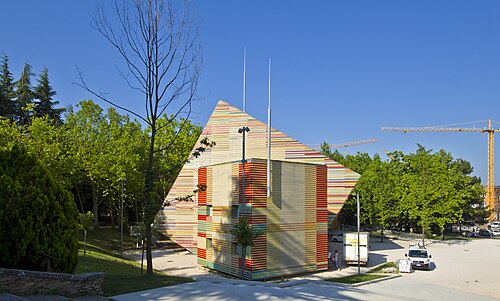
  4. Biblioteca Carpenedo Bissuola Biblioteca Carpenedo Bissuola
    05 1 hour

    Biblioteca Carpenedo Bissuola

    Teatro del Parco

    Biblioteca Carpenedo Bissuola, locally known as Teatro del Parco, is a cultural venue in Venice's mainland district of Mestre.

    • Notable
    • Art and culture venue
  5. Teatrino Palazzo Grassi Teatrino Palazzo Grassi
    06 1 hour

    Teatrino Palazzo Grassi

    Teatrino di Palazzo Grassi

    Teatrino di Palazzo Grassi is the small theatre attached to Palazzo Grassi, the contemporary art museum on Venice’s Grand Canal. The venue belongs to the Pinault Collection’s cultural complex and continues the Venetian tradition of palace performance spaces.

    • Notable
    • Art and culture venue
  6. Teatro Goldoni Teatro Goldoni
    07 1 hour

    Teatro Goldoni

    Teatro stabile del Veneto Carlo Goldoni

    Teatro Goldoni, formally Teatro Stabile del Veneto Carlo Goldoni, is a historic performing-arts venue in Venice. Named for the Venetian playwright Carlo Goldoni, it continues the city's long tradition of theatre and live performance.

    • Notable
    • Art and culture venue
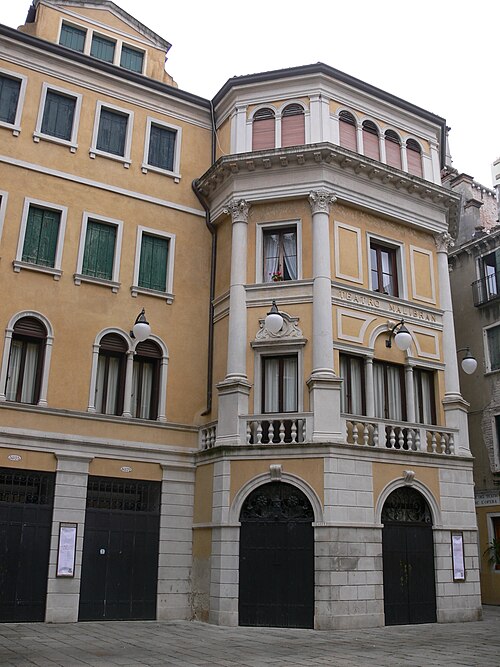
  7. Teatro Malibran Teatro Malibran
    08 1 hour

    Teatro Malibran

    Malibran

    Teatro Malibran is a historic opera house in Venice, Italy, situated in the Cannaregio district. Originally opened as Teatro San Giovanni Grisostomo in 1678, it was later renamed in honour of the celebrated Spanish mezzo-soprano Maria Malibran.

    • Notable
    • Art and culture venue
  8. teatro Momo teatro Momo
    09 1 hour

    teatro Momo

    Teatro Arnaldo Momo

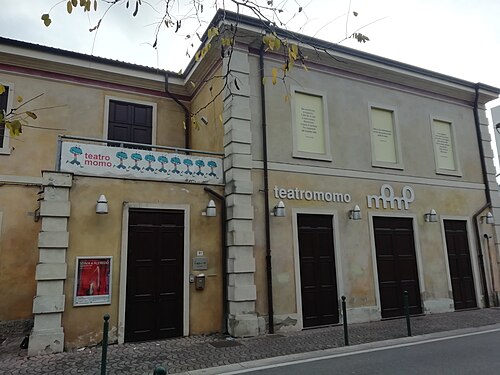
    Teatro Arnaldo Momo, commonly called Teatro Momo, is a theatre venue in Venice. The name honours Arnaldo Momo and places the venue within Venice’s performing-arts landscape.

    • Notable
    • Art and culture venue
  9. Teatro alle Tese
    10 1 hour

    Teatro alle Tese

    Teatro alle Tese is a theatrical venue located in Venice, Italy. The name reflects its architectural origins connected to the historic Arsenale complex, where 'tese' refers to the long workshop buildings once used for shipbuilding and maritime production.

    • Notable
    • Art and culture venue
  10. Teatro Toniolo Teatro Toniolo
    11 1 hour

    Teatro Toniolo

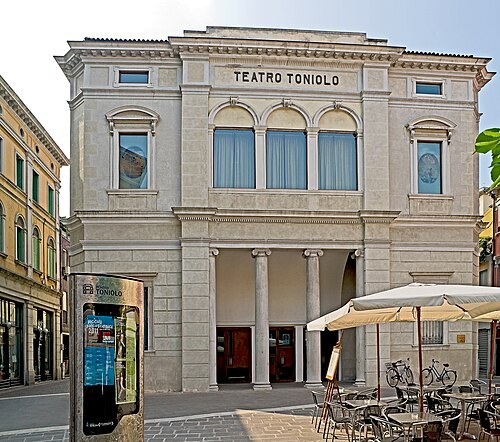
    Teatro Toniolo is a historic theatre in Venice, Italy, serving as a significant cultural venue within the city's performing arts landscape.

    • Notable
    • Art and culture venue
  11. Teatro Verde Teatro Verde
    12 1 hour

    Teatro Verde

    Teatro Verde is a theatre in Venice, Italy, known by the name “Green Theatre.” The venue belongs to Venice’s broader performing-arts landscape, a cultural tradition associated with opera, drama and music.

    • Notable
    • Art and culture venue

Source: OpenStreetMap contributors, Wikidata ·

How the city is laid out

The Grand Canal curves through the historic centre and separates San Marco and Castello from San Polo, Santa Croce and Dorsoduro. Cannaregio stretches north toward the rail station, while Castello extends east beyond the busiest visitor streets. Piazzale Roma is the road and bus terminus; Santa Lucia is the rail arrival point. Lagoon islands are not extensions of a central walk and need dedicated vaporetto time.

Checked 2026-08-26

Getting around

Walk within the historic centre and use ACTV water buses for longer canal journeys and lagoon islands. Venezia Unica lists vaporetti, buses, trams, the People Mover and ferry boats within the city transport system, while Alilaguna provides separate water connections to Marco Polo Airport. Routes can be indirect, so group island visits and confirm the current timetable before relying on a transfer.

Checked 2026-08-26

Common questions

How many days should I spend in Venice?

A fixed duration is not recorded. Plan the historic centre first, then reserve separate time for Murano, Burano, Torcello or the Lido if those islands matter to the visit.

Can I walk everywhere in central Venice?

Most of the historic centre is explored on foot across bridges and narrow lanes. Water buses are useful for longer canal trips, step-free alternatives and journeys to lagoon islands.

What is a vaporetto?

A vaporetto is a public water bus. ACTV routes connect stops in the historic centre with the Lido and lagoon islands as part of Venice's public transport network.

Are Murano and Burano part of a central Venice walk?

No. They are separate lagoon islands reached by water transport. Combine island stops deliberately and allow for waiting and transfer time between routes.

How do I travel from Marco Polo Airport by water?

Venezia Unica identifies Alilaguna as the water connection between Marco Polo Airport and Venice. ACTV city transport and airport services are separate products, so check the correct operator before purchase.