16 min walk
Mandaiike Park
- Notable
- Nature site
Language · 11 published
Place of worship · Osaka
多米神社
Reviewed by Elena Voss · Roavina Travel Editor
This place is a Place of worship.
Tameno Shrine, known locally as 多米神社, is a Shinto shrine in Osaka. It represents the kind of neighborhood religious site that sits alongside ordinary homes, roads, and local businesses rather than inside a purpose-built tourist complex. Travelers who visit can experience a quieter form of Osaka’s cultural landscape and see how worship spaces remain woven into daily city life. The shrine is a useful stop for visitors who have already seen major landmarks and want a more local-scale encounter with Japanese religious architecture. Its value comes from the atmosphere of a functioning shrine, the transition from public street to sacred grounds, and the opportunity to observe respectful worship practices. Keep the visit unhurried but modest. The site is not a stage arranged around a long sequence of exhibits; it is a place where local people may come for personal prayer. The Japanese name is helpful when navigating or asking for directions. Combine Tameno Shrine with a wider walk through Osaka rather than treating it as a full-day destination.
Checked 2026-08-26 · Source
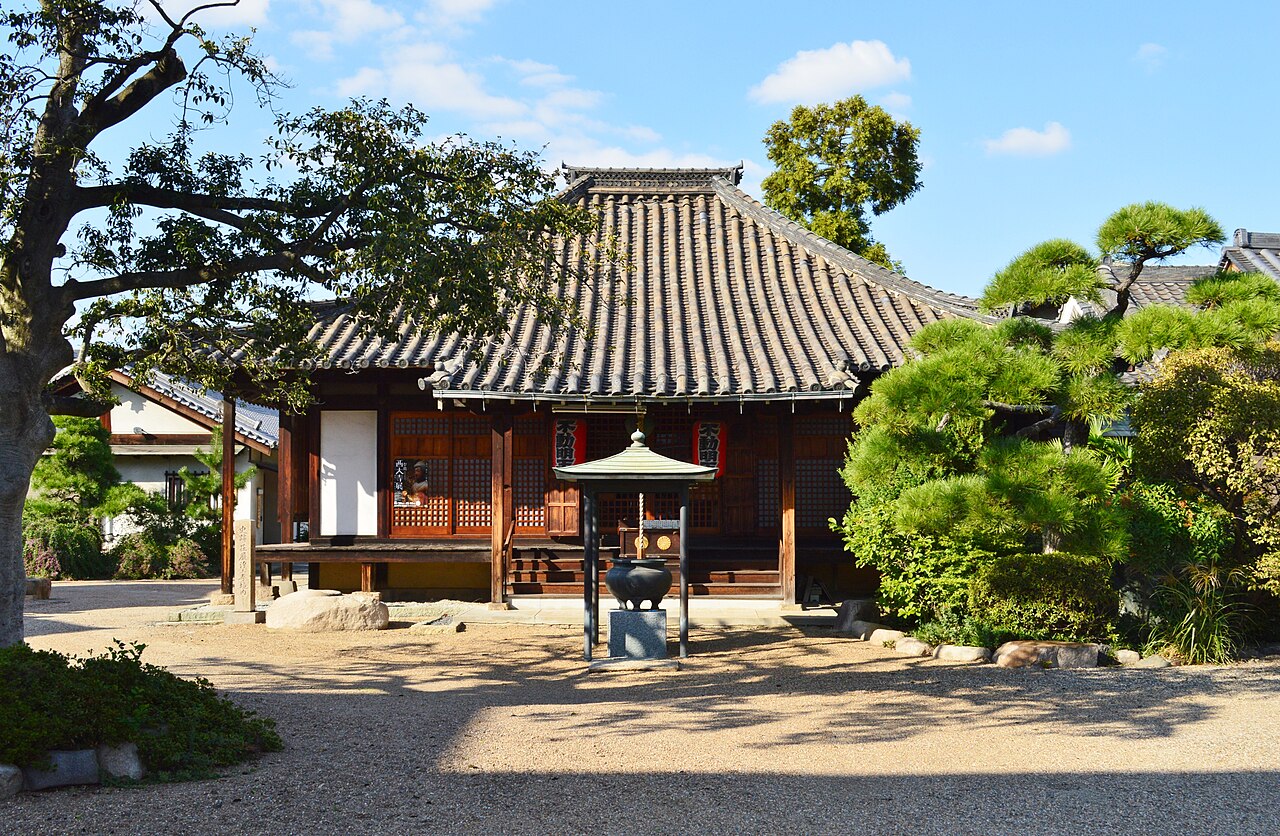
A shrine visit is centered on the entrance, the approach, the worship area, and the details that distinguish sacred space from the surrounding street. Tameno Shrine’s local name, 多米神社, reflects Japanese naming traditions and gives the site a clear cultural identity. Traditional Shinto compounds commonly organize movement through a torii gate toward a main hall, with purification and offering practices shaping the visitor experience. At Tameno, focus on the relationship between the entrance and the worship space, the materials of the buildings, and the way the compound is set within Osaka’s everyday neighborhood fabric. Avoid expecting a museum-style display or a sequence of explanatory rooms. The strongest experience comes from careful observation: notice the boundary between street and shrine, the scale of the architecture, and the quiet rhythm of people entering, praying, and leaving. If a worshipper is present, allow them priority. This is a compact cultural stop for travelers interested in local religious life, traditional design, and the contrast between a sacred enclosure and the dense city around it.
Checked 2026-08-26 · Source
Set aside roughly fifteen to forty-five minutes for Tameno Shrine. A short visit can cover the entrance, the approach, the visible architecture, and a respectful pause at the worship area. Travelers who enjoy observing details or reflecting quietly may use the longer end of that range. The shrine fits best as one part of a neighborhood route, especially when you want to slow down between busier Osaka stops. Avoid scheduling it as the sole activity for an entire morning unless your interest is specifically focused on local religious spaces and urban observation. Build a little flexibility into the route so you can wait briefly when worshippers are using the approach or hall. The visit is about quality of attention rather than the number of minutes spent inside. Children can enjoy identifying gates and fox imagery at other Inari-related shrines, but adults should explain that the grounds remain a place of worship. A calm, compact stop gives the shrine room to feel like part of Osaka rather than an isolated checklist item.
Checked 2026-08-26 · Source
Visit during daylight when the approach, buildings, and surrounding streets are easiest to read. Morning offers a quieter setting for travelers who want to observe the shrine without rushing, while later daylight can work well within a broader Osaka walking route. Summer weather in Osaka is hot and humid, so keep the outdoor stop short enough to remain comfortable and carry water. Spring and autumn are suitable seasons for pairing the shrine with neighborhood exploration, while winter visitors should bring a warm layer. A functioning religious site may have moments of prayer or local activity at any time. Step aside rather than interrupting the approach, and keep your voice low near the worship area. The shrine’s value does not depend on a special performance or exhibition: ordinary use is part of what makes the place meaningful. Allow your schedule to breathe so the visit can remain respectful if the grounds are active. A daylight stop also makes the transition back to Osaka’s streets clearer and more enjoyable.
Checked 2026-08-26 · Source
Tameno Shrine is approached as a place of worship rather than a conventional ticketed attraction. A visitor making a simple grounds visit does not need to organize an exhibition ticket or a timed museum entry. Religious offerings, amulets, fortunes, ceremonies, or other services can be separate from general access and should be treated as optional parts of shrine practice. Carry a small amount of yen if you wish to make a customary offering or purchase something during a wider neighborhood walk. An offering is an act of devotion, not an admission charge. Keep the visit simple: enter respectfully, observe the compound, and leave the worship area available to local visitors. Because the stop is short, it can be added to an Osaka itinerary without restructuring the day around reservations. Do not bring commercial expectations to the site. The most rewarding elements are the atmosphere, architecture, and connection to everyday religious life. Any visible instructions at the entrance or worship area govern how visitors should proceed.
Checked 2026-08-26 · Source
Tameno Shrine is in Osaka, where railways, subway lines, buses, and taxis connect the city’s districts. Use the mapped destination and the Japanese name 多米神社 when planning the final approach, particularly if your route leaves the main sightseeing centers. Local shrine entrances can sit among residential streets, so allow time to identify the correct gate instead of relying on a landmark-style arrival. Navigation applications are useful for the final walk and for combining the shrine with other nearby stops. If you need help from a driver or station staff, showing the Japanese name can reduce confusion. Public transport works well for a planned neighborhood visit, while a taxi can simplify the final leg when your group carries bags or has limited time. Keep clear of residential entrances and narrow streets as you approach. The shrine can be linked with local shops or a longer walk, but preserve enough time to enter and leave without rushing. Once you arrive, confirm that you are at the shrine entrance before taking photographs or beginning the visit.
Checked 2026-08-26 · Source
Tameno Shrine is a religious site first, so respectful conduct matters more than sightseeing speed. Walk calmly, keep conversations quiet, and leave the center of the approach available for worshippers. If a purification fountain is present, observe the demonstrated practice before using it. Follow signs around the main hall and do not enter areas marked for staff, ritual use, or restricted access. Photography near active prayer should be discreet, and people should not be included in close images without consent. Outdoor surfaces can become slippery in rain, and compact urban grounds may include steps or narrow passages. Osaka’s summer heat adds another practical concern for visitors walking between neighborhood stops. Keep water with you, watch bicycles on surrounding streets, and avoid leaving bags unattended. The shrine may have fewer visitor-oriented facilities than a major city attraction, so plan your visit around a comfortable route and a short pause. Children should stay close and learn that gates, statues, offerings, and buildings are not objects to climb or touch.
Checked 2026-08-26 · Source
Tameno Shrine offers photographs of a traditional sacred setting within Osaka’s ordinary city fabric. Start with exterior views of the entrance, approach, gate structure, rooflines, timber surfaces, and the relationship between the compound and nearby streets. A quiet composition can communicate more than a close detail taken while someone is praying. Keep the approach open, avoid photographing worshippers closely, and put the camera away during active ceremonies or private moments. Follow any signs around the main hall, altar area, and ritual objects. Flash adds little to outdoor shrine photography and can be distracting, so natural light is preferable. Morning and late afternoon can reveal texture in stone and wood while keeping the atmosphere subdued. A phone or small camera suits a compact local visit and makes it easier to remain unobtrusive. Tripods, commercial equipment, or posed sessions should not interfere with worship or neighborhood movement. The best photographs record the site’s calm transition from Osaka street life to sacred space.
Checked 2026-08-26 · Source
Its local Japanese name is 多米神社.
It is a Shinto shrine in Osaka and a local religious site suited to travelers interested in neighborhood culture and Japanese shrine architecture.
Allow about fifteen to forty-five minutes for the entrance, approach, visible architecture, worship area, and a quiet pause.
Focus on the shrine entrance, the approach, traditional buildings, the worship area, and the contrast between the sacred compound and Osaka’s surrounding neighborhood.
Keep quiet, leave the approach clear, follow signs, respect worshippers, avoid touching shrine objects, and treat the compound as an active religious place.
Exterior gates, rooflines, timber, stone details, the worship approach, and the shrine’s setting among Osaka streets are suitable subjects when photographed discreetly.
Loading the interactive map…
The interactive map could not be loaded.
Last updated:
Source: OpenStreetMap contributors, Wikidata ·