Perge
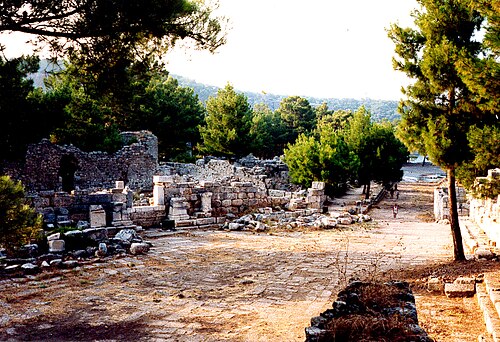
Perga
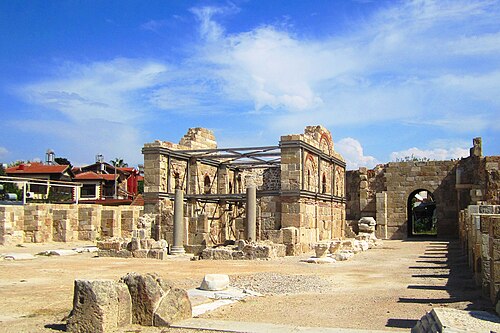
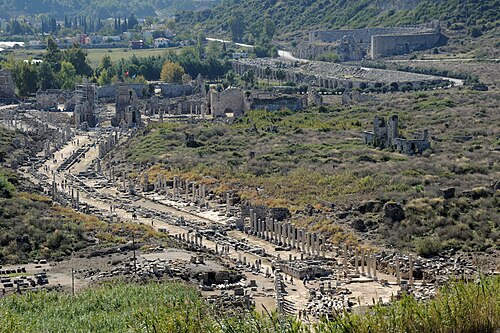
Perge is an ancient Greco-Roman city near Antalya, known locally as Perga. It was a significant settlement in Pamphylia and later an important city under Roman rule.
- Must see
- Historic site
City guide · Türkiye
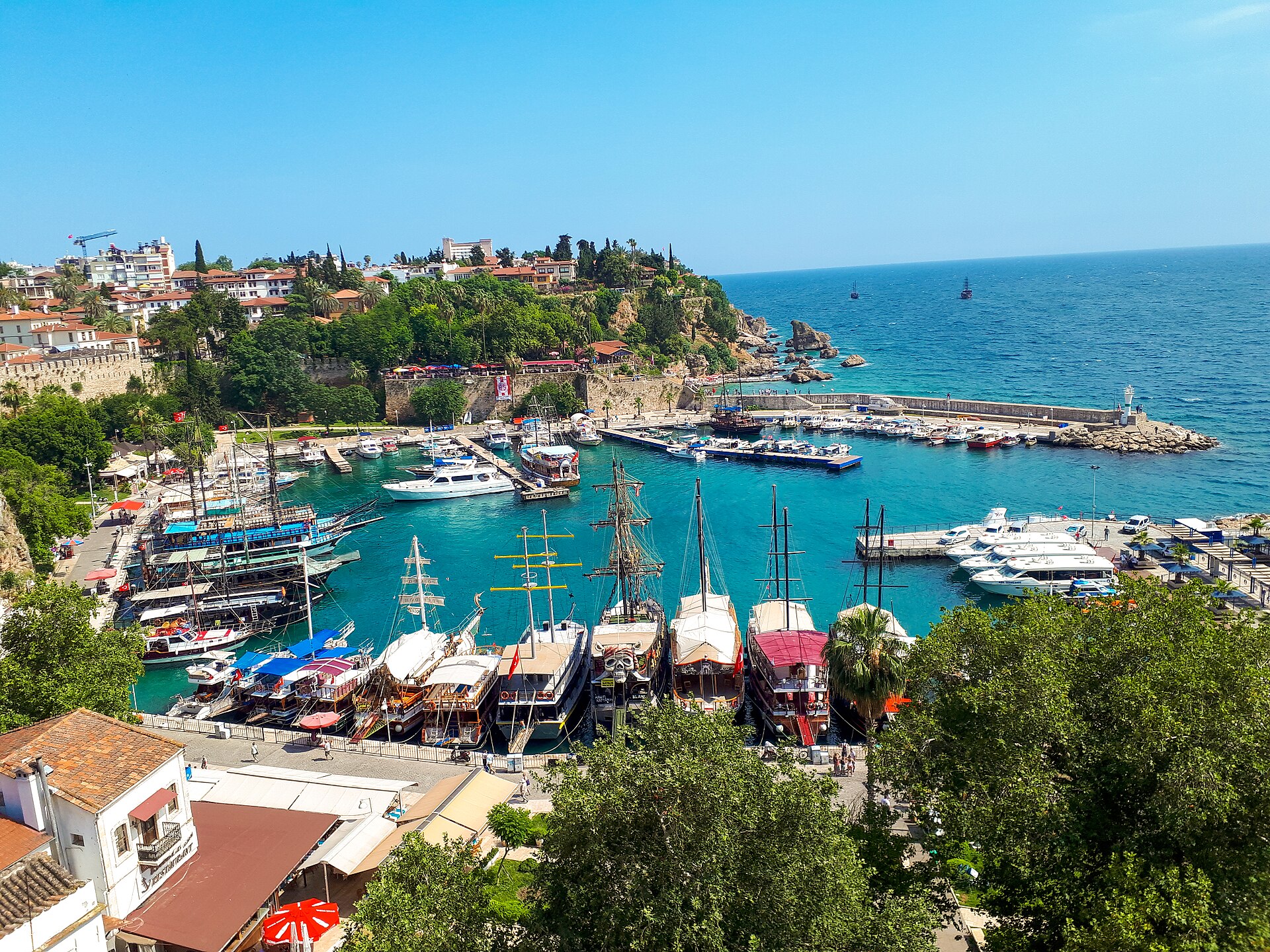
Antalya is the principal city on Türkiye's Mediterranean coast and the hub for a much wider visitor region. The compact historic core, Kaleiçi, occupies the old...
Photograph · REHBER0770 · CC BY-SA 4.0
Set your days, your pace and the hours you actually want to be out. The planner works around closing days and travel time, and leaves room to eat.
Editorial responsibility: Elena Voss · Roavina Travel Editor
Antalya is the principal city on Türkiye's Mediterranean coast and the hub for a much wider visitor region. The compact historic core, Kaleiçi, occupies the old walled quarter above and around the Roman harbour, while the modern city spreads across the coastal plain. Major museums, beaches, parks and transport terminals sit outside the old lanes, and many famous archaeological sites associated with an Antalya trip are separate excursions along the coast or inland. Distinguish the walkable city centre from the wider province when building an itinerary.
Checked 2026-08-26
November · November is mild in Antalya at 21.4°C by day, though rainfall rises to 127.7 mm.
Ranked by importance — sitelinks, pageviews and heritage status, not editor preference.
56 places match
Category
Typical visit duration
Good for
Interests
Perga
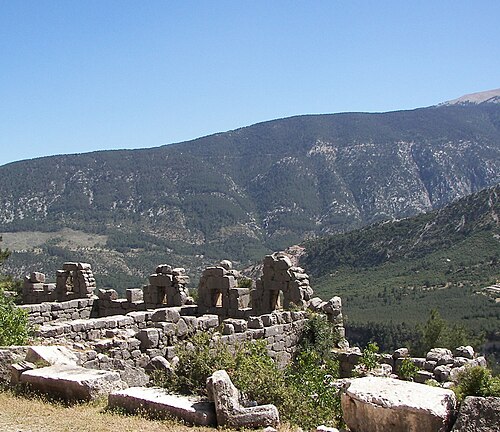
Perge is an ancient Greco-Roman city near Antalya, known locally as Perga. It was a significant settlement in Pamphylia and later an important city under Roman rule.
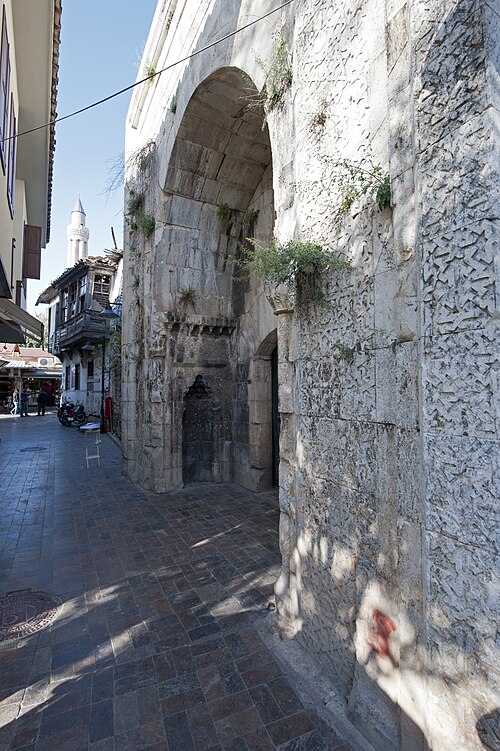
Hadrian Kapısı
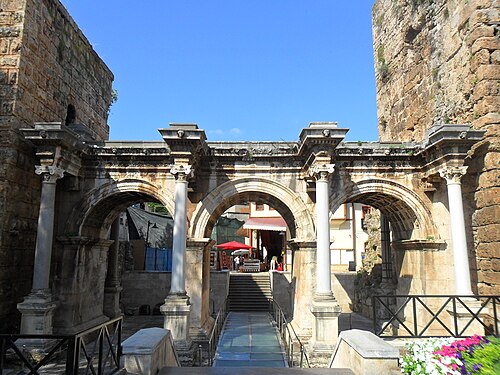
Hadrian's Gate is a triumphal arch in Antalya's Kaleiçi district, built to commemorate the visit of Roman Emperor Hadrian to the city in 130 CE.
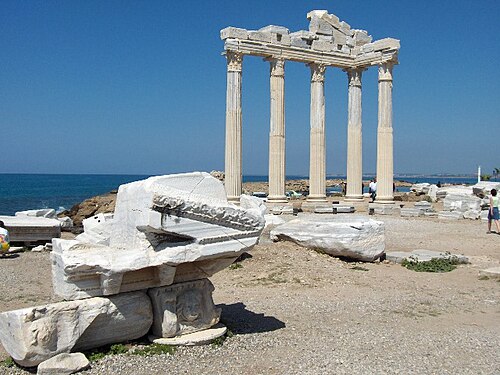
Apollon ve Athena Tapınağı
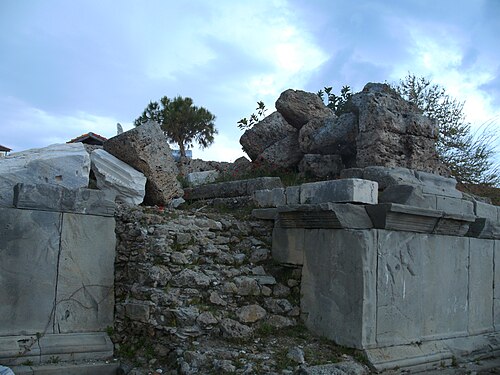
The Temple of Apollo, locally known as Apollon ve Athena Tapınağı, is an ancient religious site in Antalya, Turkey. It stands as a significant archaeological landmark within the region's rich classical heritage.
Mira Kalesi
The acropolis of Myra stands on the Demre plateau, on the mountain above the ancient theatre of the Lycian and Roman city whose early bishops included Saint Nicholas.
Faselis
Phaselis is an ancient Lycian city on the Mediterranean coast near Antalya. Founded by settlers from Rhodes around 690 BCE, it became a significant port with three harbours.
Kekova is a small, uninhabited island of about 4.5 km² off Demre district in Antalya province. It faces the villages of Kaleköy (ancient Simena) and Üçağız (ancient Teimioussa), and in antiquity it was known as Dolichiste.
Simena Castle is the medieval fortress built on the acropolis walls of Simena, an ancient Lycian town between Kaş and Demre that is now the village of Kaleköy.
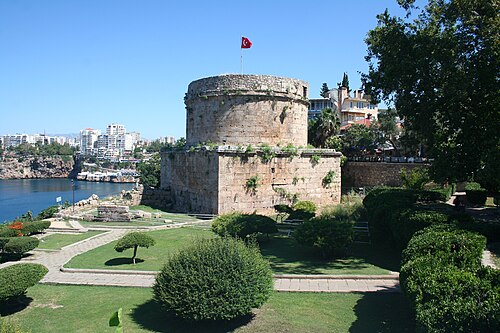
Hıdırlık Kulesi
Hidirlik Tower is a compact cylindrical stone landmark on the southwestern edge of Kaleiçi, Antalya’s historic old town, beside the harbour.
Karatay Medresesi
The Antalya Karatay Madrasa, known locally as Karatay Medresesi, stands as a historic Islamic educational institution in Antalya, Turkey. This architectural monument represents the Seljuk period heritage of the region, reflecting the scholarly traditions that once flourished here.
Limyra is an ancient Lycian city in the Finike district of Antalya Province. Its open-air ruins introduce visitors to a settlement shaped by several periods of Anatolian history.
Arikanda
Arycanda, locally known as Arikanda, is an ancient Lycian city ruin situated in the mountains of Antalya Province. The archaeological site occupies a dramatic hillside position with steep terraced construction typical of Lycian urban planning.
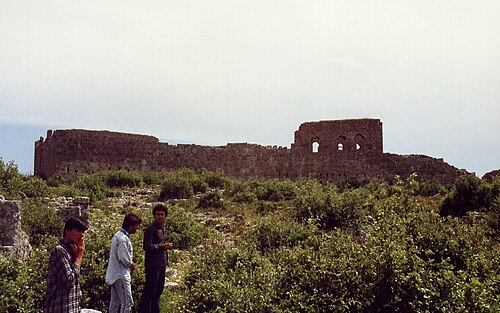
Sillyon is an ancient fortified settlement perched on a steep hilltop in the Pamphylian plain near Antalya. The site commands dramatic views across the coastal landscape and preserves substantial remains from multiple civilizations.
Olympos Teleferik
Saat Kulesi
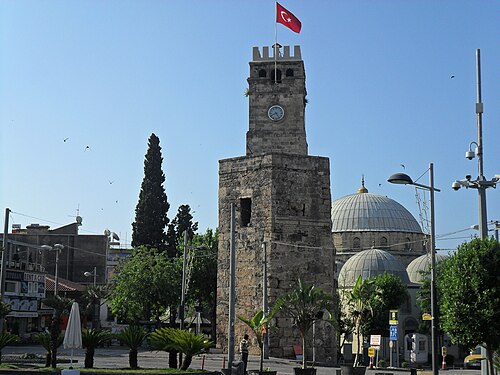
Antalya Clock Tower, also called Saat Kulesi, is a prominent historic marker at the edge of Kaleiçi, Antalya’s old town.
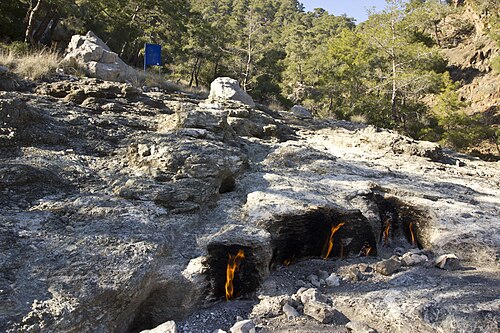
Yanartaş is a natural geological attraction in Antalya province, known for flames emerging from the rocky ground.
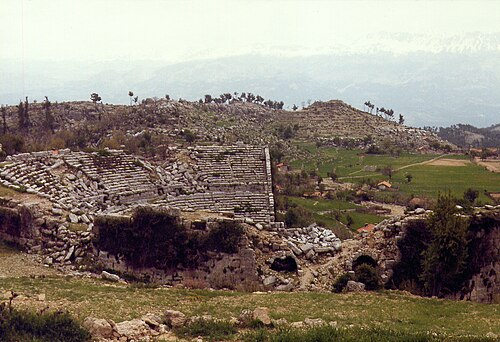
Selge is an ancient Pisidian city situated in the Taurus Mountains north of Antalya. Founded by Greek colonists, it developed into a significant mountain stronghold in classical antiquity.
Syedra Antik Kenti
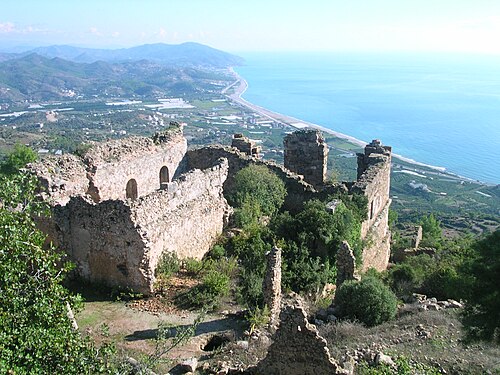
Syedra is an ancient city on a hillside above Turkey’s Mediterranean coast near Alanya, in Antalya Province.
Alara Kalesi
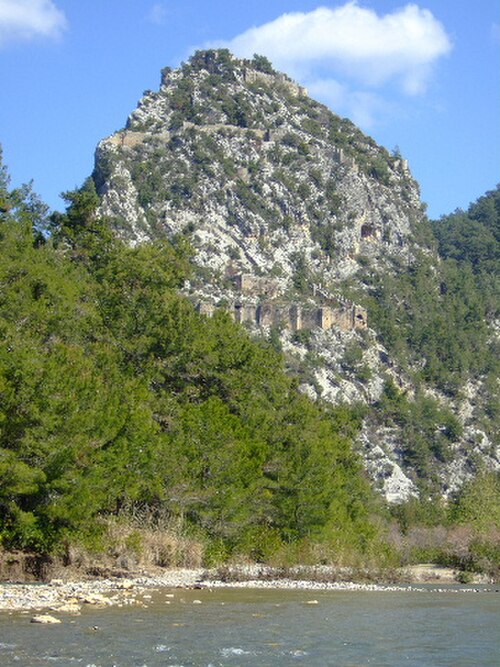
Alara Castle is a hilltop fortress ruin above the Alara River in Antalya Province. The castle’s character comes from its position: elevated ground overlooks the river corridor and separates the site from the province’s coastal resort landscape.
Doyran Monastery
Monastery of Doyran is a named historical and cultural point of interest in the Doyran area of Antalya Province. Its identity is tied to this locality and to a mapped place associated with the region’s religious heritage.
Basilica at Side
The South Basilica of Side is an ancient ecclesiastical ruin located in the Side archaeological zone within Antalya province. This basilica represents part of the extensive Roman and early Byzantine remains that characterize the ancient port city of Side.
Men Tapınağı
The Temple of Mén is a sanctuary associated with Mén, a lunar deity worshipped in parts of ancient Anatolia. At Side, its remains are encountered within the ancient city's wider archaeological landscape rather than as a complete, freestanding monument.
Arapsu bridge
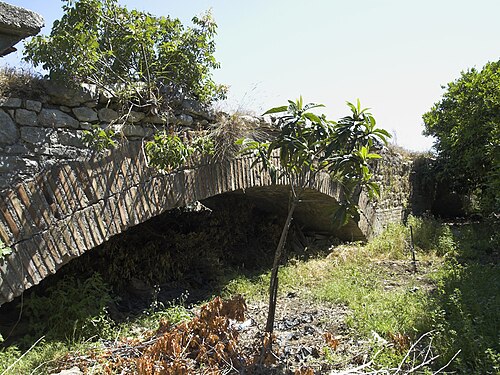
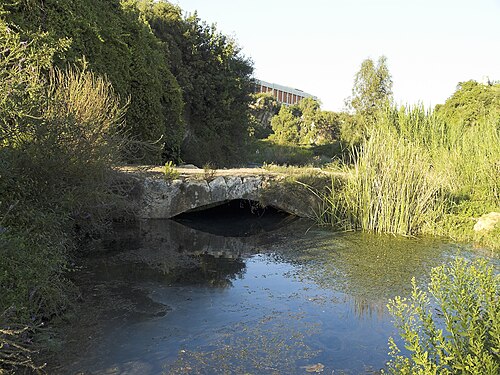
Arapsu Bridge is a historic stone crossing associated with the Arapsu stream in Antalya. Its appeal comes from the bridge as practical infrastructure: a structure made to carry movement across a watercourse, rather than a museum created for display.
Köprüpazar Köprüsü
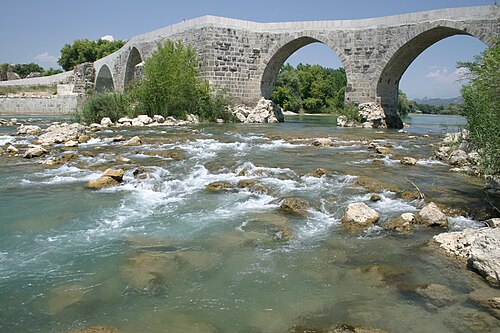
Eurymedon Bridge, locally known as Köprüpazar Köprüsü, is a historic stone crossing associated with the Eurymedon River in Antalya Province.
Herkül Köprüsü
Hercules Bridge, known locally as Herkül Köprüsü, is a historical bridge in Antalya. It is best approached as a short architectural stop rather than a major attraction with a formal visitor programme.
Korucu Köprüsü
Korucu Bridge, known locally as Korucu Köprüsü, is a historical stone bridge located in the Antalya region of Türkiye.
Kaleiçi is the oldest and most compact visitor district, enclosed by remnants of the historic walls and descending toward the old harbour. Hadrian's Gate marks its eastern edge, while the Clock Tower and Republic Square connect it with the modern commercial centre. Konyaaltı Beach and the museum corridor extend west; Lara and the Düden waterfall areas lie east. The municipality's Kaleiçi map separates long, Roman-Byzantine and Ottoman-Seljuk walking routes, a useful reminder that the old quarter rewards a dedicated walk before transport is used for the wider coast.
Checked 2026-08-26
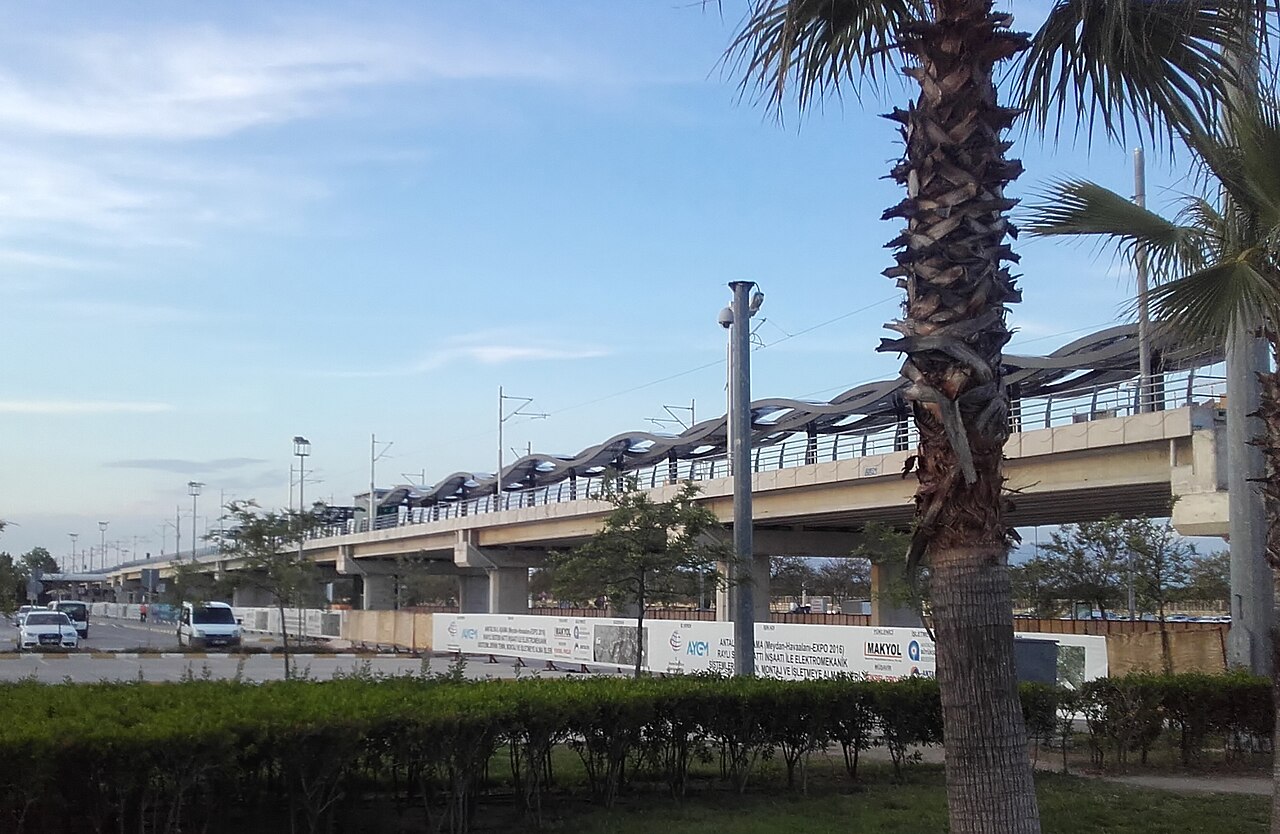
Walk inside Kaleiçi and the adjoining central streets, then use Antalya's municipal tram and bus network for beaches, museums, terminals and outer districts. The airport, historic centre and western urban corridor are linked through public transport, but archaeological sites and resort areas across the wider province may require regional buses, organised transfers or a car. Do not treat every attraction marketed under Antalya as an urban stop. Check the municipality's current route and service information before travel because seasonal demand and works can alter practical connections.
Checked 2026-08-26
Suggested stay for a first visit: 3–4 days. The range combines Kaleiçi and the city coast with one selected archaeological or nearby landscape route in Antalya Province; it is not for the city centre alone. Use an extra day for a farther coast or mountain journey.
Kaleiçi is the old walled quarter around the Roman harbour. Hadrian's Gate, the Clock Tower and Republic Square mark the transition between its lanes and the modern centre.
Yes. The municipality maps dedicated routes through the compact old quarter. Use transport after that walk for Konyaaltı, Lara, museums and other outer districts.
No. Antalya tourism commonly includes archaeological sites, resort towns and natural areas spread across the province. Treat those as separate regional journeys rather than urban stops.
Use municipal tram or bus services for the urban coast, then walk within each beach or park area. Confirm the current route because service patterns can change with works and seasonal demand.