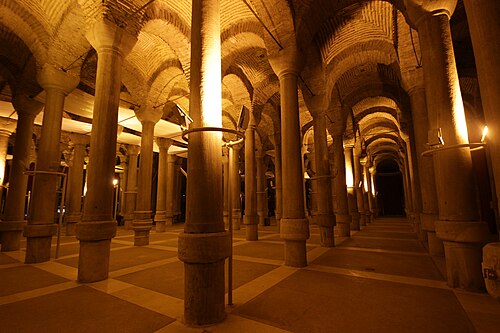
Cistern of Philoxenos
Binbirdirek Sarnıcı
Turks call it Binbirdirek, "a thousand and one columns", which is a way of saying "a great many" rather than a count. The real figure is 224.
- High
- Museum
- Fatih
City guide · Türkiye
Two continents, three empires and one strait that everything else is arranged around. The old capital rewards a plan: the great monuments sit within a twenty-mi...
Photograph · Ben Morlok · CC BY-SA 2.0
Set your days, your pace and the hours you actually want to be out. The planner works around closing days and travel time, and leaves room to eat.
Reviewed by Elena Voss · Roavina Travel Editor
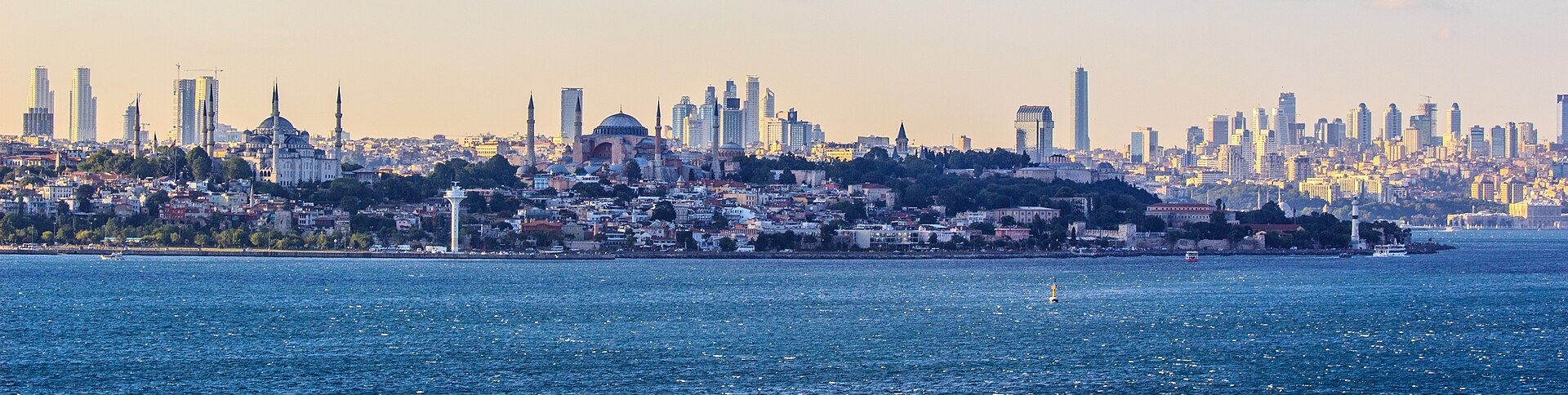
Two continents, three empires and one strait that everything else is arranged around. The old capital rewards a plan: the great monuments sit within a twenty-minute walk of each other in Fatih, and almost everything else is a ferry ride away.
Checked 2026-08-23
September · September in Istanbul has mean high 25.0°C, mean low 15.5°C, rainfall 44.3 mm, and 6.1 rain days. Mild temperatures and lower rainfall favour ferry rides and walking districts. September supports a full day of outdoor stops in Istanbul.
Ranked by importance — sitelinks, pageviews and heritage status, not editor preference.
99 places match
Category
Typical visit duration
Binbirdirek Sarnıcı
Turks call it Binbirdirek, "a thousand and one columns", which is a way of saying "a great many" rather than a count. The real figure is 224.
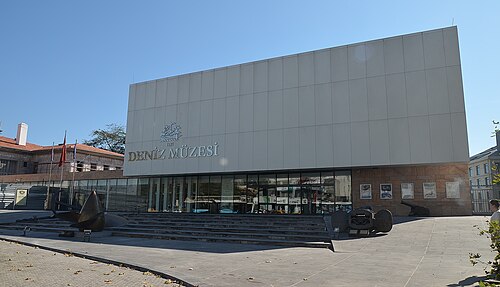
Deniz Müzesi
The Istanbul Naval Museum was founded in 1897 by Bozcaadali Hasan Husnu Pasha, then Ottoman Minister of the Navy, which makes it the first military museum established in Turkey.
Arkadyos Sütunu
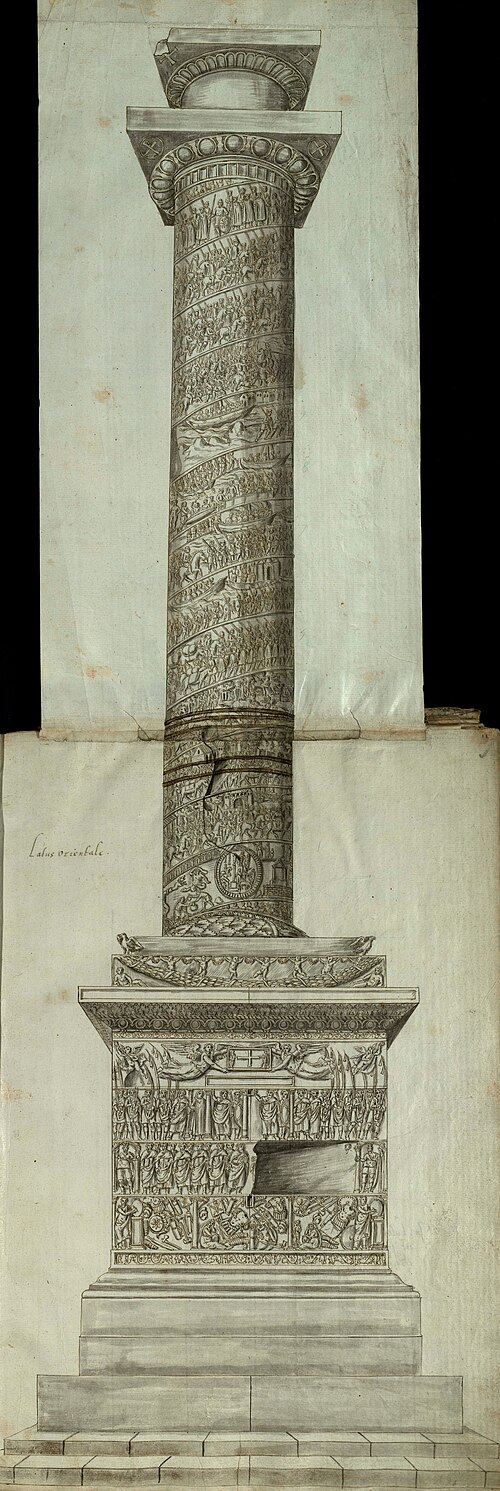
The Column of Arcadius is one of Constantinople's lost monuments, and what is left of it is the reason to come: a stump of imperial propaganda wedged between apartment blocks in Fatih.
Sabancı Üniversitesi Sakıp Sabancı Müzesi
This is a museum that used to be somebody's house, and the house has an unusually crowded guest list. From 1848 to 1884 the Emirgan mansion passed through a succession of high-ranking pasha families and Egyptian khedives.
Yeni Valide Camii
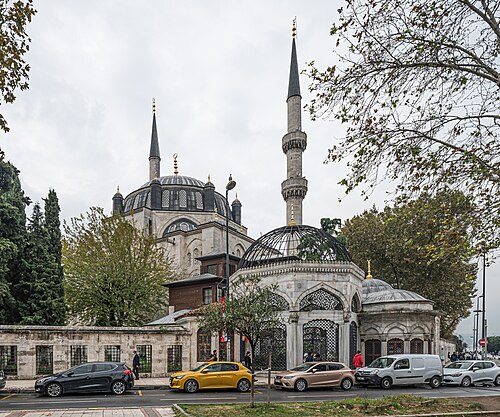
Step off the ferry at Üsküdar and this is the complex immediately in front of you, hard against the square rather than set back from it.
500. Yıl Vakfı Türk Musevileri Müzesi
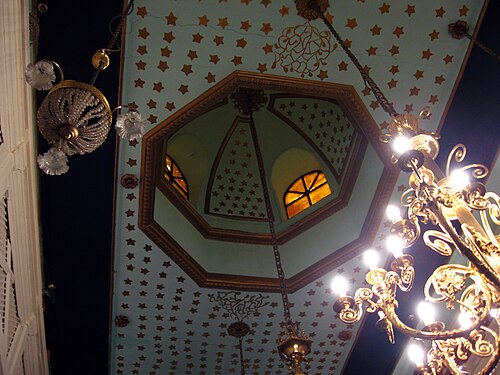
The Quincentennial Foundation Museum of Turkish Jews tells the story of a community that has been in this city far longer than most of the monuments around it.
Bodrum Camii
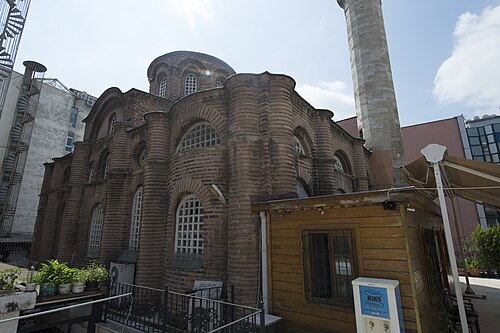
Bodrum Mosque is the church of the Myrelaion, built around 920 by Romanos I Lekapenos as the chapel of his own palace, and it is one of the very few tenth-century churches of Constantinople still standing.
Yoros Kalesi
Yoros Castle stands on the headland where the Bosphorus opens into the Black Sea, which is the whole explanation for it.
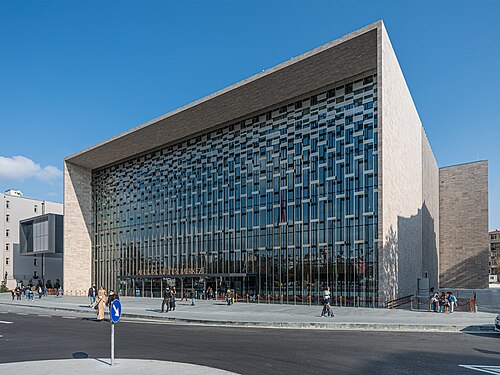
Atatürk Kültür Merkezi
The Ataturk Cultural Center closes the eastern side of Taksim Square, and it is the second building of that name to do so.
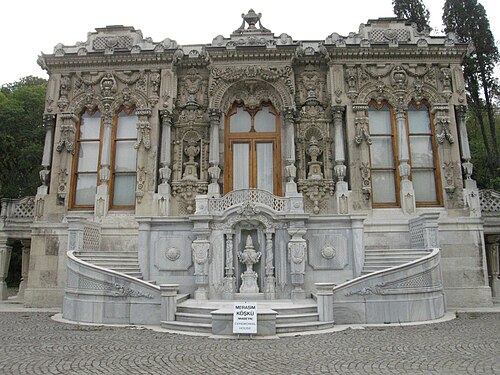
Ihlamur Kasrı (Merasim Köşkü)
Ihlamur is not a palace in the sense that Dolmabahçe is a palace.
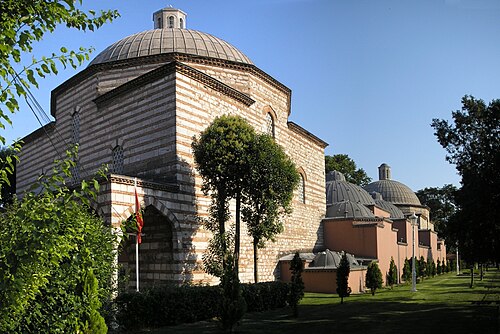
Haseki Hürrem Hamamı
The Haseki Hürrem Sultan Hamam is a twin bathhouse commissioned by Hürrem Sultan, wife of Suleiman the Magnificent, and designed by the imperial architect Mimar Sinan, built starting in 1556 between the Hagia Sophia and the Blue Mosque.
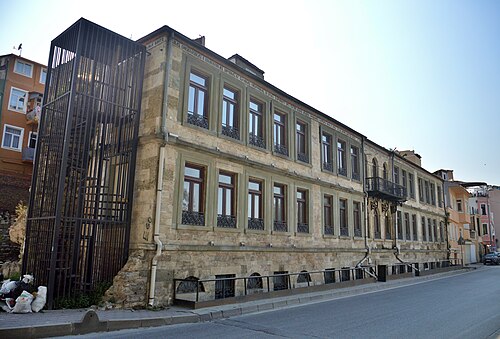
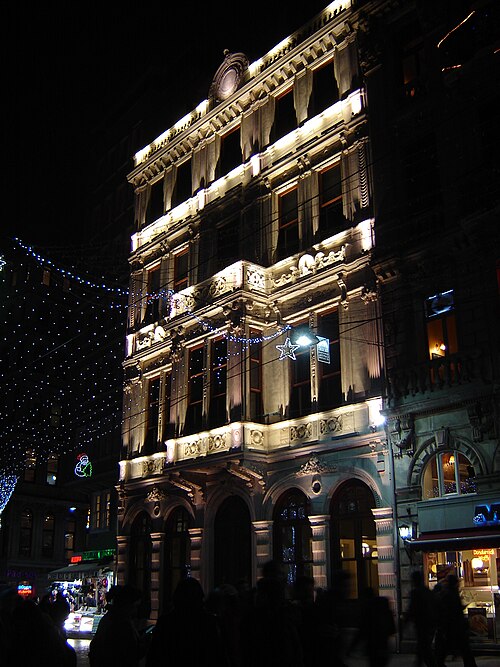
Eksarhhane
Eksarhhane is a historic building in the Fener district that housed the seat of the Bulgarian Exarchate, the autocephalous Bulgarian Orthodox church established in 1870 and centred in Istanbul until the Ottoman Empire's Bulgarian population and administration shifted after the…
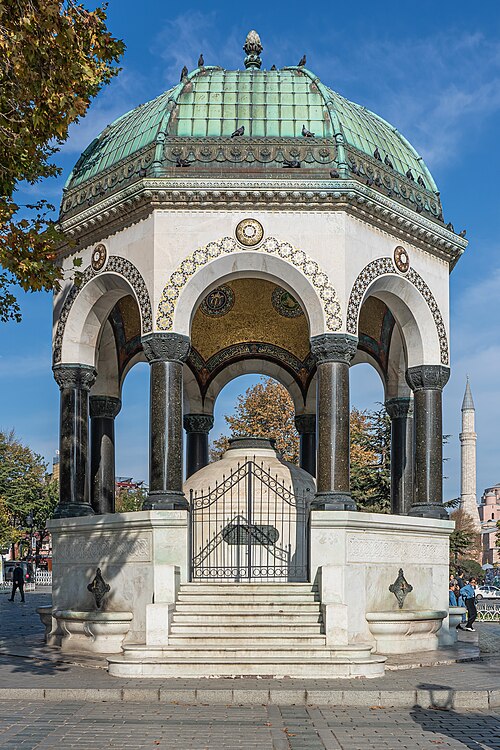
Alman Çeşmesi
The German Fountain is an octagonal, neo-Byzantine gazebo fountain standing in Sultanahmet Square, a gift from German Emperor Wilhelm II to Sultan Abdul Hamid II to mark the Kaiser's 1898 state visit to Istanbul.
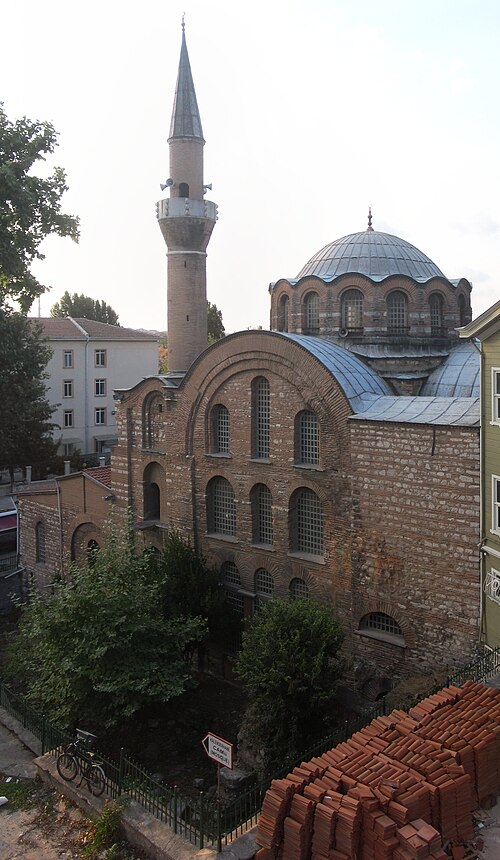
Kalenderhane Camii
Kalenderhane Camii is a Byzantine church that became a mosque, standing in Fatih immediately beside the Valens Aqueduct.
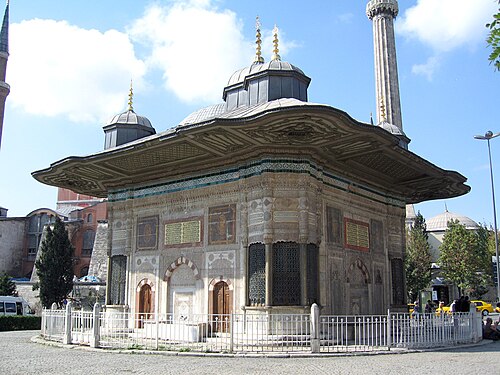
III. Ahmet Çeşmesi
The Fountain of Ahmed III stands just outside the Imperial Gate of Topkapı Palace, built in 1728 by Sultan Ahmed III during the Tulip Period, the era of Ottoman architecture known for its ornate, floral Baroque-influenced style.
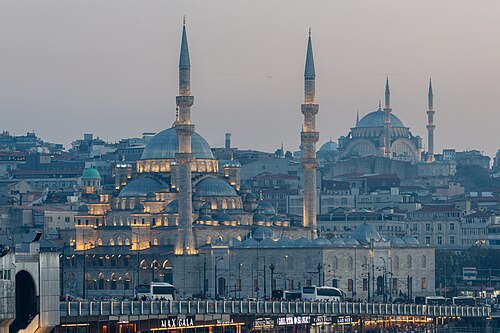
Yeni Camii
The New Mosque at Eminönü took sixty-six years to build, most of them spent as a ruin. Safiye Sultan — wife of Murad III and later Valide Sultan — ordered it in 1597.
İstanbul Havacılık Müzesi
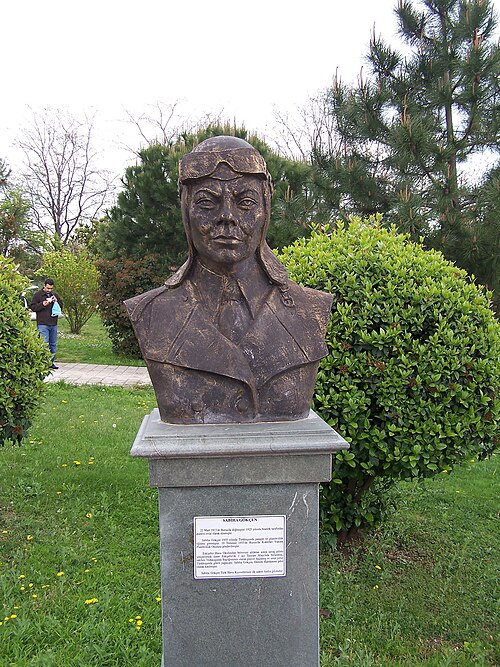
The Istanbul Aviation Museum is operated by the Turkish Air Force Academy in Yeşilköy, on the grounds of Istanbul's former main airport, and covers the history of Turkish military and civil aviation from the Ottoman era onward.
Büyük Mecidiye Camii
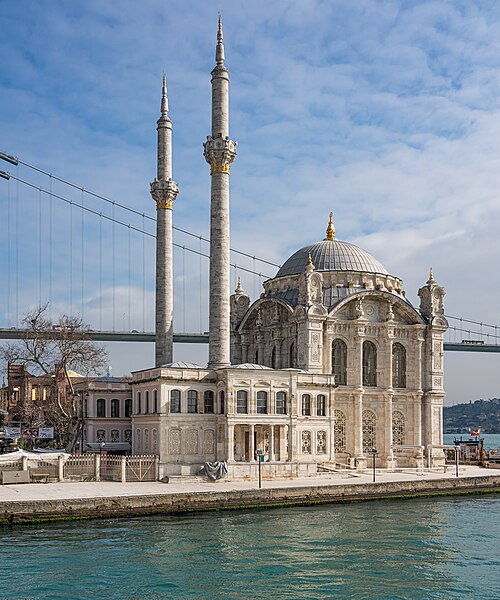
Its proper name is the Büyük Mecidiye Camii, the Great Mosque of Sultan Abdülmecid, and it stands at the water's edge of the Ortaköy pier square in Beşiktaş, on the European shore of the Bosphorus.
Ayios Polieuktos Kilisesi
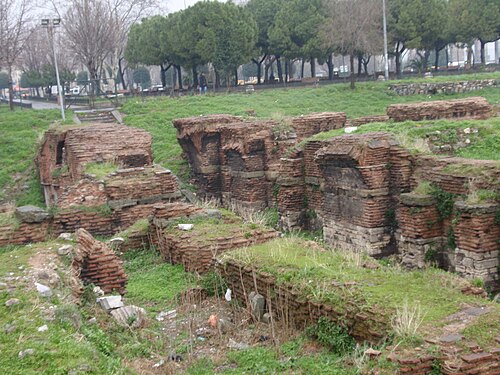
For a few years in the sixth century this was the largest church in Constantinople, and it was built by a woman making a point.
Hz. Cabir Cami
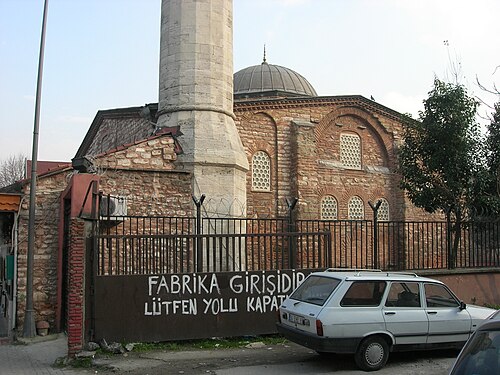
A working neighbourhood mosque in Ayvansaray that began as a Byzantine church, and nobody is entirely sure which one.
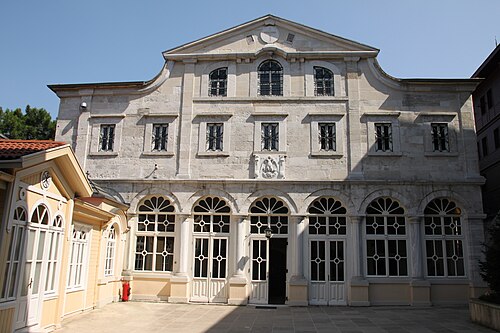
Aya Yorgi Patrikhane Kilisesi
The Church of St George in Fener is the cathedral of the Ecumenical Patriarchate of Constantinople, the senior see of the Orthodox Christian world, and from the street it is deliberately unassuming.
Galatasaray Müzesi
Galatasaray Museum is the official museum of Galatasaray Sports Club, one of Turkey's most prominent multi-sport organizations. Located in Istanbul, the institution preserves and displays materials related to the club's extensive history across football, basketball, and other athletic disciplines.
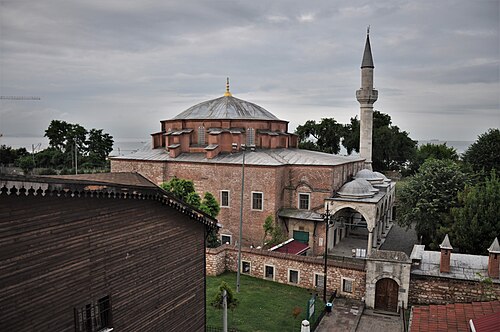
Küçük Ayasofya Camii
The Little Hagia Sophia is the church Justinian built before the great one, and it is where the idea was tried out. It went up between 527 and 536, dedicated to Saints Sergius and Bacchus.
İslam bilim ve teknoloji tarihi müzesi
The museum occupies the Has Ahırlar, the former imperial stables, a long low range on the edge of Gülhane Park below the Topkapı walls, and it opened on 25 May 2008 under the Ministry of Culture and Tourism.
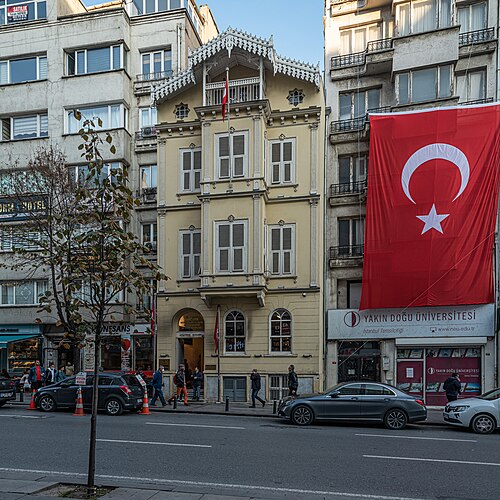
Atatürk Museum, Şişli
This is a rented house on a busy Şişli avenue that happens to be where the Turkish Republic was decided upon. The building is a three-storey house put up in 1908.
District boundaries come from OSM administrative relations, so a district page holds exactly the places inside it — plus, for the islands and the coast, the nearest district by proximity.
South of the Horn, in Fatih, the monumental core is walkable end to end: Hagia Sophia, the Blue Mosque, the Basilica Cistern and Topkapı sit inside one square kilometre.
North of the Horn, Beyoğlu climbs from Karaköy to Taksim and is where the city eats and drinks late. Across the Bosphorus, Kadıköy and Üsküdar are residential, cheaper and reached best by ferry rather than by bridge.
Checked 2026-08-23
One contactless card covers tram, metro, funicular, bus and ferry, and it is the only ticket most visitors need.
The T1 tram threads the monumental core; the M2 metro crosses the Horn to Taksim. Ferries are the fastest way between the European and Asian sides and cost the same as a tram ride. Traffic on the bridges is unpredictable enough that a taxi is rarely faster.
Checked 2026-08-23
Three days covers the monumental core in Fatih without rushing. Five lets you add Beyoğlu, a Bosphorus ferry and one of the Asian-side neighbourhoods.
Yes, outside prayer times. Shoulders and knees should be covered, shoes come off at the door, and women cover their hair; scarves are lent at the larger mosques.
The scheduled public ferry runs the same water as the tourist cruises for a fraction of the fare, and stops at neighbourhoods you can walk around before catching the next one back.
Fatih puts you inside walking distance of the monuments. Beyoğlu is livelier at night and still two tram stops away. The Asian side is cheaper and quieter but adds a ferry to every sightseeing day.
April to June and September to October are warm without the July heat or the cruise-ship peak. January and February are cold and wet but the queues disappear.