National Portrait Gallery
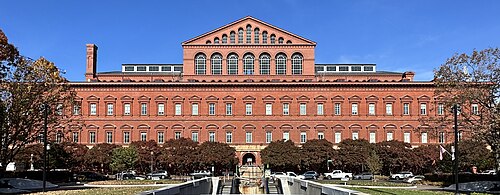
The National Portrait Gallery is a Smithsonian Institution museum in Washington, D.C., dedicated to portraiture. It shares the historic Patent Office Building with the Smithsonian American Art Museum.
- Must see
- Museum
City guide · United States
Washington is organised around the National Mall, but the city is much more than its monumental core. The Mall links the Capitol, Smithsonian museums and wester...
Photograph · Carol M. Highsmith · Public domain
Set your days, your pace and the hours you actually want to be out. The planner works around closing days and travel time, and leaves room to eat.
Reviewed by Elena Voss · Roavina Travel Editor
Washington is organised around the National Mall, but the city is much more than its monumental core. The Mall links the Capitol, Smithsonian museums and western memorials; Downtown and Penn Quarter sit north, Capitol Hill and Navy Yard lie east and southeast, and Dupont Circle, Georgetown, Shaw and The Wharf form separate neighbourhood destinations. Plan the Mall on foot and use Metro for movement between neighbourhood clusters.
Checked 2026-08-26
September · September cools Washington to a 26.3°C mean high, though 99.6 mm of rain is normal.
Ranked by importance — sitelinks, pageviews and heritage status, not editor preference.
100 places match
Category
Typical visit duration
Interests
The National Portrait Gallery is a Smithsonian Institution museum in Washington, D.C., dedicated to portraiture. It shares the historic Patent Office Building with the Smithsonian American Art Museum.
The National Archives Museum is a federal institution on the National Mall in Washington, DC. It serves as the public exhibition space of the National Archives and Records Administration.
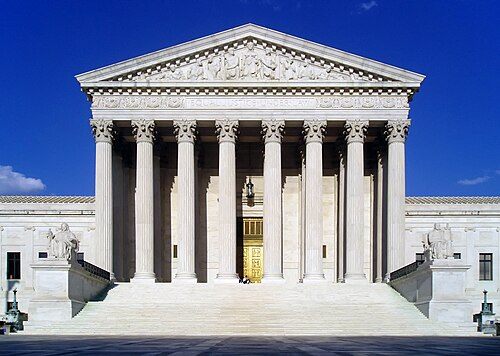
The Supreme Court of the United States is the highest judicial body in the federal judiciary of the United States. Established by Article III of the Constitution, it serves as the final interpreter of federal constitutional law.
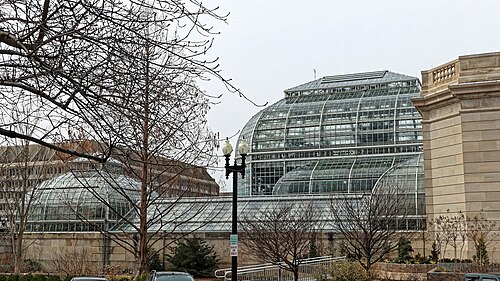
The United States Botanic Garden is the national living-plant museum of the United States. Established by Congress in 1820, it stands beside the U.S. Capitol on the National Mall in Washington, D.C.
U.S. National Arboretum
The United States National Arboretum is a large federal botanical research institution in Washington, D.C. Established by Congress in 1927, it operates under the U.S.
Rock Creek Park is a large urban national park in Washington, D.C. Established in 1890, it is one of the oldest federally managed parks in the United States.
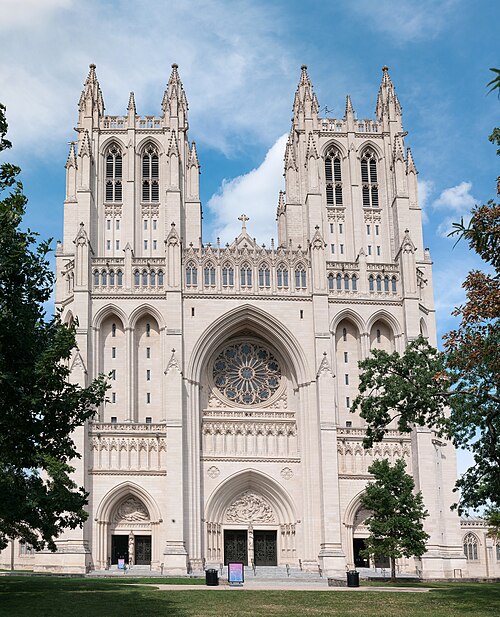
Washington National Cathedral is a Gothic Revival cathedral in Washington, D.C. It serves as the seat of the Episcopal Diocese of Washington and functions as a house of prayer for all people.
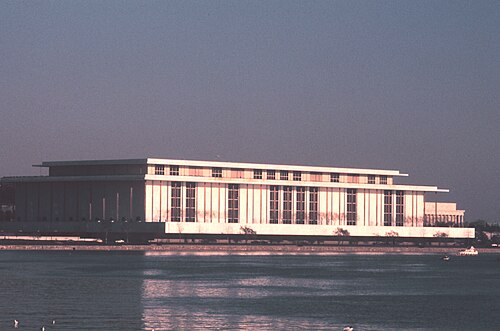
The John F. Kennedy Center for the Performing Arts is the national performing arts center of the United States and Washington, D.C.'s principal classical music venue.
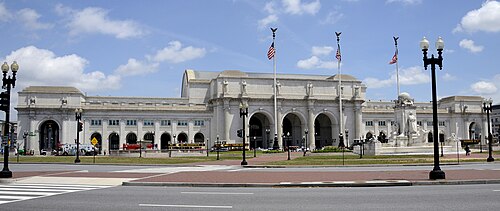
Washington Union Station is a working Beaux-Arts rail terminal and one of the capital’s most useful arrival points.
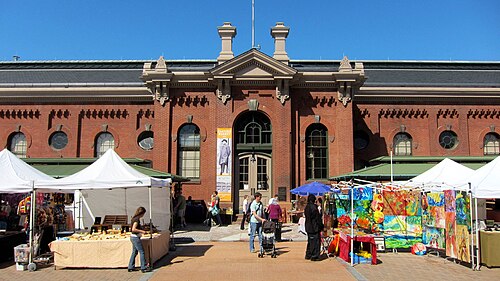
Eastern Market is Capitol Hill's historic public market in Washington, D.C. Established in 1873, it has served as a commercial and community hub for nearly 150 years.
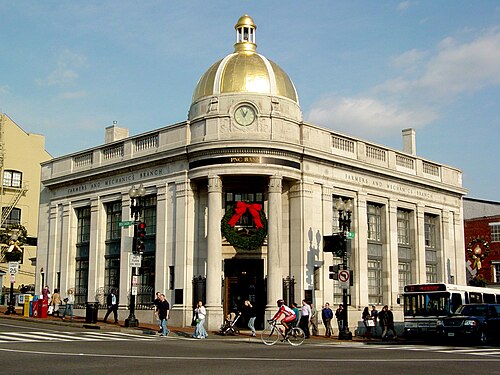
Georgetown Historic District is Washington DC's oldest neighbourhood, established before the federal city itself. It retains a distinct identity with preserved Federal and Victorian architecture, cobblestone streets, and commercial corridors along M Street and Wisconsin Avenue.
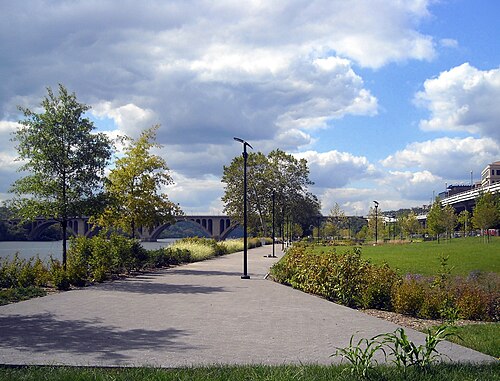
Georgetown Waterfront Park is a Potomac-side public park at the edge of historic Georgetown in Washington, D.C.
Chesapeake and Ohio Canal National Historical Park preserves a 184.5-mile canal corridor running from Georgetown in Washington, D.C., to Cumberland, Maryland.
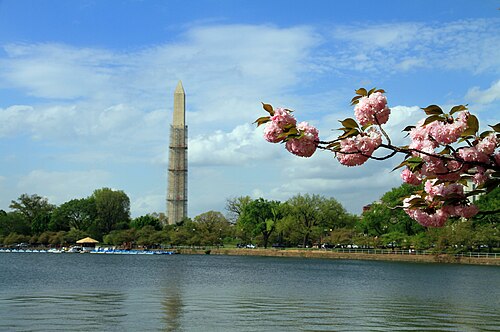
The Tidal Basin is a man-made reservoir in Washington, D.C., created in the early twentieth century as part of the Potomac River reclamation project.
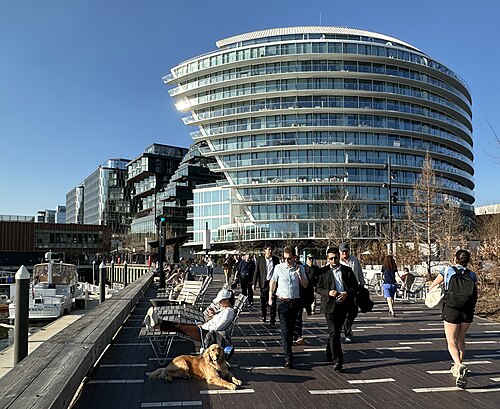
The Wharf is a redeveloped waterfront district along the Washington Channel in Southwest Washington, D.C. It represents a major transformation of the city's southwestern waterfront from industrial and maritime uses into a mixed-use destination.
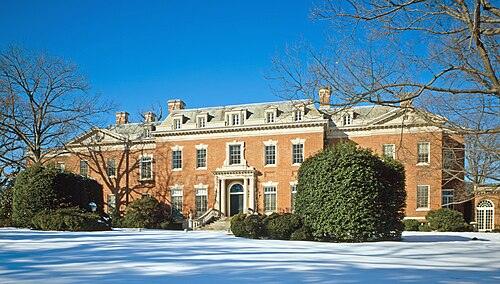
Dumbarton Oaks is a research institute, museum, historic estate, and garden in Georgetown. Its public collections focus on Byzantine and pre-Columbian art, while the institution also supports research in art history, archaeology, and garden studies.
The Phillips Collection is the United States' first museum of modern art, located in the Dupont Circle neighborhood of Washington, D.C.
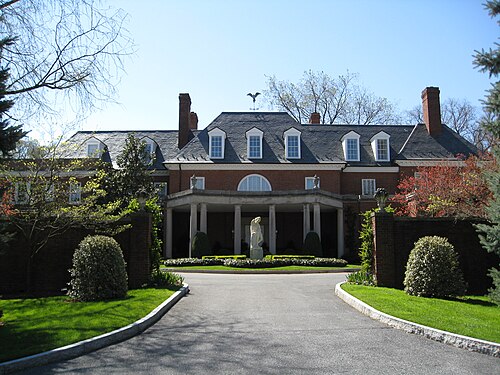
Hillwood Estate, Museum & Gardens is the former estate of Marjorie Merriweather Post, a prominent American socialite and heiress. Located in Washington, D.C., it operates as a museum showcasing her extensive collections of decorative arts.
The Freer Gallery of Art is a Smithsonian museum devoted to Asian art and the work of American artist James McNeill Whistler. It forms part of the National Museum of Asian Art beside the Arthur M.
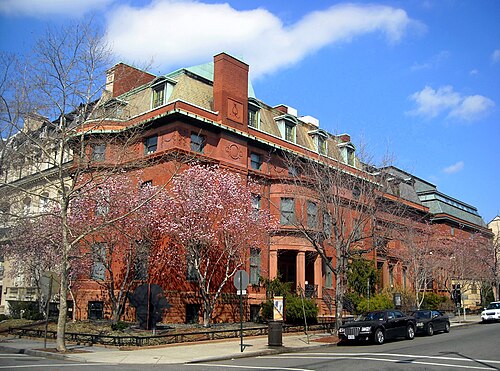
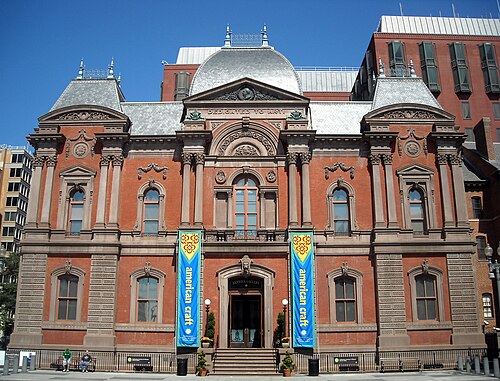
The Renwick Gallery is a branch of the Smithsonian American Art Museum, located near the White House in Washington, D.C.
The National Building Museum is an architecture and design museum in Washington, D.C., housed in the former Pension Building. Its subject is the built environment: architecture, engineering, design, construction, and urban planning.
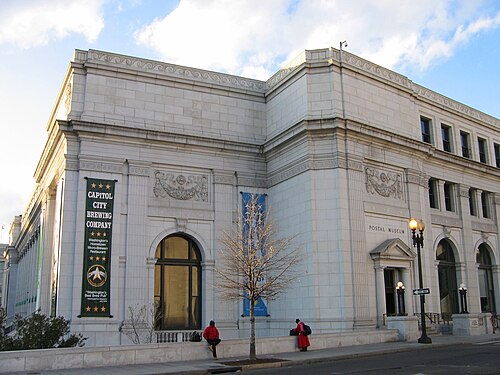
The National Postal Museum is a Smithsonian Institution museum dedicated to the history of the United States Postal Service and philately. Located adjacent to Union Station in Washington, D.C., it occupies the historic City Post Office building constructed in 1914.
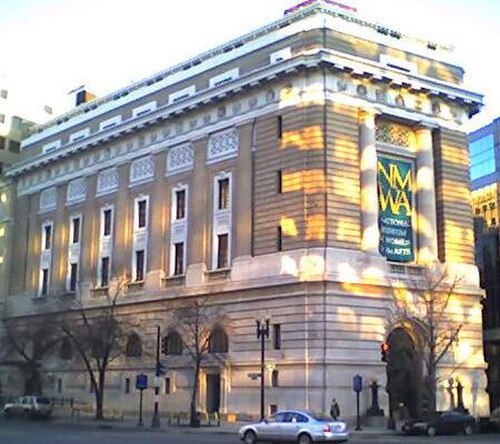
The National Museum of Women in the Arts is the world's first major museum dedicated solely to women artists. Located in Washington, D.C., it occupies a historic former Masonic temple building.
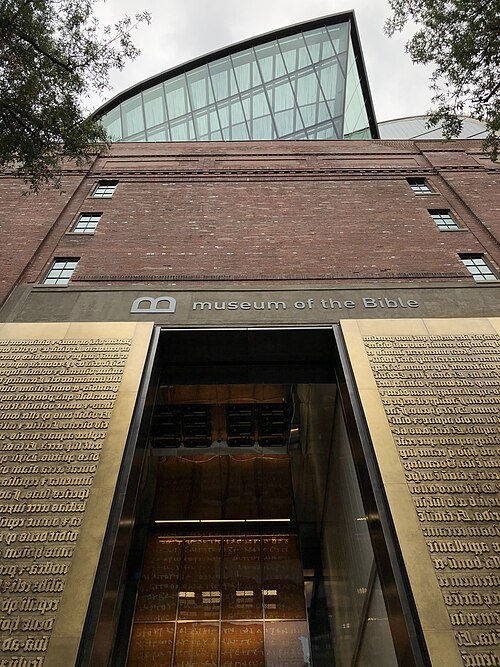
The Museum of the Bible is a large museum in Washington, D.C. dedicated to examining the Bible's history, narrative, and cultural influence. It opened in 2017 near the National Mall.
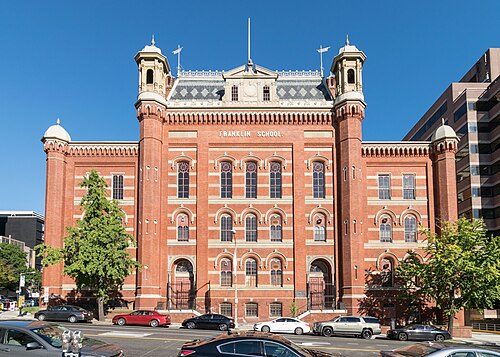
Planet Word is an interactive language arts museum located in Washington, D.C. It occupies the historic Franklin School building, a significant architectural landmark in the city.
The National Mall is the main east-west axis, with the Capitol at its eastern end and the Lincoln Memorial toward the Potomac. Downtown and Penn Quarter are north of the Mall; Capitol Hill continues east; The Wharf and Navy Yard occupy separate waterfronts to the south. Dupont Circle and Adams Morgan are northwest, while Georgetown sits west without a Metrorail station. Distances across the Mall are longer than they appear on a diagram.
Checked 2026-08-26
Walk within the National Mall and use Metrorail for longer connections between central districts. Metrobus fills gaps, particularly where rail does not reach directly, and Capital Bikeshare provides another option for waterfronts and broad avenues. Most visitors do not need a car because parking and traffic complicate central trips. Use WMATA's current trip planner and service notices for station access, closures and transfers.
Checked 2026-08-26
A fixed stay length is not recorded. Plan the National Mall and its museums first, then add Capitol Hill, Georgetown or another neighbourhood according to your priorities.
Yes, but it is longer than it looks on a map. Divide the Capitol and museum end from the western memorials if you want time inside institutions.
Most visitors do not. Walking, Metrorail and Metrobus cover the principal visitor districts, while a car adds traffic and parking constraints in the centre.
No. Georgetown has no Metrorail station, so reach it by bus, walking, cycling or a connection from a nearby rail station.
Combine the Mall with Downtown or Penn Quarter, Capitol Hill with Navy Yard, and The Wharf with the southern waterfront. Use Metro between these clusters.