_Tom,_Venus_Wong,_and_Alan_Lo_at_the_Freer_Gallery_002.jpg)
2 min walk
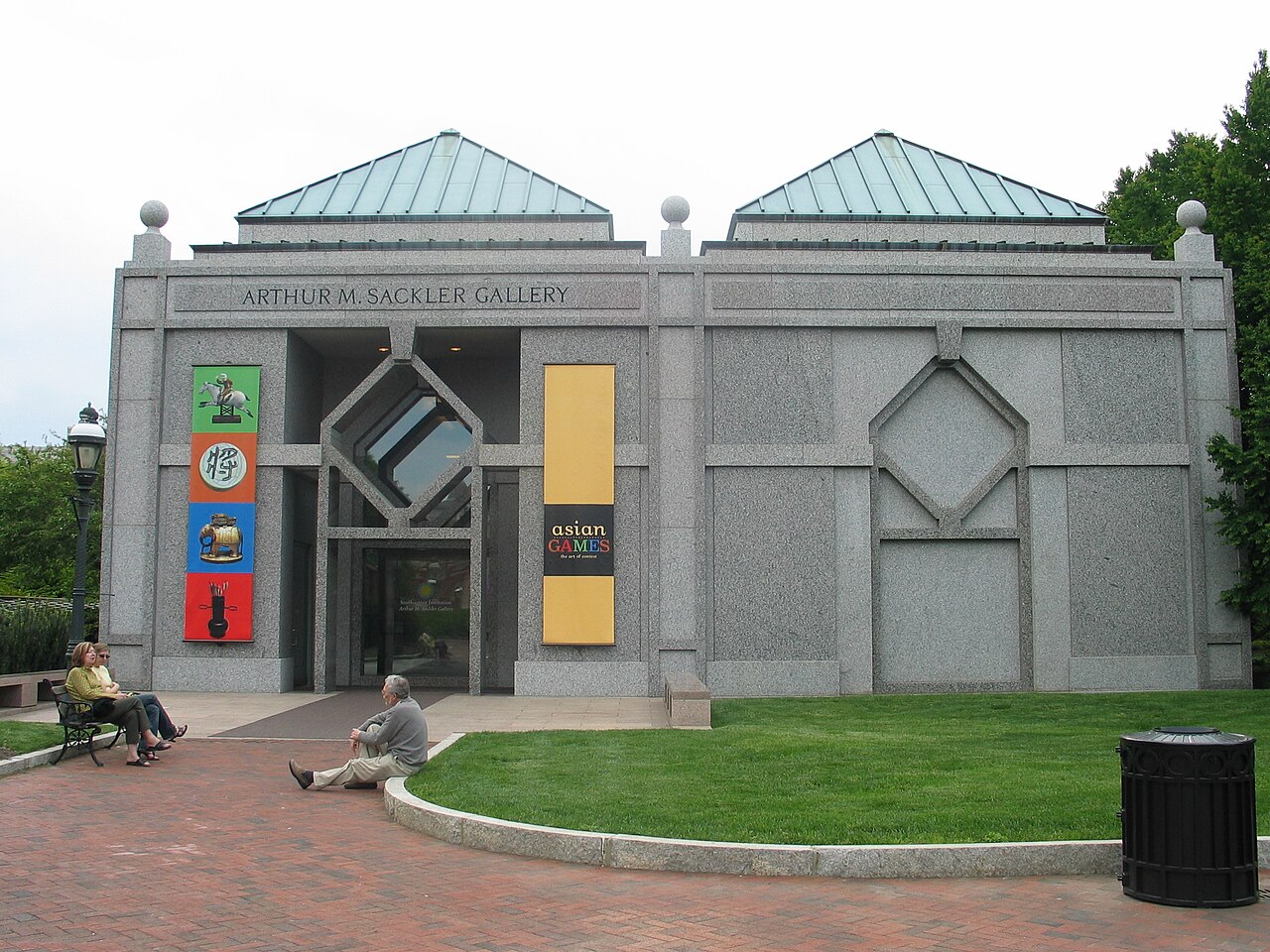
Arthur M. Sackler Gallery
- Must see
- Museum

Museum · Washington
| Monday | 10:00 – 17:30 |
|---|---|
| Tuesday | 10:00 – 17:30 |
| Wednesday | 10:00 – 17:30 |
| Thursday | 10:00 – 17:30 |
| Friday | 10:00 – 17:30 |
| Saturday | 10:00 – 17:30 |
| Sunday | 10:00 – 17:30 |
Checked 2026-08-31 · Source
| Per person | Free entry |
|---|
Checked 2026-08-31 · Source
Read from the OpenStreetMap access tags; anything not listed has no tag recorded.
Set the group type to family in the planner and the day window contracts to about three quarters of a solo day.
The Freer Gallery of Art is a Smithsonian museum devoted to Asian art and the work of American artist James McNeill Whistler. It forms part of the National Museum of Asian Art beside the Arthur M. Sackler Gallery. Charles Lang Freer's bequest created the institution, which became the Smithsonian's first art museum. The gallery is especially rewarding for travelers interested in connections between Asian artistic traditions and American decorative art, rather than a single national or chronological story. The Freer Gallery of Art is a Smithsonian museum in Washington, D.C., dedicated to Asian art and the works of American artist James McNeill Whistler. It forms part of the National Museum of Asian Art alongside the adjacent Arthur M. The institution was founded through a bequest from Detroit industrialist Charles Lang Freer, who donated his extensive personal collection to the Smithsonian. It stands as the Smithsonian's first art museum, established with a focus on comparative aesthetics between Eastern and Western artistic traditions. As a Smithsonian institution, the Freer Gallery has historically operated without admission charges, consistent with broader Smithsonian policy. Current status should be verified through official channels.
Checked 2026-08-26 · Source
The collection spans multiple regions and periods, with Chinese paintings, Japanese screens, Korean ceramics, ancient Near Eastern metalwork, Buddhist sculpture, Islamic calligraphy, and South Asian objects. Whistler's Peacock Room is the gallery's most distinctive interior, a decorative room originally created for a London townhouse. American works from Freer's collection sit alongside Asian objects, reflecting his interest in visual and spiritual relationships between different traditions. Rotating exhibitions add new ways to encounter the permanent holdings.
Checked 2026-08-26 · Source
A focused visit to the main highlights can take about an hour, while a careful visit usually needs ninety minutes to two and a half hours. Give the Peacock Room time because its painted surfaces and decorative scheme reveal details gradually. The adjacent Arthur M. Sackler Gallery connects underground, making a combined National Museum of Asian Art visit practical. Adding the Sackler substantially lengthens the stop, so travelers should reserve a larger block when planning both collections in one museum outing.
Checked 2026-08-26 · Source
Weekday mornings often provide a calmer gallery experience than afternoons and weekends. Spring and autumn bring more comfortable conditions for crossing the National Mall, while summer combines heat, humidity, and heavier visitor traffic. The museum's indoor collections remain a useful destination in poor weather. Demonstrations, festivals, and other events around the Mall can alter the feel of the surrounding area and slow nearby movement. Visitors who want sustained attention in the Peacock Room benefit from choosing a less crowded period.
Checked 2026-08-26 · Source
The Freer Gallery has historically operated without admission charges as part of the Smithsonian museums. The gallery's public collections are therefore a strong choice for a culture-focused Washington itinerary with no general museum admission cost. Lectures, special programs, and events can be organized differently from ordinary gallery entry. The museum's relationship with the adjacent Sackler makes it possible to build a broader Asian art visit within the same Mall outing. Keep the focus on the permanent galleries and Peacock Room when time is limited.
Checked 2026-08-26 · Source
The gallery stands in the southwestern part of the National Mall near Independence Avenue. Smithsonian Metro station, served by the Orange, Silver, and Blue lines, provides the nearest rail access, followed by a walk of several minutes. Buses serve nearby streets, and bicycle routes run along the Mall. Driving is difficult because downtown traffic, parking limits, and Mall-area restrictions add time. Travelers arriving through the Washington airports should allow a substantial ground journey before reaching the museum.
Checked 2026-08-26 · Source
All entrants pass through security screening, including bag inspection and metal detection. Large bags can create complications at entry. Gallery temperatures may feel cool because the collections require controlled conditions. The Peacock Room is kept in low light, which protects the room while making detail harder to see quickly. Some galleries can close for conservation or rotate displays. Food and drinks do not belong in exhibition spaces, and crowding often gathers around the Peacock Room and temporary exhibitions.
Checked 2026-08-26 · Source
The Peacock Room is the gallery's strongest photographic subject, with painted surfaces, decorative detail, and an unusually immersive interior. Chinese paintings, Japanese screens, Korean ceramics, sculpture, and calligraphy offer more intimate compositions throughout the collections. Work within the rules posted for each gallery and keep the viewing route clear for other visitors. Low lighting in the Peacock Room calls for patience and steady framing. The adjacent Sackler extends the visual range of the visit with further Asian art in connected museum spaces.
Checked 2026-08-26 · Source
The Freer Gallery has historically operated without admission charges as a Smithsonian museum.
The Peacock Room is a decorative interior created by James McNeill Whistler for a London townhouse and installed at the Freer Gallery.
Use Smithsonian station on the Orange, Silver, or Blue lines, then walk several minutes to the gallery near Independence Avenue.
Yes. The Freer connects underground with the adjacent Arthur M. Sackler Gallery for a combined National Museum of Asian Art visit.
Highlights include Chinese paintings, Japanese screens, Korean ceramics, Buddhist sculpture, Islamic calligraphy, South Asian objects, and ancient Near Eastern metalwork.
Allow ninety minutes to two and a half hours for a substantial visit, with extra time if adding the Sackler Gallery.
Loading the interactive map…
The interactive map could not be loaded.
Last updated:
Source: OpenStreetMap contributors, Wikidata ·