8 min walk
Edo Castle
- Must see · Heritage site
- Historic site
Historic site · Tokyo
皇居
The Imperial Palace in Tokyo has served as the residential palace of successive Emperors since 1868. It contains the Imperial Residence and the Imperial Palace Complex, where the Emperor undertakes official duties, and various ceremonies and public activities are held there. Other major buildings include the Imperial Household Agency building and the Palace Sericulture Centre, where successive Empresses have raised silkworms following a precedent set in 1871 by Empress Dowager Shoken. The East Gardens, on the eastern part of the grounds, are open to the public.
Checked 2026-11-10 · Source
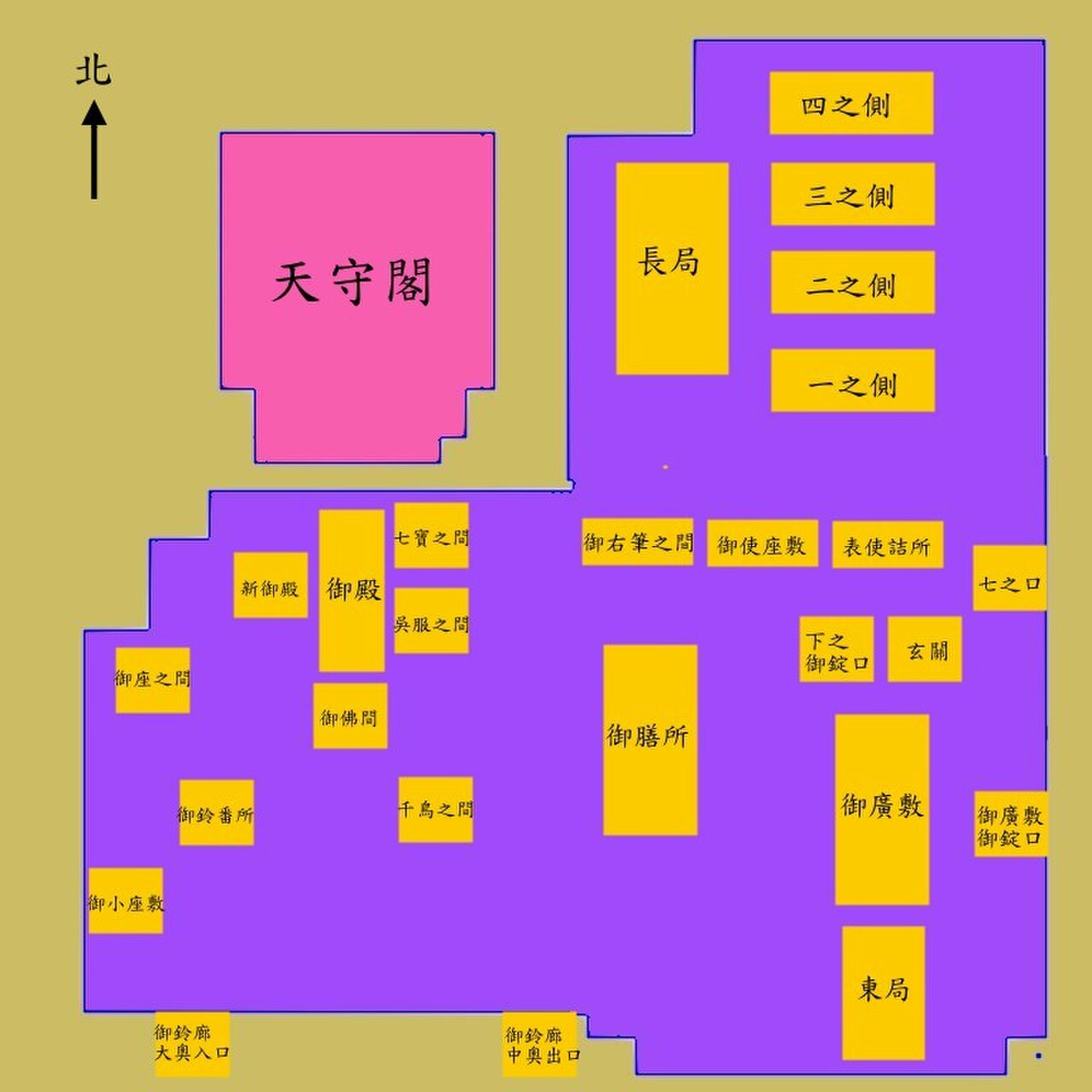
The guided tour of the palace grounds passes the Sōmeikan rest area, the former Privy Council building, the Fujimi-yagura keep, the Hasuikebori (Lotus Moat), the Fujimitamon defence house, the Imperial Household Agency building, Kyuden Totei Plaza in front of the Imperial Palace (Kyuden), the Seimon-tetsubashi bridge (Nijubashi) and the Fushimi-yagura keep. Within the East Gardens are the site of the Tenshukaku donjon, the Tokagakudo concert hall, the Suwano-chaya tea house, the old Doshin-bansho, Hyakunin-bansho and O-bansho guardhouses, and the Museum of the Imperial Collections, Sannomaru Shozokan.
Checked 2026-11-10 · Source
Guided tours of the palace grounds run twice a day, morning and afternoon, except on Sundays, Mondays and national holidays (unless the holiday falls on a Saturday), from 28 December to 4 January, and on days or tours affected by Imperial Court events. From 1 July to 30 September there are no afternoon tours. For same-day visits, numbered tickets are handed out at Kikyo-mon Gate from 9:00 for the morning tour and from 12:30 for the afternoon tour, until all have been given out.
Checked 2026-11-10 · Source
The palace grounds are visited on guided tours. You can apply in advance online or in person at the Tour Office of the Imperial Household Agency, or on the day at Kikyo-mon Gate, where numbered tickets are handed out first come, first served, one per person. Online applications open at 5:00 a.m. (JST) on the first day of the month before your visit and close at 11:59 p.m. four days before it. Bring a valid original ID such as a passport, driver's licence or student ID; photocopies are not accepted.
Checked 2026-11-10 · Source
Tours gather at Kikyo-mon Gate. It is about 10 minutes on foot from Exit 6 of Nijubashi-mae Station (Chiyoda Line) or from Exit D2 of Otemachi Station (Mita Line), and about 15 minutes on foot from the Marunouchi Central Exit of JR Tokyo Station. Bicycles and cars are not allowed inside the Imperial Palace; if you come by private car, use the parking facilities nearby.
Checked 2026-11-10 · Source
The tour route is about 2.2 km, a one-hour walk with limited shade, so take precautions against the heat. Tours go ahead in rain but may be cancelled in severe weather. Visitors under 18 must be accompanied by an adult. All visitors are subject to baggage inspection, so keep your belongings to a minimum and, if possible, use coin lockers beforehand to reduce congestion. Commercial sightseeing operators and related parties are not permitted on the tours.
Checked 2026-11-10 · Source
About one hour on foot, along a route of about 2.2 km.
You can apply in advance online or at the Tour Office, or get a same-day numbered ticket at Kikyo-mon Gate.
An original passport, driver's licence or student ID; photocopies are not accepted.
On Sundays, Mondays, national holidays (unless on a Saturday) and from 28 December to 4 January; no afternoon tours from 1 July to 30 September.
At Kikyo-mon Gate, about 10 minutes on foot from Nijubashi-mae Station Exit 6.
Loading the interactive map…
The interactive map could not be loaded.
Last updated:
Source: OpenStreetMap contributors, Wikidata ·