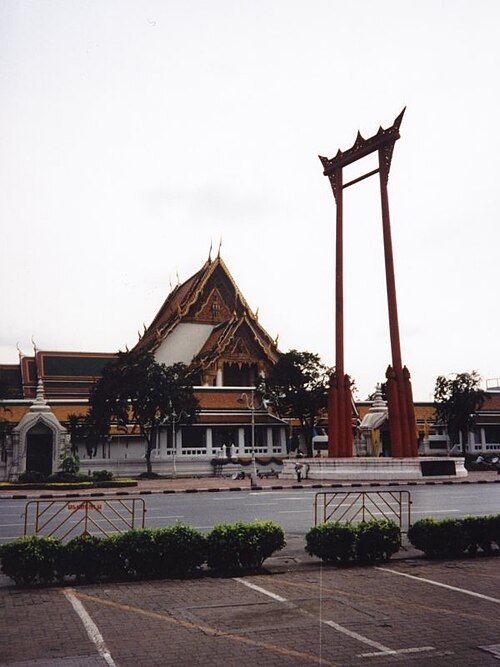
A photograph of Bangkok

City guide · Thailand

Places to visit in Bangkok, Thailand — page 2

Bangkok covers 1,568.7 km² and held an estimated 9,106,000 people in 2024, with about 17,400,000 in the metropolitan area around it. It is a flat river city wi...

Photograph · Preecha.MJ · CC BY-SA 4.0

3,496 Places
50 Districts
Suggested stay
3–4 days
Getting around
BTS, MRT and river boat

Turn this list into a plan

Set your days, your pace and the hours you actually want to be out. The planner works around closing days and travel time, and leaves room to eat.

Plan Bangkok

Reviewed by Elena Voss · Roavina Travel Editor

Bangkok covers 1,568.7 km² and held an estimated 9,106,000 people in 2024, with about 17,400,000 in the metropolitan area around it.

It is a flat river city with no single centre. The royal and religious core stands on the east bank of the Chao Phraya, the commercial towers stand several kilometres inland from it, and the two are joined by rail and by the river rather than by any street a visitor would choose to walk. Almost every complaint travellers make about Bangkok comes from ignoring that gap and trying to cross it by road at four in the afternoon.

The heat is the other constraint. Bangkok is hot enough for long enough that the shape of a day — early start, indoor middle, evening outdoors — is set by the climate rather than by opening hours. Fifty districts, 180 sub-districts, and a visitor will realistically use six of them.

Checked 2026-08-25

Practical information

Language spoken
Thai
National practical orientation; regional and minority languages may also be used
Dialling code
+66
International calling code; local area and mobile prefixes still apply
Currency
Thai baht (THB)
Use the official local currency; card acceptance varies by place
Emergency number
191 police · 1669 medical
Use only for an emergency; tourist assistance may use a separate number
Plug type
Type A, B, C and O · 220 V
Check that chargers support the recorded voltage before using an adapter
Tap water
Not recorded
No verified nationwide drinking-water statement was recorded

Planning a visit

September · September is Bangkok's wettest normal month at 335.9 mm over about twenty-one days, with roughly eleven thunderstorm days.

  1. January: best time to visit
  2. February: good time to visit
  3. March: viable with meaningful trade-offs
  4. April: recurring difficult conditions
  5. May: recurring difficult conditions
  6. June: viable with meaningful trade-offs
  7. July: viable with meaningful trade-offs
  8. August: viable with meaningful trade-offs
  9. September: recurring difficult conditions — current month
  10. October: recurring difficult conditions
  11. November: best time to visit
  12. December: best time to visit

Sources

Top things to see

Ranked by importance — sitelinks, pageviews and heritage status, not editor preference.

  1. Bangkok National Museum Bangkok National Museum
    07 2 hr 30 min

    Bangkok National Museum

    พิพิธภัณฑสถานแห่งชาติ พระนคร

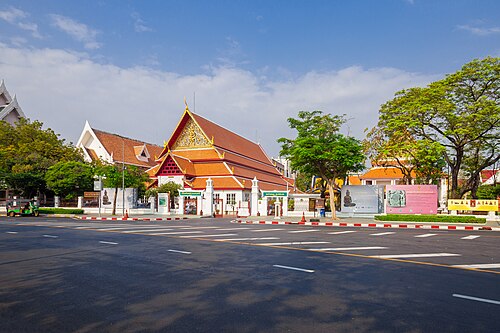
    Bangkok National Museum occupies the Wang Na, or Front Palace of the Second King, beside Sanam Luang on Na Phra That Road.

    • Must see
    • Museum
    • เขตพระนคร
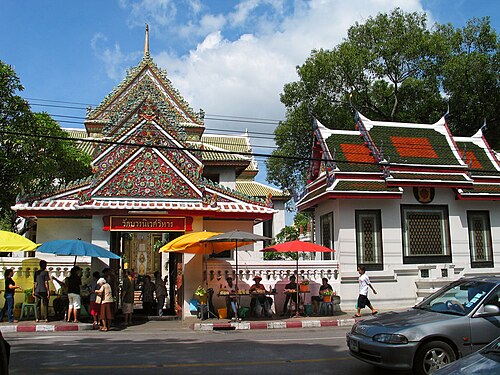
  2. Wat Saket Wat Saket
    08 1 hour

    Wat Saket

    วัดสระเกศราชวรมหาวิหาร

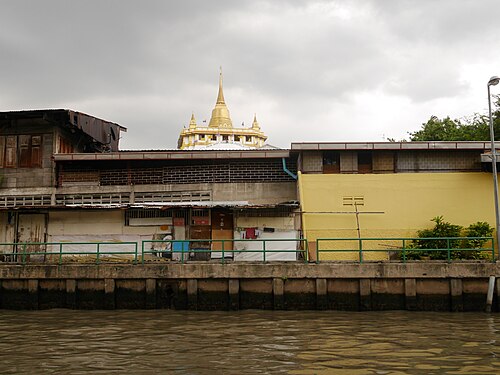
    Wat Saket is a working royal monastery in Pom Prap Sattru Phai, on the eastern edge of the old royal island, and it is older than the city that grew around it.

    • Must see
    • Place of worship
    • เขตป้อมปราบศัตรูพ่าย
  3. Lumphini Park Lumphini Park
    09 1 hour

    Lumphini Park

    สวนลุมพินี

    Lumphini Park is Bangkok's oldest public park, 360 rai — about 57.6 hectares — of lake, lawn and rain tree in Pathum Wan, wedged between the Silom and Sathorn office towers and Rama IV Road.

    • Must see
    • Nature site
    • เขตปทุมวัน
  4. Wat Traimit Wat Traimit
    10 45 min

    Wat Traimit

    วัดไตรมิตรวิทยารามวรวิหาร

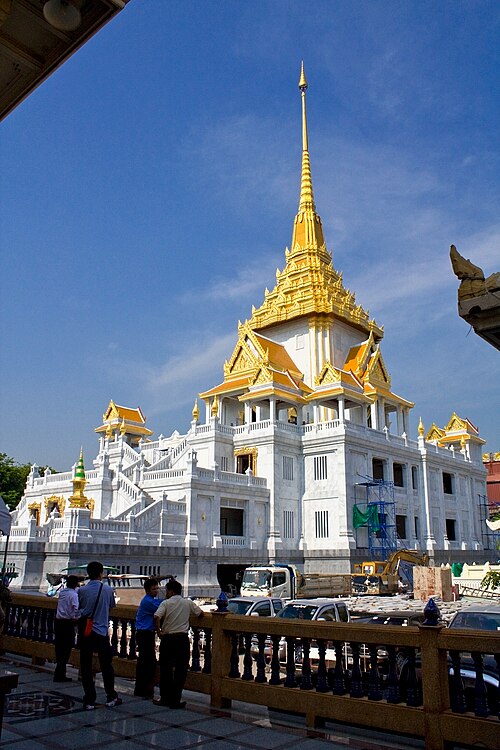
    Wat Traimit stands at the western gate of Yaowarat, where Chinatown meets the road in from Hua Lamphong, and it exists in the guidebooks for one object: a Sukhothai-style Buddha image of solid gold.

    • Must see
    • Place of worship
    • เขตสัมพันธวงศ์
  5. The Museum of Siam The Museum of Siam
    11 1 hr 30 min

    The Museum of Siam

    มิวเซียมสยาม

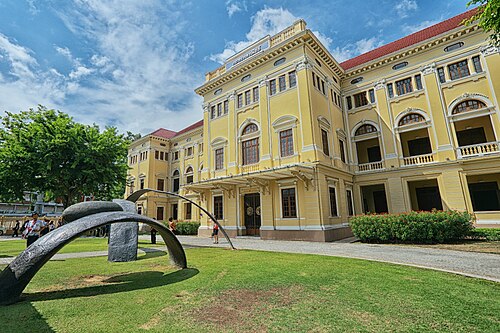
    Museum Siam is a museum about being Thai, in a building that was designed by an Italian.

    • Must see
    • Museum
    • เขตพระนคร
  6. Bangkok Art and Culture Centre Bangkok Art and Culture Centre
    12 1 hr 30 min

    Bangkok Art and Culture Centre

    หอศิลปวัฒนธรรมแห่งกรุงเทพมหานคร

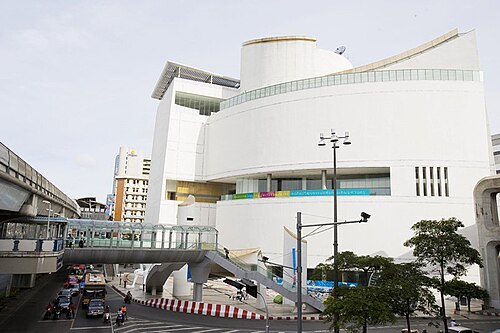
    The Bangkok Art and Culture Centre is the city's principal public venue for contemporary art, a free public building at the Pathumwan intersection that the Thai government's own Explore Bangkok listing names as the place where emerging Thai artists show.

    • Must see
    • Art and culture venue
    • เขตปทุมวัน
  7. MAHANAKHON SKYWALK (king power) MAHANAKHON SKYWALK (king power)
    13 1 hour

    MAHANAKHON SKYWALK (king power)

    MAHANAKHON SKYWALK

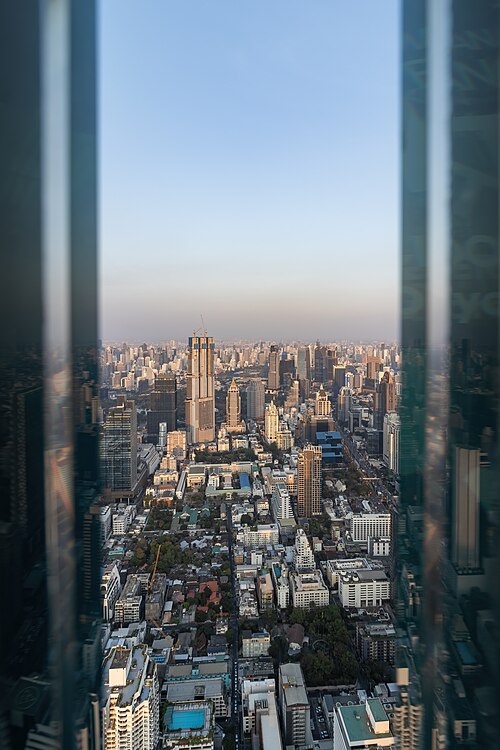
    The Mahanakhon SkyWalk is Thailand's highest observation deck, at the top of the pixelated tower in Bang Rak whose bitten-away spiral of glass boxes made it the most recognisable building added to Bangkok's skyline in a generation.

    • Must see
    • Viewpoint
    • เขตบางรัก
  8. ICONSIAM ICONSIAM
    14 45 min

    ICONSIAM

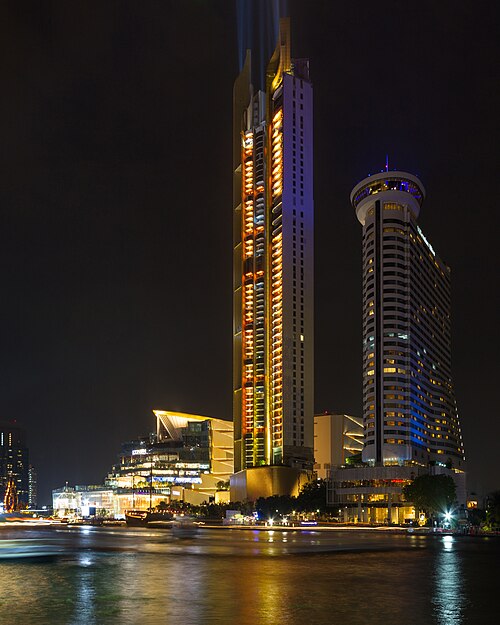
    ICONSIAM is a large mixed-use riverside development on the Chao Phraya River in Bangkok. It combines retail, residential, and entertainment functions across multiple buildings and levels.

    • Must see
    • Market
    • เขตคลองสาน
  9. Pak Khlong Talat Pak Khlong Talat
    15 1 hour

    Pak Khlong Talat

    ปากคลองตลาด

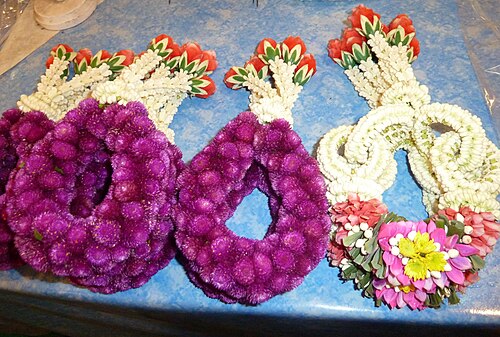
    Pak Khlong Talat is Bangkok's wholesale flower market, and it is the city's largest trading ground for cut flowers, garlands and ritual offerings — a district of lanes at the mouth of the Khlong Lot canal in Phra Nakhon where…

    • Must see
    • Market
    • เขตพระนคร
  10. Wat Suthat Wat Suthat
    16 45 min

    Wat Suthat

    วัดสุทัศนเทพวรารามราชวรมหาวิหาร

    Wat Suthat Thepwararam is one of only ten first-class royal temples in Bangkok, and the one written into the city's original plan rather than added beside it.

    • Must see
    • Historic monument
    • เขตพระนคร
  11. Wat Benchamabophit Wat Benchamabophit
    17 40 min

    Wat Benchamabophit

    วัดเบญจมบพิตรดุสิตวนารามราชวรวิหาร

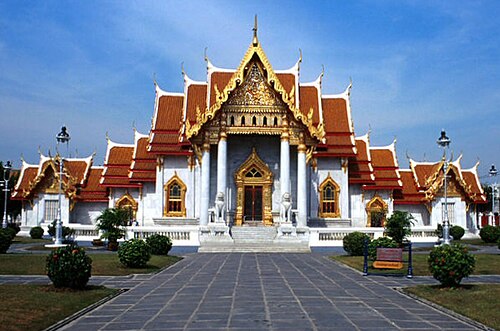
    Wat Benchamabophit is Rama V's marble temple, built in 1900 as part of the Dusit district he laid out for himself, and the clearest surviving statement of what the Thai monarchy meant by modernisation.

    • Must see
    • Historic monument
    • เขตดุสิต
  12. Khaosan Road Khaosan Road
    18 1 hour

    Khaosan Road

    ถนนข้าวสาร

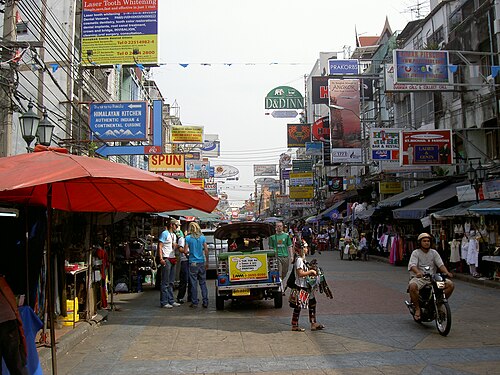
    Khao San Road is a 410-metre street in Phra Nakhon, a few minutes' walk from the Chao Phraya, whose name means milled rice and whose reputation has nothing to do with rice.

    • Must see
    • Historic monument
    • เขตพระนคร
  13. Erawan Shrine Erawan Shrine
    19 20 min

    Erawan Shrine

    ศาลท้าวมหาพรหม

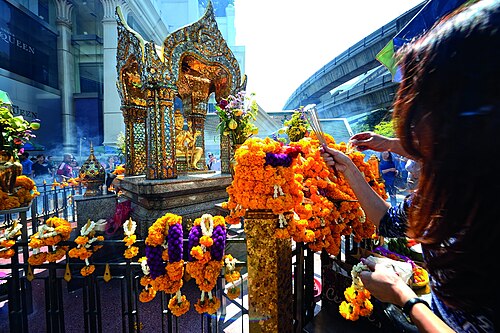
    The Erawan Shrine is a small open pavilion on the corner of the Ratchaprasong junction, hemmed in by department stores and skywalks, holding a gilded four-faced image of Phra Phrom — the Thai form of Brahma.

    • Must see
    • Place of worship
    • เขตปทุมวัน
  14. Wat Ratchanatdaram Wat Ratchanatdaram
    20 45 min

    Wat Ratchanatdaram

    วัดราชนัดดารามวรวิหาร

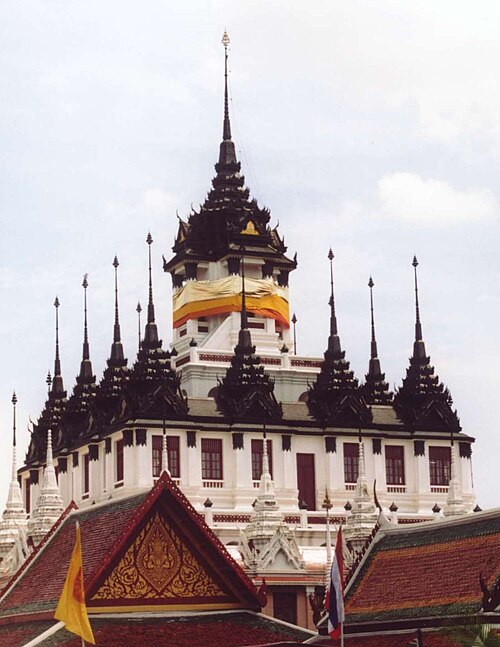
    Wat Ratchanatdaram Worawihan stands where Ratchadamnoen Klang meets Maha Chai Road in Phra Nakhon, and it is on itineraries for one building inside it: Loha Prasat, the metal-spired monastery.

    • Must see
    • Historic monument
    • เขตพระนคร
  15. Wat Paknam Phasi Charoen Wat Paknam Phasi Charoen
    21 1 hr 15 min

    Wat Paknam Phasi Charoen

    วัดปากน้ำภาษีเจริญ

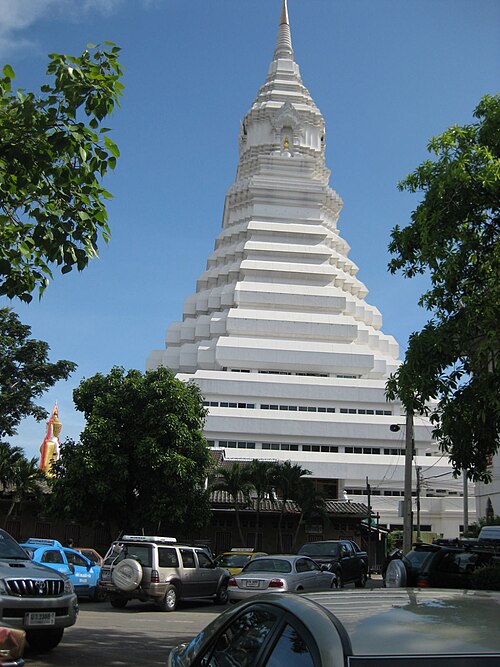
    Wat Paknam Phasi Charoen is a third-class royal monastery of the ordinary type standing on what is effectively a small square island in the canals west of the Chao Phraya, and it is the home temple of the Vijja Dhammakaya…

    • Must see
    • Place of worship
    • เขตภาษีเจริญ
  16. National Museum of Royal Barges National Museum of Royal Barges
    22 45 min

    National Museum of Royal Barges

    พิพิธภัณฑสถานแห่งชาติ เรือพระราชพิธี

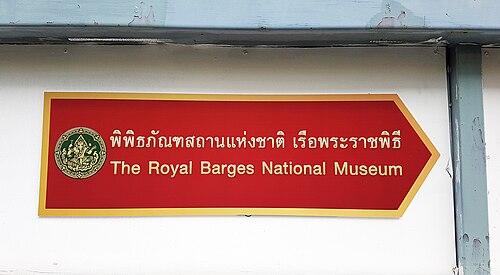
    The National Museum of Royal Barges is a single covered boat shed on the bank of Khlong Bang Kok Noi, on the Thonburi side of the Chao Phraya, where the Fine Arts Department keeps the royal ceremonial barges out of…

    • Must see
    • Museum
    • เขตบางกอกน้อย
  17. Benjakitti Park Benjakitti Park
    23 1 hr 30 min

    Benjakitti Park

    สวนเบญจกิติ

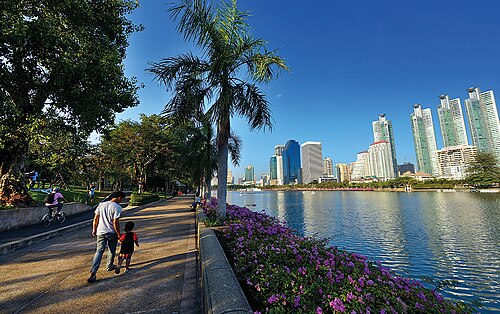
    Benjakitti Park is Bangkok’s 450-rai ecological urban forest beside the Queen Sirikit National Convention Center in Khlong Toei.

    • Must see
    • Nature site
    • เขตคลองเตย
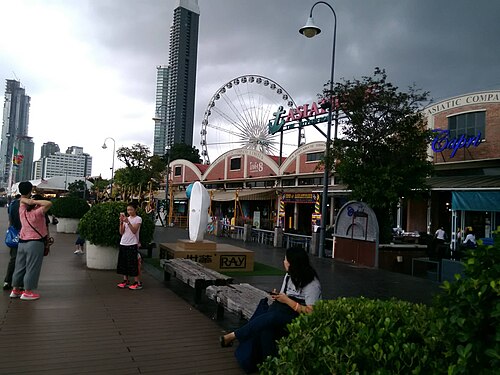
  18. Asiatique The Riverfront Destination Asiatique The Riverfront Destination
    24 45 min

    Asiatique The Riverfront Destination

    Asiatique The Riverfront

    Asiatique The Riverfront is a large open-air shopping and entertainment complex situated on the Chao Phraya River in Bangkok. The destination occupies a former international trade port site, repurposing historic warehouses and wharf structures into a contemporary riverside venue.

    • Must see
    • Market
    • เขตบางคอแหลม
  19. Wat Bowonniwet Vihara Wat Bowonniwet Vihara
    25 45 min

    Wat Bowonniwet Vihara

    วัดบวรนิเวศราชวรวิหาร

    Wat Bowonniwet Vihara is the headquarters temple of the Thammayut order, and that single fact governs everything a visitor sees in the compound.

    • Must see
    • Place of worship
    • เขตพระนคร
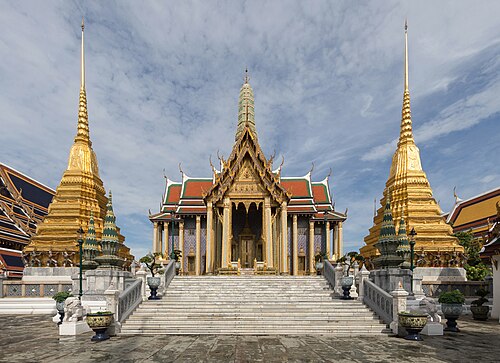
  20. Wat Phra Kaew Wat Phra Kaew
    26 1 hour

    Wat Phra Kaew

    วัดพระศรีรัตนศาสดาราม

    Wat Phra Kaew is the royal chapel standing inside the Grand Palace wall, and it is the most sacred Buddhist temple in Thailand, by function rather than by consensus of guidebooks.

    • Must see
    • Historic monument
    • เขตพระนคร
  21. Sri Maha Mariamman Temple Sri Maha Mariamman Temple
    27 30 min

    Sri Maha Mariamman Temple

    วัดพระศรีมหาอุมาเทวี

    Sri Maha Mariamman Temple, known to Bangkok as Wat Khaek and formally as Wat Phra Si Maha Uma Thewi, is the principal Tamil Hindu temple in Thailand, standing at the corner of Si Lom Road and Pan Road in Bang…

    • Must see
    • Place of worship
    • เขตบางรัก
  22. Wat Mangkon Kamalawat Wat Mangkon Kamalawat
    28 45 min

    Wat Mangkon Kamalawat

    วัดมังกรกมลาวาส

    Wat Mangkon Kamalawat is the largest and most important Chinese Buddhist temple in Bangkok, standing on Charoen Krung Road between sois 19 and 21 in Pom Prap Sattru Phai.

    • Must see
    • Place of worship
    • เขตป้อมปราบศัตรูพ่าย
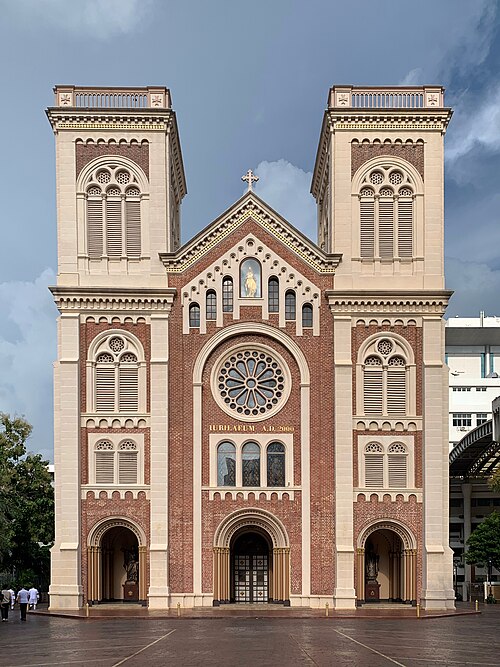
  23. Assumption Cathedral Assumption Cathedral
    29 30 min

    Assumption Cathedral

    อาสนวิหารอัสสัมชัญ

    Assumption Cathedral is the cathedral church of the Roman Catholic Archdiocese of Bangkok, standing in Soi Oriental off Charoen Krung 40 in Bang Rak, a short walk back from the Chao Phraya river.

    • Must see
    • Historic monument
    • เขตบางรัก
  24. Santa Cruz Church Santa Cruz Church
    30 30 min

    Santa Cruz Church

    วัดซางตาครู้ส

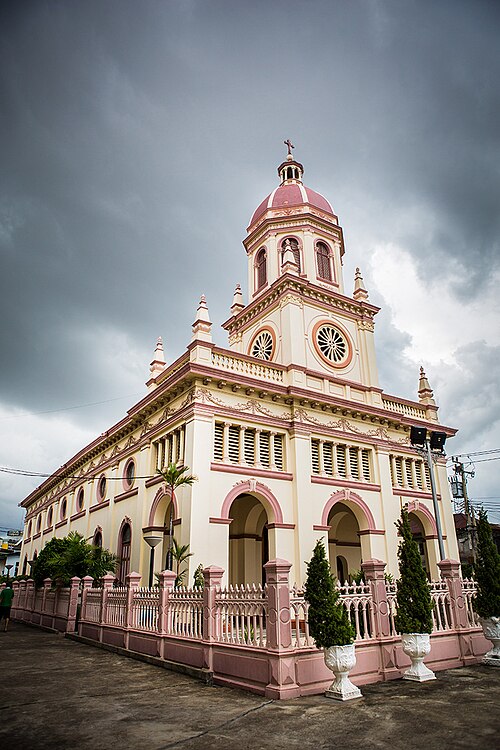
    Santa Cruz Church is a Catholic parish church on the west bank of the Chao Phraya in Thon Buri District, in Khwaeng Wat Kanlaya, at the heart of the Kudi Chin neighbourhood.

    • Must see
    • Place of worship
    • เขตธนบุรี
  25. Bangkok Folk Museum Bangkok Folk Museum
    31 1 hr 30 min

    Bangkok Folk Museum

    พิพิธภัณฑ์ชาวบางกอก

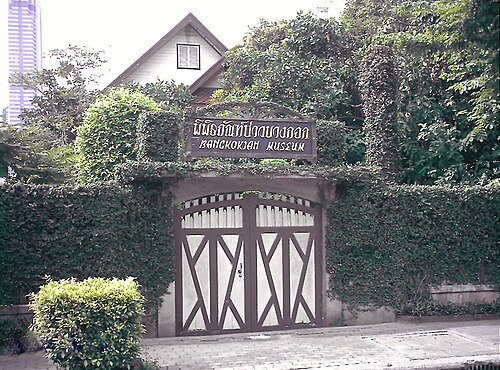
    Bangkok Folk Museum, locally called พิพิธภัณฑ์ชาวบางกอก, preserves the domestic world of Bangkok families during the early and mid-twentieth century. Set within a historic residence, it offers a close look at household routines, architecture and personal possessions.

    • Must see
    • Museum
    • เขตบางรัก

Source: OpenStreetMap contributors, Wikidata ·

Where to base yourself

District boundaries come from OSM administrative relations, so a district page holds exactly the places inside it — plus, for the islands and the coast, the nearest district by proximity.

How the city is laid out

The Chao Phraya organises the map. It runs through the city southward and empties into the Gulf of Thailand about 25 km south, and the river is what every other part of Bangkok is positioned against.

Rattanakosin, the old royal island in Phra Nakhon district, sits on the east bank and holds the Grand Palace and the City Pillar Shrine along with the temples most visitors come for. It is the one part of Bangkok that is walkable end to end, and it has almost no nightlife and few hotels.

Downriver from it, Chinatown runs along Yaowarat Road with the Sampheng lanes behind — old market neighbourhoods, dense, and best after dark.

Further east are the two business spines. Silom and Sathon carry the office towers and corporate headquarters; Sukhumvit Road runs southeast through several districts and carries the hotels, the shopping and most of the international restaurants. Between them, Siam and Ratchaprasong in Pathum Wan hold some of the largest shopping malls in Southeast Asia and the interchange that ties the rail network together.

Thonburi, the west bank, is the quiet half: fewer high rises, largely residential, and a short ferry crossing from the old town.

Bangkok is divided into fifty districts, or khet, subdivided into 180 sub-districts.

Checked 2026-08-25

Getting around

Take the trains, take the boats, and treat a taxi as the option of last resort in the middle of the day.

The BTS Skytrain opened on 5 December 1999 with two lines and 23 stations; there are now 60 fully operated stations across the Silom and Sukhumvit lines, and the two cross at Siam, which is the interchange every route seems to pass through. Service hours are 05:00 to 01:00. The BTS is elevated, air-conditioned, and covers the modern city — Sukhumvit, Silom, Sathon, Siam — but it does not reach the old royal quarter.

The MRT does. The underground Blue Line runs a loop through the older half of the city, and its stations at Sanam Chai and Hua Lamphong are how most visitors now arrive in Rattanakosin and Chinatown without touching a road. BTS and MRT are separate systems with separate tickets; the interchanges are signposted walks, not a single gateline.

On the river, the Chao Phraya express boats run to a flag system — orange, yellow, green-yellow and red — where the flag on the bow tells a passenger which piers the boat will stop at and which it will skip. The piers sit next to the old town's main sights, which makes the river the fastest and by some distance the pleasantest north-south route in Bangkok. Cross-river ferries shuttle between the banks separately from the express services.

The khlong boats on Saen Saep are the local secret: fast, cheap, uncomfortable, and the only thing that beats the traffic on the east-west axis between the old town and Pratunam.

Taxis and tuk-tuks are the wrong instrument at the wrong hour. Bangkok's road traffic is genuinely severe, a metered taxi in an afternoon jam costs more time than money, and no rail journey in this city has ever been slower than the equivalent road journey at rush hour. Insist on the meter, or use an app that fixes the fare before the trip.

Checked 2026-08-25

Common questions

How many days does Bangkok need?

Three to four. Two days cover Rattanakosin — the Grand Palace, Wat Pho, the ferry to Wat Arun — and the river that links them. A third takes Chinatown and a market, and a fourth allows either the Thonburi side or a day trip out of the city. Bangkok punishes a rushed itinerary more than most capitals, because the transfers between its halves eat the time a tighter plan assumes it has.

When is the best time to visit Bangkok?

November to February, the cool dry months of the northeast monsoon. April is the hottest month, averaging 35.7°C, and the rainy season runs from mid-May through October with September the wettest month at 335.9 mm of rain. Bangkok is visitable year-round — the rain arrives in heavy short bursts rather than all day — but the difference between February and April is the difference between walking the old town comfortably and rationing the outdoor hours.

How does a visitor get from the old town to the modern centre?

By MRT. The underground Blue Line, the Chaloem Ratchamongkhon Line, runs 48 kilometres with 38 stations and was Thailand's first underground metro; its stations at Sanam Chai and Hua Lamphong put a visitor in the old royal quarter and in Chinatown, and the line connects onward to the BTS. The road route between the two halves of Bangkok is the one every guide warns about, and the warning is correct.

What do the flags on the Chao Phraya boats mean?

They identify the service and therefore which piers the boat stops at. The operator runs an orange line between Nonthaburi and Rajsingkorn at a flat 18 baht, a yellow line between Nonthaburi and Sathorn at a flat 23 baht, a green-yellow line from Pakkret to Sathorn charging 16, 23 or 35 baht by section, and a red line between Nonthaburi and Sathorn at 32 baht. The operator lists all four as Monday-to-Friday services, so check its own timetable before planning a weekend crossing on one of them.

Are the canal boats worth using?

On the east-west axis, yes. The Khlong Saen Saep service, run by Family Transport, carries about 60,000 passengers a day on two lines: the Golden Mount line from Panfa Leelard pier near Wat Saket to Pratunam, and the NIDA line from Pratunam east to Wat Sriboonruang. It runs 05:30 to 20:30 on weekdays and to 19:00 at weekends, fares are 8 to 22 baht and tickets are bought onboard in cash. It is fast, loud, splashy and not a scenic cruise — a commuter service that happens to be the quickest way between the old town and Pratunam.

Should a visitor take taxis in Bangkok?

Early morning, late evening and for luggage — yes. Between mid-afternoon and mid-evening a taxi is the slowest way to cross Bangkok, and a rail journey that looks longer on the map will be shorter in practice. Insist on the meter rather than agreeing a price at the window, or use an app that fixes the fare before the trip. Tuk-tuks are a short-hop novelty, not transport, and are negotiated rather than metered.

Which part of Bangkok should a visitor stay in?

Sukhumvit or Silom for a first visit, because both sit on the BTS and the rail network is what makes Bangkok manageable. Rattanakosin puts the great temples on the doorstep and is the quietest, most atmospheric choice, but it has the thinnest hotel stock and no Skytrain. Riverside, near a pier between Sathorn and the old town, is the compromise: express boats north to the sights, BTS east to everything else.