
11 min walk
光明寺
- Must see
- Place of worship
Language · 11 published
Place of worship · Osaka
教恩寺
Reviewed by Elena Voss · Roavina Travel Editor
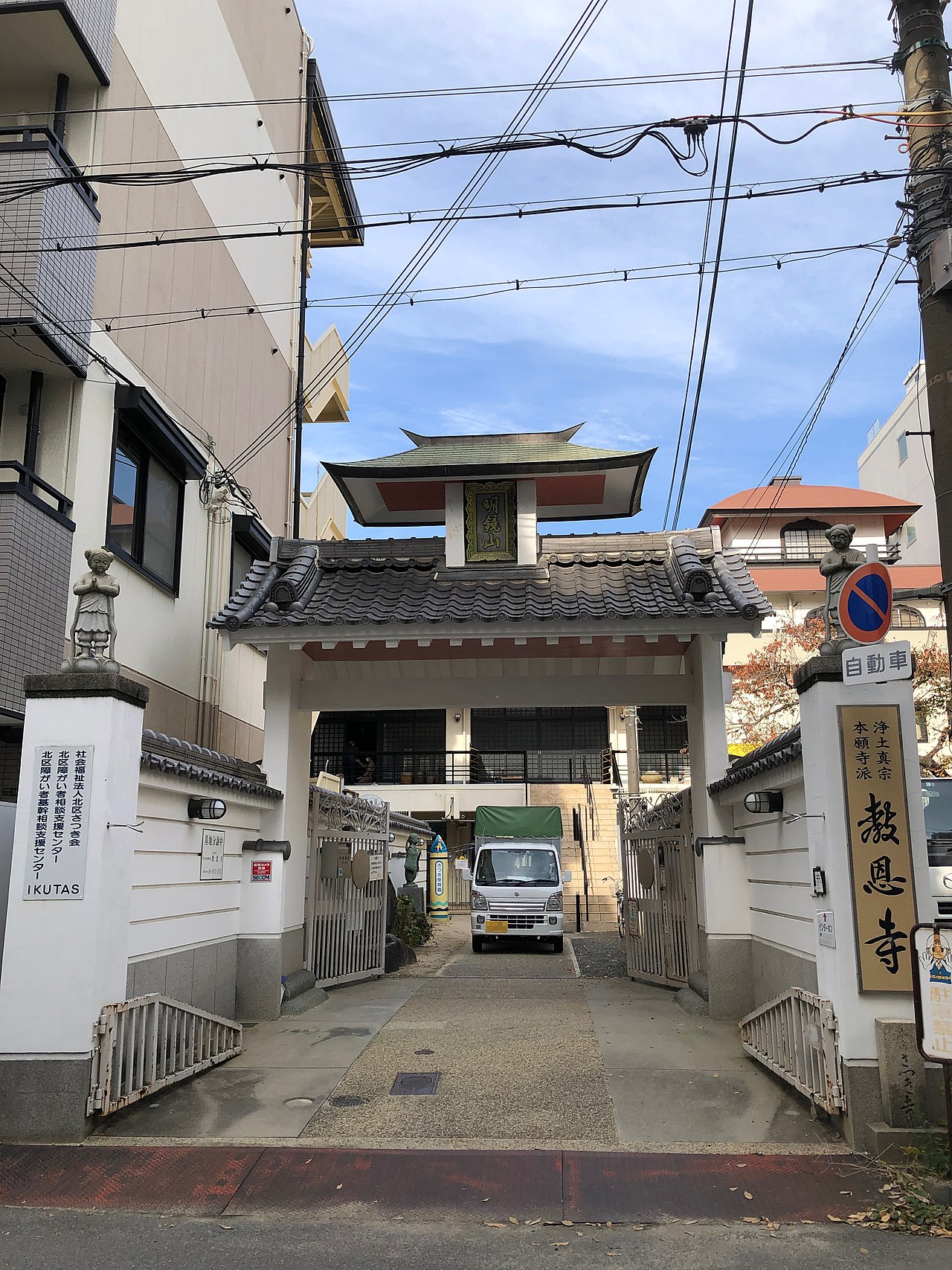
This place is a Place of worship. It was established in 1617.
Kyōon-ji Temple, known locally as 教恩寺, is a Buddhist temple in Osaka. The temple belongs to the city’s living religious landscape, where places of worship continue to sit among ordinary streets and neighborhoods. Kyōon-ji is best approached as a place for quiet observation rather than as a conventional entertainment attraction. Travelers can take in the temple setting, notice the contrast between religious architecture and the surrounding metropolis, and leave space for worshippers to use the grounds. The visit offers a calmer counterpoint to Osaka’s busy commercial districts and large-scale sightseeing landmarks. Public access is not confirmed; direct verification is recommended.
Checked 2026-08-26 · Source
Kyōon-ji Temple should be experienced through its temple grounds, buildings, and atmosphere. Buddhist temples commonly organize attention around a main hall, an altar, offerings, and spaces connected with prayer, but this guide does not assign particular statues, paintings, gardens, or treasures to Kyōon-ji. Focus on the visible architecture and the relationship between the temple and its Osaka neighborhood. If a building is open, enter only where visitors are welcomed and follow the local movement of worshippers. The temple’s value lies in encountering an active religious place, not in treating it as a staged display.
Checked 2026-08-26 · Source
Allow thirty minutes to one hour for Kyōon-ji Temple. That pace leaves room to cross the grounds slowly, observe the architecture, pause for quiet reflection, and offer a brief prayer if appropriate. A shorter stop works for travelers passing through the neighborhood, while visitors interested in Japanese religious spaces may spend longer studying details from public areas. Do not measure the experience by the number of rooms visited. Kyōon-ji is a compact cultural pause that works well between larger Osaka attractions and gives the day a quieter change of rhythm.
Checked 2026-08-26 · Source
Morning is a good time for a quiet visit to Kyōon-ji Temple, especially when travelers want to observe the grounds without adding noise to an active place of worship. Spring and autumn bring comfortable outdoor conditions in Osaka, while summer heat and humidity favor a shorter stop and winter brings shorter daylight. Weekdays may feel calmer than busy city sightseeing periods. Treat Kyōon-ji as a flexible cultural stop: the best moment is one that allows respectful observation without interrupting prayer, ceremonies, or the daily work of the temple.
Checked 2026-08-26 · Source
Kyōon-ji Temple is a neighborhood Buddhist temple, and the supplied place record does not attach a ticket arrangement to the visit. Plan for a quiet temple stop rather than a paid exhibition with timed entry, galleries, or a visitor route. A small cash offering is appropriate if a donation box is present and the traveler wishes to support the temple, but prayer and observation should remain separate from commercial expectations. Keep the visit simple and allow the temple’s atmosphere, rather than a ticketed program, to shape the experience.
Checked 2026-08-26 · Source
Kyōon-ji Temple sits within Osaka’s extensive urban transport environment. Use the map position for way/186712490 to plan the final approach from your hotel, station, or previous attraction. Rail travel followed by a walk is a natural way to reach neighborhood temples in Osaka; buses and taxis can also form part of the route. Keep the Japanese name 教恩寺 available when navigating, since it identifies the temple locally. The final walk is part of the experience, revealing how a religious site fits into the everyday city rather than standing apart from it.
Checked 2026-08-26 · Source
Kyōon-ji Temple is an active religious place, so visitors should keep voices low and give worshippers priority. Follow signs about entering buildings, remove shoes where requested, and avoid touching altars, statues, offerings, or other religious objects. Temple grounds can include steps, gravel, or uneven surfaces, so stable footwear helps. Keep food and drink away from sacred spaces, take litter with you, and avoid blocking entrances. If a ceremony is taking place, observe from a respectful distance or return later rather than interrupting it.
Checked 2026-08-26 · Source
Exterior photography at Kyōon-ji Temple should remain quiet and unobtrusive. Photograph gates, roofs, courtyards, and architectural details only from areas open to visitors. Interior altars, statues, ceremonies, and worshippers deserve particular restraint. Avoid flash, large equipment, and poses that turn a prayer space into a stage. Keep people out of close frames unless they have agreed to be photographed. Drones and commercial shoots require explicit permission and are poorly suited to a compact active temple. When a sign or member of staff sets a limit, follow it immediately.
Checked 2026-08-26 · Source
Kyōon-ji Temple is a Buddhist temple in Osaka and part of the city’s living religious landscape.
A visit of thirty minutes to one hour allows time for quiet observation, reflection, and respectful photography from public areas.
Wear stable footwear for possible steps, gravel, or uneven ground, and be ready to remove shoes where temple signs request it.
Keep voices low, give worshippers priority, avoid touching religious objects, and follow instructions about buildings and sacred spaces.
Spring and autumn offer comfortable outdoor conditions in Osaka; summer is hot and humid, while winter has shorter daylight.
Kyōon-ji Temple is known locally as 教恩寺.
Loading the interactive map…
The interactive map could not be loaded.
Last updated:
Source: OpenStreetMap contributors, Wikidata ·