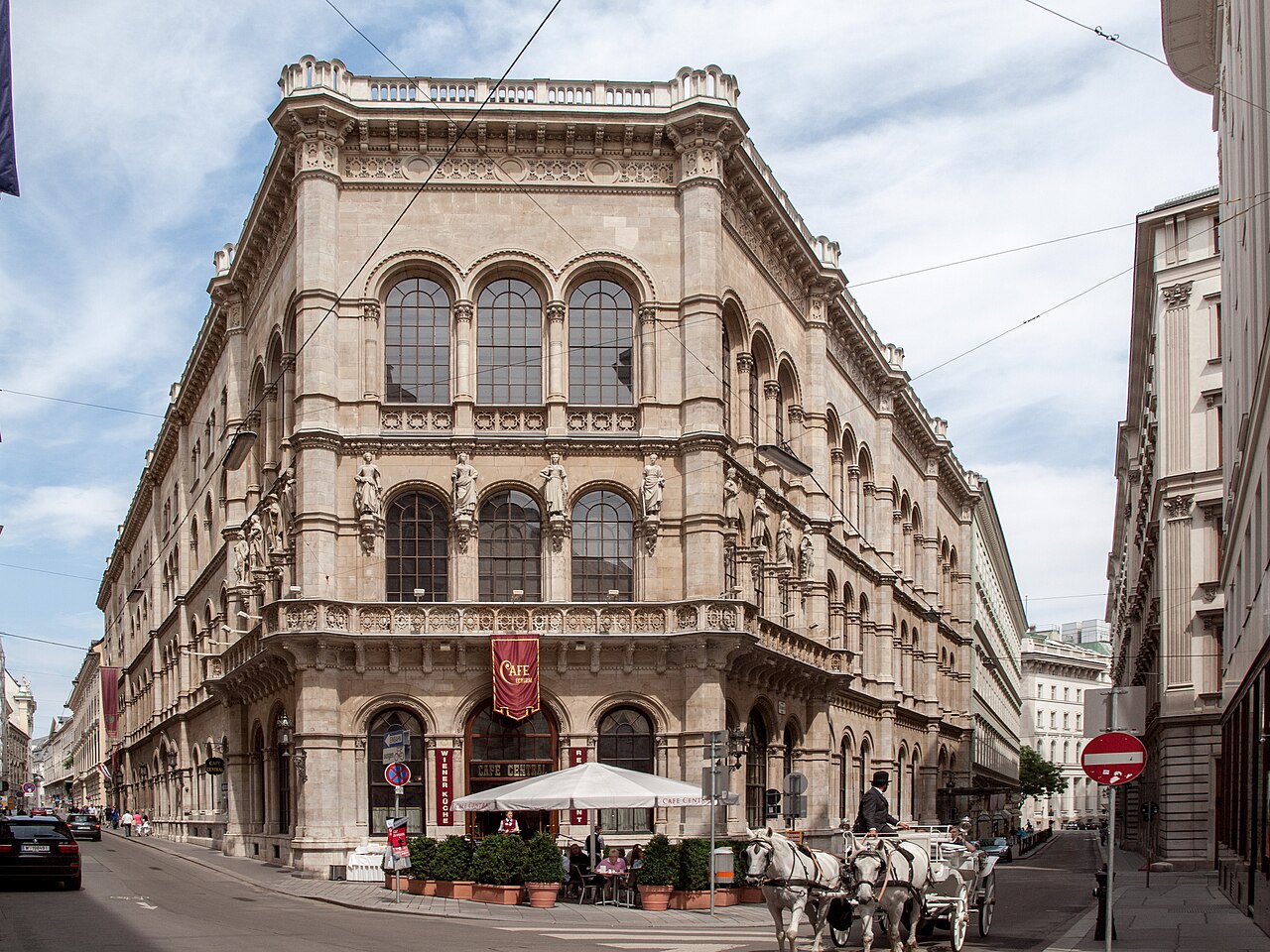
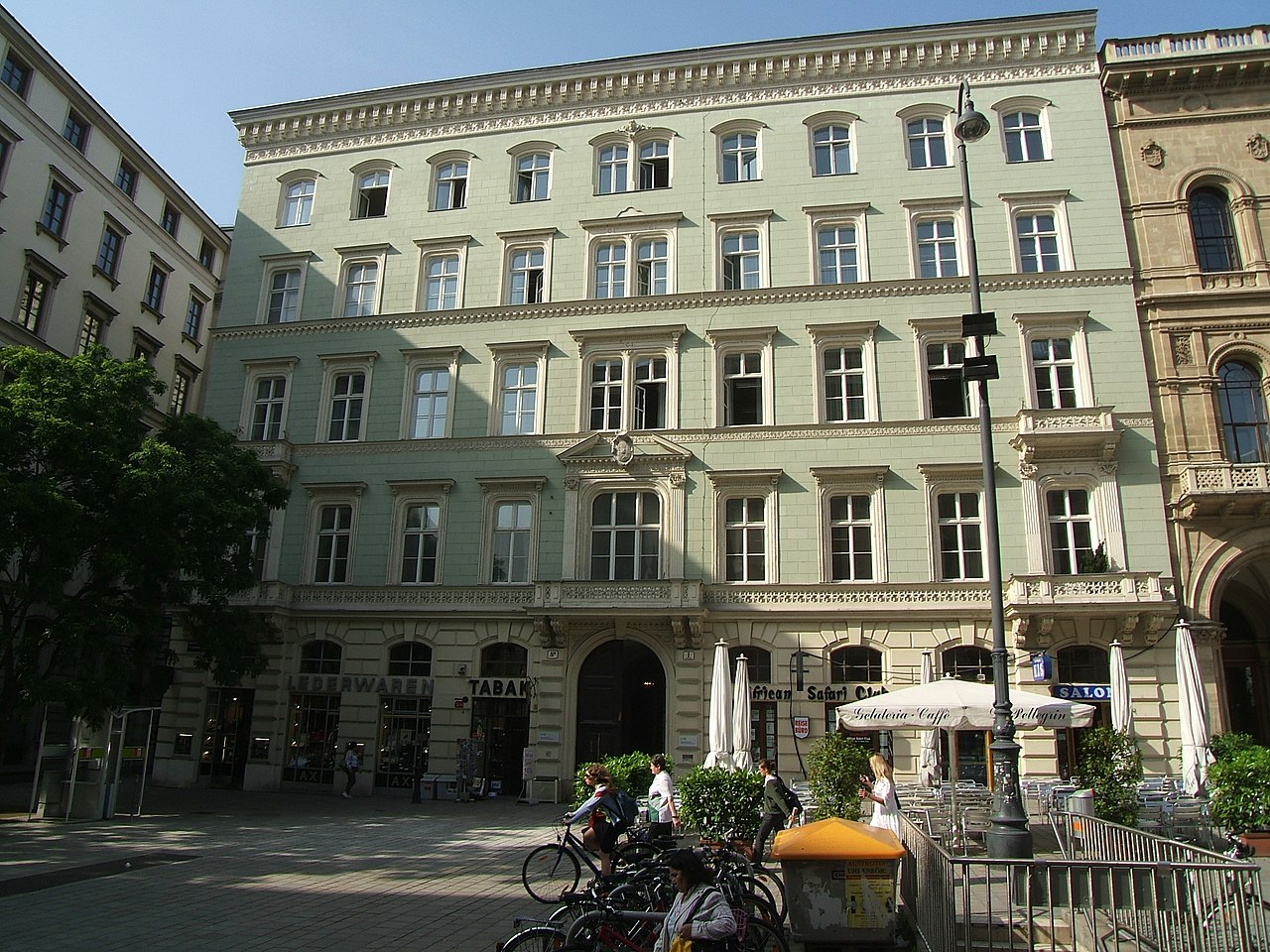
Café Central is a historic Viennese coffeehouse inside the Palais Ferstel, a Neo-Renaissance building designed by Heinrich von Ferstel. The café opened in 1876 and became one of Vienna’s best-known literary meeting places before the First World War. Leon Trotsky, Sigmund Freud and the poet Peter Altenberg were among its regular visitors, and Altenberg reportedly used the café as his postal address. Café Central is therefore both a place for coffee and cake and a direct encounter with Vienna’s celebrated coffeehouse tradition. Café Central opened in 1876 inside the Palais Ferstel, a Neo-Renaissance building designed by Heinrich von Ferstel that originally combined the Austro-Hungarian Bank with a covered arcade of shops. It became one of Vienna's most storied literary coffeehouses in the decades before the First World War, when its long opening hours and cheap newspapers made it a working space for writers and exiles who could not afford heated rooms of their own — Leon Trotsky, Sigmund Freud and the poet Peter Altenberg were all regulars, and Altenberg reportedly gave the café as his postal address.
The main room is a vaulted, arcaded hall supported by marble columns, with chandeliers beneath the vaults and a resident pianist playing during service hours. Near the entrance, a life-sized papier-mâché figure of Peter Altenberg sits at a table and has become one of the café’s most photographed details. The cake counter includes Viennese favourites such as Sachertorte, Apfelstrudel and Topfenstrudel. Wooden newspaper holders continue the reading-room character that made cafés such as Café Central important social and intellectual spaces.
Allow forty-five minutes to an hour and a half for coffee and cake at Café Central. The visit can last longer when the entrance queue is moving slowly or when you want to sit with a newspaper and enjoy the room. Viennese coffeehouse etiquette allows a guest to remain at the table with one coffee for an extended period, so Café Central does not work like a quick takeaway café. Build in extra time if the coffeehouse is part of a tightly timed central-Vienna itinerary.
Arrive before mid-morning for the best chance of finding a table without a long wait. Midday, afternoon and weekends are busier, and the entrance queue can extend beyond thirty minutes. Casual visits are walk-in only, so timing matters more than advance planning. A solo visitor may be seated sooner than a large group because a single place can fit an available table. The quietest visit also gives you more time to notice the arches, piano and coffeehouse details without rushing.
Café Central has no admission ticket; you pay for the food and drink ordered at the table. The café’s menu includes Viennese coffee preparations such as Melange and Einspänner, together with cakes including Sachertorte, Apfelstrudel and Topfenstrudel. Current menu prices are not included in this guide, so plan for a table-service café rather than a free museum stop. In Vienna, a tip is commonly given directly to the server when paying, with roughly ten percent described as customary for table service.
Café Central stands at the corner of Herrengasse and Strauchgasse inside the Palais Ferstel. U3 Herrengasse station is about a two-minute walk away. The Hofburg, Austrian National Library and Graben are each within roughly a ten-minute walk, making Café Central easy to combine with central Vienna sightseeing. Tram lines along the Ringstrasse stop within a similar walking distance. Plan the café as a pause between nearby landmarks, while leaving enough time for the entrance queue and the slower rhythm of table service.
The entrance queue can exceed an hour during busy periods, and tables turn over slowly because extended sitting is part of the coffeehouse tradition. Check the bill for the full table-service cost, and ask for the bill when you are ready to leave; Viennese waiters do not necessarily bring it without being asked. Round up the payment by roughly ten percent for customary service. Café Central is a working café as well as a landmark, so keep voices and movement considerate around diners, readers and the pianist.
The vaulted arcade and marble columns photograph well from a seated position looking along the length of the main hall. The Peter Altenberg figure near the entrance is the most distinctive single detail, but the table sits beside a narrow aisle, so take a brief photograph without blocking other guests. The Palais Ferstel façade makes a clear exterior subject from across Herrengasse, and the covered arcade beside the café adds architectural context. Keep photography discreet around diners and avoid disturbing the pianist or service.
Nothing non-essential is set before you choose, in regions where consent is required. If you decline, ads still appear and analytics is switched off entirely.