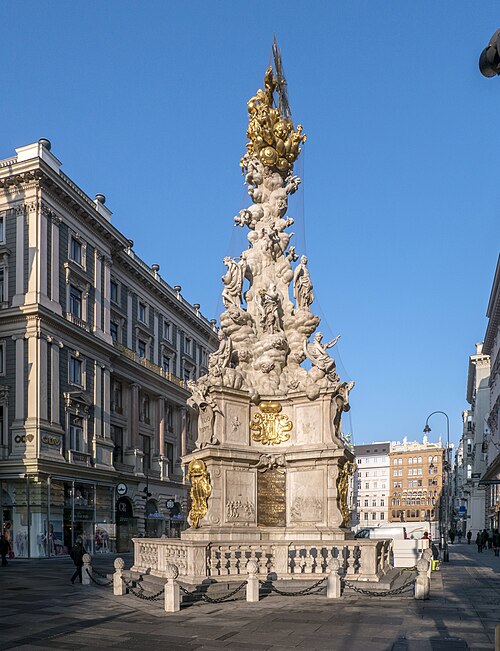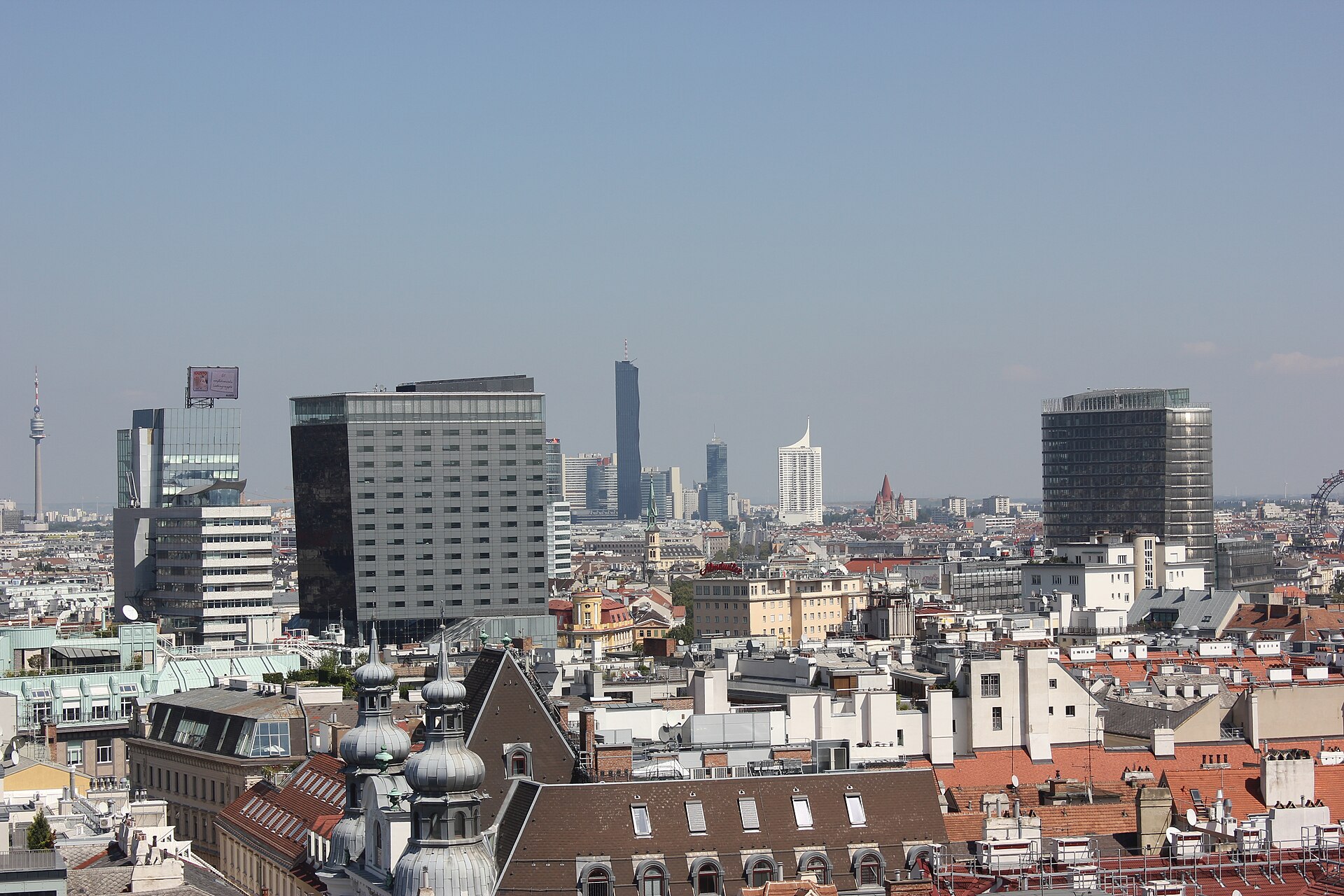
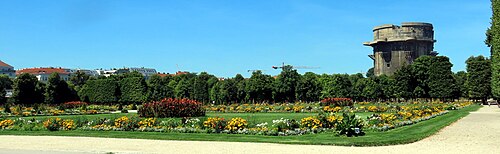
A photograph of Vienna

City guide · Austria

Vienna

Vienna is 414.78 km² holding 2,028,499 people, and almost everything a visitor comes for sits inside a single ring road less than a kilometre across. The Inner...

Photograph · Andrzej Otrębski · CC BY-SA 4.0

5,640 Places
23 Districts
Suggested stay
3–4 days
Getting around
U-Bahn and tram

Turn this list into a plan

Set your days, your pace and the hours you actually want to be out. The planner works around closing days and travel time, and leaves room to eat.

Plan Vienna

Reviewed by Elena Voss · Roavina Travel Editor

Vienna is 414.78 km² holding 2,028,499 people, and almost everything a visitor comes for sits inside a single ring road less than a kilometre across.

The Innere Stadt — the 1st district — is the medieval core, and the Ringstrasse that surrounds it was built in the second half of the nineteenth century on the line of the demolished bastions. The 371-hectare historic centre has been a UNESCO World Heritage Site since 2001; it was on the endangered list from 2017 to 2026.

The wider urban area holds 2,223,236 people and the metropolitan area 2,890,577, which makes Vienna the tenth largest city in Europe and by a long way the largest in Austria.

Checked 2026-08-23

Practical information

Language spoken
German
German is Austria's official language; Croatian, Slovenian and Hungarian also have official status in some regions
Dialling code
+43 1
Vienna landlines; drop the leading 0 of 01 when calling from abroad
Currency
Euro (€, EUR)
Austria introduced euro banknotes and coins in 2002
Emergency number
112
One number across the country; 144 reaches an ambulance directly
Plug type
Not recorded
No verified national official source was found
Tap water
Safe to drink
Austria's national tourism authority states that tap water is drinkable in every region

Planning a visit

September · September in Vienna has mean high 20.3°C, mean low 11.7°C, rainfall 53.5 mm, 7.0 rain days. Comfortable daytime temperatures support Vienna's parks, boulevards, and outdoor café culture. September supports a full day of outdoor stops in Vienna.

  1. January: viable with meaningful trade-offs
  2. February: viable with meaningful trade-offs
  3. March: good time to visit
  4. April: good time to visit
  5. May: best time to visit
  6. June: best time to visit
  7. July: good time to visit
  8. August: good time to visit
  9. September: best time to visit — current month
  10. October: good time to visit
  11. November: viable with meaningful trade-offs
  12. December: viable with meaningful trade-offs

Sources

Top things to see

Ranked by importance — sitelinks, pageviews and heritage status, not editor preference.

  1. Flakturm Augarten (Gefechtsturm) Flakturm Augarten (Gefechtsturm)
    32 45 min

    Flakturm Augarten (Gefechtsturm)

    The Flakturm Augarten (Gefechtsturm) is one of six surviving flak towers built in Vienna during the Second World War. Constructed between 1942 and 1945, these massive reinforced concrete structures served as anti-aircraft gun platforms, command centers, and air-raid shelters.

    • Must see
    • Historic monument
    • Leopoldstadt
  2. Donnerbrunnen Donnerbrunnen
    33 45 min

    Donnerbrunnen

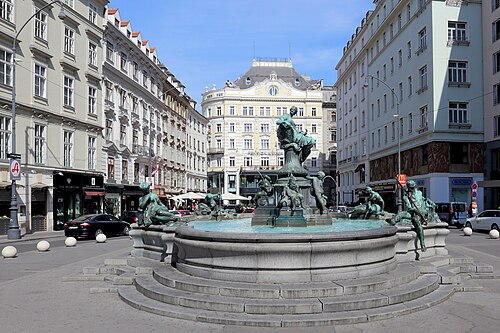
    Donnerbrunnen, also called the Providentia Fountain, is a Baroque monument in Neuer Markt. Georg Raphael Donner created the fountain between 1737 and 1739, making it one of Vienna’s important eighteenth-century sculptural works.

    • Must see
    • Historic monument
    • Innere Stadt
  3. Republikdenkmal Republikdenkmal
    34 45 min

    Republikdenkmal

    Denkmal der Republik

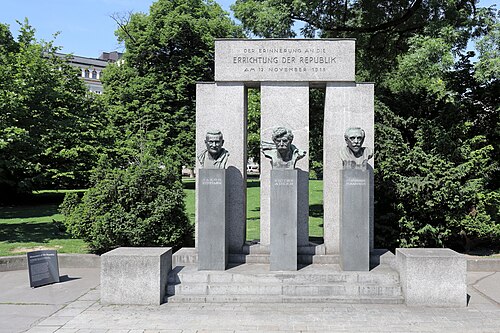
    Republikdenkmal, also known as Denkmal der Republik, commemorates the founding of the Austrian Republic in 1918. The monument marks the political transition that followed the end of Habsburg imperial rule and the emergence of republican government.

    • Must see
    • Historic monument
    • Innere Stadt
  4. Memorial for the Victims of Nazi Military Justice Memorial for the Victims of Nazi Military Justice
    35 45 min

    Memorial for the Victims of Nazi Military Justice

    Deserteursdenkmal

    The Memorial for the Victims of Nazi Military Justice, known locally as Deserteursdenkmal, is an outdoor memorial in Vienna. It honours people persecuted by Nazi military courts, including deserters and others punished for refusing service or being judged insubordinate.

    • Must see
    • Historic monument
    • Innere Stadt
  5. Trinity column, Radetzkystraße 1, Landstraße Trinity column, Radetzkystraße 1, Landstraße
    36 45 min

    Trinity column, Radetzkystraße 1, Landstraße

    Dreifaltigkeitssäule

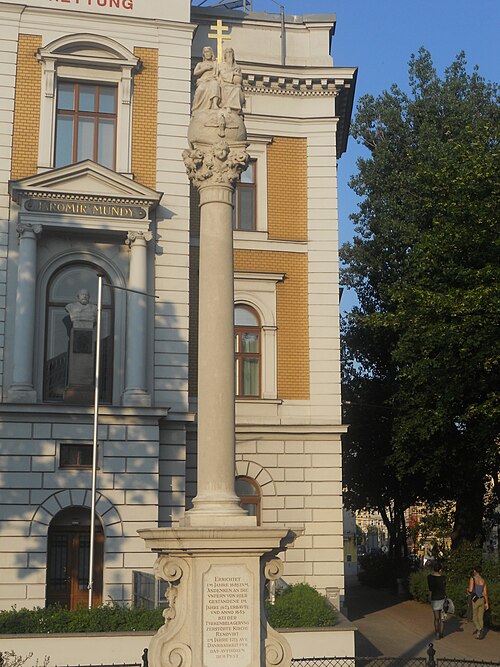
    The Dreifaltigkeitssäule, or Trinity Column, stands at Radetzkystraße 1 in Vienna's Landstraße district. This religious monument represents the Holy Trinity and forms part of the city's extensive heritage of plague columns and devotional structures erected across Central Europe.

    • Must see
    • Historic monument
    • Landstraße
  6. Burg am Leopoldsberg Burg am Leopoldsberg
    37 45 min

    Burg am Leopoldsberg

    Burg am Leopoldsberg is a historic castle structure on Leopoldsberg, a prominent hill in northern Vienna above the Danube. The elevated setting places the castle within a landscape of river views, wooded slopes and the expanding city below.

    • High
    • Historic monument
    • Döbling
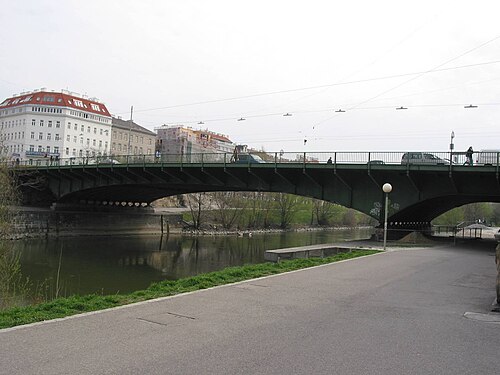
  7. Friedensbrücke Friedensbrücke
    38 45 min

    Friedensbrücke

    Friedensbrücke, or Peace Bridge, crosses the Danube Canal in Vienna. It is a working urban connection linking parts of the city for pedestrians, cyclists and vehicles.

    • High
    • Historic monument
    • Brigittenau
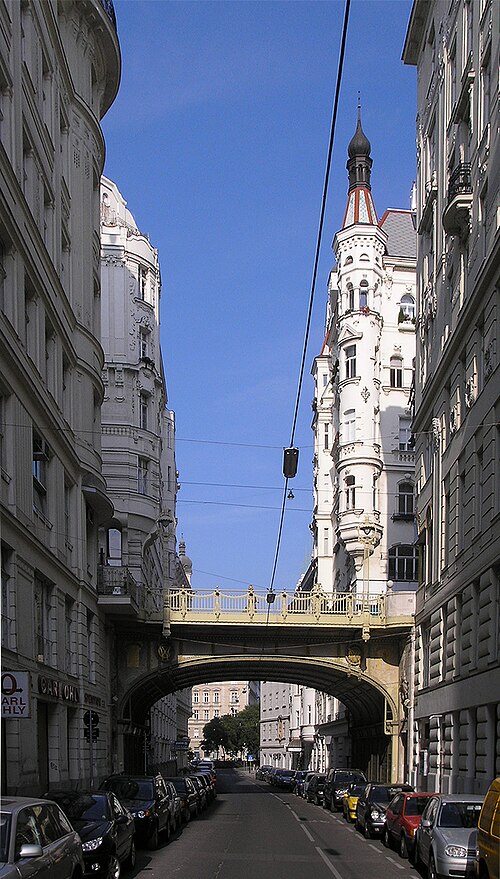
  8. Hohe Brücke Hohe Brücke
    39 45 min

    Hohe Brücke

    Hohe Brücke is a historic bridge in Vienna. The German name means “High Bridge,” and the structure belongs to the city’s network of crossings, streets and walkways.

    • High
    • Historic monument
    • Innere Stadt
  9. Schloss Altmannsdorf Schloss Altmannsdorf
    40 45 min

    Schloss Altmannsdorf

    Altmannsdorfer Schloss

    Schloss Altmannsdorf, also known locally as Altmannsdorfer Schloss, is a historic palace in Vienna’s Altmannsdorf district.

    • High
    • Historic monument
    • Meidling
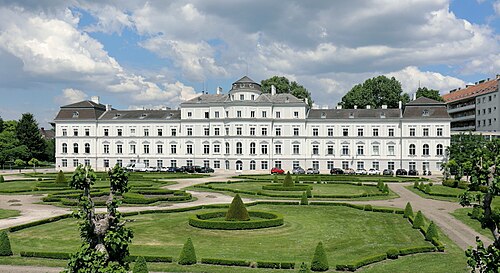
  10. Palais Augarten Palais Augarten
    41 5 min

    Palais Augarten

    Augartenpalais

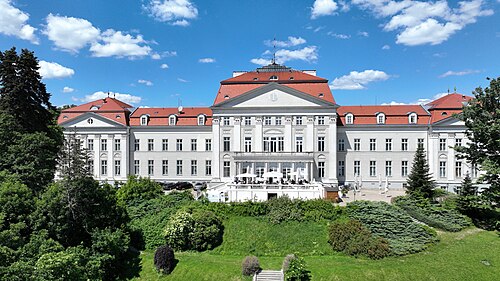
    Palais Augarten is the Baroque palace standing inside Augarten park in Leopoldstadt.

    • High
    • Historic monument
    • Leopoldstadt
  11. Bergkirche Rodaun Bergkirche Rodaun
    42 45 min

    Bergkirche Rodaun

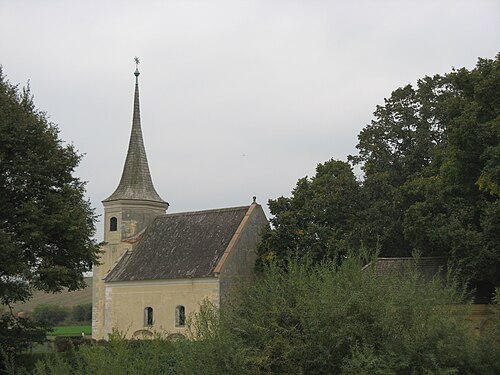
    Bergkirche Rodaun is a functioning church in Vienna’s Rodaun district. Its name refers to its elevated setting, giving the building a distinctive position within the neighbourhood.

    • High
    • Historic monument
    • Liesing
  12. Erlöserkirche Erlöserkirche
    43 45 min

    Erlöserkirche

    Erlöserkirche Endresstraße

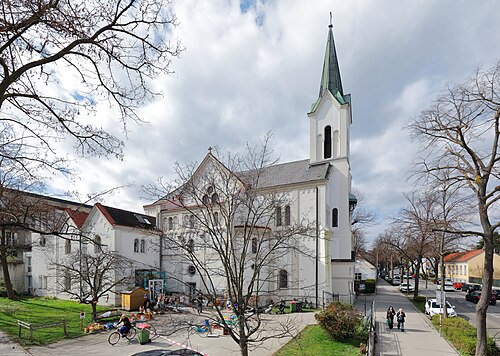
    Erlöserkirche is a church on Endresstraße in Vienna. Its role is best understood through its place in the city’s neighbourhood religious landscape: it is a church building serving worship and community life, rather than a large museum complex.

    • High
    • Historic monument
    • Liesing
  13. Chuch of St. John Chuch of St. John
    44 45 min

    Chuch of St. John

    Evang. Johanneskirche

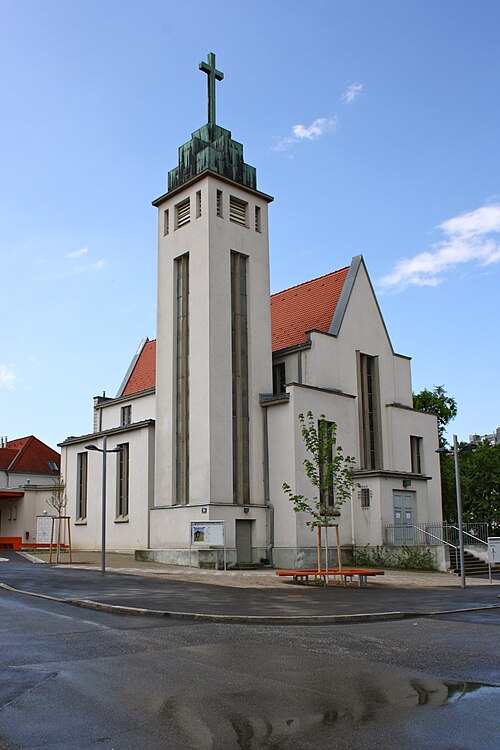
    The Evangelische Johanneskirche, known in English as the Church of St. John, is a Protestant church in Vienna. It serves the Evangelical Lutheran tradition and belongs to the city’s diverse religious and architectural landscape.

    • High
    • Historic monument
    • Liesing
  14. Johanneskirche Johanneskirche
    45 45 min

    Johanneskirche

    Johanneskirche is a church in Vienna, Austria, serving as a place of Christian worship within the capital’s broad religious and architectural landscape.

    • High
    • Historic monument
    • Favoriten
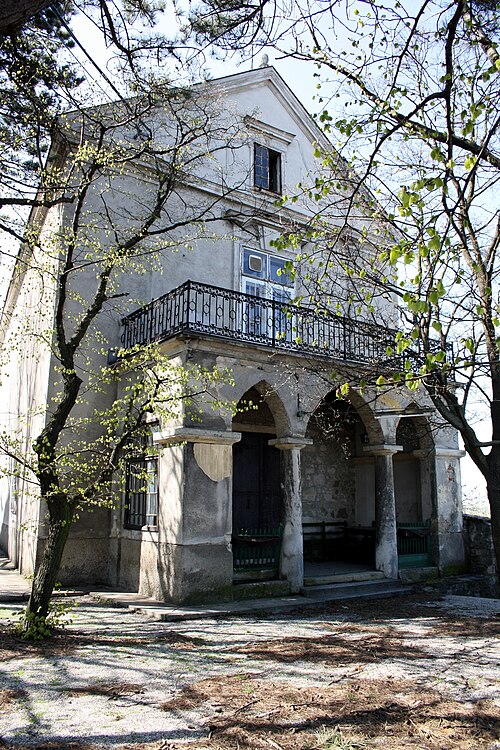
  15. Hofmannsthal-Schlössl Hofmannsthal-Schlössl
    46 45 min

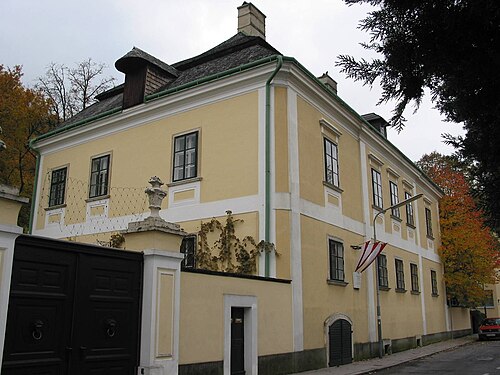
    Hofmannsthal-Schlössl

    Hofmannsthal-Schlössl is a historic building in Vienna associated with the von Hofmannsthal family, notable for their cultural significance in Austrian history. The structure represents aristocratic Viennese architecture and serves as a tangible connection to the city's literary and social heritage.

    • High
    • Historic monument
    • Liesing
  16. Etablissement Gschwandner Etablissement Gschwandner
    47 45 min

    Etablissement Gschwandner

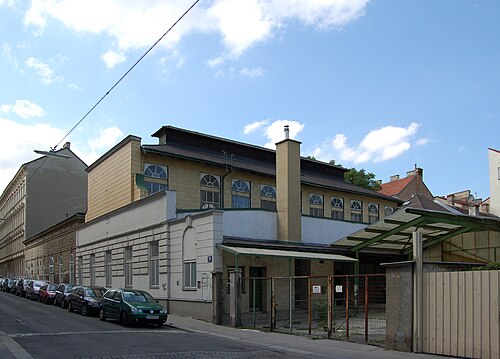
    Ehem. Etablissement Gschwandner

    Etablissement Gschwandner, also known locally as Ehem. Etablissement Gschwandner, is a former entertainment establishment in Vienna.

    • High
    • Historic monument
    • Hernals
  17. Liesing Aqueduct Liesing Aqueduct
    48 45 min

    Liesing Aqueduct

    Aquädukt Liesing

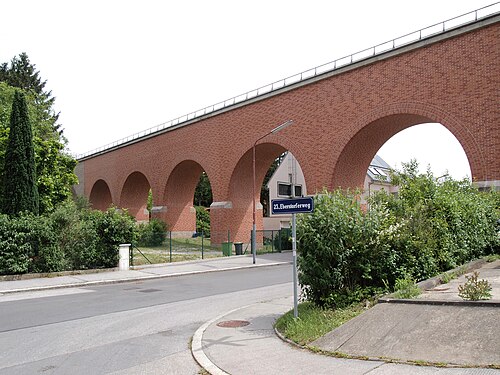
    The Liesing Aqueduct, known locally as Aquädukt Liesing, is a historic water-bridge structure in Vienna’s twenty-third district, Liesing. It belongs to the city’s wider history of water-management and public engineering, showing how infrastructure can become part of an urban landscape.

    • High
    • Historic monument
    • Liesing
  18. aqueduct Speising aqueduct Speising
    49 45 min

    aqueduct Speising

    Aquädukt Speising

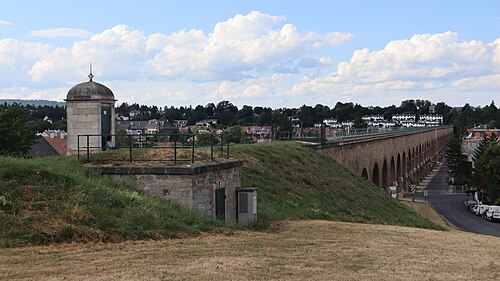
    Aquädukt Speising is a historic aqueduct in southern Vienna and a tangible example of municipal water engineering.

    • High
    • Historic monument
    • Liesing
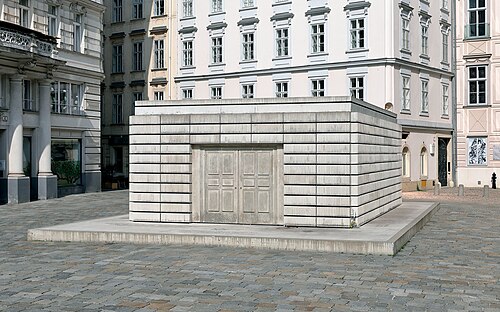
  19. Judenplatz Holocaust Memorial Judenplatz Holocaust Memorial
    50 15 min

    Judenplatz Holocaust Memorial

    Holocaust-Mahnmal

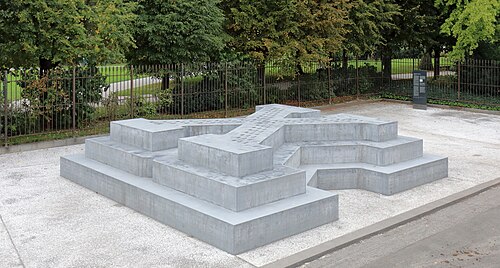
    The Judenplatz Holocaust Memorial is a sealed concrete sculpture by the British artist Rachel Whiteread, unveiled on 25 October 2000 on Judenplatz in the Innere Stadt.

    • High
    • Historic monument
    • Innere Stadt
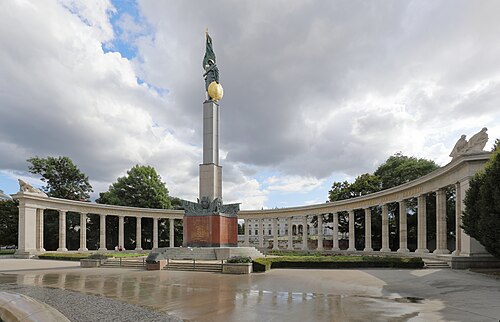
  20. Soviet War Memorial Soviet War Memorial
    51 10 min

    Soviet War Memorial

    Heldendenkmal der Roten Armee

    The Soviet War Memorial on Schwarzenbergplatz commemorates the Red Army soldiers killed during the Vienna Offensive of April 1945, and was built and unveiled by Soviet authorities the same year, within months of the city's capture.

    • High
    • Historic monument
    • Landstraße
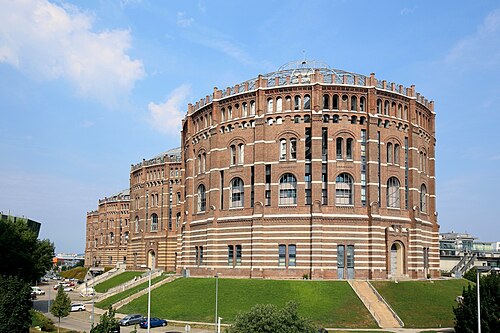
  21. Gasometer Gasometer
    52 1 hour

    Gasometer

    Wiener Gasometer

    The Gasometers are four Victorian gas holders with flats inside them.

    • High
    • Historic monument
    • Simmering
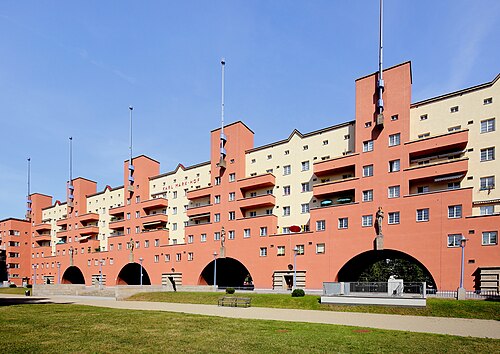
  22. Karl Marx-Hof Karl Marx-Hof
    53 1 hour

    Karl Marx-Hof

    Karl-Marx-Hof

    Karl-Marx-Hof is a block of council flats 1,100 m long, and it is one of the longest single residential buildings in the world.

    • High
    • Historic monument
    • Döbling
  23. Pestsäule Pestsäule
    54 10 min

    Pestsäule

    The Pestsäule is a promise made by an emperor who had left town.

    • High
    • Historic monument
    • Innere Stadt
  24. Stephansplatz Stephansplatz
    55 20 min

    Stephansplatz

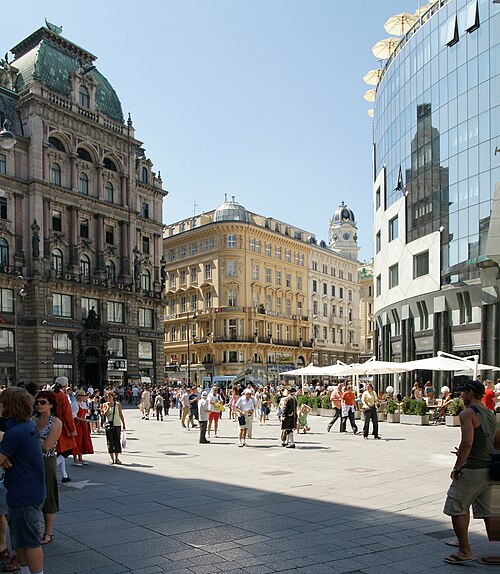
    Stephansplatz is the square at the geographic and historic centre of Vienna, formed around St. Stephen's Cathedral and taking its name directly from it.

    • High
    • Historic monument
    • Innere Stadt
  25. Schloss Wilhelminenberg Schloss Wilhelminenberg
    56 45 min

    Schloss Wilhelminenberg

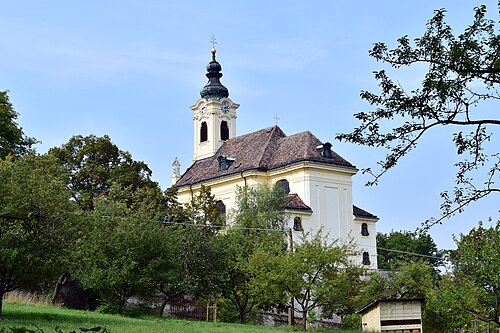
    Schloss Wilhelminenberg sits on a wooded hill above Ottakring, Vienna's 16th district, built in the 1730s for Field Marshal Guido Starhemberg and later named for Archduchess Wilhelmine, who owned it in the nineteenth century.

    • Notable
    • Historic monument
    • Ottakring

Source: OpenStreetMap contributors, Wikidata ·

Where to base yourself

District boundaries come from OSM administrative relations, so a district page holds exactly the places inside it — plus, for the islands and the coast, the nearest district by proximity.

How the city is laid out

Twenty-three districts, numbered roughly in the order they were absorbed, arranged around the 1st.

The Innere Stadt is the 1st and holds the cathedral, the Hofburg, the opera and most of what a short visit will see. Districts 2 to 9 and 20 were incorporated in 1850 and lie inside the Gürtel, the outer ring road; they are the inner districts and are where most visitors sleep and eat. Districts 10 to 19 and 21 to 23 came in between 1874 and 1938, mostly in 1892.

Districts 21 and 22 are across the Danube on the left bank — Floridsdorf is the northernmost part of the city and Donaustadt the largest by area. Districts 2 and 20 sit on the island between the Danube and the Donaukanal.

The postal code gives the district: 1XXA, where the middle two digits are the district number. An address at 1070 is in the 7th.

Checked 2026-08-23

Getting around

The U-Bahn, the trams, and a ticket that covers both.

The U-Bahn has five lines, 109 stations and 83.9 km of track, and it opened on 25 February 1978. It carried 404.8 million passengers in 2023. Trains run from about 05:00 to 01:00 at intervals of two to fifteen minutes, and run all night at fifteen-minute intervals on Friday and Saturday nights and before public holidays.

A sixth line, the U5, is under construction for completion between 2026 and 2032; the network will then be 90 km with 116 stations.

Tickets are integrated with the trams, the buses and the S-Bahn through the VOR system, so one ticket covers the whole journey. Some airport services are outside it.

Inside the Ring, walking beats all of it.

Checked 2026-08-23

More city guides

Common questions

How many days does Vienna need?

Three to four. Two days cover the Innere Stadt and the Ring — the cathedral, the Hofburg, the opera, the museums on the Maria-Theresien-Platz. A third takes Schönbrunn and the Belvedere, and a fourth allows a proper concert or an afternoon in the wine villages.

How do the districts work?

Twenty-three of them, numbered roughly in the order they joined the city. The 1st is the medieval centre, districts 2–9 and 20 came in 1850 and lie inside the Gürtel, and the rest arrived between 1874 and 1938. The postal code carries the number: 1070 is the 7th district.

What is the Ringstrasse?

The boulevard built in the second half of the nineteenth century on the line of the demolished city bastions, encircling the Innere Stadt. Most of Vienna's great public buildings face onto it.

Is the U-Bahn the best way around?

For anything beyond the Ring, yes. Five lines, 109 stations, 83.9 km, running from about 05:00 to 01:00 and all night at weekends. Inside the Ring, walking is faster.

When is the best time to come?

April to June and September to October. Summer afternoons reach 27–32°C and the palace gardens have little shade; winter hovers around freezing but brings the concert season and the Christmas markets.

How big is Vienna really?

414.78 km² with 2,028,499 people in the city proper, 2,223,236 in the urban area and 2,890,577 in the metropolitan area — the tenth largest city in Europe.