.jpg)
.jpg)
01
1 hr 30 min
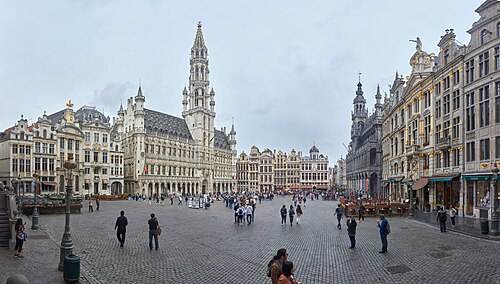
Grand-Place - Grote Markt
Grand-Place, or Grote Markt, is Brussels' historic central square and a UNESCO World Heritage Site since 1998.
- Must see
- Historic monument
- Brussels
Language · 11 published
Country guide
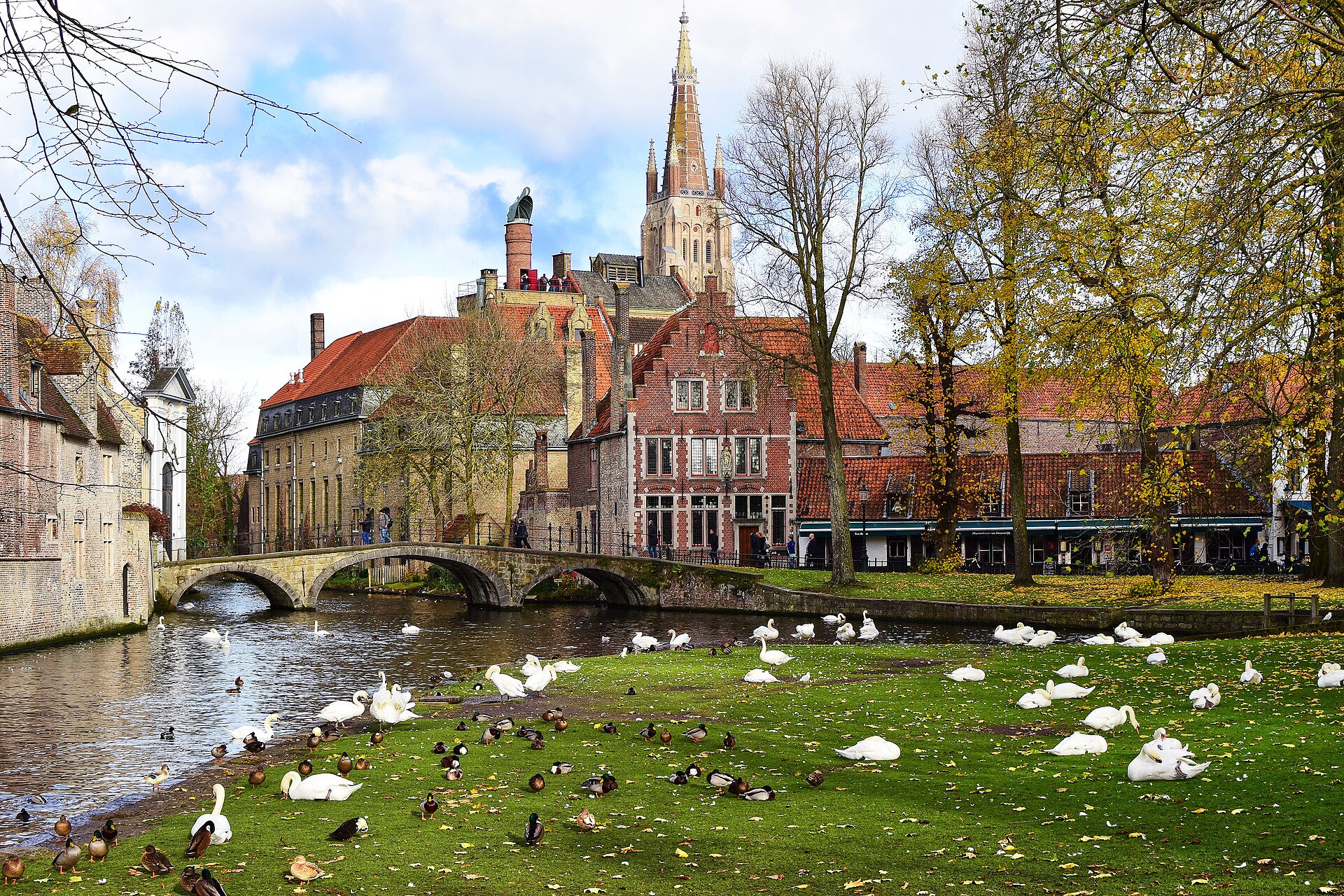
Belgium covers 30,689 km² and holds more than 11.8 million people, a density of 383 per km² that ranks sixth in Europe. It is divided three ways — Flanders in the north, Wallonia in the south, the Brussels-Capital Region in the middle — and the language divides with it: Dutch for about 60 per cent of the population, French for about 40, German for the one per cent in the East Cantons. The choice for a visitor is largely between Brussels, which carries the seats of the European Commission and Council and the headquarters of NATO, and the Flemish cities: Antwerp, Ghent, Bruges, Leuven.
Reviewed by Elena Voss · Roavina Travel Editor
Every city catalogued in this country so far, ranked by how much there is to see.
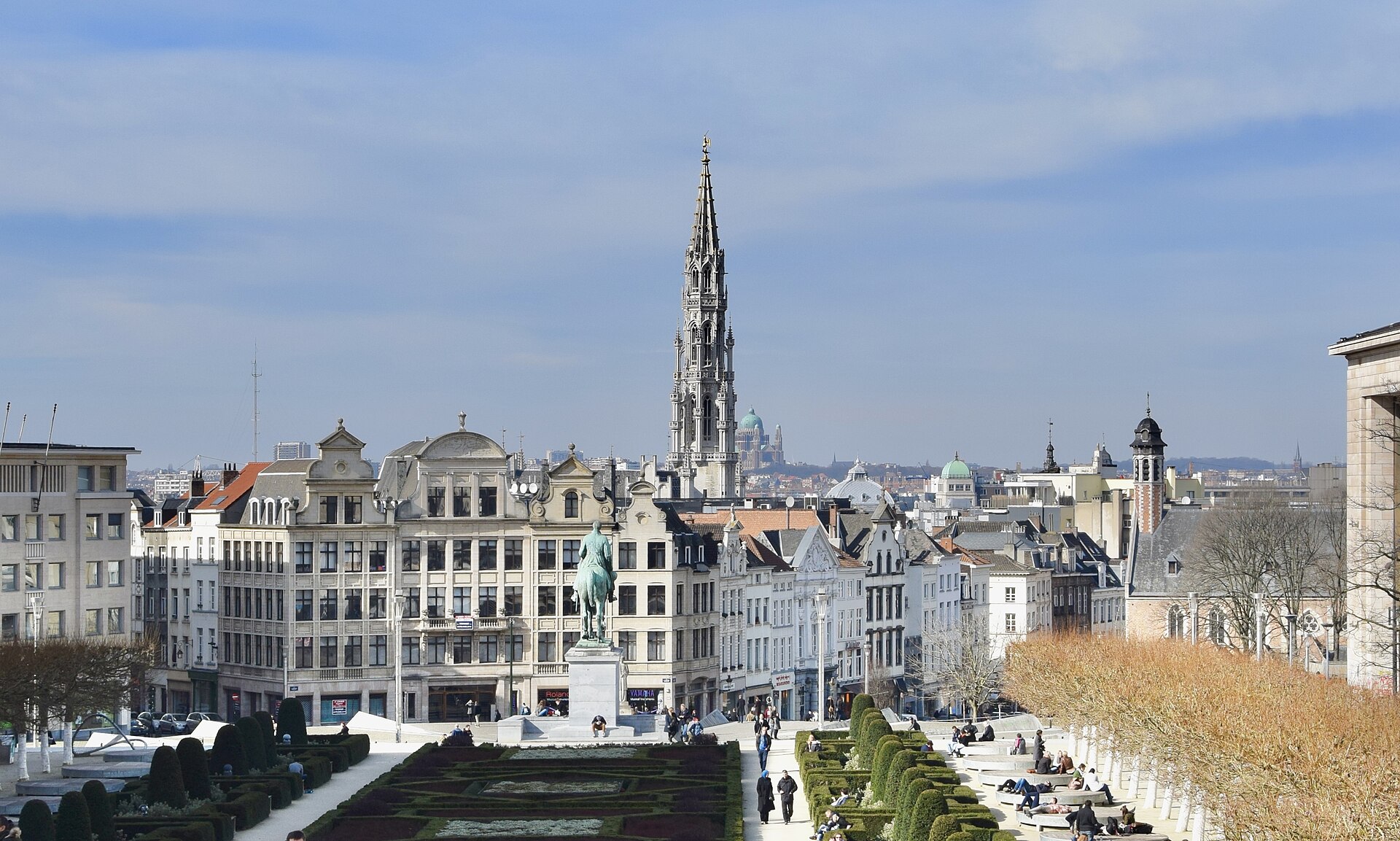
Photograph · Ank Kumar · CC BY-SA 4.0
Ranked by importance — sitelinks, pageviews and heritage status, not editor preference.
25 places match
Category
Typical visit duration
Interests
Grand-Place, or Grote Markt, is Brussels' historic central square and a UNESCO World Heritage Site since 1998.
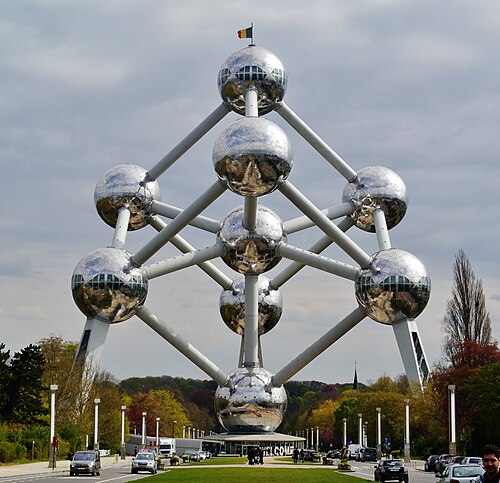
The Atomium is a building in the shape of a cube standing on one corner, and it is a model of something: the unit cell of an iron crystal, magnified 165 billion times.
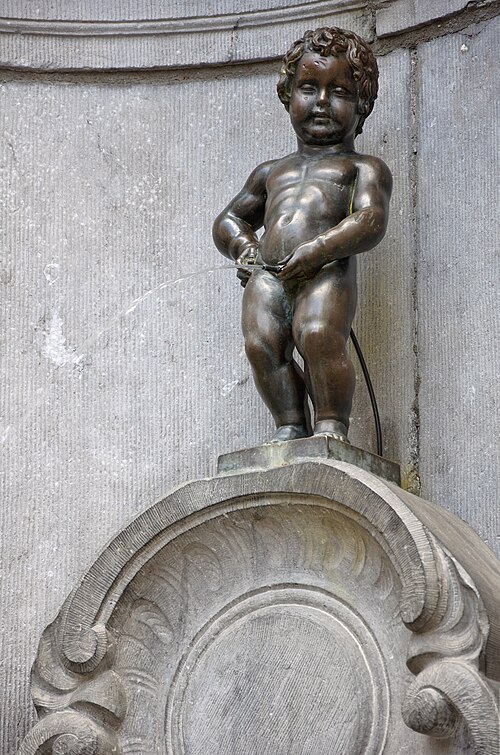
Manneken Pis is a bronze fountain figure of a small boy urinating, 55.5 centimetres tall, set in a stone niche on the corner where the Rue du Chêne meets the Rue de l'Étuve, a short walk downhill from the Grand-Place.
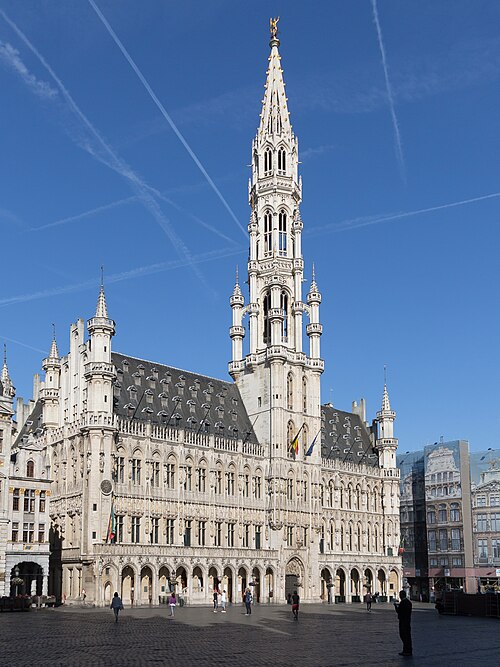
Hôtel de Ville de Bruxelles - Stadhuis van Brussel
The City Hall of Brussels is the working seat of the city's administration and the only building on the Grand-Place that a visitor can go inside on a ticket.
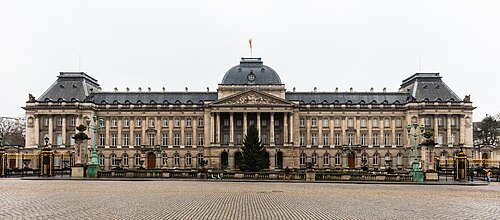
Palais Royal - Koninklijk Paleis
The Royal Palace of Brussels serves as the official palace of the Belgian King and houses the administrative services of the monarchy. Despite its name, it is not the royal residence; the King lives at the Palace of Laeken.
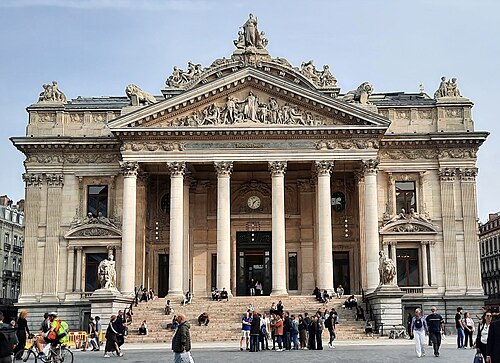
Bourse - Beurs
Bourse Palace, known locally as Bourse or Beurs, is a historic landmark on Boulevard Anspach 80 in central Brussels. The building stands in the pedestrian zone beside Grand-Place and combines public halls with visitor attractions, hospitality venues and services.
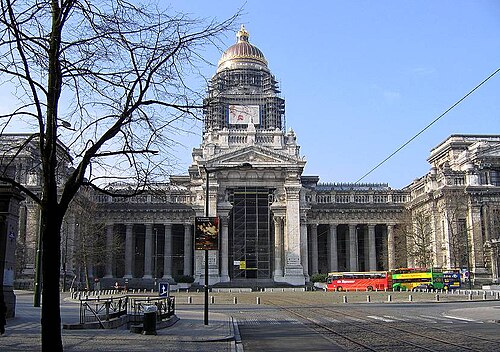
Palais de justice - Justitiepaleis
The Palace of Justice of Brussels, known locally as Palais de justice or Justitiepaleis, stands as one of Belgium's most monumental law courts.
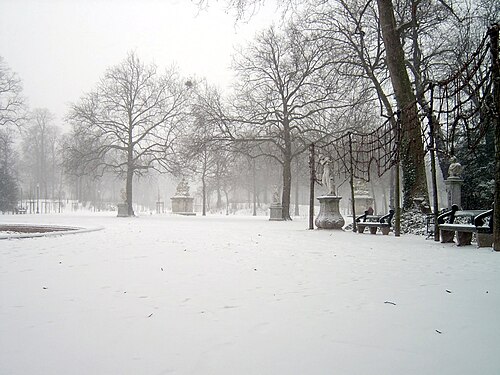
Parc de Bruxelles - Warandepark
Brussels Park, known locally as Parc de Bruxelles and Warandepark, is a public park situated in the heart of Brussels. It lies adjacent to the Royal Square and the Belgian Parliament building.
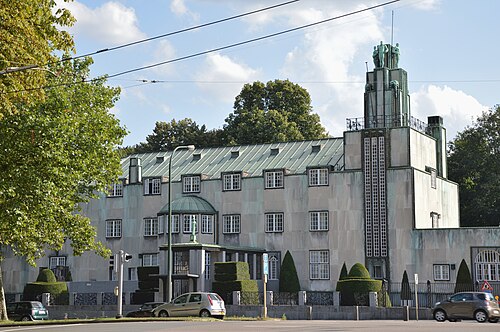
Palais Stoclet - Stocletpaleis
The Stoclet Palace is a private residence in Brussels, Belgium, designed by architect Josef Hoffmann and the Wiener Werkstätte between 1905 and 1911. It stands as one of the most refined achievements of the Vienna Secession movement.

Château de Laeken - Kasteel Van Laken
The Royal Castle of Laeken serves as the official residence of the Belgian royal family. Located in the Laeken district north of central Brussels, this neoclassical palace complex stands within extensive private grounds.
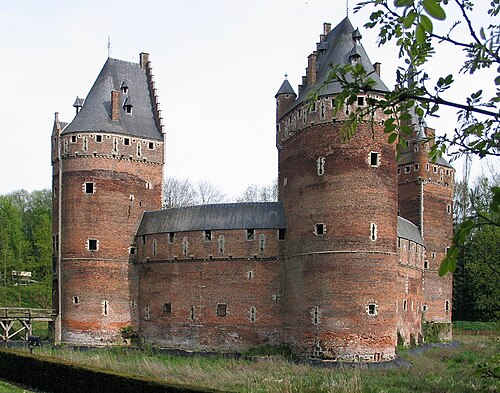
Kasteel van Beersel
Beersel Castle, also called Kasteel van Beersel, is a medieval fortress in the municipality of Beersel, southwest of Brussels. Its preserved defensive form is defined by circular towers, heavy masonry and a moat surrounding the castle.

Château Charle-Albert — Charle-Albertkasteel
Charle-Albert Castle, also known as Château Charle-Albert or Charle-Albertkasteel, is a named historic castle structure in Brussels.
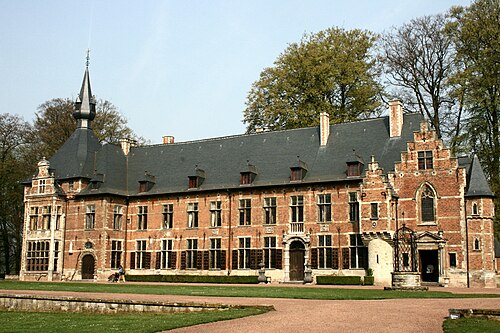
Kasteel Groot-Bijgaarden
Groot-Bijgaarden Castle, known locally as Kasteel Groot-Bijgaarden, is a historic castle situated in the municipality of Dilbeek, within the Brussels-Capital Region's broader metropolitan area. The structure represents Belgian feudal and Renaissance architectural heritage, with origins tracing to medieval fortifications.
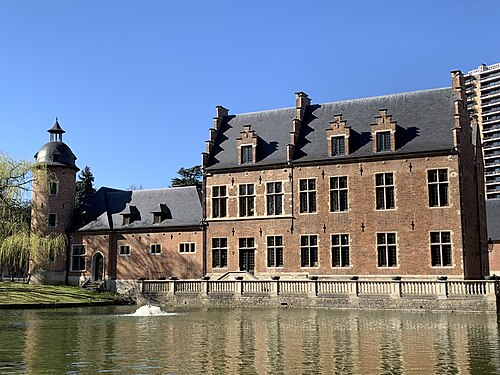
Château du Karreveld - Kasteel Karreveld
Karreveld Castle, known as Château du Karreveld and Kasteel Karreveld, is a historic castle and cultural landmark in Brussels. The site is associated with Wikidata identifier Q2971719 and contributes to the heritage character of the Brussels region.
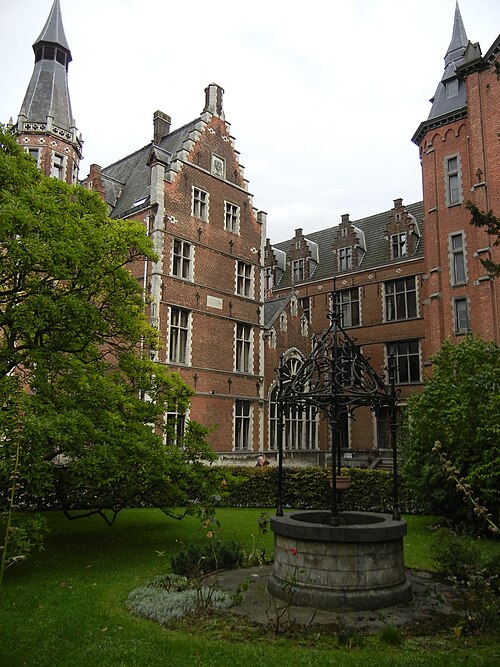
Castel de Lindthout
Linthout Castle, also known as Castel de Lindthout, is a documented historic structure in Brussels and is identified by Wikidata as Q2941363.
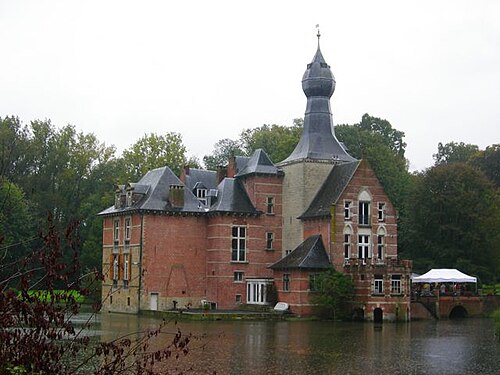
Château de Rivieren - Kasteel ter Rivieren
Rivieren Castle, also called Château de Rivieren and Kasteel ter Rivieren, is a heritage landmark in Brussels. Its French and Dutch names fit the bilingual character of the Belgian capital.

Gemeentehuis Wemmel
Wemmel Castle, also known locally as Gemeentehuis Wemmel, is a civic landmark in the municipality of Wemmel near Brussels. The second name means Wemmel Town Hall and explains the building’s present municipal role.
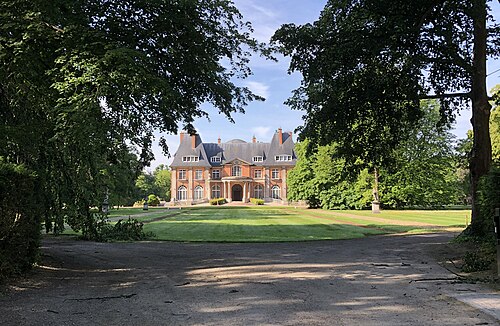
Château de La Fougeraie - Kasteel van Fougeraie
Wittouck Castle, also known as Château de La Fougeraie and Kasteel van Fougeraie, is a private estate in Uccle, in the southern part of Brussels.
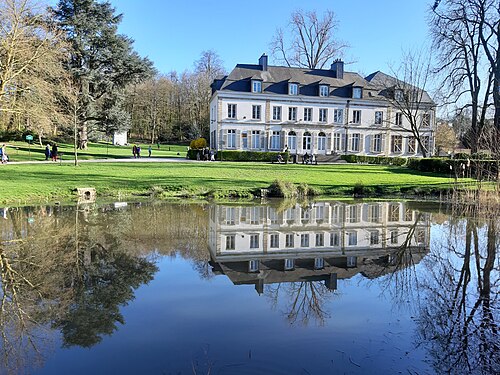
Château de Wolvendael - Kasteel Wolvendael
Wolvendael Castle, also called Château de Wolvendael and Kasteel Wolvendael, is a historic landmark in Brussels. The French and Dutch names place it within the capital’s bilingual cultural landscape.
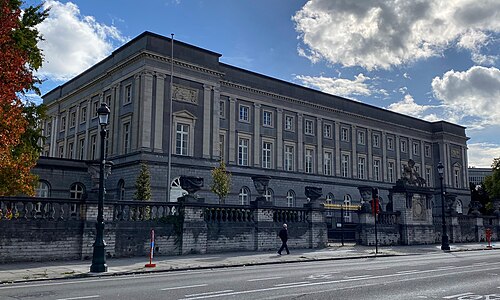
Palais des Académies - Academiënpaleis
Academy Palace, Palais des Académies or Academiënpaleis, is a neoclassical institutional building in Brussels. It serves as the seat of five Belgian royal academies, including the Royal Academy of Sciences and the Royal Academy of French Language and Literature.
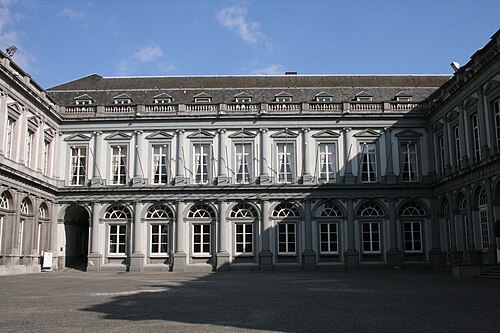
Palais d'Egmont - Egmontpaleis
Egmont Palace is a historic aristocratic residence beside the Petit Sablon in central Brussels. Today it serves as a venue for Belgian and international state functions, diplomatic meetings, ministerial gatherings and ceremonial occasions.
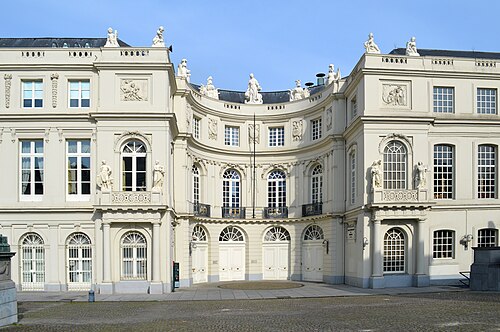
Palais de Charles de Lorraine - Paleis van Karel van Lotharingen
The Palace of Charles of Lorraine is a historic Brussels building associated with Charles of Lorraine and the aristocratic world of the Habsburg Netherlands.
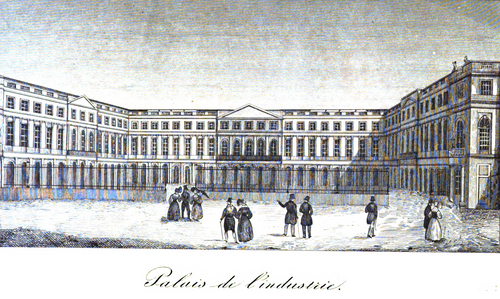
Palais de l'Industrie Nationale - Paleis voor de Nationale Nijverheid
The Palace of National Industry, known as Palais de l'Industrie Nationale in French and Paleis voor de Nationale Nijverheid in Dutch, is a Brussels building linked with Belgium's industrial heritage.

Palais du Comte de Flandre - Paleis van de Graaf van Vlaanderen
The Palace of the Count of Flanders is a Brussels landmark associated with the Count of Flanders title and Belgium’s aristocratic heritage. Its identity is architectural and historical rather than that of a conventional museum.
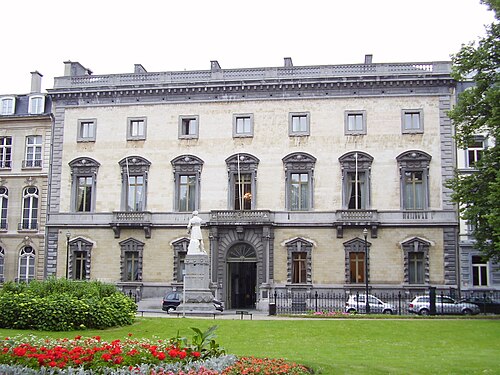
Palais du marquis d'Assche - Paleis van de Markies van Assche
The Palace of the Marquess of Assche is a Brussels aristocratic residence linked with the city’s noble architectural heritage. Its importance lies in the way titled families shaped the Belgian capital’s built environment.
Source: OpenStreetMap contributors, Wikidata ·
Five to seven days covers Brussels plus two or three rail-linked cities such as Antwerp, Ghent, Bruges, Leuven or Liège. Staying in one or two bases avoids losing time to repeated hotel changes in this compact network.
Belgium’s foreign-affairs service publishes visa and short-stay requirements. Check the rule for the passport being used and the full Schengen itinerary, especially when Belgium is not the first external border crossed.
Brussels Airport connects directly with Belgium’s national rail network, and intercity trains link the principal cities without compulsory reservations. Local buses, trams and metros belong to separate regional operators, so one urban ticket is not automatically valid nationwide.
April through June offers long sightseeing days, while September usually retains workable conditions with fewer peak-summer pressures. Belgian weather remains changeable, making a waterproof layer useful in any of these months.
The euro (EUR) is Belgium’s currency. Card and cash acceptance can differ between a station machine, a market stall and a small business, so retain a second payment method rather than assuming one card will work everywhere.
Belgium uses 112 for emergencies and Type C or E plugs at 230 V. The recorded national guidance says mains tap water is safe.